Water Heater Leak Cleanup in Longmont, CO — Fast Water Removal & Structural Drying
Emergency water damage cleanup for leaking water heaters across Longmont and Boulder County
When you need water heater leak cleanup Longmont CO, you need more than someone to mop up a puddle. You need a restoration team that can help limit water spread, extract standing water, locate hidden moisture, dry affected materials, and document the damage after the plumbing source has been controlled.
Mont Long Restoration serves homeowners, landlords, property managers, HOAs, and commercial properties throughout Longmont and the Front Range. With a 40-person team, 10 equipped service vans, and 24/7 emergency availability, we respond when a leaking water heater affects flooring, carpeting, drywall, insulation, baseboards, cabinets, storage areas, or finished basements.
If water is actively spreading, first make the area safe. Shut off the cold-water supply to the heater if you can safely access it, avoid wet electrical areas, and contact a qualified plumber to stop the source. Then call Mont Long Restoration for emergency water extraction and structural drying.
- Emergency water extraction for water-heater leaks, overflows, and utility-room flooding
- Moisture mapping, structural drying, dehumidification, and damage documentation
- Cleanup support for homes, apartments, HOAs, offices, retail spaces, and commercial properties
- Available 24/7 for urgent water damage throughout Longmont, Boulder County, and nearby Front Range communities
Call +1 (720) 438-7100 for 24/7 emergency water removal, moisture assessment, and structural drying in Longmont.
Request Emergency Restoration
Fill out the form and we'll contact you immediately!
Water Heater Leak Cleanup Backed by 16 Years of Restoration Experience
A local emergency restoration team focused on drying the structure—not just removing visible water
A water heater leak is not always limited to the area directly around the tank. Water can run beneath flooring, wick into drywall, soak carpet padding, enter insulation, travel under cabinets, or reach adjacent rooms before it becomes obvious. Mont Long Restoration approaches every water-heater leak cleanup in Longmont with a clear goal: identify the affected area, remove water, dry materials correctly, and help prevent secondary damage.
Our role is distinct from the plumber's role. A qualified plumber diagnoses and repairs the water heater, supply connection, drain valve, or related pipe. Mont Long Restoration addresses the water damage left behind through extraction, moisture inspection, drying, stabilization, documentation, and reconstruction planning when needed.
16+ Years Serving Longmont
More than 16 years serving Longmont, Boulder County, and surrounding Front Range communities
40 Skilled Professionals
40 skilled restoration professionals and 10 fully equipped service vans
24/7 Emergency Response
24/7 emergency response for active leaks, flooded utility rooms, and water-damaged interiors
Industry Certifications
Applied Structural Drying, Water Damage Restoration, Applied Microbial Remediation, and Certified Restorer credentials
All Property Types
Restoration support for residential, multi-family, HOA, commercial, and property-management clients
Clear Documentation
Clear scopes of work, moisture documentation, and repair recommendations based on observed conditions
Water Heater Leak Cleanup Near Longmont Landmarks, Neighborhoods & Business Areas
Serving Old Town Longmont, Prospect New Town, Historic Eastside, and properties throughout the 80501 area
Mont Long Restoration provides water-damage cleanup for properties near Downtown Longmont, Main Street Historic District, Prospect New Town, McIntosh Lake, Golden Ponds Park, St. Vrain Greenway, Twin Peaks Mall, and the Hover Street and Ken Pratt Boulevard corridors. Whether water reaches a basement utility room in an older home, a water-heater closet in a townhome, or a mechanical area in a commercial property, fast drying can make a meaningful difference.
Longmont has a mix of historic homes, newer residential developments, rental properties, multi-family communities, offices, retail spaces, breweries, warehouses, and public-facing facilities. A water-heater leak can affect each property differently depending on the floor plan, material types, location of the unit, and how long moisture remains undetected.
Longmont Neighborhoods & Communities Served
Nearby Communities Served
Regional Locations & Service Context
Specialized Water Heater Leak Cleanup for Wet Floors, Walls, Basements & Utility Rooms
Longmont restoration specialists focused on extraction, moisture detection, and controlled structural drying
A water-heater leak may look simple at first: a puddle under the tank, wet carpet near a utility closet, or water collecting on a basement floor. But visible water is often only part of the problem. Moisture can move below flooring, behind trim, inside wall cavities, through carpet padding, and into structural materials where ordinary fans or surface mopping cannot confirm dryness.
Mont Long Restoration provides a restoration-focused response after water-heater leaks. We assess the affected area, remove standing water, inspect for hidden moisture, place appropriate drying equipment, monitor drying progress, and help property owners understand what can be restored versus what may require repair or replacement.
What Happens When a Water Heater Leaks in Longmont?
Why a puddle under a hot water heater can become a flooring, drywall, or basement water-damage problem
A water heater can leak from an upper fitting, cold-water supply connection, drain valve, temperature-and-pressure relief valve, discharge line, tank seam, or connected pipe. Because water runs downward, a leak from the top of the unit can collect at the bottom and look like a failed tank. A puddle may also be ordinary condensation, especially in certain operating conditions, but it should not be assumed to be harmless.
An active leak can spread into materials that are not immediately visible. Water may travel under laminate, hardwood, vinyl, tile, carpet, cabinets, baseboards, insulation, and drywall. The longer materials remain wet, the greater the risk of deterioration, odors, staining, warping, microbial growth, and more extensive reconstruction.
What Should You Do When Your Water Heater Starts Leaking?
A safe first-response checklist for Longmont homeowners, landlords, and property managers
Water-heater leaks do not follow a convenient schedule. A leak may begin during the night, while you are away, after returning from vacation, during a cold Front Range weather period, or when an older component finally fails. If water is actively spreading, focus first on safety and source control—then arrange professional cleanup and drying.
Mont Long Restoration does not replace the need for a qualified plumber. A plumber should determine whether the issue is a fitting, drain valve, T&P relief valve, supply line, pressure-related condition, or failed tank. Once the source is stopped or safely controlled, our team can address the water damage.
| Immediate Step | What to Do | Why It Matters |
|---|---|---|
| Make the area safe | Avoid standing water near outlets, cords, appliances, or electrical panels | Reduces electrical and slip hazards |
| Stop the water if safe | Shut off the cold-water supply valve to the heater or the main water supply if necessary | Limits continued water release |
| Shut down the energy source safely | Turn off power to an electric unit or follow safe shutoff procedures for a gas unit | Helps reduce electrical, burn, and equipment risks |
| Protect belongings | Move furniture, stored items, rugs, boxes, and valuables away from wet areas | Reduces secondary contents damage |
| Document visible conditions | Take photos of the unit, water path, flooring, walls, and affected belongings | May assist with repair decisions and insurance documentation |
| Call the right professionals | Contact a qualified plumber for source repair and Mont Long Restoration for extraction and drying | Separates plumbing repair from water-damage restoration |
Important Safety Notes
- Do not touch electrical equipment while standing in water.
- Do not attempt to cap or plug a temperature-and-pressure relief valve.
- If you smell gas, leave the immediate area and follow appropriate emergency or gas-utility guidance.
- Do not assume water at the bottom of the tank proves the entire tank has failed.
- Do not wait until morning if water is actively spreading into finished rooms, flooring, walls, or electrical areas.
Seasonal Timing & Prevention Considerations
Frequency note: A water-heater leak cleanup is not a routine annual certification service. It is a mitigation response when water has escaped, materials are wet, or hidden moisture may be present.
Cost range note: Cleanup cost depends on the amount of water, affected materials, accessibility, drying time, emergency timing, equipment needs, and whether repairs or reconstruction are required. Mont Long Restoration can explain the observed conditions and recommended scope before work proceeds.
Property-Protection Tips
Who Needs Water Heater Leak Cleanup in Longmont?
From single-family homes to multi-unit and commercial properties across the Front Range
Any property with a water heater can experience an unexpected leak. The restoration needs may differ, but the objective is the same: control the affected area, remove water, inspect for hidden moisture, and dry materials before secondary damage grows.
Mont Long Restoration helps residential and commercial property owners respond to water-heater leaks, appliance-related overflows, supply-line leaks, and water damage affecting interior finishes.
How Longmont Weather, Travel, and Building Layouts Affect Water Heater Leak Damage
Winter cold snaps, temperature swings, basement utility rooms, and delayed discovery can increase the impact of a leak
Longmont's Front Range environment brings winter cold, temperature variation, sunshine, seasonal travel, and a range of property layouts—from historic homes to newer construction. These conditions do not cause every water-heater failure, but they can influence how quickly a plumbing issue is noticed and how far water travels.
A water-heater leak discovered immediately may be limited to a utility-room floor. A leak that runs overnight, during a winter trip, or behind stored belongings can reach more materials and require more extensive drying.
Summer
Busy homes, heavy hot-water use, vacation absences, and closed-up interiors can allow a small leak to go unnoticed
Winter
Cold utility spaces, freeze-related pipe stress, and winter travel can contribute to delayed discovery or related plumbing leaks
Spring & Fall
Seasonal changes, water-pressure fluctuations, and household maintenance can reveal worn fittings, valves, or aging connections
Basements & Lower Levels
Water can move across concrete, under flooring, into carpet padding, and toward finished living areas or storage spaces
The City of Longmont advises residents to protect water service lines from freezing and to know how to shut off the main water supply when a pipe bursts. That local preparation can also help limit damage when water appears near a heater or connected plumbing line.
What Type of Water Heater Is Leaking in Your Longmont Property?
Understanding whether water is coming from a tank, fitting, valve, supply line, or connected component
Different water-heater setups can create different water-damage patterns. A traditional tank may release a significant amount of water if the tank body fails. A tankless unit can leak from supply connections, relief components, condensate lines, or piping within a mechanical enclosure. An electric unit can create added electrical safety concerns, while gas units require careful attention to any gas odor or unsafe condition.
Mont Long Restoration helps clean up the resulting water damage after the source has been safely controlled by the appropriate professional.
| Water-Heater Type or Leak Source | Typical Water-Damage Scenario | Restoration Priority |
|---|---|---|
| Traditional tank water heater | Water pooling beneath the tank from a seam, drain valve, or bottom area | Extract water and inspect surrounding flooring, drywall, and contents |
| Upper supply connections | Water runs down the side of the tank and collects at the base | Trace the water path and check adjacent walls, flooring, and stored items |
| T&P relief valve or discharge line | Water appears near a side pipe or drain route | Do not cap the valve; source diagnosis is required before restoration work |
| Gas water heater | Water damage near a tank, pipe, or mechanical area | Maintain safe access and address any gas-related safety concern first |
| Electric water heater | Water near electrical connections, breaker-controlled equipment, or wet flooring | Avoid electrical hazards before entry, extraction, or drying |
| Tankless water heater | Water from a supply line, fitting, condensate component, or concealed mechanical area | Inspect nearby walls, cabinets, floors, and enclosed spaces |
| Hybrid / heat-pump water heater | Condensate or plumbing-related moisture around a larger unit | Determine whether the water is expected condensation or an active leak |
Reliability and diagnosis note: Water at the base of a heater does not automatically mean the tank needs replacement. A qualified plumber should identify the source. Mont Long Restoration then evaluates the impact on the building materials and contents.
Our 6-Step Water Heater Leak Cleanup Process
What to expect when Mont Long Restoration responds to a leaking water heater in Longmont
Emergency Call & Initial Assessment
We discuss the visible water, location of the heater, affected rooms, source-control status, safety concerns, and urgency. If the leak is still active, we encourage the caller to contact a qualified plumber or emergency plumbing provider for source repair.
On-Site Safety Review & Water-Damage Inspection
Our team evaluates safe access, visible water, affected surfaces, material types, possible migration paths, and potential electrical or structural concerns.
Water Extraction & Initial Stabilization
We remove standing water from hard surfaces, carpets, padding, utility-room floors, basements, and other affected areas as conditions allow.
Moisture Mapping & Drying Plan
Technicians inspect beyond the visible puddle to identify moisture in flooring, drywall, baseboards, cabinetry, insulation, subflooring, and nearby rooms. We then develop a drying strategy based on actual conditions.
Structural Drying & Monitoring
We use air movement, dehumidification, targeted drying methods, and follow-up moisture checks to help dry affected materials. Equipment needs and monitoring frequency depend on the size and severity of the loss.
Documentation, Repair Planning & Reconstruction Support
We provide restoration documentation, discuss damaged materials, and recommend next steps for cleaning, repairs, reconstruction, or insurance-related documentation support when applicable.
What Is Included in Our Water Heater Leak Cleanup Service?
Clear restoration deliverables for Longmont homeowners, property managers, and businesses
Every water-heater leak is different. A small, quickly discovered drip may require limited extraction and drying. A tank leak that runs overnight may affect floors, walls, carpet, insulation, contents, and adjacent rooms. Mont Long Restoration tailors the scope to the condition of the property rather than applying a one-size-fits-all approach.
Key Advantages of Working With Mont Long Restoration
Emergency response, moisture-focused restoration, and clear communication from first call through drying
Mont Long Restoration is built for Longmont property owners who need practical help after water escapes from a heater, supply line, appliance, plumbing fixture, or related system. Our focus is to stabilize the affected area, reduce moisture impact, document conditions, and help move the property toward restoration.
24/7 Emergency Response
24/7 emergency water-damage response for urgent leak and flooding conditions
40 Professionals & 10 Vans
40 skilled professionals and 10 service vans prepared for residential and commercial restoration needs
Full Drying Capability
Water extraction, structural drying, dehumidification, and moisture-mapping capability
Detailed Documentation
Property-damage documentation for homeowners, landlords, HOAs, businesses, and insurers
Repair & Reconstruction
Restoration, repair, and reconstruction support after affected materials are evaluated
Full Coverage Area
Service coverage throughout Longmont, Boulder County, and surrounding Front Range communities
Water Heater Leak Cleanup Transformations for Longmont Properties
What changes after the water is removed, hidden moisture is identified, and materials are properly dried
A water-heater leak often creates uncertainty. Property owners may not know whether the tank failed, whether the water reached the subfloor, whether drywall is wet behind baseboards, or whether a finished basement is safe to use. A professional restoration process replaces uncertainty with a documented plan.
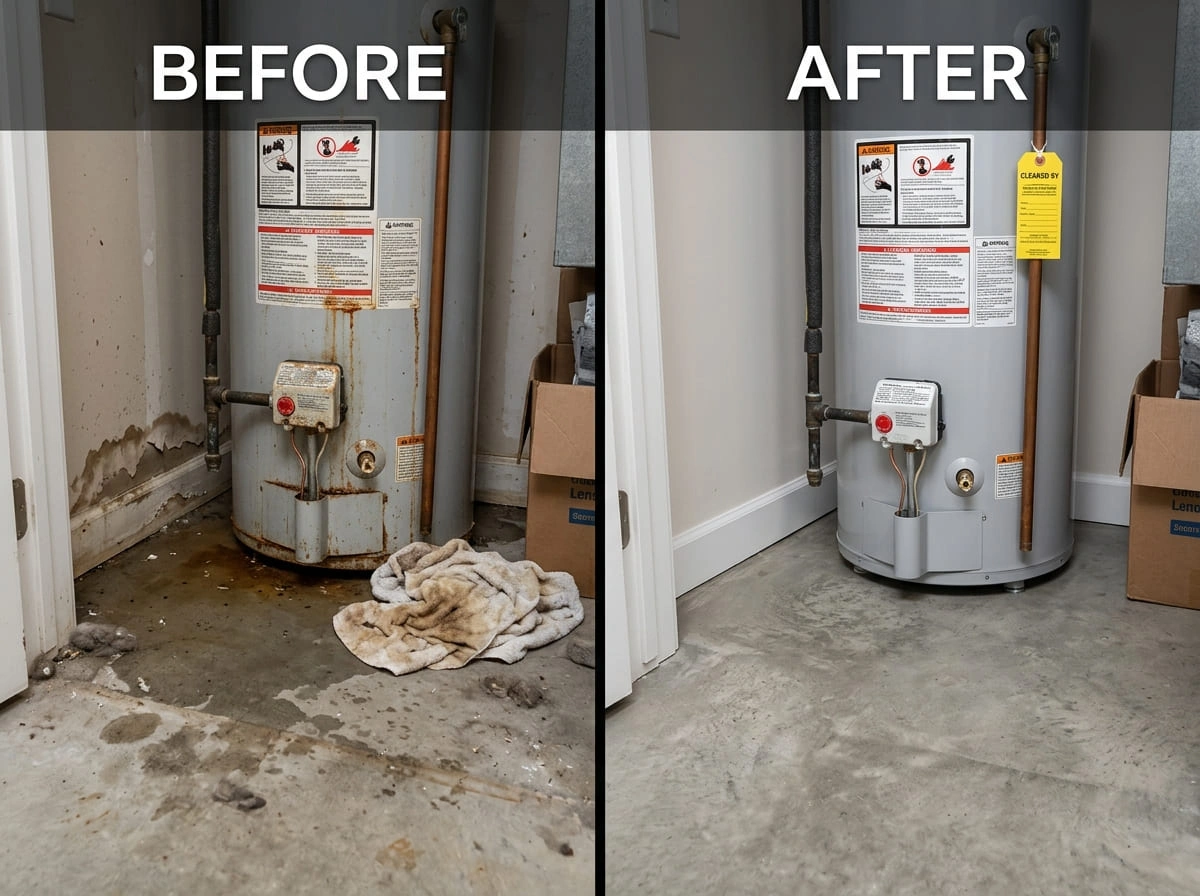
Water pooling around a heater, wet flooring, damp carpet, or a musty utility room.
Standing water removed, affected materials assessed, and drying equipment placed where needed.
No clear answer about whether moisture traveled behind walls or under flooring.
Moisture mapping identifies the extent of the affected area and guides restoration decisions.
Concern about damaged drywall, carpet padding, insulation, cabinetry, or stored belongings.
A practical dry-in-place, cleaning, removal, repair, or reconstruction recommendation.
Stress about photos, invoices, and insurance communication.
Organized documentation that may assist the owner's insurance claim process.
How We Remove Water and Dry Structures After a Water Heater Leak
Restoration methods selected for the affected materials, amount of water, and moisture migration pattern
Mont Long Restoration uses water-damage mitigation methods designed to remove water, reduce humidity, dry structural materials, and help prevent secondary damage. The specific approach depends on whether the water affected hard surfaces, carpet, padding, drywall, insulation, wood flooring, cabinets, subfloors, crawl spaces, or finished basement materials.
Professional water-damage-restoration practices rely on inspecting conditions, selecting appropriate drying methods, and monitoring results rather than simply placing fans in a wet room. ANSI/IICRC S500 is an internationally recognized, ANSI-accredited standard covering professional water-damage restoration practices.
Should Water-Damaged Materials Be Restored or Replaced After a Water Heater Leak?
Helping Longmont property owners understand the next step after moisture damage
A plumber determines whether the water heater, valve, fitting, pipe, or related plumbing component can be repaired or needs replacement. Mont Long Restoration evaluates a different question: can the building materials affected by the leak be dried and restored, or are they too damaged to remain in place?
| Water-Damaged Condition | Drying or Restoration May Be Appropriate | Removal or Replacement May Be Appropriate |
|---|---|---|
| Limited water on non-porous surfaces | Yes, when water is removed promptly and no moisture is trapped beneath finishes | If water entered seams, wall cavities, or materials become unstable |
| Carpet and padding | Carpet may sometimes be cleaned and dried based on timing and source conditions | Padding may require replacement after significant saturation or deterioration |
| Drywall and baseboards | Limited exposure may allow controlled drying and monitoring | Swelling, deterioration, contamination, or extensive wicking may require removal |
| Hardwood or engineered flooring | Prompt drying may help limit damage in some situations | Cupping, buckling, delamination, or trapped moisture may require repair or replacement |
| Cabinet bases and trim | May be dried if exposure was limited and materials remain stable | Swollen particleboard, delamination, or structural damage may require replacement |
| Insulation | Limited conditions may allow evaluation | Wet insulation often needs removal because it can retain moisture |
When Removal or Replacement May Be Necessary
- Materials are swollen, crumbling, warped, delaminated, or structurally compromised
- Moisture remains trapped behind walls, under flooring, or within insulation
- The leak ran long enough to affect multiple layers or rooms
- Water damage has caused odor, visible deterioration, or microbial-growth concerns
- A qualified restoration assessment shows that drying alone is not likely to return the material to an acceptable condition
What Does Water Heater Leak Cleanup Cost in Longmont, CO?
Clear explanations of the factors that affect emergency water removal, drying, and restoration cost
Water-heater leak cleanup costs vary because the visible puddle does not always show the full extent of moisture. A small leak caught early may require limited extraction and drying. A tank failure that affects carpet, hardwood, drywall, insulation, cabinetry, or multiple rooms can require more equipment, labor, monitoring, repairs, and reconstruction.
Mont Long Restoration explains the observed conditions, recommended scope, and cost factors before work proceeds whenever circumstances allow.
Main Cost Drivers Include:
| Service Category | Typical Scope Considerations |
|---|---|
| Emergency water extraction | Amount of standing water, surface type, access, and urgency |
| Moisture inspection and mapping | Number of rooms, walls, floors, and concealed areas evaluated |
| Structural drying | Equipment type, material conditions, humidity levels, and drying duration |
| Material removal | Wet drywall, insulation, padding, cabinetry, flooring, or other unsalvageable materials |
| Repair and reconstruction | Finish materials, scope of repairs, labor, and project coordination |
| Commercial or multi-unit response | Number of affected units, access, scheduling, tenant coordination, and documentation |
Pricing note: Do not rely on internet discussions or another homeowner's quote to estimate your specific loss. Water-heater repair or replacement pricing is separate from water-damage cleanup pricing, and each property requires an on-site assessment.
When Should a Longmont Property Owner Call for Water Damage Restoration?
Signs that water may have moved beyond a simple puddle
Not every drip requires a major restoration project. However, professional water-damage cleanup becomes important when water has spread into materials that cannot be confirmed dry through surface cleaning alone. If you are unsure whether the water reached flooring, walls, insulation, or adjoining rooms, a moisture assessment can provide clearer direction.
Call Mont Long Restoration when you notice:
Water Heater Leak Cleanup for Commercial & Multi-Unit Properties
Protect utility rooms, tenant spaces, equipment areas, and common spaces across your portfolio
Commercial and multi-unit water-heater leaks can affect more than one room or tenant. A mechanical-room failure, leaking hot-water line, failed tank, or concealed utility-space leak may impact common areas, finished suites, storage rooms, inventory, flooring, walls, electrical systems, and daily operations.
Mont Long Restoration coordinates with facility managers, property owners, maintenance teams, landlords, HOAs, and authorized representatives to stabilize affected areas and create a practical restoration plan. Learn more about our commercial water damage restoration services.
| Commercial Restoration Service | Description |
|---|---|
| Emergency water extraction | Remove standing water from mechanical rooms, suites, corridors, offices, retail areas, and common spaces |
| Moisture inspection and mapping | Identify water migration into walls, flooring, ceilings, insulation, and adjoining units |
| Structural drying | Deploy appropriate drying and dehumidification equipment for affected building materials |
| Damage documentation | Provide photos, observations, readings, and restoration records for owners and authorized claim contacts |
| Repair and reconstruction planning | Identify damaged materials and recommend repairs after drying and stabilization |
| Multi-unit response coordination | Support organized access, tenant communication, phased work, and property-manager coordination |
Commercial Property Types We Assist Include:
Why Commercial Property Owners Call Mont Long Restoration:
| Commercial Situation | Typical Restoration Consideration |
|---|---|
| Multi-unit building leak | Access coordination, unit-to-unit moisture migration, tenant communication |
| Office or retail water-heater leak | Protect flooring, walls, equipment, inventory, and business continuity |
| Mechanical-room failure | Assess drainage paths, adjoining finishes, electrical safety, and equipment access |
| Hospitality or food-service property | Rapid containment, drying, sanitation evaluation, and operational disruption planning |
Benefits of Hiring Water Damage Restoration Professionals in Longmont
Faster water removal, better moisture visibility, and a clearer path to restoring your property
A water heater leak can appear manageable until moisture is found under flooring, inside drywall, behind cabinets, or beneath carpet padding. Professional mitigation helps property owners make decisions based on measured conditions rather than assumptions.
Why DIY Water Heater Leak Cleanup Can Be Risky
Protect yourself first when water, electricity, heat, gas, and building materials are involved
A wet utility room can involve several hazards at once: standing water, electricity, hot water, slippery surfaces, gas appliances, damaged flooring, and concealed moisture. A homeowner may be able to move valuables and perform limited surface cleanup after the source is safely controlled, but do not take risks around electrical equipment, gas odors, active leaks, or water entering building materials.
Important Safety Warnings
- Do not stand in water near electrical outlets, power strips, appliances, or panels
- Do not touch or disconnect electrical components on a leaking electric water heater
- Do not cap, plug, or bypass a T&P relief valve or discharge line
- Do not assume water around the tank is harmless condensation without checking the condition
- Do not enter a gas-appliance area if you smell gas; leave the area and follow emergency guidance
- Do not use household fans as a substitute for moisture assessment when water reached walls, flooring, padding, insulation, or cabinets
- Do not wait for normal business hours when water is actively spreading or finished areas are affected
Answers to Common Water Heater Leak Questions in Longmont
Fast answers for homeowners, landlords, property managers, and businesses
What should I do first when my water heater starts leaking?
If it is safe, stop the water at the cold-water supply valve or main water shutoff, avoid electrical hazards, move nearby belongings, and contact a qualified plumber to identify and stop the source. Call Mont Long Restoration when water has affected flooring, carpet, walls, insulation, cabinets, or other materials.
Should I turn off the water if my hot water heater is leaking?
If you can safely access the shutoff, stopping the incoming water can help limit damage. If you are unsure which valve to use, cannot safely reach it, or water is near electrical hazards, contact a qualified professional.
Is a leaking water heater an emergency?
An active leak can be an emergency when water is spreading, entering finished areas, reaching electrical components, affecting a basement, or continuing without control. Even a slow leak deserves prompt attention because moisture can spread into hidden materials.
Why is my water heater leaking from the bottom?
Water may be coming from a drain valve, tank seam, lower fitting, connected pipe, or water that originated higher on the unit and ran downward. A qualified plumber should diagnose the source before assuming the tank itself has failed.
Why is water coming from my water heater pressure-relief valve?
A T&P relief valve may discharge for several reasons involving temperature, pressure, the valve, or related components. Do not cap or plug it. Arrange professional diagnosis.
Is the puddle under my water heater condensation or a leak?
It may be condensation, but it may also be a plumbing or tank-related leak. Dry the visible water, observe the area safely, and obtain professional diagnosis if moisture returns, water is actively flowing, corrosion is visible, or damage is spreading.
Can a leaking water heater be repaired, or does it need replacement?
Some leaks come from fittings, valves, or connected plumbing and may be repairable. A failed tank body, severe corrosion, or a leaking internal seam often requires replacement. A qualified plumber should make that determination.
How do I clean up water from a leaking water heater?
After the source is safely controlled, remove standing water, protect belongings, document visible damage, and arrange water extraction and moisture inspection when water reached porous materials or concealed areas. Mont Long Restoration provides water-heater leak cleanup, drying, and restoration support.
Can a water heater leak cause mold or damage drywall?
Yes. Water can enter drywall, insulation, flooring, carpeting, padding, cabinets, and subfloors. Drying wet areas promptly is important because prolonged moisture can contribute to mold growth and material damage.
Who cleans up water damage from a leaking water heater?
A plumber handles the water-heater source, while a water-damage restoration company handles extraction, moisture assessment, drying, cleaning, repair planning, and reconstruction support for affected building materials.
Does homeowners insurance cover water damage from a water-heater leak?
Coverage depends on the cause of loss, policy language, exclusions, maintenance history, deductible, and insurer decision. Mont Long Restoration can provide documentation that may help support your claim, but cannot guarantee coverage approval.
Can I use water while my water heater is leaking?
This depends on where the leak is coming from, whether the water supply has been shut off, and whether using water could worsen the loss. Ask a qualified plumber for source-related guidance.
Should I turn off power to an electric water heater that is leaking?
Electrical safety is important. Do not touch breakers, wiring, or the unit if standing water or unsafe conditions are present. Contact a qualified professional if you are unsure.
How do I know if water got under my flooring?
Signs can include damp edges, lifted flooring, buckling, soft spots, staining, musty odor, swollen baseboards, or moisture readings. A professional moisture inspection can determine whether water traveled beneath visible surfaces.
Can a leaking water heater flood a basement?
Yes. A tank or plumbing failure can release enough water to spread through a basement, utility room, finished living area, storage space, or adjoining rooms—especially if it occurs overnight or while the property is vacant.
How quickly should wet carpet or drywall be dried?
Prompt action is important. The EPA advises drying water-damaged areas and items within 24 to 48 hours when possible to help prevent mold growth.
Do I need water damage restoration after the plumber fixes the leak?
If water reached porous materials, spread beneath flooring, entered walls, soaked carpet or padding, affected insulation, or ran for an unknown period, professional moisture inspection and drying can be appropriate after the plumber stops the source.
You're Supported From Emergency Water Removal Through Restoration Planning
Clear communication, moisture-focused service, and responsive support when water damages your Longmont property
Mont Long Restoration approaches water-heater leak cleanup with a practical commitment: respond to the water-damage condition, explain what we observe, document affected materials, recommend an appropriate drying or restoration scope, and help you understand the next steps.
We do not use one-size-fits-all solutions. The required work depends on the amount of water, how long materials remained wet, where the water traveled, the condition of the affected finishes, and whether the plumbing source has been safely controlled.
Reinforcing statement: If new moisture concerns are identified during the documented drying process, we will explain the condition, update the recommended scope when necessary, and outline corrective options for restoring the affected area.
1205 S Main St
Longmont, CO 80501
United States
Training and Certifications Relevant to Water Damage Restoration
Qualifications that support extraction, structural drying, microbial-risk awareness, and reconstruction work
Water-heater leak cleanup requires more than visible surface cleaning. Water-damage restoration work can involve moisture inspection, drying science, equipment monitoring, material evaluation, microbial-risk awareness, and reconstruction planning.
Mont Long Restoration identifies the following certifications and qualifications as part of its supplied business information:
Applied Structural Drying (ASD)
Applied Microbial Remediation Technician (AMRT)
Water Damage Restoration Technician (WRT)
Certified Restorer (CR)
Local Municipal Class C / General Contractor License
These qualifications should be displayed only with accurate, current credential details and in accordance with the applicable certifying or licensing organization's rules. Water-heater repair, gas work, electrical work, and plumbing modifications should be performed by appropriately qualified and licensed trade professionals.
Emergency Water Heater Leak Cleanup in Longmont, CO
Rapid response when water is spreading through floors, walls, basements, or commercial spaces
When a water heater leaks, every hour can matter. Water may continue moving under flooring, behind walls, through carpet padding, around cabinets, or into lower levels until the source is controlled and drying begins. Mont Long Restoration provides around-the-clock emergency water-damage response for Longmont properties affected by water-heater failures and related plumbing leaks.
Emergency Response Process:
Emergency Situations That Warrant Immediate Help Include:
Insurance Claim Assistance for Water Heater Leak Damage
Restoration documentation that may help you navigate the claims process
A water-heater leak can create questions about what happened, when it was discovered, how far the water traveled, what materials were affected, and what mitigation work was completed. Mont Long Restoration can provide restoration records that may help property owners communicate with an insurer or authorized adjuster.
Potential Insurance Documentation Support Includes:
Policy note: Insurance coverage depends on the specific policy, cause of loss, exclusions, maintenance history, deductible, insurer evaluation, and claim decision. Water damage from a sudden and accidental discharge may be treated differently than gradual leakage, deterioration, floodwater, sewer backup, sump-pump overflow, or mold-related conditions. Mont Long Restoration cannot guarantee insurance coverage, claim approval, deductible relief, or payment.
Warranty Coverage for Water Heater Leak Cleanup and Reconstruction
Clear records and project-specific terms for restoration and repair work
Warranty terms depend on the service provided, the type of materials installed, manufacturer terms, site conditions, the underlying plumbing repair, and the scope of reconstruction. Mont Long Restoration should provide project-specific warranty information in writing when applicable.
| Coverage Type | Typical Scope |
|---|---|
| Workmanship | May apply to eligible restoration repair or reconstruction labor under the written project agreement |
| Materials and products | Manufacturer warranties may apply to newly installed materials or products, subject to manufacturer terms |
| Drying documentation | Moisture and drying records may document the mitigation process and observed conditions |
| Plumbing source repair | Performed and warranted separately by the qualified plumber or provider responsible for the water-heater repair |
Important Notes
- Warranty details vary by project, material, manufacturer, repair method, and site condition.
- Water-damage restoration cannot guarantee the future performance of an aging water heater, plumbing fitting, valve, pipe, or appliance.
- Any warranty should be explained in the written work authorization, estimate, contract, or final project documents.
10 Fully Equipped Service Vans Serving Longmont & the Front Range
Tools, drying equipment, and restoration personnel prepared for urgent water damage
Mont Long Restoration's 10 service vans support emergency response throughout Longmont and surrounding communities. Equipped restoration vehicles help the team begin extraction, moisture inspection, drying, and stabilization without waiting for basic resources to arrive.
Fleet and Equipment Capabilities Include:
Flexible Payment Discussions for Water Heater Leak Restoration and Reconstruction
Helping property owners plan for larger drying, repair, or reconstruction needs
A small water-heater leak may require limited cleanup. A larger loss can involve water extraction, days of drying, material removal, flooring repairs, drywall repair, insulation replacement, cabinet work, or reconstruction. When a project becomes larger, Mont Long Restoration can discuss available payment and project-planning options based on the actual services offered at the time.
Potential Project-Planning Considerations Include:
Availability of financing, payment plans, promotions, or insurance billing arrangements should be confirmed directly with Mont Long Restoration before work is authorized.
Mont Long Restoration Awards and Community Recognition
Recognition should reflect verified service, current eligibility, and documented achievements
Mont Long Restoration's supplied business information lists the following awards and recognition categories:
Angi Super Service Award
Boulder County Gold Award
Longmont Area Chamber of Commerce Business of the Year
Nextdoor Neighborhood Fave
The Best of Longmont Award
Awards, rating claims, logos, badge language, issuing organizations, award dates, and eligibility should be displayed only when they are current, accurate, authorized, and supported by verifiable documentation. Do not imply an award is current or independently verified unless the underlying documentation confirms it.
Restoration Discounts and Offers for Eligible Longmont Properties
Ask about available emergency response, assessment, and restoration promotions
Mont Long Restoration's supplied business information identifies the following promotional offerings:
Deductible Relief Discount
Direct-to-Insurance Billing Promo
Extraction & Reconstruction Bundle Credit
Flat-Rate 24/7 Emergency Dispatch
Free Structural Moisture Assessment
Offer availability, eligibility, exclusions, expiration dates, insurance restrictions, service-area limitations, minimum project requirements, and other terms should be confirmed before scheduling or authorizing work. Insurance deductibles remain the policyholder's responsibility unless a lawful, written, and fully disclosed promotion applies.
Water Heater Leak Cleanup Hours in Longmont, CO
24/7 emergency availability for water extraction, drying, and restoration support
Water-heater leaks can begin at night, during weekends, while a home is vacant, or when a commercial property is closed. Mont Long Restoration operates 24 hours a day, seven days a week for emergency water-damage response across Longmont and the surrounding Front Range service area.
| Day | Emergency Service Hours |
|---|---|
| Monday | 00:00–23:59 |
| Tuesday | 00:00–23:59 |
| Wednesday | 00:00–23:59 |
| Thursday | 00:00–23:59 |
| Friday | 00:00–23:59 |
| Saturday | 00:00–23:59 |
| Sunday | 00:00–23:59 |
Contact Mont Long Restoration:
What Should You Look for in a Longmont Water Damage Restoration Provider?
Choose a provider based on response readiness, moisture expertise, documentation, and clear service scope
When water escapes from a heater, it is important to choose the right kind of help for the problem. A plumber repairs or replaces the water-heater source. A restoration company addresses the moisture and property damage. The best response may involve both, coordinated around the needs of the property.
| Service Consideration | Mont Long Restoration Approach | What to Confirm With Any Provider |
|---|---|---|
| Service focus | Water extraction, moisture inspection, structural drying, restoration, and reconstruction support | Whether the provider performs mitigation or only surface cleanup |
| Emergency availability | 24/7 emergency service as supplied by the business | Actual after-hours response process and dispatch availability |
| Moisture assessment | Moisture mapping and structural-drying capability | Whether hidden moisture in walls, flooring, padding, and insulation will be evaluated |
| Documentation | Photos, readings, scopes, and restoration records as applicable | What documentation is provided for property records or insurance claims |
| Property types | Residential, commercial, multi-unit, HOA, landlord, and property-management support | Whether the provider can manage your property's size, access, and occupancy needs |
| Source repair | Coordinates around plumbing source control | Whether a qualified plumber is required for the water-heater repair itself |
Rather than choosing based only on the lowest upfront quote, ask what will be inspected, how hidden moisture will be identified, what drying methods will be used, how progress will be monitored, and what documentation you will receive.
Contact Mont Long Restoration for Water Heater Leak Cleanup in Longmont, CO
Talk with a water-damage restoration professional when a leaking heater affects your floors, walls, basement, or business
If you found a puddle under a hot water heater, noticed water spreading across a utility room, discovered a leak after returning home, or suspect moisture reached flooring or walls, Mont Long Restoration is ready to help. We provide 24/7 emergency water extraction, moisture assessment, structural drying, and restoration support for residential and commercial properties.
Contact Details
Mont Long Restoration
(720) 438-7100
1205 S Main St, Longmont, CO 80501
Current Special Offers
- Free Structural Moisture Assessment
- Flat-Rate 24/7 Emergency Dispatch
- Deductible Relief Discount
- Direct-to-Insurance Billing Promo
- Extraction & Reconstruction Bundle Credit
Protect your home, business, flooring, walls, and belongings with fast, professional water heater leak cleanup Longmont CO from Mont Long Restoration.