Sump Pump Failure Cleanup in Longmont, CO
Longmont emergency basement water removal, extraction, and structural drying when a sump pump fails or cannot keep up.
When you need sump pump failure cleanup Longmont CO, the problem is usually already urgent: water is rising in the pit, the pump runs but the basement is wet, carpet is soaking through, or water is moving toward drywall, storage, outlets, and finished flooring. Mont Long Restoration provides 24/7 emergency water extraction, basement flood cleanup, moisture mapping, dehumidification, and structural drying for Longmont homes, rental properties, HOAs, and commercial buildings after sump-pump-related water damage.
A failed pump, power outage, blocked discharge line, stuck float switch, high groundwater, or heavy rain can turn a small water event into widespread property damage. If the sump pump or drainage source is still malfunctioning, contact a qualified plumber or pump professional for source repair. Once the source is controlled and it is safe to enter, our restoration team can remove water, identify hidden moisture, dry affected materials, document conditions, and help plan needed repairs.
- Emergency water extraction after sump-pump failure, groundwater intrusion, or basement flooding
- Moisture mapping for wet carpet, drywall, insulation, flooring, and hidden wall cavities
- Structural drying and dehumidification after the active water source is controlled
- 24/7 emergency water-damage response throughout Longmont and nearby Front Range communities
Call +1 (720) 438-7100 for 24/7 sump pump water cleanup and basement drying in Longmont.
Request Emergency Sump Pump Cleanup
Fill out the form and we'll contact you immediately!
Sump Pump Failure Cleanup Backed by Local Restoration Experience
A Longmont water-damage team focused on protecting your property—not simply removing visible water.
A flooded basement can look manageable at first, especially when the standing water is limited to one room or a small area around the sump basin. Yet water can travel beneath carpet, behind baseboards, into drywall and insulation, under laminate or vinyl flooring, and into stored belongings. Mont Long Restoration approaches sump pump failure water cleanup as a complete property-recovery process: assess the source and safety conditions, remove standing water, inspect for retained moisture, dry materials strategically, and document the work performed.
We explain the difference between plumbing repair and restoration in plain language. A plumber or pump professional corrects the failed pump, electrical issue, check valve, discharge line, drain, or related plumbing problem. Our role is to address the resulting water damage—water extraction, moisture mapping, structural drying, cleaning, sanitation when conditions require it, and repair planning.
Emergency Basement Water Cleanup Near Longmont Neighborhoods and Property Hubs
Serving Longmont homes and businesses from Downtown and Historic Eastside to Prospect New Town, Fox Hill, Clover Creek, and surrounding communities.
Longmont properties face changing Front Range conditions, including snowmelt, spring thaw, fast-moving thunderstorms, periods of high groundwater, and winter freezes that can affect exterior discharge routing. A sump pump may run more frequently when groundwater rises around a foundation, while heavy rain or runoff can expose issues with a pump, float switch, backup battery, perimeter drain, check valve, or discharge line.
Mont Long Restoration provides Longmont flooded basement cleanup near Downtown Longmont, the Main Street Historic District, Historic Eastside, Prospect New Town, Fox Hill, Champion Greens, Clover Creek, Meadowview, Southmoor Park, The Greens, Quail Crossing, Rainbow Ridge, and other nearby communities.
Longmont Communities
Downtown, Historic Eastside, Prospect New Town, Fox Hill, Clover Creek, Champion Greens, Meadowview, Southmoor Park, The Greens, Rainbow Ridge, Quail Ridge, and surrounding neighborhoods
Nearby Cities
Boulder, Broomfield, Superior, Westminster, Thornton, Loveland, Greeley, Fort Collins, Arvada, Denver, Lakewood, Aurora, Parker, Castle Rock, Centennial, and Commerce City
Local Context
St. Vrain Creek, Left Hand Creek, St. Vrain Greenway, Main Street, Union Reservoir, Golden Ponds, McIntosh Lake, and Front Range drainage conditions
Local Note: Longmont's 2013 flood severely affected the community, including areas along St. Vrain Creek, and led to long-term resilience work. That history makes property-specific drainage and flood awareness important, but it does not mean every Longmont home is in a floodplain or will experience the same risk.
Specialized Sump Pump Failure Cleanup for Wet Basements, Flooring, Walls, and Crawl Spaces
Restoration specialists who address the water damage after the pump problem is controlled.
When a sump pump fails, removing the visible water is only one part of the job. Water may remain under carpet padding, along wall edges, behind baseboards, in insulation, beneath floating flooring, or within lower wall cavities. A basement can appear dry while materials continue holding moisture that may lead to odors, staining, deterioration, or secondary damage.
Mont Long Restoration focuses on emergency water-damage mitigation after a failed or overwhelmed sump system. We assess which materials can be dried, which materials require removal, and where moisture may have traveled beyond the visible puddle. If the sump pit is full, the motor has failed, the pump hums without moving water, the discharge line is blocked, or the float switch is stuck, contact a qualified plumbing or pump professional to correct the source while our team addresses the property damage.
- Moisture inspection beyond visible standing water
- Water extraction for carpet, hard surfaces, basements, and crawl spaces
- Controlled air movement and dehumidification for structural drying
- Cleaning and sanitation measures based on actual water conditions
- Repair and reconstruction recommendations when affected materials cannot be restored
What Happens When a Sump Pump Fails in Longmont?
Water can spread quickly through a basement—even when the original problem begins in one sump pit.
A sump pump is designed to remove water collected around a foundation through a perimeter-drain or sump-basin system. When it does not activate, cannot keep up, loses power, has a blocked discharge path, or sends water back toward the home, the risk is not limited to the pump itself. Groundwater or stormwater can spread into finished basement rooms, crawl spaces, storage areas, carpet, drywall, insulation, and flooring.
Common problems Longmont property owners report include a sump pump that is silent while the pit fills, a pump that runs nonstop, water coming in next to a working sump basin, a frozen discharge line, a failed battery backup, or a pump that cannot keep up during heavy rain or snowmelt.
Key Sump Pump Failure Risks
- Water reaching outlets, appliances, cords, or electrical equipment may create an electrical hazard
- Carpet, padding, drywall, insulation, wood trim, and flooring can retain moisture after visible water is removed
- A musty basement smell after flooding may indicate retained moisture and requires inspection
- Drain or toilet backup may involve contaminated water rather than ordinary groundwater
- Delayed drying can increase the scope of material damage and repair needs
- Water may travel beneath flooring or behind walls before it becomes visible
Safety Notice: If water is near electrical equipment, outlets, appliances, an electrical panel, or exposed wiring, do not enter the flooded area until it is safe. Contact an appropriately qualified electrical professional or emergency service when an immediate electrical hazard is present.
What Should You Do When Your Sump Pump Fails?
Take safe, practical steps while arranging pump repair and emergency water-damage cleanup.
A sump-pump failure can happen during a storm, overnight, during spring snowmelt, or when a power interruption disables the primary pump and battery backup. The priority is to protect people, control the source when safe, and prevent water from spreading into more materials.
| Immediate Step | What to Do | Why It Matters |
|---|---|---|
| Check for electrical danger | Stay out of standing water if outlets, cords, appliances, wiring, or the electrical panel may be wet | Reduces risk of electric shock or fire |
| Identify the active source | Note whether the pump is silent, humming, running continuously, or unable to keep up | Helps determine whether a plumber or pump professional is needed |
| Stop additional damage safely | Move dry belongings out of the water path only if the area is safe to enter | Protects items before water spreads |
| Contact a qualified source-repair professional | Call a plumber or pump technician when the sump system, discharge line, drain, or related plumbing is failing | Restoration begins most effectively after the source is controlled |
| Call for emergency water removal | Arrange extraction, moisture inspection, and drying as soon as possible | Helps limit water migration into affected materials |
| Photograph conditions | Take photos of the water level, affected rooms, belongings, and visible damage when safe | Useful for property records and potential insurance communication |
- Call immediately when water is spreading beyond the sump area, soaking carpet, reaching drywall, or entering finished rooms
- Do not assume a working pump means the issue is resolved; water can enter around a functioning sump basin because of broader drainage or foundation conditions
- Do not use a gasoline-powered generator inside a home, garage, crawl space, or near open windows because of carbon-monoxide danger
- Do not treat suspected sewage or drain backup as ordinary clean groundwater
Who Needs Sump Pump Water Cleanup in Longmont?
Emergency extraction and drying for homes, rentals, HOAs, offices, and commercial properties.
A failed sump pump can affect far more than a single-family basement. Longmont property owners, tenants, landlords, property managers, HOA boards, and commercial operators may all need fast, organized support when water enters a lower level, storage room, crawl space, mechanical area, hallway, or finished basement.
Mont Long Restoration provides emergency basement water removal Longmont property owners can call after a sump-pump-related water event, whether the affected space is partially finished, fully finished, used for storage, occupied by tenants, or essential to business operations.
How Longmont Weather Can Contribute to Sump Pump Problems
Snowmelt, thunderstorms, freeze-thaw cycles, and discharge issues can increase basement-water risk.
Longmont's Front Range weather can change quickly. Spring thaw and rain may raise groundwater around foundations. Afternoon thunderstorms can overwhelm drainage systems. Winter freezes can affect exterior discharge piping, while seasonal debris can restrict water flow. These conditions do not mean a sump pump will fail, but they can reveal a weak pump, undersized system, failing float switch, blocked check valve, frozen discharge line, or battery backup that is not ready for a power loss.
Spring
Snowmelt, rain, and rising groundwater may increase sump-pump cycling
Summer
Intense rain and thunderstorms can push runoff into drainage systems faster than a pump can remove it
Fall
Leaves, sediment, and debris can affect exterior drainage or discharge areas
Winter
Freezing temperatures can block or freeze a discharge line, causing water to return toward the sump pit or remain trapped
If you notice that your sump pump runs every few minutes with no rain, runs constantly during normal conditions, makes grinding sounds, trips a breaker, or leaves the basement floor wet, arrange a qualified pump or plumbing evaluation before the next weather event.
Why Is My Sump Pump Running but My Basement Is Still Flooding?
The visible symptom can point to a pump issue, drainage problem, power problem, or water source that needs separate evaluation.
Different sump-pump and basement-water situations call for different next steps. Mont Long Restoration handles the cleanup and drying after water enters the property; a qualified plumber, pump professional, waterproofing specialist, electrician, or utility contact may be needed to resolve the underlying cause.
| Failure Scenario | What You May Notice | Restoration Focus |
|---|---|---|
| Pump will not turn on | Water rises in the pit and the unit is silent | Emergency extraction and drying after pump repair |
| Pump hums but does not move water | Full pit, motor noise, little or no discharge | Cleanup after mechanical or discharge issue is corrected |
| Pump runs constantly | Continuous motor operation but wet basement conditions remain | Water removal, moisture mapping, and drying |
| Pump cannot keep up with rain or snowmelt | Water spreads during heavy weather despite pump operation | Emergency water extraction and material protection |
| Battery backup fails | Pump stops during a power interruption | Cleanup, documentation, and drying after power/pump restoration |
| Discharge line is blocked or frozen | Water may return to the pit or fail to move away from the home | Drying and damage mitigation after discharge correction |
| Water enters beside a working sump basin | Wet floor or foundation-wall area near an operating pump | Moisture inspection and coordination with drainage or waterproofing professionals |
| Sewer backup is suspected | Odor, toilet/drain backup, dark or contaminated water | Containment and sanitation after source evaluation |
Our 6-Step Sump Pump Water-Damage Cleanup Process
Know what to expect after you call Mont Long Restoration.
Emergency Call and Safety Screening
We ask where the water is, whether it is actively spreading, whether the sump pump or source is still failing, and whether electrical or sewage-contamination concerns may be present.
On-Site Assessment and Moisture Inspection
We inspect the visible water, affected materials, likely migration paths, and conditions that influence the extraction and drying plan.
Water Extraction and Initial Mitigation
We remove standing water where appropriate and work to limit spread into adjacent rooms, flooring, walls, and contents.
Material Evaluation and Targeted Removal
We determine whether carpet, pad, baseboards, insulation, drywall, flooring, or other materials can be dried or should be removed due to saturation, damage, or contamination.
Structural Drying and Moisture Monitoring
We place drying equipment as needed, monitor moisture conditions, and adjust the drying plan to address retained moisture in affected materials.
Documentation and Repair Planning
We provide records of observed conditions and work performed, then explain repair, reconstruction, or next-step recommendations where needed.
What's Included in Our Sump Pump Failure Water Cleanup
Clear restoration deliverables for Longmont property owners and managers.
Every sump-pump-failure cleanup is different because water may affect different materials, rooms, and levels of the structure. Our scope is based on actual conditions—not a one-size-fits-all checklist—and we explain what we find before proceeding with recommended work.
- Emergency assessment of the affected basement, crawl space, room, or commercial area
- Standing-water extraction where conditions allow
- Moisture readings for walls, floors, baseboards, carpet, insulation, and nearby materials
- Moisture mapping to identify hidden water migration
- Controlled air movement and dehumidification for structural drying
- Cleaning and sanitation measures when appropriate to the water source and affected materials
- Documentation of observed conditions, work performed, and recommended next steps
- Removal or repair recommendations for materials that cannot be safely or effectively dried
- Reconstruction planning when water damage requires drywall, flooring, trim, or other repairs
Key Advantages of Working With Mont Long Restoration
Emergency response, restoration-focused drying, and clear communication from first call through repair planning.
A sump-pump failure is stressful because the visible water may be only part of the damage. Mont Long Restoration focuses on the practical work required to protect your property: remove water, inspect affected materials, dry hidden moisture, document conditions, and explain what should happen next.
24/7 Emergency Response
24/7 emergency response for active basement water damage
Beyond Surface Cleanup
Water extraction and structural drying beyond surface-level cleanup
Moisture Mapping
Moisture mapping for wet walls, carpet, flooring, insulation, and lower-level spaces
Clear Responsibility
Clear separation between pump repair and restoration cleanup responsibilities
Full Documentation
Documentation that can support communication with property managers or insurers
All Property Types
Service for residential, rental, HOA, and commercial properties across the Longmont area
Sump Pump Failure Cleanup Transformations for Longmont Properties
What changes after standing water is removed and affected materials are professionally assessed.
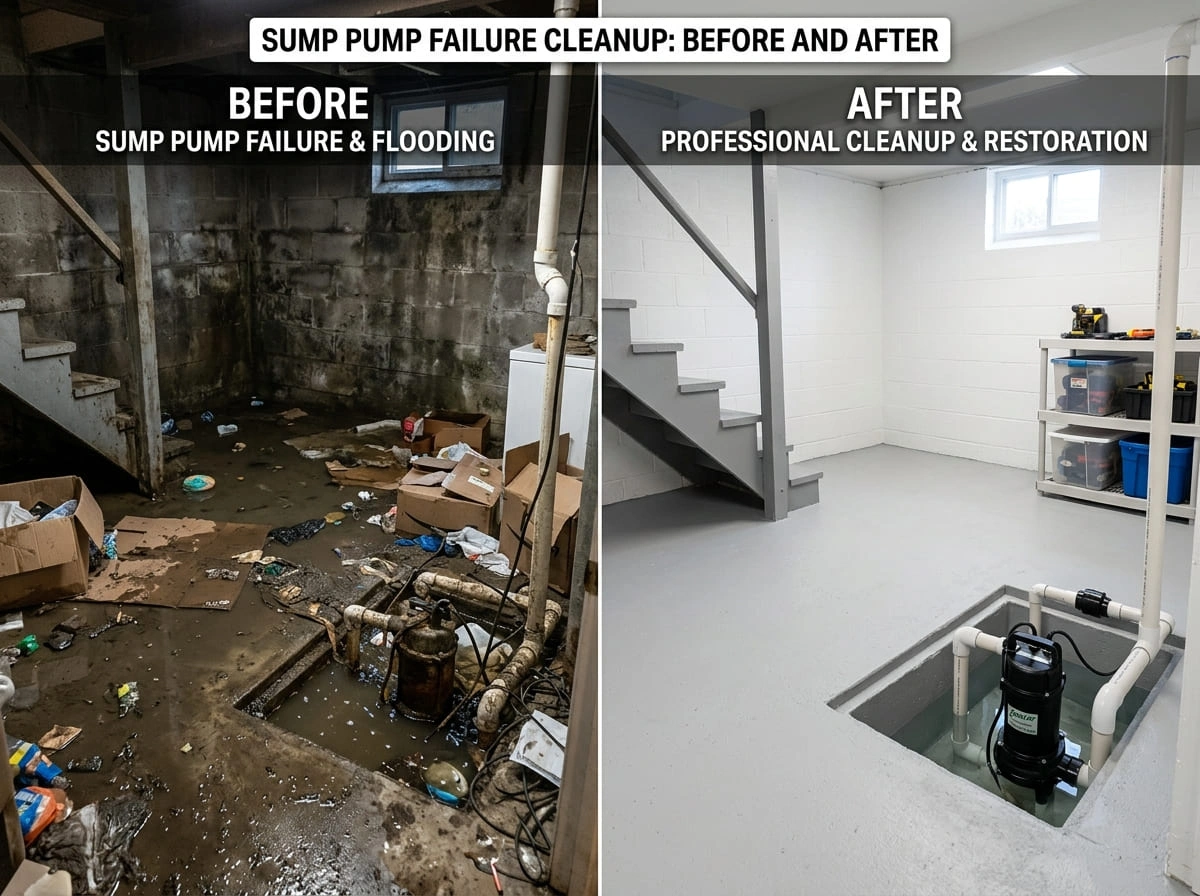
Many property owners call when they see water around the sump pit, wet carpet, damp drywall, soaked storage boxes, or a basement that smells musty after water recedes. The immediate concern is understandable: "Can I save the carpet?" "Is the drywall wet behind the baseboards?" "Is this groundwater or sewage?" "How do I know the basement is actually dry?"
- Standing water, wet carpet, damp baseboards, uncertainty about hidden moisture
- A sump pump failed or could not keep up during rain, snowmelt, or a power interruption
- Property owners are unsure whether flooring, drywall, insulation, or stored contents can be saved
- Water removed, affected materials assessed, and a documented drying plan in place
- The source has been addressed by the appropriate repair professional and the water damage is being mitigated
- Clear, material-specific recommendations based on moisture conditions, contamination concerns, and the condition of each affected item
How We Clean Up and Dry Sump Pump Water Damage
Equipment and methods selected for your water conditions, materials, and affected areas.
Sump-pump-failure cleanup requires more than placing fans in a wet basement. Drying should be based on what water reached, how long it remained, whether contamination is suspected, whether materials can be accessed, and how moisture is moving through the structure.
Mont Long Restoration uses restoration methods appropriate to the conditions found at the property. The goal is to remove water, manage humidity, promote controlled drying, identify retained moisture, and make informed decisions about materials that can be restored or require removal.
Water Extraction Equipment
For standing water on hard surfaces, carpet, and affected rooms
Air Movers
To promote controlled evaporation from wet materials
Dehumidifiers
To remove moisture from the indoor air during structural drying
Moisture Meters & Hygrometers
To track conditions in floors, walls, carpet, and surrounding materials
Thermal Imaging
Where appropriate to support moisture investigation
Containment Procedures
When suspected sewage or contaminated water is involved
Targeted Material Removal
When materials cannot be dried safely or effectively
What Can Be Saved After a Sump Pump Failure?
The right decision depends on the water source, material type, duration of saturation, and verified drying results.
A failed sump pump does not automatically mean every material must be removed. At the same time, visible dryness does not prove that carpet padding, insulation, drywall edges, flooring underlayment, or wall cavities are dry. Mont Long Restoration evaluates materials based on actual conditions and recommends the least invasive appropriate path.
| Material | May Be Salvageable When | Replacement May Be Needed When |
|---|---|---|
| Carpet | Water is addressed quickly, contamination is not suspected, and drying can be verified | Padding is saturated, water is contaminated, odor persists, or drying cannot be confirmed |
| Drywall | Moisture is limited and the assembly can be properly dried | Water wicks upward, insulation is wet, drywall is deteriorated, or contamination is present |
| Hardwood flooring | Prompt stabilization and controlled drying limit distortion | Boards cup, buckle, separate, or retain moisture beyond recoverable levels |
| Laminate or vinyl plank flooring | Components can be safely accessed and dried based on their construction | Water is trapped below, seams swell, backing fails, or hidden moisture remains |
| Insulation | Limited situations with accessible, dryable materials | Insulation is wet, contaminated, compacted, or cannot be reliably dried |
| Trim and baseboards | Materials can be removed, dried, cleaned, and reinstalled when suitable | They are swollen, warped, contaminated, or trap moisture behind walls |
Sump Pump Failure Cleanup Costs in Longmont, CO
Clear cost drivers for emergency water removal, drying, cleanup, and repair planning.
The cost of water extraction after sump pump failure Longmont properties experience depends on the actual extent of water damage. A small, quickly addressed wet area may require limited extraction and drying. A finished basement with wet carpet, padding, drywall, insulation, flooring, and contents may require a broader mitigation and repair plan.
Mont Long Restoration explains recommended work and cost drivers before moving forward with non-emergency scope whenever practical.
Cost Factors That Affect Your Estimate
- Amount of standing water and total affected square footage
- Whether water reached finished rooms, carpet, padding, flooring, walls, insulation, or contents
- Water source and whether contamination is suspected
- How long water remained before extraction and drying began
- Accessibility of basement rooms, crawl spaces, wall cavities, and affected materials
- Emergency or after-hours response requirements
- Amount and duration of drying equipment and moisture monitoring needed
- Material removal, cleaning, repair, or reconstruction requirements
| Service Type | Typical Cost Factors |
|---|---|
| Emergency water extraction | Water volume, location, access, and affected materials |
| Basement structural drying | Room size, humidity conditions, material saturation, and monitoring duration |
| Carpet and flooring drying | Floor type, pad/underlayment conditions, water category, and recovery potential |
| Contaminated-water cleanup | Source, safety controls, material removal, sanitation, and disposal requirements |
| Repair and reconstruction | Scope of drywall, trim, insulation, flooring, painting, and related repairs |
When Should You Call for Basement Water Removal in Longmont?
Prompt assessment is especially important when water reaches porous materials, electrical areas, or finished spaces.
You may need professional water-damage restoration when a failed sump pump leaves more than a small, contained puddle. The sooner water, humidity, and hidden moisture are addressed, the more options may be available for drying and material recovery.
Call for professional cleanup when:
- Water is spreading across a basement, crawl space, storage room, or lower-level commercial area
- Carpet, padding, drywall, insulation, wood trim, or flooring is wet
- Water has entered a finished basement or room with furniture, electronics, records, or belongings
- The sump pump is running but water continues to rise or spread
- Water is near outlets, appliances, electrical equipment, or an electrical panel
- You suspect a sewer backup, toilet/drain overflow, or contaminated water source
- A musty smell remains after visible water is removed
- You need moisture documentation for a landlord, HOA, property manager, or insurer
- Water has moved beneath vinyl plank, laminate, hardwood, or carpeted flooring
Sump Pump Water Damage Cleanup for Commercial and Multi-Unit Properties
Protect lower-level spaces, common areas, storage, operations, and tenant environments across Longmont.
Commercial and multi-unit properties may have several water-entry points, shared mechanical areas, occupied spaces, tenant responsibilities, business-continuity concerns, and documentation requirements. Mont Long Restoration coordinates with property owners, facility managers, HOA representatives, landlords, and commercial operators to respond to water damage after a sump-pump failure or basement flooding event.
| Commercial Cleanup Service | Description |
|---|---|
| Emergency water extraction | Removal of standing water from affected rooms, common areas, lower levels, and storage spaces |
| Structural drying | Controlled drying for floors, walls, carpet, insulation, and other wet materials |
| Moisture mapping | Identification of visible and hidden water migration for targeted drying and repair planning |
| Contents and material assessment | Evaluation of furniture, inventory, finishes, documents, and building materials |
| Documentation support | Photos, moisture records, scope details, and invoices for ownership or claim communication |
| Reconstruction coordination | Repair planning for removed or damaged drywall, flooring, trim, and related finishes |
- Apartment communities, condominiums, and HOA-managed properties
- Retail spaces, offices, restaurants, and mixed-use buildings
- Warehouses, storage facilities, and lower-level mechanical areas
- Schools, churches, medical offices, and community facilities
- Commercial properties that require coordinated communication with tenants, managers, and ownership groups
Benefits of Hiring a Water-Damage Restoration Team in Longmont
Emergency extraction, moisture assessment, and controlled drying can help protect your property after a sump-pump failure.
A sump pump may stop running, run nonstop, lose power, or fail to keep up during severe weather. Once water enters the building, professional cleanup focuses on more than what can be seen on the floor. Moisture can move into porous materials, along wall edges, under flooring, and into insulation.
Helps remove standing water before it reaches additional rooms and materials
Identifies hidden moisture that a household fan, shop vacuum, or visual inspection may miss
Supports drying decisions for carpet, pad, drywall, insulation, hardwood, laminate, and vinyl flooring
Helps distinguish ordinary groundwater from conditions where sewage or drain backup may be suspected
Provides factual photos, moisture records, and work documentation
Coordinates restoration activity with plumbers, electricians, drainage specialists, and reconstruction professionals when needed
Helps reduce the chance of prolonged dampness, odor, and secondary material damage through prompt drying
Is It Safe to Enter a Flooded Basement After a Sump Pump Fails?
Treat standing water cautiously until electrical hazards and the water source are understood.
Do not enter a flooded basement simply to check the sump pump if electrical safety is uncertain. Water near outlets, extension cords, appliances, electrical panels, wiring, or powered equipment may create a serious shock or fire hazard. If water is deep, the source is unknown, the basement smells of sewage, or structural materials are compromised, stay out and contact the appropriate professionals.
Safety Warnings
- Do not stand in water near electrical outlets, appliances, cords, panels, or exposed wiring
- Do not operate electrical tools or equipment while standing in water
- Do not assume water is clean if toilets, drains, or sewer lines are backing up
- Do not use a gasoline-powered generator indoors, inside a garage, or near openings
- Do not remove sewage-affected materials without appropriate protective measures
- Do not rely on surface dryness alone; hidden moisture can remain beneath flooring and inside walls
Emergency Reminder: Call emergency services if people face immediate danger or the building presents a serious electrical or structural hazard.
Answers to Common Sump Pump Failure Questions in Longmont
Straightforward guidance for water rising in the pit, wet basements, and uncertain water sources.
What should I do first if my sump pump stops working and water is rising?
Stay out of the affected area if electricity may be involved. If safe, identify whether the pump is silent, humming, running continuously, or unable to keep up. Contact a qualified plumber or pump professional to correct the failed system, then call Mont Long Restoration for emergency water extraction and drying if water has entered the property.
Why is my sump pump running but my basement is still flooding?
The pump may be undersized, overwhelmed by heavy water flow, affected by a blocked or frozen discharge line, cycling incorrectly, or operating while water enters around the foundation from another path. A qualified pump, plumbing, drainage, or waterproofing assessment may be needed. We can remove water and inspect affected materials after the source is controlled.
Is it safe to enter a flooded basement?
Not always. Avoid entering if outlets, appliances, electrical panels, cords, or wiring may be wet. Also avoid contact with water if a sewer or drain backup is possible. Electrical safety and the water source should be addressed before cleanup begins.
Do I need a plumber or a water-damage restoration company after sump pump failure?
Often, both roles are needed. A plumber or pump professional repairs the failed sump system, discharge line, related plumbing, or drain issue. A restoration company removes the water, assesses moisture, dries materials, and documents property damage.
Can wet carpet be saved after a sump-pump failure?
It depends on the water source, how long the carpet and pad were wet, whether contamination is suspected, and whether drying can be verified. Clean-water exposure addressed quickly may offer more recovery options than prolonged saturation or suspected sewage contamination.
Does wet drywall always need to be removed?
Not always. The decision depends on how high water wicked, whether insulation behind the wall is wet, the water category, the condition of the drywall, and whether the wall assembly can be dried effectively. Moisture inspection helps determine the right action.
How long does it take to dry a flooded basement?
Drying time varies based on the amount of water, materials affected, indoor humidity, access, water source, and equipment required. A professional drying plan is adjusted using moisture readings rather than a fixed number of days.
Is sump-pump water clean or contaminated?
Water from a sump system may be groundwater, but conditions vary. If water contains sewage, drain backup, visible waste, strong odor, or other signs of contamination, it should be handled differently. Do not diagnose the category remotely; arrange assessment when you are unsure.
Can I connect my sump pump to the sanitary sewer in Longmont?
No. Longmont's residential excess-runoff guidance states that sump-pump discharge should not be connected to the sanitary sewer. The City advises routing water to an area with appropriate drainage and obtaining applicable permission for any connection to storm infrastructure.
How do I know whether basement water is a sump-pump problem or a sewer backup?
A full sump pit, failed pump, groundwater intrusion, or water around the foundation may point toward a drainage/sump issue. Sluggish drains or sewage backing up inside while you use water may indicate a private service-line or main-line issue. Longmont Water Utilities provides guidance for determining whether the issue may involve the service line or main.
Does homeowners insurance cover sump pump failure cleanup?
Coverage depends on the cause of loss, policy wording, deductible, exclusions, endorsements, and the insurer's determination. Some policies treat sump overflow, sewer backup, seepage, groundwater, and surface-water flooding differently. We can provide factual documentation, but we cannot determine or guarantee coverage.
How can I prevent another sump-pump failure?
Ask a qualified pump professional about routine testing, float-switch operation, check valves, properly routed discharge, high-water alarms, battery backups, and whether the system is sized appropriately for the property. Follow City guidance on lawful and appropriate discharge routing.
Get Clear Next Steps From Emergency Water Removal to Structural Drying
Local response, practical communication, and a documented cleanup plan for Longmont properties.
Mont Long Restoration is committed to explaining what we see, what water may have affected, and what work is recommended to protect your property. We focus on safe extraction, moisture assessment, targeted structural drying, and realistic material-recovery decisions—not blanket promises or one-size-fits-all cleanup plans.
If you are facing a wet basement, soaked carpet, water near a sump basin, damp drywall, a musty smell after flooding, or uncertainty about what to do after a failed pump, contact our team for emergency water-damage assistance.
Water-Damage Restoration Training and Professional Standards
Skill areas relevant to extraction, drying, environmental stabilization, and reconstruction planning.
Sump-pump-failure cleanup requires sound judgment about water conditions, wet building materials, drying science, occupant safety, and repair needs. Mont Long Restoration's service approach is built around professional restoration practices for emergency water mitigation and property recovery.
WRT
Water Damage Restoration Technician practices
ASD
Applied Structural Drying principles
AMRT
Applied Microbial Remediation Technician principles for appropriate environmental stabilization work
Certified Restorer (CR)
Restoration-management principles
General Contractor
Coordination for repair and reconstruction planning
Safety-Aware Handling
Safety-aware handling of suspected sewage or contaminated-water conditions
Emergency Sump Pump Water Cleanup in Longmont, CO
Rapid support when basement water is spreading, materials are wet, or the source has overwhelmed the property.
A failed sump pump can become an emergency when water reaches carpet, flooring, drywall, insulation, storage, lower-level rooms, or electrical areas. Mont Long Restoration provides 24/7 emergency water-damage response across Longmont and the surrounding Front Range service area.
Our first priority is to understand the safety conditions, whether the pump or water source is still active, what areas are wet, and whether electrical or sewage-backup concerns require additional professionals. If the pump itself needs repair, a qualified plumber or pump technician should address that source while we focus on water extraction and drying.
- Immediate phone discussion to assess water spread, source status, and safety concerns
- Emergency dispatch for water extraction and affected-material assessment when conditions allow
- Moisture inspection for wet floors, walls, carpet, and lower-level spaces
- Structural drying and dehumidification after source control
- Documentation for owners, property managers, and insurance communication
- Coordination recommendations when plumbing, electrical, sewer, drainage, or reconstruction work is needed
Insurance Claim Assistance for Sump Pump Water Damage
Factual photos, records, and scope information to help you communicate with your insurer.
After a sump-pump failure, property owners often ask what to photograph, whether to save damaged materials, and how to document the condition of carpet, drywall, flooring, insulation, and belongings. Mont Long Restoration can provide factual restoration documentation related to our assessment and work.
Policy Note: Insurance coverage depends on the policy's terms, cause of loss, deductible, exclusions, endorsements, and the insurer's decision. Coverage for sump-pump overflow, sewer backup, groundwater seepage, and surface-water flooding can differ. Mont Long Restoration does not determine or guarantee insurance coverage or claim payment.
Sump Pump Failure Cleanup and Reconstruction Warranty Information
Written terms should match the exact work performed and materials installed.
Emergency water extraction and structural drying are condition-based services. Results depend on source control, access to wet materials, water category, material condition, the length of time water was present, and whether the property owner approves recommended mitigation and repair steps.
Where Mont Long Restoration performs repair or reconstruction work, applicable workmanship or manufacturer terms should be provided in writing for that specific scope.
| Coverage Area | What It May Address |
|---|---|
| Water extraction and drying records | Documentation of the mitigation work performed and measured conditions |
| Reconstruction workmanship | Written workmanship terms for qualifying repairs completed by Mont Long Restoration |
| New materials or products | Manufacturer warranty information when eligible materials are installed |
| Ongoing property protection | Not a guarantee against future sump-pump, plumbing, drainage, roof, foundation, or weather-related water events |
Important Note: A cleanup or repair scope does not replace the need to correct an underlying failed pump, drainage condition, plumbing defect, roof leak, foundation issue, or discharge problem through the appropriate qualified professional.
Equipped for Water Extraction, Moisture Mapping, and Structural Drying
Tools and restoration equipment selected for active water damage and retained moisture.
Mont Long Restoration uses water-damage mitigation equipment to address standing water, elevated humidity, wet materials, and hidden moisture after a sump-pump failure. The equipment used depends on the property layout, water conditions, access, materials affected, and required drying approach.
Water Extraction Equipment
For basement floors, carpet, and affected rooms
Air Movers
For controlled drying of wet materials
Dehumidifiers
For humidity control during structural drying
Moisture Diagnostic Tools
Moisture meters, hygrometers, and diagnostic tools for moisture monitoring
Containment Equipment
For conditions requiring controlled material handling
10 Service Vans
Emergency-response vehicles serving Longmont and nearby communities
Flexible Options for Major Sump Pump Water-Damage Reconstruction
Discuss practical payment planning when cleanup leads to larger repair needs.
Emergency water removal and structural drying are often the first priorities after a sump-pump failure. In some situations, water damage may also require drywall replacement, insulation replacement, flooring work, painting, trim repair, or more extensive reconstruction.
If your property requires a larger approved repair scope, ask Mont Long Restoration about available payment or project-planning options for qualifying work.
Recognition and Standards That Support Property Recovery
A focus on responsive service, clear communication, and professional water-damage recovery.
Mont Long Restoration's priority after a sump-pump failure is to provide practical emergency help: explain the safety concerns, remove standing water, inspect moisture, establish a drying plan, and communicate clearly with owners and managers throughout the process.
Angi Super Service Award
Boulder County Gold Award
Longmont Chamber Business of the Year
Nextdoor Neighborhood Fave
The Best of Longmont Award
- Respectful communication with homeowners, tenants, managers, and business operators
- Clear explanation of restoration scope, water conditions, and next steps
- Prompt attention to active water damage and material-protection needs
- Documentation that supports informed repair and insurance conversations
- Local service centered in Longmont and the greater Front Range area
Savings Opportunities for Qualifying Sump Pump Failure Cleanup Work
Practical support when unexpected basement water damage creates an urgent property expense.
Unexpected water damage can create financial pressure, especially when a failed sump pump affects carpet, flooring, drywall, insulation, or stored belongings. Ask Mont Long Restoration about any current service offers, emergency-dispatch options, or qualifying project promotions that may apply to your restoration needs.
Free Structural Moisture Assessment
Ask about currently available emergency-service offers
Flat-Rate 24/7 Emergency Dispatch
Clear emergency-response pricing
Deductible Relief Discount
Ask about qualifying multi-service or reconstruction project options
Direct-to-Insurance Billing Promo
Request a clear scope and cost explanation before authorizing non-emergency work
Extraction & Reconstruction Bundle Credit
Review your insurance policy and speak with your insurer about available coverage
Sump Pump Failure Cleanup Hours in Longmont, CO
24/7 emergency water extraction, drying, and property-damage response.
Basement flooding does not wait for regular business hours. Mont Long Restoration provides 24/7 emergency water-damage response for sump-pump failure cleanup, basement water removal, moisture inspection, and structural drying in Longmont and nearby communities.
| Day | Emergency Response Hours |
|---|---|
| Monday | 24 hours |
| Tuesday | 24 hours |
| Wednesday | 24 hours |
| Thursday | 24 hours |
| Friday | 24 hours |
| Saturday | 24 hours |
| Sunday | 24 hours |
Contact Information
Phone: +1 (720) 438-7100
Email: montlongrestoration@gmail.com
Website: waterdamagerestorationlongmontco.com
What to Look for in a Longmont Sump Pump Failure Cleanup Company
The right provider should address more than the water you can see.
When comparing options after a sump-pump failure, look for a company that can explain its role clearly. Pump repair, electrical safety, sewer diagnosis, water extraction, drying, sanitation, and reconstruction may involve different professionals. A restoration-focused team should not blur those responsibilities or make promises it cannot support.
| What to Compare | Mont Long Restoration Service Focus | Questions to Ask Any Provider |
|---|---|---|
| Emergency response | 24/7 water-damage response for active property damage | Are you available when water is actively spreading? |
| Scope clarity | Water extraction, moisture assessment, drying, and repair planning after source control | Do you repair the pump, clean up the damage, or coordinate both roles? |
| Moisture inspection | Assessment of visible and potential hidden moisture | How do you check beneath flooring and behind wall finishes? |
| Water-source awareness | Safety and sanitation decisions based on actual conditions | How do you handle suspected sewer backup or contaminated water? |
| Documentation | Photos, moisture records, and work documentation | What records will I receive for my property or insurer? |
| Repair planning | Recommendations for drying, material removal, and reconstruction | Can you explain what may be saved versus what needs replacement? |
Contact Mont Long Restoration for Sump Pump Failure Cleanup in Longmont, CO
Talk with an emergency water-damage professional about active basement flooding, wet materials, and drying needs.
If your sump pump stopped working, the pit is full, the pump runs but water keeps rising, carpet is soaked, drywall is wet, or you are unsure whether the water may be groundwater or a sewer backup, call for immediate guidance. We can discuss the water-damage conditions, safety concerns, and the appropriate restoration response after the active source is controlled.
Contact Mont Long Restoration
(720) 438-7100
montlongrestoration@gmail.com
1205 S Main St
Longmont, CO 80501
Sump Pump Failure Cleanup
24/7 Emergency Service Available
Current Special Offers
- Free Structural Moisture Assessment
- Flat-Rate 24/7 Emergency Dispatch
- Deductible Relief Discount
- Direct-to-Insurance Billing Promo
- Extraction & Reconstruction Bundle Credit
Protect your basement, flooring, walls, stored belongings, and indoor environment with professional sump pump failure cleanup Longmont CO from Mont Long Restoration.
Sump Pump Failure Cleanup Service Area
Serving Longmont and the surrounding Front Range communities 24/7.