Emergency Hardwood Floor Drying Longmont — Fast, Licensed & Available 24/7
Longmont, Colorado water-damage specialists helping protect hardwood floors, subfloors, and the rest of your property after leaks, overflows, burst pipes, and flooding.
When you need hardwood floor water damage restoration Longmont CO, fast action matters. Water can move beneath hardwood boards before the surface shows obvious damage, leaving homeowners with cupping, crowning, buckling, black staining, loose boards, or moisture trapped in the subfloor.
Mont Long Restoration provides emergency water removal, moisture mapping, structural drying, and water-damaged hardwood floor repair in Longmont for homeowners, HOAs, property managers, and commercial properties. With 16 years of local service, a team of 40 skilled professionals, 10 equipped service vans, and 24/7 emergency availability, we help protect the possibility of saving your flooring before hidden moisture creates more extensive damage.
- Emergency water extraction, structural drying, and moisture mapping for hardwood-floor water damage
- Help for cupping, crowning, buckling, warping, staining, and water under wood flooring
- Restoration support after appliance leaks, pipe bursts, toilet overflows, water-heater leaks, basement seepage, and stormwater intrusion
- Available 24/7 across Longmont, Boulder County, and surrounding Front Range communities
Call (720) 438-7100 for same-day water-damage help, moisture assessment, and clear documentation of affected flooring and materials.
Request Emergency Hardwood Floor Restoration
Fill out the form and we'll contact you immediately!
Hardwood Floor Water Damage Restoration Backed by 16+ Years of Experience
Work with a local restoration team that measures hidden moisture, explains your options clearly, and prioritizes drying before unnecessary removal.
Hardwood-floor water damage is not a simple surface-cleaning problem. A floor may look dry while water remains beneath planks, inside underlayment, along baseboards, or in the subfloor. That hidden moisture can continue to affect the material after the leak has stopped.
Mont Long Restoration approaches each loss with a practical sequence: locate the source, stabilize conditions, extract water, inspect affected materials, measure moisture, dry the assembly, and then determine whether repair, refinishing, selective removal, or reconstruction makes sense. We do not promise that every floor can be saved, and we do not recommend replacement based on appearance alone.
Hardwood Floor Water Damage Restoration Near Longmont Landmarks, Neighborhoods & Business Hubs
Serving homes and properties around Downtown Longmont, Prospect New Town, St. Vrain Greenway, McIntosh Lake, and the wider Longmont, Colorado community.
Whether your property is near Historic Eastside, along Main Street, around Prospect New Town, or close to Longmont's parks, greenways, and business corridors, a plumbing leak or water intrusion event can affect far more than the visible flooring. Hardwood can absorb moisture from below, causing boards to expand, cup, crown, stain, separate, or lift as the moisture imbalance continues.
Mont Long Restoration provides on-site wet hardwood floor drying service for residential and commercial properties throughout Longmont and nearby Front Range communities. We respond to everyday indoor water events—such as dishwasher leaks, refrigerator-line leaks, toilet overflows, washing-machine failures, and water-heater leaks—as well as basement seepage and storm-related water intrusion.
Longmont Neighborhoods
Historic Eastside, Prospect New Town, Clover Creek, Fox Hill, Southmoor Park, Meadowview, Rainbow Ridge, Quail Crossing, The Greens, Villas at Ute Creek, and surrounding communities
Nearby Cities
Boulder, Niwot, Erie, Lyons, Mead, Firestone, Frederick, Broomfield, Superior, Loveland, Greeley, Fort Collins, and Denver-area communities
Regional Landmarks & Hubs
Downtown Longmont, Main Street Historic District, St. Vrain Creek, Left Hand Creek, Union Reservoir, McIntosh Lake, Golden Ponds Park, Longmont Museum, and Vance Brand Municipal Airport
Specialized Water-Damage Restoration for Hardwood, Engineered Wood & Subfloor Systems
Front Range specialists focused on controlled drying, moisture verification, and honest restore-versus-replace guidance.
Water-damaged hardwood flooring involves more than removing visible water. The flooring assembly may include solid hardwood, engineered hardwood, laminate transitions, underlayment, adhesives, vapor barriers, plywood or OSB subflooring, concrete slabs, baseboards, wall cavities, and nearby cabinetry. Each material responds differently to water and drying conditions.
Mont Long Restoration maintains a dedicated restoration team for water mitigation and structural drying. Our technicians use moisture mapping, moisture-content readings, extraction equipment, air movers, dehumidification, and material-specific drying methods to understand what is wet, what can potentially be dried in place, and what may require repair or replacement.
- Specialized technicians trained to assess hardwood, engineered wood, subfloor, wall-base, and adjacent-material moisture
- Experience with homes, multifamily properties, offices, retail spaces, restaurants, and other sensitive environments
- Equipped vans with extraction tools, air movers, dehumidification equipment, moisture meters, and restoration supplies
- Clear documentation, practical recommendations, and straightforward communication for owners and property managers
What Happens When Hardwood Flooring Gets Wet in Longmont?
Cupping, buckling, staining, and hidden subfloor moisture can worsen after the visible water has been removed.
Hardwood floors absorb moisture and expand. When the bottom or underside of a board becomes wetter than the top surface, the board edges may rise and create cupping. When the center rises higher than the edges, the floor may be crowning. Severe expansion, subfloor movement, adhesive failure, or prolonged saturation can lead to buckling or tenting, where boards lift away from the surface beneath them.
A water-damaged floor may also develop black staining, soft spots, gaps, separation, musty odors, or movement underfoot. These symptoms can be caused by plumbing leaks, appliance failures, stormwater, basement seepage, water-heater leaks, toilet overflows, or water from a burst pipe. The condition of the subfloor matters just as much as the appearance of the finish floor.
Hardwood Floor Water-Damage Risk Factors
- Trapped moisture can remain beneath flooring even after the top surface feels dry
- Cupping, crowning, warping, gaps, and buckling can worsen as wood continues to move
- Wet subfloors, baseboards, drywall, insulation, and cabinetry may require assessment and drying
- Category 2 or Category 3 water, including sewage-related contamination, may require removal of affected porous materials rather than simple drying
- Delayed drying can increase the risk of microbial growth, odors, material deterioration, and a larger reconstruction scope
- Premature sanding, refinishing, sealing, or reinstalling materials can trap moisture and create additional repair issues
The U.S. Environmental Protection Agency advises prompt moisture control after water damage and notes that materials may need professional evaluation when wet for more than 24–48 hours or when mold is suspected. It also cautions that drying and refinishing decisions should rely on verified material dryness rather than surface appearance alone.
Prevent Hardwood Floor Damage with Routine Moisture and Leak Prevention Checks
What Longmont properties can do throughout the year to reduce the chance of wet flooring, hidden leaks, and expensive repairs.
Hardwood floors do not require annual certification in the way regulated mechanical systems do, but Longmont property owners can reduce water-damage risk with routine inspections and practical prevention planning. Seasonal changes, appliance aging, plumbing connections, roof conditions, basement moisture, sump-pump performance, and winter freeze events can all create water exposure that reaches flooring before the problem is obvious.
Mont Long Restoration can evaluate water-damaged materials after an incident and help property owners understand where recurring moisture may be entering the home or building. For ongoing property care, coordinate water-damage prevention with qualified plumbing, roofing, appliance, HVAC, and building-maintenance professionals as appropriate.
| Task | Description | Typical Timing | Prevention Impact |
|---|---|---|---|
| Visual Flooring Check | Look for cupping, new stains, separation, soft spots, or board movement | Monthly and after leaks | Helps identify early warning signs |
| Appliance Connection Review | Inspect dishwasher, refrigerator, washing-machine, and ice-maker connections for visible leaks | Every 3–6 months | Reduces slow, hidden kitchen and laundry leaks |
| Water-Heater Area Check | Look for corrosion, puddling, damaged fittings, or drain-pan issues | Every 3–6 months | Helps prevent major water-heater leak damage |
| Plumbing Leak Response | Address drips, supply-line leaks, and unexplained moisture promptly | As needed | Limits water migration beneath floors |
| Sump Pump / Basement Review | Test appropriate drainage equipment and inspect basement conditions | Before snowmelt and storm seasons | Helps reduce basement seepage and floor-level water |
| Documentation and Moisture Assessment | Record damage, photograph conditions, and arrange inspection after an incident | Immediately after water exposure | Supports drying decisions and insurance documentation |
Seasonal Prevention Tips
- Schedule appliance-hose, water-heater, and visible plumbing checks before winter freeze conditions.
- Inspect basements, crawl spaces, and drainage conditions before spring snowmelt and periods of heavy rain.
- Watch for humidity-related movement, cupping, and gaps during seasonal shifts.
- Address minor leaks early; slow water loss can travel beneath wood flooring long before a visible stain appears.
Frequency note: Most hardwood floors do not need a scheduled restoration service each year. However, properties with prior water events, recurring basement moisture, appliance leaks, plumbing concerns, or humidity-related flooring movement benefit from prompt inspection whenever conditions change.
Cost range note: Costs depend on the source and category of water, the area affected, flooring type, moisture extent, access, required drying equipment, monitoring duration, and whether repair or reconstruction is needed. Mont Long Restoration provides a clear scope after assessing the affected materials.
Maintenance Best Practices
- Keep refrigerator, dishwasher, washing-machine, and water-heater areas accessible for quick inspection.
- Save previous water-damage records, repair invoices, and moisture reports for insurance and property-maintenance files.
- Do not ignore small floor changes such as new cupping, dark seams, or boards that feel loose.
- Use a qualified professional to investigate recurring leaks, drainage problems, or moisture that returns after drying.
Who Needs Hardwood Floor Water Damage Restoration in Longmont?
From single-family homes to multifamily communities and commercial properties across Boulder County.
Any property with hardwood, engineered wood, wood-look flooring, subflooring, or adjacent finished materials can need water mitigation after a leak, overflow, burst pipe, or flood event. The key issue is not whether the floor is residential or commercial—it is whether moisture has entered the flooring system and whether the affected materials can be stabilized, dried, restored, or safely removed.
Mont Long Restoration works with property owners and managers who need a clear plan after water reaches finished floors, walls, ceilings, crawl spaces, basements, or adjacent building materials.
How Longmont Weather, Moisture Swings & Water Events Affect Hardwood Flooring
Winter freezes, spring snowmelt, summer storms, and indoor water leaks can all create moisture conditions that affect wood flooring.
Longmont properties experience Front Range temperature changes, dry-air periods, winter freeze risk, spring snowmelt, heavy rain, and seasonal thunderstorms. Wood flooring naturally responds to changes in moisture, but sudden water intrusion can create much faster and more severe movement than normal seasonal expansion or contraction.
A home may have cupping after a refrigerator-line leak, basement seepage after rapid snowmelt, or buckling after a burst supply line. Properties near drainage paths, creek corridors, or areas affected by heavy rain may also need prompt water removal and material inspection after stormwater enters a lower level. Longmont provides flood information and monitoring resources related to St. Vrain Creek and Left Hand Creek, which can help residents understand property-specific flood risk.
Winter
Frozen or burst pipes, thawing supply lines, roof leaks, and ice dams can release water into ceilings, walls, and flooring systems.
Spring
Snowmelt, saturated soil, sump-pump issues, and basement seepage can create moisture below finished floors.
Summer
Heavy thunderstorms, flash-flood conditions, roof leaks, and stormwater entry can affect basements, crawl spaces, and ground-level rooms.
Fall
Seasonal temperature shifts, irrigation shutdown issues, roof maintenance needs, and indoor humidity changes can reveal weak plumbing connections or existing moisture problems.
Common Wood Flooring Types Affected by Water Damage in Longmont and the Front Range
Understanding the flooring system helps determine whether controlled drying, repair, refinishing, selective removal, or replacement is appropriate.
Different floors react differently to water. Solid hardwood may sometimes be dried and later evaluated for refinishing when the boards remain stable and moisture levels return toward normal. Engineered hardwood may be more vulnerable to delamination because it contains layered construction. Laminate flooring can swell or separate when water reaches its core, while luxury vinyl may survive surface water but still trap moisture beneath the planks or beneath adjacent materials.
Mont Long Restoration evaluates the entire assembly, including visible flooring, seams, transitions, underlayment, adhesives, subflooring, baseboards, cabinetry, wall cavities, and adjoining rooms.
| Flooring or Material Type | Typical Use | Water-Damage Concern | Restoration Consideration |
|---|---|---|---|
| Solid Hardwood | Living rooms, hallways, bedrooms, dining areas | Cupping, crowning, warping, staining, buckling | May be a candidate for controlled drying when stable and uncontaminated |
| Engineered Hardwood | Kitchens, living spaces, remodels, condos | Delamination, edge swelling, veneer damage, adhesive failure | Requires material-specific assessment; replacement may be more likely when layers separate |
| Prefinished Wood Flooring | Residential and commercial interiors | Surface staining, seam infiltration, moisture beneath boards | Drying and stability evaluation should occur before refinishing decisions |
| Laminate Flooring | Bedrooms, living spaces, lower-cost remodels | Swelling, edge lift, core damage, joint failure | Often requires removal when the core absorbs water |
| Luxury Vinyl / Wood-Look Plank | Kitchens, basements, commercial interiors | Trapped moisture below planks, wet subfloor, adhesive issues | Surface may appear intact while moisture remains underneath |
| Plywood or OSB Subfloor | Beneath finished floors | Swelling, delamination, structural movement, microbial growth | Must be tested and evaluated before reinstalling or refinishing flooring |
| Concrete Slab | Ground-level and basement flooring systems | Moisture vapor, trapped water, adhesive failure | May need moisture evaluation before replacement flooring is installed |
Note on reliability and testing: Whether a floor can remain in place depends on the water source, contamination level, flooring type, measured moisture conditions, structural stability, and how the material responds during controlled drying. Appearance alone is not enough to determine whether a floor is dry or ready for repair.
Our 6-Step Hardwood Floor Water-Damage Restoration Process
Know what to expect when Mont Long Restoration arrives at your Longmont property.
Emergency Call & Initial Loss Assessment
We discuss the source of water, the affected rooms, the flooring type, whether water is still active, and any immediate safety concerns. This helps us determine the right response priority.
On-Site Inspection & Safety Setup
Technicians inspect visible conditions, identify the likely water path, check for hazards, and prepare the area for extraction, moisture testing, and controlled drying.
Water Extraction & Moisture Mapping
We remove standing water where applicable and measure moisture in flooring, subflooring, walls, baseboards, cabinets, and nearby materials. Thermal imaging or other diagnostic tools may be used when appropriate.
Controlled Hardwood and Structural Drying
Based on the materials and moisture conditions, we use appropriate drying equipment. This may include air movers, dehumidifiers, targeted floor drying, cavity drying, containment, and regular monitoring.
Restore, Repair, or Replacement Recommendations
After drying progress and material stability are evaluated, we explain whether flooring may be preserved, refinished, selectively repaired, removed, or reconstructed. Cupping does not always mean replacement, but severe buckling, contamination, delamination, or unstable subflooring can change the recommendation.
Documentation, Insurance Support & Follow-Up
We provide records of the moisture conditions, drying process, photos, and the scope of work. If additional repairs are needed, we outline practical next steps for reconstruction or flooring restoration.
What's Included in Our Hardwood Floor Water Damage Restoration Service
Clear deliverables for Longmont homeowners, HOAs, property managers, and business owners.
Every hardwood-floor water-damage project begins with the condition of your actual materials—not assumptions based on what the floor looks like from the surface. Mont Long Restoration explains what is affected, what drying steps are recommended, and what decisions should wait until moisture conditions stabilize.
- Pre-arrival discussion of the water source, affected room, flooring type, and urgency
- On-site visual inspection of hardwood, engineered wood, transitions, baseboards, cabinets, walls, and adjacent rooms
- Moisture mapping and moisture-content measurements of affected materials
- Water extraction when standing water or wet materials require removal
- Placement and monitoring of appropriate drying equipment
- Evaluation of subfloor moisture and hidden water migration where accessible
- Documentation of readings, conditions, photos, and drying progress
- Clear recommendations for drying, refinishing, repair, selective removal, reconstruction, or specialty cleaning
- Insurance-ready documentation support when requested
- Referrals or coordination guidance for related plumbing, roofing, appliance, or flooring work when the source must be repaired separately
Key Advantages of Working with Mont Long Restoration
Commercial-grade drying tools, documented moisture readings, and 24/7 support for urgent Longmont water losses.
Mont Long Restoration is built for property owners who need more than a surface cleanup. Our approach focuses on identifying hidden moisture, protecting materials that can be saved, documenting the work clearly, and helping you make informed restoration decisions.
Hardwood Floor Water-Damage Transformations for Longmont Properties
What changes once moisture is identified, controlled, and documented.
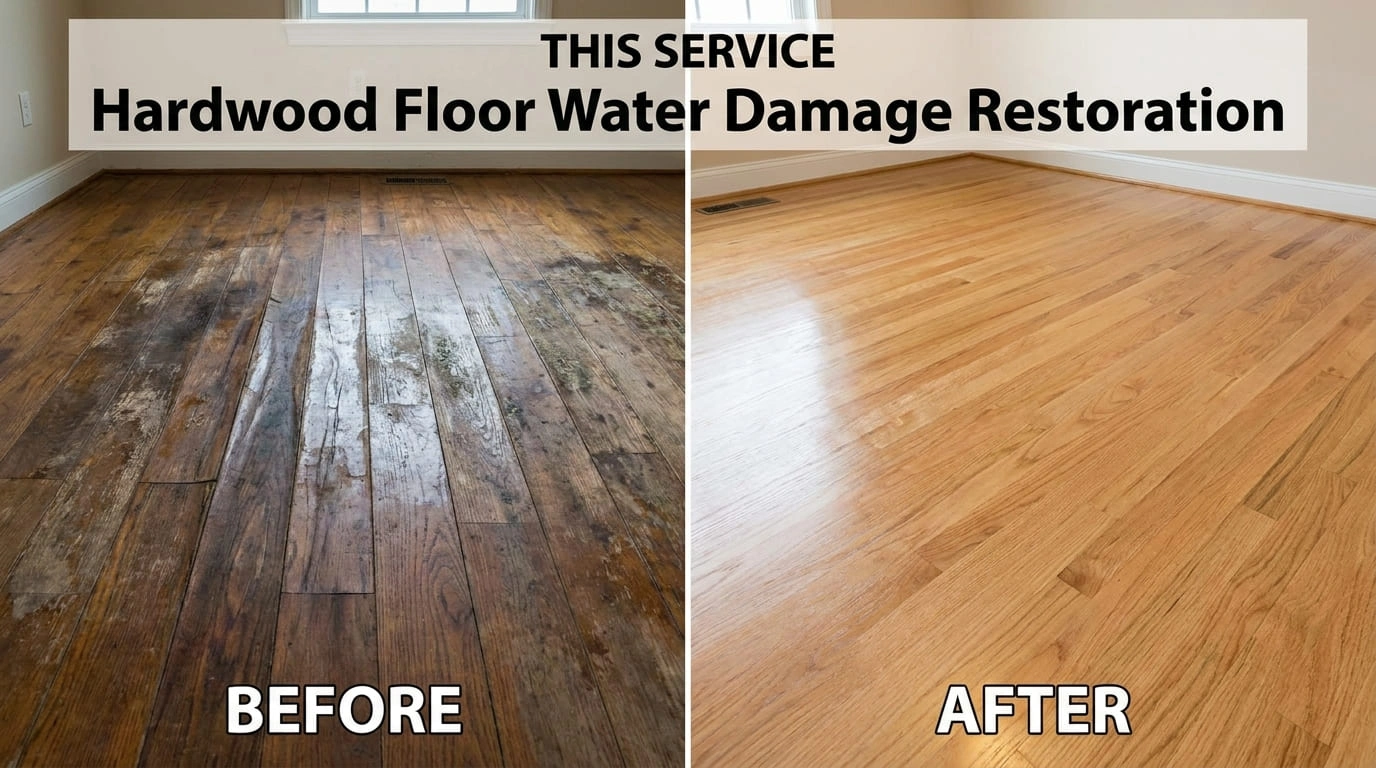
Many property owners call after seeing a floor begin to cup, lift, stain, or separate days after a leak. Others discover water beneath hardwood only after a dishwasher, refrigerator line, toilet, water heater, or burst pipe has already affected the subfloor. The goal is not to promise a perfect result before inspection—it is to stabilize the loss quickly and give the owner a reliable, evidence-based path forward.
How We Dry, Protect, Repair & Restore Water-Damaged Hardwood Floors
Material-specific methods, careful monitoring, and restoration practices designed around the real condition of your property.
Mont Long Restoration uses professional water-mitigation methods to remove water, reduce humidity, locate hidden moisture, and monitor drying progress. The exact approach depends on flooring type, water source, duration of exposure, room layout, access, subfloor construction, contamination category, and the condition of surrounding materials.
- Moisture meters and moisture mapping to identify wet hardwood, engineered wood, subflooring, walls, cabinets, and baseboards
- Water extraction for standing water, wet carpet, saturated materials, and affected areas around flooring systems
- Air movers and dehumidification to support controlled drying conditions
- Hardwood floor drying mats or negative-pressure floor drying when appropriate for the flooring assembly and access conditions
- Thermal imaging or diagnostic tools when appropriate to identify suspected moisture migration
- Containment and material protection when drying or removal work affects occupied areas
- Selective removal of materials when contamination, delamination, structural instability, or inaccessible trapped moisture makes drying in place unsuitable
- Post-mitigation verification before repair, refinishing, sealing, or replacement decisions are finalized
EPA guidance notes that moisture meters can help determine whether materials such as flooring are dry and ready for refinishing, and cautions property owners not to paint, seal, or close wet materials until they are dry on the inside.
Should You Fix a Water-Damaged Hardwood Floor or Install New Flooring?
Helping Longmont property owners choose the right path after leaks, flooding, and moisture damage.
The right answer depends on measured moisture, floor type, material stability, water category, damage extent, and the condition of the subfloor. A floor that is mildly cupped after a clean-water leak may respond differently than engineered wood with visible layer separation after prolonged saturation or a toilet overflow involving contamination.
Mont Long Restoration evaluates drying potential first when appropriate. If the material cannot be safely stabilized or restored, we explain why repair, selective removal, or full replacement may be necessary.
| Scenario | Drying or Repair May Be Recommended | Replacement May Be Recommended |
|---|---|---|
| Mild cupping after a clean-water leak addressed quickly | Yes, when flooring and subfloor remain stable and moisture responds to drying | Not usually unless damage persists after stabilization |
| Minor staining with stable flooring | Possible drying, cleaning, repair, or later refinishing evaluation | May be needed if staining is severe or boards are damaged |
| Engineered hardwood with no visible layer separation | May be evaluated for controlled drying and stability | Possible if moisture causes swelling, edge damage, or later delamination |
| Delaminated engineered flooring | Usually limited repair options | Yes, when layers separate or the flooring loses structural integrity |
| Buckling, tenting, or major board movement | Immediate assessment is required | Often more likely when boards, adhesive, or subfloor are compromised |
| Wet or swollen subfloor | Drying may be attempted when materials remain structurally sound | May be needed when swelling, deterioration, or instability persists |
| Sewage or contaminated water exposure | Material-specific evaluation is required | More likely for porous materials affected by Category 3 water |
| Repeated leaks or recurring moisture | Source repair and drying are essential | May be needed if prior water damage has weakened the flooring system |
When Replacement May Be the Safer Option
- Flooring is buckled, tented, split, unstable, or severely warped
- Engineered wood has delaminated or the veneer layer has failed
- Water has caused significant subfloor swelling, deterioration, or loss of stability
- The affected material was exposed to sewage or other contaminated water
- Moisture remains trapped despite appropriate drying efforts
- The flooring cannot be matched, repaired, refinished, or safely returned to service
- Repeated water events have caused cumulative material damage
Hardwood Floor Water Damage Restoration Costs in Longmont, Colorado
Clear cost drivers and practical estimates based on the condition of your flooring system.
The cost of hardwood floor water-damage restoration varies because no two water losses are the same. A small refrigerator-line leak affecting a few boards can require a very different response than a burst pipe, toilet overflow, flooded basement, or widespread water event affecting hardwood, drywall, cabinets, insulation, and subflooring.
Mont Long Restoration explains the work recommended for your property and provides a clear scope based on inspection findings. The goal is to address moisture correctly before expensive repair, refinishing, or reconstruction decisions are made.
Main Cost Drivers
- Water source and category, including clean water, gray water, or contaminated water
- Size of the affected area and number of rooms involved
- Flooring type: solid hardwood, engineered hardwood, laminate, vinyl, or mixed materials
- Moisture depth in flooring, underlayment, subflooring, walls, cabinetry, and adjacent rooms
- Accessibility of affected areas, including crawl spaces, basements, built-ins, and finished rooms
- Required extraction, drying equipment, monitoring visits, containment, and specialty methods
- Need for material removal, flooring repair, refinishing, reconstruction, or mold-related work
- Emergency dispatch timing versus scheduled assessment
- Documentation requirements for insurers, property managers, HOAs, or commercial owners
| Service Type | Typical Pricing Consideration |
|---|---|
| Emergency inspection and moisture assessment | Depends on urgency, loss conditions, and scope of affected materials |
| Water extraction and initial mitigation | Depends on water volume, affected rooms, material type, and equipment required |
| Hardwood and subfloor drying | Depends on floor construction, moisture readings, equipment setup, and monitoring duration |
| Selective flooring removal | Depends on affected square footage, material type, access, and disposal needs |
| Repair or reconstruction | Depends on flooring match, finish type, subfloor condition, trim, cabinetry, and surrounding materials |
| Commercial or multifamily water loss | Depends on unit count, access coordination, after-hours work, documentation, and scale |
Insurance note: Insurance may cover certain sudden and accidental water losses, but coverage depends on the cause of damage, policy language, deductibles, exclusions, endorsements, and the insurer's decision. We can provide photos, moisture records, drying documentation, and work details for your claim.
Which Longmont Properties Need Professional Hardwood Floor Drying?
If water reached wood flooring, a subfloor, walls, or nearby finishes, an inspection can help determine the right next step.
Professional evaluation is especially important when the water source is unknown, moisture may have entered beneath the flooring, the floor is beginning to cup or buckle, or the event involved a burst pipe, toilet overflow, floodwater, or other contaminated water. You may not need a full replacement, but waiting until visible damage becomes severe can reduce available restoration options.
- Properties with hardwood, engineered wood, laminate, or wood-look flooring affected by a leak or water intrusion
- Homes with water under flooring after a dishwasher, refrigerator line, washing machine, toilet, or water-heater leak
- Buildings affected by burst pipes, frozen pipes, roof leaks, stormwater, basement seepage, or sump-pump failure
- Properties where boards are cupping, crowning, separating, buckling, staining, or feeling loose
- Homes and businesses with musty odors, moisture around baseboards, or suspicion of wet subflooring
- Properties affected by sewage backup, contaminated water, or flooding that may require specialized cleanup and material removal
- HOAs, apartment communities, and commercial properties managing water losses across multiple units or rooms
Hardwood Floor Water Damage Restoration for Commercial & Multi-Unit Properties
Protect flooring, operations, tenants, and property value across your Longmont portfolio.
Commercial and multifamily water losses can move quickly. A leak above a retail suite, burst pipe in a hallway, appliance failure in a unit, roof intrusion, or plumbing overflow can affect flooring, ceilings, wall cavities, storage areas, tenant spaces, and neighboring units. Property managers need timely communication, a documented scope, coordination with occupants, and a practical plan for mitigation and reconstruction.
Mont Long Restoration supports commercial properties throughout Longmont, Boulder County, and the broader Front Range. We coordinate with owners, facility managers, HOAs, maintenance teams, and insurance representatives to assess affected materials, manage drying, document conditions, and plan repairs with as little operational disruption as practical.
| Commercial Service | Description |
|---|---|
| Emergency Water Extraction | Remove standing water and stabilize affected commercial areas |
| Hardwood and Floor-System Drying | Assess flooring, subflooring, transitions, walls, and adjacent materials for moisture |
| Moisture Mapping | Document affected areas and help guide mitigation and repair decisions |
| Selective Removal | Remove materials when contamination, instability, or irreparable damage requires it |
| Reconstruction Planning | Coordinate repair scope for flooring, baseboards, drywall, trim, cabinetry, and related finishes |
| Documentation Support | Provide photos, readings, and work records for owners, insurers, and property files |
Commercial Property Types We Serve
- Office buildings, coworking spaces, professional suites, and business campuses
- Restaurants, cafes, breweries, tasting rooms, hospitality spaces, and retail locations
- Apartment communities, condos, HOAs, student housing, and mixed-use properties
- Schools, churches, recreation facilities, medical offices, clinics, and community centers
- Warehouses, industrial properties, production facilities, and logistics spaces
- Historic commercial spaces and properties with specialty flooring or finish requirements
Why Commercial Owners Choose Us
- One restoration partner for emergency water removal, drying, documentation, and reconstruction planning
- Capacity to coordinate multi-room, multi-unit, and complex commercial losses
- Clear communication with managers, tenants, vendors, and insurance contacts
- 24/7 availability for urgent property-damage events
| Commercial Service Situation | Typical Considerations |
|---|---|
| Multi-unit water event | Unit access, tenant communication, moisture spread, scheduling, and documentation |
| Retail or restaurant floor damage | Customer safety, slip risks, equipment protection, odor control, and reopening priorities |
| Office or professional building | Records protection, after-hours work, wall/floor moisture, and business continuity |
| Large campus or portfolio | Phased mitigation, building-by-building scope, centralized communication, and repair planning |
| Industrial or warehouse property | Safety procedures, equipment access, specialty materials, and operational coordination |
Benefits of Hiring Hardwood Floor Water-Damage Pros in Longmont
Protect materials, reduce uncertainty, and make repair decisions using measured conditions rather than guesswork.
Water-damaged hardwood can look less serious than it is. A floor may feel dry on top while moisture remains beneath the boards or in the subfloor. Professional restoration helps identify the true extent of the loss before the property owner spends money on sanding, refinishing, flooring replacement, or cosmetic repairs that may be premature.
Hidden Moisture Detection
Identify hidden moisture that household fans or surface drying may not address
Reduce Material Damage
Reduce the chance of ongoing cupping, crowning, warping, gaps, buckling, and material deterioration
Protect Adjacent Materials
Protect subflooring, baseboards, walls, cabinets, and nearby finishes from avoidable water damage
Insurance Documentation
Receive moisture readings, photos, and project documentation for property records and insurance claims
Clear Options
Understand the difference between drying, repair, refinishing, selective removal, and reconstruction
Safe Contaminated Water Response
Address contaminated water events with appropriate safety and material-handling precautions
Informed Decisions
Make an informed decision about whether the floor may be saved, repaired, or replaced
Minimal Disruption
Reduce disruption through organized equipment placement, monitoring, communication, and follow-up planning
Why DIY Drying or Delayed Water Removal Can Create Bigger Problems
Critical reasons to use qualified restoration professionals when hardwood floors, subfloors, or contaminated water are involved.
A small spill wiped up immediately is different from a leak that has traveled beneath finished flooring. When water reaches subflooring, wall cavities, electrical areas, insulation, cabinetry, or contaminated surfaces, household fans and a dehumidifier may not be enough to determine whether the building materials are actually dry and stable.
Do not enter standing water near electrical outlets, appliances, extension cords, or damaged electrical equipment. Do not assume toilet, sewer, flood, or unknown water is safe to handle. Do not sand, seal, paint, or reinstall flooring until moisture conditions are evaluated and affected materials are dry enough for the next phase of work.
Critical Safety Warnings
- Surface-dry flooring can still conceal moisture beneath boards and inside the subfloor
- Improper or excessive heat can damage wood flooring, finishes, adhesives, and surrounding materials
- Premature sanding or refinishing can worsen distortion and lock in a bad repair decision
- Sewage, floodwater, and unknown water sources may contain contaminants that require professional cleanup measures
- Wet flooring can create trip hazards, unstable boards, slippery surfaces, and damage to nearby electrical systems
- Delayed drying can increase the scope of material damage and microbial-growth risk
- Untrained removal can disturb contaminated materials or damage flooring that might otherwise have been assessed for preservation
EPA guidance advises caution with wet wooden surfaces and recommends prompt moisture removal, controlled drying, and careful use of heat around hardwood floors.
Answers to Common Hardwood Floor Water-Damage Questions in Longmont
Quick, practical answers for homeowners, HOAs, property managers, and commercial property owners.
Can hardwood floors be saved after water damage?
Sometimes. Solid hardwood may be a candidate for controlled drying and later restoration when water is addressed quickly, the floor remains stable, the subfloor is sound, and the water was not contaminated. Severe buckling, prolonged saturation, damaged subflooring, black staining, mold concerns, or delaminated engineered wood can make replacement more likely. Moisture readings and material condition—not appearance alone—should guide the decision.
How fast should a wet hardwood floor be dried?
The sooner the water source is stopped and the affected materials are assessed, the better. EPA guidance emphasizes rapid moisture control and notes that wet materials may require professional evaluation when wet for more than 24–48 hours or when mold is suspected.
Will cupped hardwood floors flatten after drying?
Some cupping may lessen as flooring and subfloor moisture return toward appropriate levels, but results vary. Do not rush into sanding or replacement based only on the first visual change. A professional should evaluate the water source, flooring type, moisture readings, and stability before recommending the next step.
What is the difference between cupping, crowning, and buckling?
Cupping occurs when the edges of a board rise higher than its center. Crowning occurs when the center rises higher than the edges. Buckling or tenting occurs when boards lift or push upward, often because of severe moisture expansion, subfloor movement, or adhesive failure. Each symptom needs a moisture and material assessment.
Can engineered hardwood be repaired after water damage?
It depends. Engineered wood can sometimes be dried and stabilized if the damage is limited and the layers remain intact. If the material swells, separates, delaminates, loses its veneer, or becomes unstable, replacement may be necessary. Engineered floors often have more limited refinishing options than solid hardwood.
How do you know if water got under hardwood flooring?
Common signs include cupping, crowning, buckling, board separation, dark staining, water at seams, musty odors, soft spots, loose boards, damp baseboards, or water damage in adjacent rooms. Moisture meters and professional moisture mapping help identify conditions that cannot be confirmed by touch alone.
Can a dishwasher or refrigerator leak damage hardwood flooring?
Yes. A slow dishwasher, ice-maker, refrigerator water-line, or dishwasher-supply leak can travel beneath cabinets and flooring before visible signs appear. The longer water remains trapped under the floor, the more likely it is to affect planks, underlayment, subflooring, baseboards, and nearby cabinetry. Learn more about appliance leak water damage cleanup.
What should I do if a toilet overflows onto hardwood?
Stop the water source if it is safe, keep people and pets away from the affected area, avoid spreading water to clean rooms, and contact a qualified cleanup professional. Toilet overflow water can be contaminated, especially when sewage or drain backup is involved. Porous materials may require a different response than clean-water drying. See our toilet overflow cleanup services.
Can mold grow under water-damaged hardwood flooring?
Moisture beneath flooring can create conditions that support microbial growth, especially when materials remain wet or damp. Visible mold, musty odors, persistent moisture, contaminated water, or a wet floor assembly that cannot be fully inspected should be evaluated promptly. EPA notes that mold can grow on wood and other materials that remain wet, and that rapid drying is important.
Does homeowners insurance cover water-damaged hardwood floors?
Coverage depends on your policy, the cause of loss, deductibles, exclusions, endorsements, and the insurer's decision. Sudden accidental discharge from a plumbing failure may be treated differently from long-term leakage, maintenance problems, groundwater, floodwater, sewer backup, or sump-pump failure. Mont Long Restoration can provide documentation, but your insurer determines coverage.
Do I need to replace hardwood after a burst pipe?
Not always. The need for replacement depends on how long the floor was wet, whether the water was clean or contaminated, the flooring type, the condition of the subfloor, the amount of cupping or buckling, and how the materials respond to controlled drying. A burst-pipe event should be inspected promptly because water can travel beyond the visible area.
You're Supported From Emergency Drying Through Repair Planning
Local response, moisture-based recommendations, clear documentation, and practical support when your property needs it most.
Mont Long Restoration approaches every hardwood-floor water-damage project with a focus on timely mitigation, measured conditions, material protection, and honest communication. We stand behind the scope of work we perform and explain what our findings mean for your flooring, subflooring, and related building materials.
We do not make blanket promises that every hardwood floor can be restored. Instead, we commit to providing a professional assessment, appropriate drying recommendations, documented conditions, and clear options for restoration, repair, selective removal, or reconstruction.
Reinforcing statement: If materials we repair or replace are covered by a documented workmanship or manufacturer warranty, we will explain the applicable terms for that project. Warranty eligibility, duration, and coverage depend on the specific material, installation method, repair scope, and written agreement.
1205 S Main St
Longmont, CO 80501
United States
Credentials That Support Hardwood Floor Water-Damage Restoration
Training and qualifications that matter when moisture affects flooring, subfloors, walls, and indoor environments.
Hardwood-floor water-damage restoration requires more than cosmetic flooring knowledge. Technicians need to understand water categories, moisture movement, material response, drying principles, contamination concerns, documentation, and how water can migrate through a building assembly.
Mont Long Restoration lists restoration and construction credentials intended to support water-damage mitigation, structural drying, microbial-risk response, repair planning, and reconstruction work.
WRT
Water Damage Restoration Technician
ASD
Applied Structural Drying
AMRT
Applied Microbial Remediation Technician
CR
Certified Restorer
Licensed
Local Municipal Class C / General Contractor License
Trained
Ongoing restoration, safety, drying, and equipment training for field personnel
Emergency Hardwood Floor Water-Damage Restoration in Longmont
Rapid response when water reaches hardwood, engineered wood, subflooring, walls, or other finished materials.
Water losses rarely happen at convenient times. A refrigerator line can leak overnight, a pipe can burst during freezing weather, a toilet can overflow when guests are present, a water heater can fail before work, or stormwater can enter a lower level during a heavy rain event. Mont Long Restoration provides around-the-clock emergency support across Longmont, Boulder County, and the surrounding Front Range.
Our Emergency Process
- Immediate phone consultation to discuss the water source, affected materials, safety concerns, and response priority
- Dispatch planning for water extraction, moisture inspection, and drying equipment as the loss conditions require
- On-site assessment of hardwood, subflooring, baseboards, walls, cabinetry, ceilings, crawl spaces, or basement materials
- Moisture mapping, water extraction, and controlled drying recommendations
- Documentation for property records, insurance claims, HOAs, facility managers, or commercial ownership teams
- Repair and reconstruction planning when drying alone cannot restore the affected flooring system
Active water on hardwood floors or water coming through seams
Cupping, crowning, buckling, lifting, staining, or soft spots after a leak
Toilet overflow, sewage backup, or contaminated-water exposure
Basement seepage, sump-pump failure, roof leak, ice dam, stormwater, or flood-related intrusion
Water damage affecting multiple rooms, neighboring units, commercial suites, or common areas
Insurance Claim Assistance for Hardwood Floor Water-Damage Incidents
Documentation that helps you and your insurer understand the loss, drying work, and repair needs.
Water-damage claims can feel overwhelming, especially when a leak affects valuable hardwood, engineered flooring, cabinets, drywall, furniture, or multiple rooms. Mont Long Restoration can document the conditions we observe and the water-mitigation work performed so you have organized information for your records and insurance claim.
We can provide project documentation, but we do not determine whether a loss is covered. Your insurer decides coverage based on your policy, the cause of damage, deductibles, exclusions, endorsements, and claim investigation.
Insurance Documentation We Provide
- Initial inspection notes and photos of visible damage and affected areas
- Moisture readings and moisture-mapping documentation where applicable
- Drying-equipment records and monitoring documentation
- Scope of water extraction, drying, material protection, removal, and mitigation work
- Invoices and estimates for approved work or recommended repair phases
- Written descriptions of observed water source, affected materials, and corrective actions taken
- Documentation to share with an adjuster, property manager, HOA, or insurance representative
Policy note: Coverage varies by policy. Sudden and accidental plumbing discharge may be handled differently from long-term leakage, floodwater, groundwater, sewer backup, sump-pump overflow, maintenance-related issues, or mold-related damage. Review your policy and speak with your insurance carrier or agent about your specific protections.
Warranty Coverage for Hardwood Floor Restoration Work
Know how workmanship, installed materials, and manufacturer protections may apply after service.
Water mitigation, structural drying, flooring repair, refinishing, reconstruction, and replacement are different types of work with different materials and warranty considerations. Mont Long Restoration explains any applicable workmanship or material warranty terms in writing for the specific scope performed.
Drying results can be affected by pre-existing damage, hidden moisture, flooring age, product condition, water category, structural conditions, manufacturer requirements, and whether materials can be preserved. Because of these variables, no warranty statement should be read as a guarantee that every water-damaged floor will return to its prior appearance.
| Coverage Type | Description |
|---|---|
| Workmanship | Written warranty terms may apply to eligible repair, installation, or reconstruction labor |
| Parts and New Materials | Manufacturer warranties may apply to eligible flooring, components, equipment, or materials installed |
| Drying Documentation | Moisture records and project files can support future repair, insurance, or maintenance discussions |
| Repair Scope | Warranty terms depend on the exact repair, material, installation method, and written agreement |
| Exclusions | Pre-existing damage, undisclosed moisture, new water events, product defects, maintenance issues, and conditions outside the completed scope may be excluded |
Important notes: Warranty details vary by project, product, manufacturer, and written scope. Mont Long Restoration will outline applicable terms before eligible repair or replacement work begins and explain the maintenance steps needed to protect new materials.
10 Fully Equipped Vehicles Serving Longmont & the Front Range
Tools, drying equipment, moisture-detection resources, and trained professionals ready for urgent water-damage response.
Mont Long Restoration operates with 10 equipped service vans to support water extraction, structural drying, moisture assessment, material protection, and restoration planning across Longmont and nearby communities. The equipment used at your property depends on the water source, materials affected, access conditions, and drying goals.
Moisture meters and moisture-mapping tools for hardwood, subflooring, drywall, and related materials
Water-extraction equipment for standing water and wet material conditions
Air movers and dehumidification equipment for controlled drying
Diagnostic tools and restoration supplies for evaluating hidden moisture and protecting affected areas
Drying equipment selected for floor assemblies, wall cavities, basements, crawl spaces, ceilings, and other affected structures
GPS-dispatched service vehicles for response coordination across Longmont, Boulder County, and surrounding Front Range communities
Stocked protective materials and common restoration supplies to begin stabilization work promptly
Flexible Payment Options for Hardwood Floor Restoration & Reconstruction Projects
Helping property owners plan for larger repair scopes after drying, mitigation, and insurance review.
Emergency mitigation often needs to begin quickly to protect the property. Once drying is complete, some owners may face additional costs for flooring repair, refinishing, selective replacement, reconstruction, cabinets, drywall, trim, or related building work.
Mont Long Restoration can discuss available payment or financing options for qualifying larger restoration or reconstruction projects, subject to applicable terms and approval. Financing availability, rates, fees, eligibility, and repayment terms depend on the provider and the specific program offered at the time of application.
- Options may be available for larger flooring-repair or reconstruction projects
- Potential support for multi-room, multifamily, and commercial restoration scopes
- Clear discussion of project phases, insurance documentation, and out-of-pocket responsibilities
- Written explanation of financing terms, timelines, and applicable conditions before an agreement is finalized
- Coordination with broader property-repair planning after emergency mitigation is complete
Awards and Community Recognition for Mont Long Restoration
Recognition associated with long-term service, emergency response, and property-restoration support in Longmont and Boulder County.
Mont Long Restoration lists local and industry recognition intended to reflect its commitment to emergency water-damage response, restoration service, property care, and customer support. Awards and recognition should be reviewed alongside the scope of service, training, documentation practices, and the specific needs of your property.
Angi Super Service Award
Boulder County Gold Award
Longmont Area Chamber of Commerce Business of the Year
Nextdoor Neighborhood Fave
The Best of Longmont Award
Senior & Military Discounts on Hardwood Floor Water-Damage Services
Supporting seniors, active-duty military members, veterans, and qualifying households after unexpected water damage.
Unexpected water damage can place immediate pressure on a household budget. Mont Long Restoration offers special discounts for qualifying senior, military, and veteran customers on eligible water-damage restoration and related service work.
Discount availability, service eligibility, scope limitations, combination rules, and proof requirements may apply. Ask the team about the current offer before authorizing work.
Senior Discount
Senior-citizen discount on qualifying water-damage restoration services
Military & Veteran
Military and veteran discounts for eligible emergency mitigation or restoration work
Seasonal Promotions
Seasonal promotions and service offers may be available for qualifying property-repair needs
Clear Explanation
Clear explanation of any applicable discount before work begins
Restrictions Apply
Discount programs may not apply to all emergency, insurance, reconstruction, or third-party billed services
Hardwood Floor Water-Damage Restoration Hours in Longmont, Colorado
24/7 availability for water extraction, moisture assessment, structural drying, and emergency restoration support.
Hardwood-floor water damage does not wait for standard business hours. A burst pipe, washing-machine leak, water-heater failure, refrigerator-line leak, toilet overflow, or storm-related water event can happen overnight, on a weekend, or during a holiday. Mont Long Restoration is available 24 hours a day, seven days a week, for emergency water-damage response across Longmont and the Front Range.
| Day | Hours |
|---|---|
| Monday | 00:00–23:59 |
| Tuesday | 00:00–23:59 |
| Wednesday | 00:00–23:59 |
| Thursday | 00:00–23:59 |
| Friday | 00:00–23:59 |
| Saturday | 00:00–23:59 |
| Sunday | 00:00–23:59 |
Phone: (720) 438-7100
Email: montlongrestoration@gmail.com
Website: waterdamagerestorationlongmontco.com
Mont Long Restoration vs. Typical Hardwood Floor Water-Damage Providers in Longmont
What to look for when choosing a company to dry, assess, repair, or restore water-damaged flooring.
Not every company that offers general cleaning, plumbing, flooring, or construction work provides the same level of water-mitigation assessment. When hardwood is wet, the key question is whether the provider can identify the water source, assess moisture below the visible surface, use appropriate drying methods, document conditions, and explain repair options without making unsupported promises.
| Feature | Mont Long Restoration | What to Ask Any Provider |
|---|---|---|
| Local service focus | Serves Longmont, Boulder County, and surrounding Front Range communities | Do you genuinely serve my area and dispatch for emergency water losses? |
| Emergency availability | 24/7 emergency response listed | Are you available now, overnight, weekends, and holidays? |
| Moisture assessment | Moisture mapping and structural drying services listed | Will you test beneath flooring and in the subfloor, not just inspect the surface? |
| Service scope | Extraction, drying, leak-related cleanup, mitigation, repair, and reconstruction services listed | Can you manage both the emergency drying phase and the next repair phase? |
| Flooring decision support | Restore-versus-replace recommendations based on material condition | Will you explain options before recommending full removal? |
| Documentation | Photos, moisture records, and insurance-support documentation available | Will I receive clear documentation for my property records or insurer? |
| Commercial capability | Commercial water-damage restoration service listed | Can you coordinate with property managers, HOAs, tenants, and facilities teams? |
| Communication | Direct phone access and project-scope explanations | Who will update me, and what happens after the equipment is removed? |
Contact Mont Long Restoration for Hardwood Floor Water-Damage Restoration in Longmont, Colorado
Speak with a water-damage restoration professional about wet, cupped, warped, buckling, stained, or unstable hardwood flooring today.
If you have water under hardwood flooring, active water on the floor, cupping after a leak, black stains, a refrigerator-line problem, a dishwasher leak, a burst pipe, a toilet overflow, basement seepage, or stormwater entering your property, Mont Long Restoration is ready to help. We will discuss the source of water, the affected areas, immediate safety concerns, and the best next step for moisture assessment, extraction, drying, documentation, repair, or reconstruction planning.
Do not wait for visible damage to become severe. Water can migrate beneath flooring and into subfloors, walls, baseboards, cabinetry, and nearby rooms even when the top surface appears dry.
Contact Mont Long Restoration
(720) 438-7100
1205 S Main St
Longmont, CO 80501
24/7 Emergency Service Available
Protect your property with prompt, documented hardwood floor water damage restoration Longmont CO from Mont Long Restoration.