Emergency Toilet Overflow Cleanup Longmont, CO — Fast, Licensed & Available 24/7
Front Range toilet overflow cleanup to protect your property, limit contamination concerns, and reduce water-damage disruption.
When you need toilet overflow cleanup Longmont CO property owners can count on, the priority is simple: stop the water, prevent it from spreading, and address any contamination before flooring, drywall, cabinets, or nearby rooms are affected. Mont Long Restoration provides emergency toilet overflow cleanup, water extraction, sanitation, structural drying, and water-damage repair support for homes, apartments, HOAs, commercial buildings, and property managers across Longmont and the Front Range.
Water still rising? Turn the toilet shutoff valve clockwise, do not flush again, and avoid running additional water until the cause is identified. If toilet water has reached carpet, baseboards, drywall, a hallway, a lower-level room, or stored belongings, prompt cleanup and drying can help limit the damage.
With a supplied team of 40 skilled professionals, 10 equipped service vans, and 24/7 emergency availability, Mont Long Restoration responds to bathroom floods, overflowing toilets, sewage backups, toilet water damage, and related restoration needs throughout Longmont.
- Emergency toilet overflow water removal for homes and businesses
- Cleanup support for toilet backups, bathroom flooding, and sewage-related water damage
- Moisture inspection, sanitation, drying, odor-control support, and repair planning
- Available 24/7 for urgent toilet overflow cleanup across Longmont and nearby Front Range communities
Call +1 (720) 438-7100 for emergency toilet overflow cleanup, water extraction, and structural drying in Longmont.
Request Emergency Cleanup
Fill out the form and we'll contact you immediately!
Toilet Overflow Cleanup Backed by 16+ Years of Experience
Partner with a Local Emergency Restoration Team Focused on Safe Cleanup, Clear Communication, and Practical Recovery Steps
A toilet overflow is not just a mess to mop up. Water can move underneath flooring, behind baseboards, beneath vanities, into wall cavities, or into adjoining rooms before the visible surface appears dry. When wastewater or toilet-bowl water is involved, the cleanup decision also includes sanitation and material assessment—not just drying.
Mont Long Restoration is positioned to help Longmont property owners move from the emergency stage to a documented cleanup and recovery plan. We assess the affected area, remove standing water where appropriate, identify moisture migration, explain the visible and hidden impacts, and help determine what should be cleaned, dried, repaired, or replaced.
- 16+ years serving Longmont, Boulder County, and Front Range communities
- Emergency water extraction, drying, sanitation, and reconstruction support
- 24/7 availability for toilet overflows, bathroom floods, and sewage backup cleanup
- Residential, commercial, multi-unit, HOA, rental, and property-management support
- Clear scope-of-work communication and damage documentation support
Toilet Overflow Cleanup Near Longmont Neighborhoods, Landmarks & Business Areas
Serving Properties Throughout Downtown Longmont, Prospect New Town, Historic Eastside, and Surrounding Front Range Communities
Whether a toilet backup affects a historic home near Downtown Longmont, a newer property in Prospect New Town, a rental near Main Street, or a commercial restroom near major retail and business corridors, the immediate goal is the same: stop the source, prevent further spread, and address moisture or wastewater safely.
Mont Long Restoration provides emergency bathroom flood cleanup Longmont property owners can request for affected bathrooms, hallways, bedrooms, lower-level spaces, utility rooms, basements, crawl spaces, offices, apartment units, and commercial facilities.
Longmont Neighborhoods & Communities
Historic Eastside, Westside Historic District, Prospect New Town, Fox Hill, Meadowview, Southmoor Park, Rainbow Ridge, Rainbow Ridge Estates, Quail Crossing, Quail Ridge, Champion Greens, Creekside, Clover Creek, The Greens, Villas at Ute Creek, Prairie Village, Pleasant Valley, Reynolds Farm, Sundial, and Wolf Creek
Nearby Front Range Communities
Boulder, Broomfield, Erie, Firestone, Frederick, Lafayette, Louisville, Lyons, Loveland, Niwot, Superior, and Westminster
Local Places & Corridors
Downtown Longmont, Main Street Historic District, Prospect New Town, Longmont Museum & Cultural Center, McIntosh Lake, Union Reservoir, Golden Ponds Park & Nature Area, St. Vrain Greenway, St. Vrain Creek corridors, Left Hand Brewing Company area, and Longmont commercial and industrial corridors
Specialized Toilet Overflow Cleanup for Contaminated Water, Sewage Backups & Hidden Moisture
Front Range Restoration Specialists Focused on Extraction, Sanitation, Drying, and Damage Recovery
A toilet overflow can be caused by a simple bowl obstruction, a failed toilet component, a branch-drain clog, a main sewer-line issue, or wastewater backing up through a low-level fixture. The visible water is only part of the concern. Water may travel below vinyl, tile, laminate, hardwood flooring, baseboards, bathroom cabinets, carpet, padding, or drywall.
Mont Long Restoration focuses on the restoration side of the emergency: water removal, affected-material assessment, cleaning and sanitation, structural drying, odor-control support, and reconstruction planning when damage requires it. If the underlying cause requires drain clearing, plumbing repair, sewer camera inspection, or service-line work, the source should be diagnosed and corrected so the area does not flood again.
- Emergency technicians equipped for water extraction and structural drying
- Moisture-focused inspection around flooring, baseboards, walls, cabinets, and adjacent rooms
- Practical support for homes, rentals, HOAs, offices, retail spaces, and multi-unit properties
- Clear documentation of affected areas, conditions, and recommended recovery steps
- Cleanup coordination that recognizes the difference between a toilet-only clog and a larger sewer backup
What Happens When a Toilet Overflows in Longmont?
Common Toilet-Backup Problems Longmont Property Owners Face and Why Fast Action Matters
A toilet overflow can occur when water cannot move through the toilet trap, branch drain, building drain, private sewer service line, or public sewer main. It can also happen when a toilet fill valve fails and continues sending water into the bowl. The cause matters because it affects whether the water may be relatively clean, toilet-bowl contaminated, or potentially contaminated wastewater from a sewer backup.
A small supply-water overflow may be limited to a bathroom floor if stopped quickly. A bowl backup or multi-fixture sewer backup can be more serious because water may contain waste and may move beyond the bathroom into absorbent building materials. Waiting can increase the chance of damaged flooring, swollen baseboards, odor, hidden moisture, and interruptions to normal use of the property.
Common Risks Include
- Water spreading into hallways, bedrooms, closets, basements, crawl spaces, or adjoining units
- Contamination concerns when water has come from the toilet bowl, a drain backup, or a sewer line
- Moisture collecting beneath flooring, inside cabinetry, behind baseboards, and in wall cavities
- Persistent odors after visible water has been removed
- Disruption for residents, tenants, customers, employees, and property managers
- Recurring toilet backups if the underlying plumbing or sewer-line cause is not corrected
If you notice slow drains, gurgling, water coming up in a bathtub or shower, sewage odor, or multiple plumbing fixtures backing up, stop using water throughout the property until the situation is evaluated. The City of Longmont notes that sluggish drains and sewer backups can stem from either a private service-line blockage or a main sewer-line blockage.
Prevent Toilet Backups with Routine Drain, Sewer & Moisture-Awareness Maintenance
What Longmont Homes and Commercial Properties Can Do Each Year to Reduce Repeat Overflows
Toilet overflow cleanup is an emergency restoration service, not an annual certification program. However, recurring toilet backups are often connected to plumbing or sewer conditions that benefit from regular attention. Property owners who experience repeated clogs, gurgling, slow drains, sewage odor, or backup during laundry or shower use should consider plumbing evaluation, drain cleaning, and camera inspection through an appropriately qualified plumbing provider.
For property owners and managers, prevention may include keeping records of recurring incidents, identifying the location of the sewer cleanout, monitoring lower-level fixtures, and addressing drain symptoms before a full backup affects the property.
| Maintenance Task | What It Involves | Typical Timing | Prevention Benefit |
|---|---|---|---|
| Visual bathroom inspection | Look for toilet-base leaks, loose supply lines, staining, or recurring moisture | Monthly or as needed | Helps detect small leaks before a larger loss |
| Drain performance check | Note slow drains, gurgling, repeated plunging, or backup after laundry | Ongoing | Identifies possible branch-drain or sewer concerns |
| Sewer cleanout awareness | Locate or have a plumber identify the private cleanout | One-time review | Helps speed professional diagnosis |
| Camera inspection | Professional review of recurring sewer or service-line problems | As recommended | Can identify roots, offsets, breaks, or buildup |
| Drain-safe habits | Keep wipes, hygiene products, paper towels, grease, and foreign objects out of drains | Every day | Reduces avoidable clogs and sewer problems |
| Damage documentation | Record previous backups, repairs, and restoration work | After each incident | Supports maintenance planning and insurance communication |
Seasonal Prevention Considerations
- Schedule plumbing or drain evaluation before seasonal occupancy changes, large gatherings, or major property turnovers.
- Watch for freeze-related plumbing stress during colder Front Range weather and for increased drainage use during busy household periods.
- Address recurring slow drains before holiday guests, commercial events, or tenant move-ins.
- Keep access clear around toilets, drains, cleanouts, utility rooms, and lower-level bathrooms.
The City of Longmont advises residents not to flush wipes, paper towels, diapers, sanitary items, rags, cotton swabs, dental floss, cat litter, or other non-toilet-paper materials. It also advises disposing of grease and meat drippings in the trash rather than down drains.
Who Needs Toilet Overflow Cleanup in Longmont?
From Single-Family Homes to Large Commercial and Multi-Unit Properties Across the Front Range
Any property can experience a toilet overflow, but the response needs may differ depending on where water traveled, whether the water was contaminated, how quickly it was stopped, and whether other fixtures are affected. Mont Long Restoration supports property owners, occupants, managers, and businesses dealing with toilet water damage, bathroom flooding, and sewage-related cleanup needs.
We Assist with Cleanup Needs For
For commercial properties, a restroom backup can create operational disruption, sanitation concerns, tenant complaints, customer access problems, and potential damage to adjacent suites. Fast toilet water extraction and drying can help support a more organized recovery plan.
How Longmont Weather, Property Age & Daily Use Can Contribute to Toilet Backups
Freeze-Thaw Conditions, Established Infrastructure, Seasonal Changes, and Heavy Use Can Reveal Hidden Plumbing Weaknesses
Longmont properties range from historic homes and established neighborhoods to newer developments, multi-unit communities, retail centers, and commercial facilities. Plumbing and drain systems can be affected by daily use, aging components, shifting soils, root intrusion, grease buildup, improper flushing habits, and cold-weather stress.
While weather does not cause every toilet overflow, Front Range temperature swings can contribute to frozen or damaged pipes, and seasonal changes may expose weaknesses in plumbing systems. Properties with basements, crawl spaces, lower-level bathrooms, floor drains, or older sewer service lines should take recurring drain symptoms seriously.
Winter
Freezing temperatures can affect exposed pipes, vulnerable supply lines, and poorly protected plumbing components.
Spring
Increased moisture, snowmelt conditions, and seasonal property activity may reveal drainage concerns or moisture issues.
Summer
High household occupancy, visitors, irrigation activity, and commercial traffic can increase plumbing demand.
Fall
Property preparation, tenant turnover, and colder-weather readiness create an opportunity to address slow drains and known sewer issues.
If toilets gurgle, drains empty slowly, water rises in a shower, or a lower-level fixture backs up when another appliance drains, do not assume it is only a toilet clog. A plumbing professional may need to evaluate the drain or sewer system while a restoration team addresses any water damage.
Common Toilet Overflow, Toilet Backup & Sewer Backup Types in Longmont
Understanding the Type of Overflow Helps Determine the Cleanup, Sanitation, Drying, and Repair Response
Not every toilet overflow has the same cause or cleanup requirement. A relatively clean tank or supply-line overflow is different from a toilet-bowl backup, and both are different from wastewater entering through a toilet, shower, floor drain, or lower-level fixture because of a main sewer-line issue.
| Overflow or Backup Type | Typical Cause | Contamination Concern | Recommended Response |
|---|---|---|---|
| Supply or fill overflow | Failed fill valve, float issue, plumbing component failure | May begin as relatively clean water; becomes less clean after contacting the bowl and building surfaces | Stop water, extract promptly, inspect flooring and adjacent materials |
| Toilet-bowl backup | Toilet trap clog, excess paper, foreign object, branch-drain issue | May contain toilet-bowl water and waste | Avoid direct contact, stop further flushing, arrange source correction and cleanup |
| Repeated toilet overflow | Recurring clog, inadequate clearing, damaged pipe, venting or drain issue | Varies by source | Arrange plumbing diagnosis; assess water-damaged materials |
| Multi-fixture backup | Main drain, sewer service line, or municipal main blockage | Potentially contaminated wastewater | Stop all water use, seek plumbing/utility evaluation and professional cleanup |
| Basement or lower-level backup | Sewer-line obstruction, low-point drain backup, floor-drain issue | Often potentially contaminated wastewater | Isolate area, avoid contact, extract and sanitize affected materials |
| Toilet-base leak | Failed wax ring, loose toilet, cracked base, flange issue, condensation, or hidden water source | Depends on source | Determine the source, dry hidden moisture, inspect flooring and subfloor |
| Water from shower or tub after flushing | Downstream drain or sewer blockage | Possible wastewater backup | Stop using water and arrange prompt diagnosis |
Water coming up through multiple fixtures is not a "wait and see" symptom. The City of Longmont states that sewer backups can arise from a blockage in either a service line or a main sewer line, and it can investigate to identify where the problem may be occurring.
Our 6-Step Toilet Overflow Cleanup Process
What to expect when Mont Long Restoration arrives at your Longmont property.
Emergency Call & Initial Assessment
Call +1 (720) 438-7100 and explain what happened: whether water is still rising, whether the toilet was flushed, whether other drains are involved, how far water spread, and whether the issue may involve sewage or a sewer backup.
On-Site Inspection & Safety Setup
The affected area is evaluated for visible water, moisture migration, contamination concerns, impacted materials, and conditions that may require containment or restricted access.
Water Extraction & Source-Area Stabilization
Standing water is removed where appropriate, and the affected bathroom or surrounding space is stabilized to reduce additional spread. The plumbing source must be stopped or corrected before full restoration can proceed.
Cleaning, Sanitation & Affected-Material Assessment
Cleanup methods are selected based on the source of water, the materials affected, and whether wastewater contamination may be involved. Porous materials, flooring edges, baseboards, wall cavities, or carpet padding may require further evaluation.
Structural Drying & Moisture Monitoring
Drying equipment and moisture assessment methods may be used to address moisture below flooring, behind walls, beneath cabinets, in carpet, or in adjoining areas.
Documentation, Repair Planning & Follow-Up
Mont Long Restoration can provide documentation of the affected area and recommended next steps. When repairs or reconstruction are needed, the plan may include drywall, trim, flooring, cabinetry, painting, or other water-damage restoration work.
What's Included in Our Toilet Overflow Cleanup Service
Clear deliverables for Longmont homeowners, tenants, property managers, and businesses.
Every toilet overflow is different. The proper scope depends on whether the water came from a clean supply source, toilet bowl, branch drain, or sewer backup; how long it sat; which materials were affected; and whether the underlying plumbing issue has been corrected.
A Professional Toilet Overflow Cleanup Scope May Include
- Initial property and affected-area assessment
- Identification of visible water, moisture migration, and likely impact zones
- Emergency water extraction from bathroom flooring and affected adjacent areas
- Inspection around toilets, vanities, cabinets, baseboards, walls, flooring transitions, and nearby rooms
- Containment or access-control measures when appropriate
- Cleaning and sanitation procedures based on the water source and material conditions
- Structural drying and dehumidification for affected building materials
- Moisture mapping and follow-up moisture checks where needed
- Odor-control support after water or wastewater exposure
- Recommendations for damaged carpet, padding, drywall, baseboards, trim, flooring, cabinetry, insulation, or contents
- Photo documentation, scope details, and invoices for property-owner or insurance communication
- Repair and reconstruction planning after mitigation is complete
Key Advantages of Working with Mont Long Restoration
Emergency-Ready Equipment, Practical Documentation, and Long-Term Restoration Support
Mont Long Restoration is structured to assist Longmont properties that need more than a quick mop-up after an overflowing toilet. The goal is to identify the impact, remove water, address contamination concerns appropriately, dry affected materials, and help the property move toward normal use.
Emergency restoration support for active bathroom flooding and toilet overflow water damage
Water extraction, structural drying, dehumidification, and moisture assessment capabilities
Cleanup support for toilet-bowl water, sewer backup, and multi-fixture overflow conditions
Residential, commercial, multi-unit, HOA, and property-manager coordination
Documentation to help communicate conditions, recommended work, and repair needs
Service connections across Longmont and surrounding Front Range communities
Reconstruction planning for damaged drywall, flooring, trim, cabinetry, and interior finishes
Toilet Overflow Cleanup Transformations for Longmont Properties
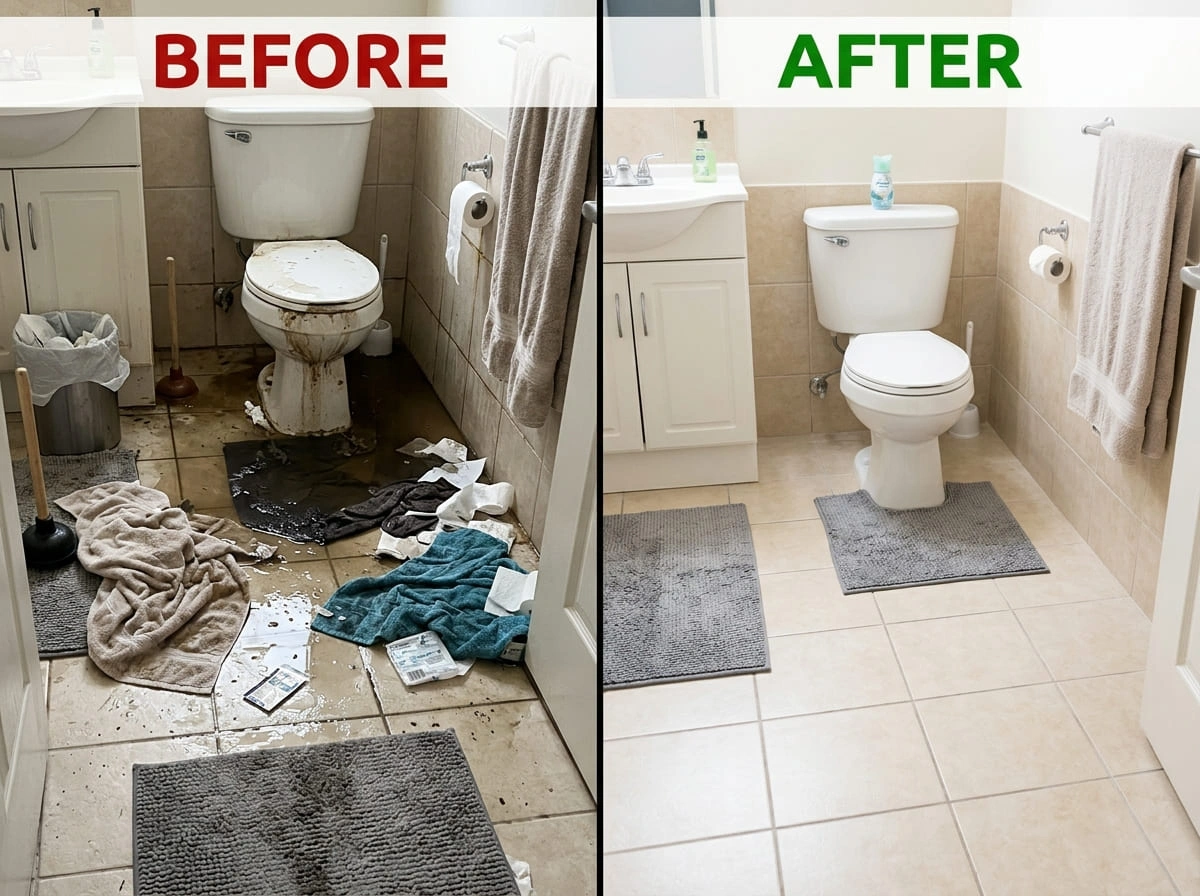
What Changes After Water Is Removed, Affected Materials Are Assessed, and Drying Begins
A toilet overflow can leave a property owner unsure whether the situation is limited to a wet bathroom floor or has moved into flooring, walls, cabinets, carpet, or adjacent rooms. The goal of professional restoration is to replace uncertainty with a clear, documented recovery path.
Before
Water may be standing on bathroom flooring or spreading toward hallways and nearby rooms.
After
The affected area has a clearer restoration scope.
Before
The source of the overflow may be unclear: toilet clog, drain blockage, failed component, or sewer backup.
After
Visible water is removed and moisture conditions are evaluated.
Before
Flooring, baseboards, carpet, drywall, cabinetry, or stored items may have unknown moisture exposure.
After
Impacted materials are identified for cleaning, drying, repair, or replacement.
Before
Odor and contamination concerns may make the affected area difficult to use safely.
After
Property owners have documentation for decision-making and insurance communication.
Before
Owners and managers may not know what to photograph, document, clean, dry, or remove.
After
A repair or reconstruction plan can be developed when the incident damaged finishes or building materials.
How We Clean, Dry & Restore Areas Affected by Toilet Overflow Water
Water-Damage Restoration Methods Selected for the Source, Spread, Material Type, and Contamination Concern
Toilet overflow cleanup should be based on what happened—not a one-size-fits-all response. Water from a failed tank component may require a different approach than toilet-bowl water or sewage returning through multiple fixtures. Mont Long Restoration assesses the type of water involved, how far it traveled, how long it remained, and which building materials were affected.
Depending on the Incident, Methods May Include
- Water extraction equipment for standing water and saturated surfaces
- Moisture meters and moisture mapping to identify moisture beyond visible surfaces
- Air movement and dehumidification to support controlled structural drying
- Targeted cleaning and sanitation procedures for impacted hard surfaces and materials
- Containment measures where affected materials or contaminated water require controlled work areas
- Removal recommendations for materials that cannot be safely or effectively cleaned and dried
- Inspection beneath vanities, at flooring edges, behind baseboards, under carpet, and inside accessible cavities
- Odor-control measures after cleanup and drying where conditions warrant
- Repair planning for drywall, trim, flooring, cabinets, and other affected finishes
The aim is not to make broad promises. It is to identify the actual impact and recommend the appropriate recovery steps for the property.
Should You Restore Water-Damaged Materials or Replace Them?
Helping Longmont Property Owners Make Practical Decisions After Toilet Water or Wastewater Reaches Building Materials
Whether a material can be cleaned, dried, repaired, or replaced depends on the water source, the material's porosity, how long the exposure lasted, the depth of water penetration, and the condition of the material after drying. Hard, nonporous surfaces may sometimes be cleaned and dried more readily than carpet padding, untreated wood products, insulation, or water-damaged drywall.
| Material or Condition | Cleaning / Drying May Be Appropriate | Replacement May Be Recommended |
|---|---|---|
| Sealed tile, vinyl, or nonporous hard surfaces | When water exposure is limited and sanitation/drying are effective | When water has penetrated beneath materials or caused damage |
| Baseboards and trim | When moisture is limited and materials remain stable | When swelling, warping, contamination, or hidden moisture is present |
| Drywall | When exposure is limited and the material remains structurally sound | When wastewater exposure, saturation, swelling, or deterioration is present |
| Carpet and padding | Limited situations involving promptly addressed clean water | Often when toilet-bowl water, sewage, or prolonged saturation affects padding and fibers |
| Laminate or engineered flooring | When moisture has not migrated beneath planks and materials remain stable | When edges swell, panels separate, or moisture is trapped below |
| Hardwood flooring | When promptly dried and evaluated | When cupping, buckling, staining, separation, or contamination affects the material |
| Bathroom cabinetry | When surfaces are intact and moisture is limited | When particleboard, toe-kicks, or cabinet bases swell or retain moisture |
| Insulation | Rarely, depending on material and exposure | Often after significant saturation or wastewater exposure |
Replacement May Be the Better Option When
- Materials have absorbed potentially contaminated wastewater.
- Flooring, drywall, cabinets, or trim are swollen, delaminated, warped, or deteriorated.
- Moisture remains trapped below surfaces or inside cavities.
- Odor persists after appropriate cleaning and drying.
- The material cannot be effectively restored without creating an ongoing moisture or sanitation concern.
Toilet Overflow Cleanup Costs in Longmont, CO
Clear Cost Factors for Emergency Water Extraction, Sanitation, Drying, and Repairs
The cost of toilet overflow cleanup depends on the specific incident. A small, quickly stopped supply-water overflow may require a limited cleanup scope. A toilet-bowl backup or sewer backup that reaches carpet, drywall, flooring, cabinets, adjoining rooms, a basement, or crawl space can require a more extensive response.
Mont Long Restoration can explain the scope of affected areas and the factors that influence restoration pricing before work proceeds.
Primary Cost Factors Include
- Whether the water came from a clean supply source, a toilet bowl, or a sewer backup
- The amount of standing water and how far it spread
- Whether water reached carpet, padding, drywall, cabinetry, flooring, insulation, or contents
- The need for extraction, sanitation, containment, dehumidification, or structural drying
- The accessibility of bathrooms, basements, crawl spaces, utility rooms, or commercial areas
- Whether the incident occurred during an emergency or after-hours period
- The extent of repairs or reconstruction needed after mitigation
- Whether the underlying plumbing or sewer issue must be diagnosed and corrected separately
| Service Type | Typical Pricing Consideration |
|---|---|
| Limited bathroom water extraction | Size of affected area, water source, and drying requirements |
| Toilet-bowl overflow cleanup | Contamination concern, affected surfaces, and sanitation scope |
| Sewer backup cleanup | Number of affected rooms, materials, containment, disposal, and drying |
| Carpet and flooring recovery | Water source, square footage, padding/subfloor impact, and material condition |
| Structural drying | Equipment needs, monitored drying time, and extent of moisture migration |
| Drywall, trim, cabinet, or flooring repair | Material type, removal needs, matching requirements, and reconstruction scope |
Which Longmont Properties Need Toilet Overflow, Sewage Backup & Water-Damage Cleanup?
Understanding When a Wet Bathroom Can Become a Property-Wide Restoration Issue
Professional cleanup is strongly recommended when an overflowing toilet involves wastewater, spreads beyond a small nonporous surface, reaches porous materials, affects more than one fixture, or leaves uncertainty about hidden moisture.
You May Need Professional Toilet Overflow Cleanup If
- Toilet water reached carpet, rugs, padding, wood flooring, laminate, drywall, cabinets, or stored items
- Wastewater or sewage backed up through a toilet, tub, shower, floor drain, or lower-level fixture
- More than one drain is slow, gurgling, or backing up
- Water moved into a hallway, bedroom, basement, crawl space, adjacent suite, or shared wall area
- The property has tenants, customers, patients, children, pets, employees, or other occupants who need the area made safe for use
- You smell sewage after the visible water is gone
- The toilet overflowed while the property was unattended
- A recurring toilet backup suggests a drain, sewer service line, or main-line issue
- You need photos, a written scope, moisture information, or invoices for property records or an insurance claim
For a small supply-water incident confined to a cleanable hard surface and addressed immediately, a homeowner may be able to dry and clean the area. When the water came from the bowl, contains waste, spreads into materials, or may be part of a sewer backup, professional assessment is the safer choice.
Toilet Overflow Cleanup for Commercial & Multi-Unit Properties
Protect Restrooms, Tenants, Employees, Customers, Inventory, and Operations Across Longmont
A commercial toilet backup can affect much more than one restroom. Water or wastewater can move into hallways, tenant suites, storage areas, employee spaces, customer areas, mechanical rooms, lower levels, and shared building systems. For property managers and business owners, the response needs to balance health and safety, operations, documentation, tenant communication, and a practical path to reopening the affected area.
Mont Long Restoration assists commercial and multi-unit properties with emergency water extraction, affected-area assessment, cleanup, structural drying, documentation, and repair planning.
| Commercial Cleanup Service | Description |
|---|---|
| Emergency water extraction | Removal of standing water from restrooms, hallways, suites, storage areas, and lower levels |
| Toilet and sewer backup cleanup | Cleanup support when water may be contaminated or multiple fixtures are affected |
| Structural drying | Drying of flooring, walls, cabinetry, trim, and other affected building materials |
| Moisture assessment | Identification of visible and hidden moisture conditions |
| Documentation support | Photos, scope details, invoices, and condition notes for ownership or insurance communication |
| Repair and reconstruction planning | Planning for damaged finishes, drywall, flooring, cabinets, and related restoration work |
Commercial Properties We Support Include
- Retail centers and shopping areas
- Restaurants, cafés, breweries, and hospitality venues
- Office buildings and professional suites
- Multi-family housing and apartment communities
- HOA-managed properties and common areas
- Schools, churches, and community facilities
- Medical, dental, and wellness offices
- Warehouses, industrial buildings, and logistics facilities
- Hotels, vacation rentals, and guest accommodations
Why Commercial Property Owners Need a Coordinated Response
- Fast action can reduce downtime in customer-facing or tenant-occupied areas.
- Water or sewage backup documentation can support communication with owners, insurers, and property managers.
- Drying plans must account for shared walls, lower levels, suites, and building materials beyond the restroom.
- Plumbing diagnosis and restoration cleanup may need to happen in a coordinated sequence.
Benefits of Hiring Toilet Overflow Cleanup Professionals in Longmont
Faster Stabilization, More Informed Recovery Decisions, and Greater Peace of Mind After a Bathroom Flood
A toilet overflow can create uncertainty quickly. Property owners may not know whether they are dealing with clean supply water, toilet-bowl water, or a sewer backup; whether they can use other fixtures; whether flooring is wet underneath; or whether the odor will return after the surface dries.
Professional cleanup and restoration support can help by:
Removing standing water before it travels farther into the property
Evaluating whether water has migrated into flooring, trim, drywall, cabinets, carpet, or adjacent rooms
Using appropriate sanitation and drying methods based on the source of water
Identifying conditions that point to a larger plumbing or sewer issue
Supporting a more organized approach to material cleaning, drying, repair, or replacement
Providing photos, scope information, and invoices for property records or insurance communication
Helping residents, tenants, customers, and employees return to a safer, drier environment
Why DIY Toilet Overflow Cleanup Can Become Risky
Important Reasons to Stop the Water, Avoid Another Flush, and Seek Professional Help
Do not treat every toilet overflow as a simple clog. If water is rising, the toilet has overflowed more than once, sewage is present, multiple drains are backing up, or water has moved into porous materials, the situation may require plumbing diagnosis and professional restoration.
Avoid These Common Mistakes
- Do not flush the toilet again to "test" whether the clog cleared.
- Do not keep using sinks, showers, dishwashers, or laundry if other drains are gurgling or backing up.
- Do not allow children or pets into affected areas.
- Do not use chemical drain cleaners in a toilet without professional guidance; they may create handling hazards and may not solve the blockage.
- Do not assume visible floor water is the full extent of the damage.
- Do not use ordinary household fans to blow potentially contaminated water or debris through unaffected areas.
- Do not delay assessment when sewage, odor, carpet, drywall, cabinets, or lower-level spaces are affected.
If a toilet shutoff valve does not stop the water, turn off the home's main water supply if you can do so safely and know where it is located. Then request emergency help.
Answers to Common Toilet Overflow Cleanup Questions in Longmont
Direct answers to the questions Longmont property owners ask when a toilet backs up or floods.
What should I do first when my toilet starts overflowing?
Do not flush again. If water is still rising, turn the shutoff valve behind the toilet clockwise. Keep children and pets away from the area, move nearby items only if safe, and call for help if water has spread beyond a small cleanable surface or may contain sewage.
Should I flush an overflowing toilet again?
No. Another flush can add more water to an existing blockage and worsen the flood. Wait until the cause has been identified and the toilet or drain issue has been properly addressed.
Is toilet overflow water clean water or sewage?
It depends on the source. Water from a failed tank or supply component may begin as relatively clean water. Water that came through the toilet bowl can contain contaminants, and water returning through multiple fixtures may be potentially contaminated wastewater from a drain or sewer backup. The cleanup approach should match the actual source.
Can I use the sink, shower, dishwasher, or washing machine after a toilet overflow?
If the toilet overflow appears to be a simple, isolated fixture issue, other fixtures may not be affected. However, if drains are slow, gurgling, backing up, or if water comes up in a tub or shower, stop using water throughout the property. Running more water can worsen a blocked drain or sewer backup.
Why is sewage coming up in my bathtub when I flush the toilet?
This can indicate a downstream drain or sewer blockage. Water may seek the lowest available opening when it cannot move through the drain line. Stop using water and arrange prompt plumbing or utility evaluation, followed by professional cleanup if wastewater affected the property.
Why is my toilet overflowing but not clogged?
Possible causes include a failed fill valve, float problem, blocked branch drain, partial sewer-line obstruction, venting issue, or a developing main-line problem. A toilet may appear to clear temporarily while an underlying drainage issue remains.
How do I know whether I have a toilet clog or a main sewer-line clog?
A single toilet that will not flush may be a localized clog. Multiple slow drains, gurgling, water in the tub or shower when flushing, repeated backups, or a lower-level toilet overflow can point to a larger drain or sewer issue.
Who should I call for a sewer backup in Longmont?
If you have sluggish drains or a sewer backup, the City of Longmont says Water Utilities can investigate whether the issue may be in the private service line or the city main. During regular hours, contact Water Utilities; after hours, the City directs residents to Longmont Public Safety Dispatch so a utility technician can be notified. For property cleanup, water extraction, sanitation, drying, and repair planning, contact Mont Long Restoration at +1 (720) 438-7100.
Does the City of Longmont fix sewer backups?
The City says it can send a crew to investigate and clean a plugged municipal main sewer line. The private sewer service line between a home or business and the main is owned and maintained by the property owner. If a backup happens only when water is used inside the property, the City says the problem is most likely in the private service-line system.
Am I responsible for a clogged sewer service line in Longmont?
The City of Longmont states that property owners own and maintain the sewer service line between the house or business and the sewer main. If the problem originates in the private service-line system, the owner is responsible for cleanup and repair.
Can carpet be saved after a toilet overflow?
It depends on the water source, how quickly the incident was stopped, how much water reached the carpet and padding, and whether toilet-bowl water or sewage was involved. Carpet and padding affected by potentially contaminated wastewater often require more cautious evaluation than a small clean-water spill.
Does toilet water under tile cause mold?
Moisture under tile, flooring, cabinets, baseboards, or drywall can create conditions for further damage if it is not properly dried. A moisture assessment can help determine whether water traveled below the visible surface.
Why does my bathroom still smell after a toilet backup?
Persistent odor can mean that moisture, residue, or affected materials remain in hidden areas such as beneath flooring, behind baseboards, inside cabinets, or near drain openings. The source should be evaluated rather than masked with fragrance.
Will homeowners insurance cover toilet overflow cleanup?
Coverage depends on your individual policy, cause of loss, deductible, endorsements, exclusions, and insurer decision. Sewer-backup coverage may be separate from standard water-damage coverage. Mont Long Restoration can provide documentation to help you communicate with your insurer, but cannot determine or guarantee coverage.
How can I prevent another toilet overflow?
Avoid flushing wipes, paper towels, hygiene products, dental floss, diapers, cat litter, and other non-toilet-paper items. Address recurring slow drains or gurgling promptly, avoid pouring grease down drains, locate your sewer cleanout, and seek plumbing evaluation if backups recur.
You're Supported from Emergency Cleanup to Water-Damage Recovery
Local Response, Clear Communication, Documented Restoration Steps, and Ongoing Support
Mont Long Restoration approaches toilet overflow cleanup with a practical focus: stabilize the affected area, identify the extent of water impact, address sanitation and drying needs, and give the property owner clear next steps. Every situation is different, so the work plan should be based on the water source, the materials affected, the extent of moisture migration, and the condition of the property after cleanup.
If additional moisture, damaged materials, or repair needs are identified during the restoration process, our team can explain the condition, outline available next steps, and help coordinate a path toward repair and reconstruction.
Mont Long Restoration1205 S Main St
Longmont, CO 80501
United States
Credentials That Support Toilet Overflow Cleanup & Structural Drying
Training and Qualifications That Matter When Water, Wastewater, Damaged Materials, and Recovery Planning Are Involved
Toilet overflow cleanup can involve water extraction, contamination concerns, drying science, moisture monitoring, material evaluation, and reconstruction planning. Mont Long Restoration's supplied business profile identifies restoration-related qualifications intended to support this type of work.
AMRT
Applied Microbial Remediation Technician
ASD
Applied Structural Drying
WRT
Water Damage Restoration Technician
CR
Certified Restorer
Licensed
Local Municipal Class C / General Contractor License
Front Range
Longmont, Boulder County, and surrounding service area experience
These credentials are relevant to water-damage restoration, structural drying, microbial-risk awareness, and reconstruction planning. Plumbing diagnosis, drain clearing, sewer-line repair, and utility-main investigation may require separate appropriately qualified providers or municipal response depending on the source of the toilet overflow.
Emergency Toilet Overflow Cleanup in Longmont, CO
Rapid Restoration Support When Toilet Water, Wastewater, or Sewer Backup Affects Your Property
Toilet overflows do not wait for standard business hours. A bathroom can flood in the middle of the night, during a weekend, before a commercial opening, or while a property is occupied by tenants or guests. Mont Long Restoration provides around-the-clock emergency response support for toilet overflow cleanup, bathroom flooding, water extraction, sanitation, drying, and water-damage recovery.
Emergency Response Process
- Immediate phone discussion to understand whether water is active, whether sewage may be involved, and whether multiple drains are backing up
- Guidance on shutting off the water, avoiding further flushing, and limiting water use when a sewer backup may be involved
- Dispatch planning for water extraction, affected-area assessment, and emergency stabilization
- Inspection of flooring, baseboards, walls, cabinets, carpet, adjacent rooms, basements, and crawl spaces when impacted
- Cleanup, sanitation, drying, and documentation based on actual site conditions
- Repair and reconstruction planning if water damaged building materials or finishes
Emergency Situations That Require Quick Action Include
- Toilet water continuing to rise or overflow
- A toilet backup spreading into hallways, bedrooms, carpet, or lower levels
- Sewage coming up through a toilet, shower, tub, floor drain, or basement fixture
- Multiple drains gurgling, draining slowly, or backing up together
- Toilet water reaching drywall, cabinetry, hardwood, laminate, carpet, or stored belongings
- A commercial restroom overflow affecting staff, customers, tenants, or operations
- A toilet overflow discovered after the property was unattended
Insurance Claim Assistance for Toilet Overflow & Sewer Backup Damage
Documentation That Can Help You Communicate the Incident, Affected Materials, and Restoration Needs
A toilet overflow can create insurance questions quickly—especially when water reaches flooring, drywall, cabinets, carpet, stored belongings, adjoining rooms, a basement, or a crawl space. Mont Long Restoration can help organize restoration-related documentation so you have clearer information for your records and for conversations with your insurance provider.
Available Documentation Support May Include
- Initial condition notes and photos of visible water damage
- Documentation of affected rooms, materials, and moisture conditions
- Water-extraction, drying, sanitation, and restoration scope information
- Invoices and work records for completed services
- Repair and reconstruction recommendations when materials require further work
- Communication support for property owners, managers, and adjusters regarding the restoration scope
Insurance coverage depends on your policy terms, deductible, exclusions, endorsements, cause of loss, and the insurer's claim decision. Sewer-backup coverage, sump-pump overflow coverage, and water-damage coverage may differ by policy. Review your policy and consult your insurance agent or carrier for coverage guidance.
Warranty Considerations for Toilet Overflow Cleanup, Drying & Repairs
Understand the Difference Between Emergency Mitigation, Reconstruction Workmanship, and Product Warranties
Emergency toilet overflow cleanup focuses first on stabilizing the property, removing water, addressing sanitation concerns, and drying affected materials. If repair or reconstruction work is later needed, warranty terms may depend on the type of work performed, the materials installed, manufacturer terms, site conditions, and the underlying cause of the original overflow.
| Coverage Category | Typical Application |
|---|---|
| Emergency mitigation work | Scope focuses on extraction, sanitation, drying, and documented restoration procedures |
| Reconstruction workmanship | May apply to eligible repair or rebuilding work, subject to written project terms |
| New materials or installed products | Manufacturer warranties may apply where applicable |
| Documentation | Work records may support future maintenance, repair, insurance, or warranty questions |
Warranty details should be provided in writing for the specific work performed. Damage caused by a recurring plumbing failure, unresolved sewer blockage, new water intrusion, misuse, or conditions outside the completed restoration scope may require separate evaluation.
10 Fully Equipped Service Vehicles Serving Longmont & the Front Range
Water Extraction, Drying Equipment, and Emergency Response Resources for Bathroom Floods and Sewage-Related Cleanup
Mont Long Restoration's supplied business profile identifies a fleet of 10 fully equipped service vans supporting emergency restoration response in Longmont and surrounding communities. For toilet overflow cleanup, the right equipment helps address both the visible water and the moisture that may have moved beneath or behind building materials.
Water extraction equipment for standing toilet overflow water
Moisture meters and assessment tools for floors, walls, cabinets, and adjacent areas
Air movers and dehumidifiers for controlled structural drying
Containment and cleaning equipment for affected spaces
Equipment for carpet water extraction and material drying
Emergency dispatch coordination for Longmont and nearby Front Range service areas
Restoration resources for follow-up repair and reconstruction planning
Flexible Payment Discussions for Larger Toilet Overflow Restoration Projects
Helping Property Owners Plan for Extensive Drying, Repairs, and Reconstruction After a Serious Loss
A small toilet overflow may require limited emergency cleanup. More extensive incidents can affect flooring, drywall, cabinetry, trim, carpet, padding, insulation, or multiple rooms. When larger restoration or reconstruction projects are needed, property owners may need time to review the scope, coordinate with insurance, and plan the next phase of work.
Mont Long Restoration can discuss project options and payment considerations for qualifying restoration and reconstruction projects, including:
- Multi-room water-damage repair projects
- Flooring, drywall, trim, cabinetry, or interior reconstruction after a toilet overflow
- Multi-unit property restoration work
- Commercial restroom and adjacent-area recovery projects
- Combined extraction, drying, repair, and reconstruction scopes
- Coordination between property-owner decisions and insurance documentation
Any financing, payment plan, discount, or promotional option is subject to current availability, qualification requirements, and written terms.
Recognition for Emergency Water-Damage & Property Restoration Service
Community-Facing Service Standards for Longmont Homes, Businesses, and Property Managers
Mont Long Restoration's supplied business profile identifies the following recognition and award associations:
Angi Super Service Award
Boulder County Gold Award
Longmont Area Chamber of Commerce Business of the Year
Nextdoor Neighborhood Fave
The Best of Longmont Award
These recognition references should be displayed only where the underlying award, year, issuing organization, eligibility, and usage permissions are accurately documented. The value for customers is not simply an award title—it is responsive service, clear communication, practical restoration planning, and care for the property during a stressful water-damage event.
Senior & Military Discounts on Eligible Toilet Overflow Cleanup Services
Supporting Qualifying Longmont Customers with Available Service Offers
Mont Long Restoration may offer qualifying discounts or promotional options for eligible senior citizens, active-duty military personnel, veterans, and other customers, subject to current terms and service eligibility.
Senior-customer discounts on select emergency cleanup or restoration services
Military and veteran discounts on qualifying work
Seasonal offers for water-damage mitigation and reconstruction projects
Bundle credits when extraction, drying, and reconstruction services are completed as part of an eligible project
Discount availability, amount, service eligibility, and exclusions should be confirmed at the time of scheduling. Emergency conditions, insurance-related work, third-party requirements, and existing promotions may affect eligibility.
Toilet Overflow Cleanup Hours in Longmont, CO
24/7 Availability for Emergency Water Removal, Toilet Overflow Cleanup, and Water-Damage Restoration
A toilet overflow can happen overnight, on a weekend, during a holiday gathering, before opening a business, or while a property manager is responsible for tenants. Mont Long Restoration provides 24/7 emergency service availability for toilet overflow cleanup and related water-damage restoration needs in Longmont and the Front Range.
| Day | Emergency Service Availability |
|---|---|
| Monday | 00:00 – 23:59 |
| Tuesday | 00:00 – 23:59 |
| Wednesday | 00:00 – 23:59 |
| Thursday | 00:00 – 23:59 |
| Friday | 00:00 – 23:59 |
| Saturday | 00:00 – 23:59 |
| Sunday | 00:00 – 23:59 |
Contact Information
Phone: +1 (720) 438-7100
Email: montlongrestoration@gmail.com
Website: waterdamagerestorationlongmontco.com
Mont Long Restoration vs. Limited-Scope Toilet Overflow Cleanup Options in Longmont
What to Look For When an Overflowing Toilet May Have Caused Water Damage Beyond the Bathroom Floor
A toilet overflow may involve more than stopping the toilet. Property owners should look for a cleanup provider that can assess the water source, identify visible and hidden moisture, explain sanitation needs, document the damage, and provide a path toward drying and repairs where needed.
| Service Consideration | Mont Long Restoration Approach | Limited-Scope Response May Involve |
|---|---|---|
| Emergency availability | 24/7 emergency restoration service availability | Limited daytime or appointment-based response |
| Water extraction | Focus on removing standing water and evaluating spread | Surface mopping without moisture assessment |
| Toilet-bowl and sewage concerns | Cleanup approach based on actual water source and affected materials | Generic cleaning without evaluating contamination risk |
| Structural drying | Moisture assessment and drying support for impacted materials | Visible-area drying only |
| Documentation | Photos, scope details, and restoration records for property owners | Limited or no damage documentation |
| Repairs after mitigation | Repair and reconstruction planning when materials are damaged | Separate contractor coordination left to the owner |
| Commercial and multi-unit coordination | Support for managers, tenants, businesses, and property owners | Limited residential-only scope |
The right provider should not use fear-based promises. Instead, they should explain what happened, what areas may be affected, what can be cleaned or dried, what may need repair, and what steps can help prevent repeat damage.
Contact Mont Long Restoration for Toilet Overflow Cleanup in Longmont, CO
Speak with an emergency restoration professional about water extraction, sanitation, drying, and recovery planning.
If your toilet is overflowing, water is spreading through the bathroom, sewage is backing up through multiple fixtures, or you are unsure whether the problem is a simple toilet clog or a larger drain issue, act quickly. Stop the water if you can do so safely, avoid flushing again, and call Mont Long Restoration for emergency cleanup support.
Contact Mont Long Restoration
(720) 438-7100
montlongrestoration@gmail.com
1205 S Main St
Longmont, CO 80501, USA
Toilet Overflow Cleanup Service Page
24/7 Emergency Service Available
Protect your home, business, tenants, customers, flooring, walls, and indoor environment with professional toilet overflow cleanup Longmont CO property owners can request 24/7 from Mont Long Restoration.