Swamp Cooler Water Damage Restoration Near Me in Longmont, CO
Longmont swamp cooler leak cleanup to protect ceilings, ductwork, insulation, walls, floors, and belongings.
When you search for swamp cooler water damage Longmont, you need more than someone to stop a visible drip. A roof-mounted evaporative cooler can leak from a water line, float valve, reservoir, overflow, drain, pad system, roof curb, or nearby flashing. Water may travel through insulation, ductwork, ceiling cavities, drywall, and flooring before it becomes visible inside your home or business.
Mont Long Restoration provides 24/7 emergency water removal, moisture inspection, structural drying, and reconstruction support for properties affected by a leaking swamp cooler or evaporative cooler in Longmont and the surrounding Front Range. With 40 skilled professionals and 10 equipped service vans, our team is prepared to help after the water source is stopped and your property needs professional dry-out services.
If it is safe to do so, turn off the cooler's water supply, stop running the unit, move valuables away from wet areas, and avoid touching wet electrical fixtures, outlets, switches, or ceiling lights. Then call Mont Long Restoration for emergency water mitigation.
Call Now: (720) 438-7100Call for same-day water extraction, moisture mapping, structural drying, and documented cleanup support in Longmont.
- Emergency water removal for leaks affecting ceilings, vents, drywall, insulation, flooring, and contents
- Professional moisture mapping to help identify water that moved beyond the visible drip
- Structural drying and dehumidification for residential and commercial properties
- Available 24/7 for swamp cooler leak water damage emergencies across Longmont and Boulder County
Request Emergency Cooler Leak Cleanup
Fill out the form and we'll contact you immediately!
Swamp Cooler Leak Water Damage Help Backed by 16+ Years of Experience
Work with a local emergency restoration team focused on fast action, clear communication, and practical recovery steps.
A swamp cooler leak is not always a simple HVAC inconvenience. A failed float, cracked cooler line, corroded pan, overflowing reservoir, clogged distribution tray, loose fitting, or roof-level leak can place water where it does not belong. Once moisture reaches building materials, the priority shifts from stopping the source to preventing secondary damage.
Mont Long Restoration helps homeowners, landlords, property managers, HOAs, businesses, and facilities respond to water damage from leaking evaporative coolers. We focus on water extraction, moisture assessment, controlled drying, documentation, and repair planning after the cooler source has been addressed by the appropriate HVAC, plumbing, or roofing professional.
16+ Years of Local Experience
Serving Longmont, Boulder County, and surrounding Front Range communities since 2010.
40 Skilled Professionals
Available for emergency mitigation, drying, cleanup, and reconstruction needs.
10 Equipped Service Vans
Supporting 24/7 emergency dispatch across Longmont and the Front Range.
Certified Restoration Team
WRT, ASD, AMRT, and Certified Restorer capabilities for comprehensive water-damage mitigation.
Clear Documentation
Property records and insurance claim communication support for residential, commercial, multifamily, HOA, and rental properties.
Swamp Cooler Leak Cleanup Near Longmont Neighborhoods, Landmarks & Business Areas
Front Range emergency water damage support for properties near Downtown Longmont, Prospect New Town, Main Street, and surrounding communities.
Longmont's dry summers make swamp coolers and evaporative coolers familiar to many local property owners. A leaking roof-mounted unit, however, can become a ceiling, ductwork, insulation, wall, or flooring problem quickly—especially when water has been running unnoticed.
Mont Long Restoration provides emergency water damage mitigation for homes and businesses throughout Longmont, including properties near Downtown Longmont, Main Street Historic District, Prospect New Town, St. Vrain Greenway, McIntosh Lake, Union Reservoir, Roosevelt Park, Golden Ponds Park, and surrounding business corridors.
Longmont Neighborhoods & Communities Served
Nearby Front Range Service Areas
Specialized Swamp Cooler Leak Water Damage Restoration for Longmont Properties
Professional water removal and structural drying for moisture that reaches ceilings, ducts, insulation, drywall, carpet, hardwood, and subflooring.
A wet ceiling, bubbling paint, brown water stain, dripping vent, or soggy floor can be the visible symptom of a larger hidden-moisture problem. Water from a roof-mounted swamp cooler may move through attic insulation, ceiling cavities, ductwork, wall assemblies, flooring layers, or other concealed materials before it appears indoors.
Mont Long Restoration is focused on the property-damage side of the event. We do not assume that a stopped drip means the affected materials are dry. Our team evaluates visible and hidden moisture, removes standing water when needed, establishes controlled drying conditions, monitors progress, and identifies materials that may require repair or replacement.
- Emergency restoration technicians trained to assess water migration beyond the visible leak
- Moisture mapping for ceilings, wall cavities, insulation, flooring, and affected contents
- Commercial-grade extraction, air-moving, and dehumidification equipment
- Clear scope explanations for homeowners, landlords, facility managers, and insurance representatives
- Coordinated restoration support after an HVAC technician, plumber, or roofer addresses the cooler source
What Happens When a Swamp Cooler Leaks Into a Longmont Property?
A roof cooler overflow, cracked water line, or failed float can cause damage that is not immediately visible.
A leaking evaporative cooler can allow clean water to enter ceiling cavities, ductwork, insulation, drywall, walls, hardwood, carpet, laminate, and stored belongings. The exact cause may be a split water supply line, stuck float valve, overflowing reservoir, corroded pan, loose fitting, clogged water-distribution trough, improperly positioned pads, drain problem, roof curb issue, or flashing failure.
When water is pulled into the airflow path, it may travel through a duct "tunnel" and emerge from a ceiling vent or register. When the leak begins near a roof-mounted unit, water can also move through insulation and framing before a stain, drip, soft ceiling, or musty odor appears indoors.
Common risks include:
- Wet ceiling insulation that remains damp after the visible leak stops
- Sagging drywall, bubbling paint, brown stains, or ceiling deterioration
- Moisture inside ductwork or around ceiling registers
- Swollen baseboards, damaged hardwood, wet carpet, laminate problems, or subfloor moisture
- Electrical concerns around wet fixtures, switches, outlets, or ceiling lights
- Musty odors and elevated microbial-growth risk when materials remain wet
- Disruption for homeowners, tenants, businesses, HOAs, and property managers
- More extensive reconstruction needs when water migration is not identified early
Prevent Swamp Cooler Water Damage With Seasonal Checks and Fast Leak Response
Longmont properties benefit from pre-season cooler inspection, fall shut-down, and prompt drying after an unexpected leak.
Swamp cooler maintenance and water-damage mitigation are different services, but they work together to protect your property. An HVAC professional can inspect and repair the evaporative cooler, while Mont Long Restoration addresses the wet materials inside the property after a leak, overflow, broken line, or water migration event.
Longmont's warm, dry summers and cold winter conditions can expose weaknesses during spring start-up and fall shut-down. A line that was not fully drained may freeze, split, or fail when water is restored. A float, valve, fitting, hose, drain, pad, or distribution tray problem can also become visible when the cooler begins operating again.
| Seasonal Task | Why It Matters | Typical Timing | Water-Damage Impact |
|---|---|---|---|
| Cooler start-up inspection | Helps identify line, float, fitting, pad, and drain concerns before extended operation | Spring | May prevent an overflow or hidden ceiling leak |
| Water-line and connection check | Looks for cracked tubing, loose fittings, corrosion, and leaks | Before summer use | Reduces risk of water entering attic, duct, or ceiling areas |
| Float and overflow check | Helps confirm reservoir water level is controlled | Start-up and as needed | Can reduce persistent overflow conditions |
| Pad and distribution check | Helps prevent uneven water flow and water entering airflow paths | Before peak cooling season | May reduce water carryover into ducts or vents |
| Winterization / shut-down | Water is shut off, line and reservoir are drained, and power is disconnected | Before freezing temperatures | Helps reduce freeze-related line and component damage |
| Moisture assessment after a leak | Checks ceiling, insulation, walls, floors, and contents for hidden moisture | As soon as possible after a leak | Supports timely drying and limits secondary damage |
Seasonal Planning for Longmont Properties
- Schedule cooler maintenance before regular summer operation begins
- Have the water supply line and fittings inspected after a hard winter or missed winterization
- Do not rely on a cover alone; a cover does not drain trapped water from the cooler line or reservoir
- Stop operating the cooler if water appears at a vent, ceiling register, ceiling stain, or indoor floor area
- Arrange water extraction and moisture assessment when water reaches building materials
Most properties do not need a restoration visit unless a leak has affected the structure or contents. However, if water reached insulation, drywall, flooring, ductwork, a finished room, or electrical components, a professional assessment can help determine whether targeted drying is sufficient or damaged materials need to be removed.
Who Needs Swamp Cooler Water Damage Restoration in Longmont?
From single-family homes to multifamily communities and commercial facilities across the Front Range.
A leaking swamp cooler can affect nearly any property with a roof-mounted or ducted evaporative cooling system. Mont Long Restoration serves property owners and managers who need emergency water removal, drying, documentation, and reconstruction support after water escapes from the cooler system.
We help:
- Homeowners with roof-mounted evaporative coolers
- Tenants who need to report active leaks and protect personal belongings
- Landlords and rental-property owners managing water-related emergencies
- HOAs and condominium communities with shared roofs, ceilings, corridors, or mechanical systems
- Apartment communities and multifamily property managers
- Restaurants, cafes, breweries, retail stores, offices, and mixed-use properties
- Warehouses, workshops, light-industrial facilities, and storage spaces
- Schools, churches, daycares, community centers, and nonprofit facilities
- Medical offices, clinics, dental practices, and professional buildings
For tenants, the best first step is usually to notify the landlord or property manager promptly, document the visible conditions, protect belongings where safe, and avoid making repairs to the roof-mounted equipment. Responsibility can vary by lease and property arrangement, but reporting the issue quickly helps limit damage.
How Longmont Weather Can Contribute to Swamp Cooler Leaks
Dry summer operation, seasonal start-up, and freezing winter conditions can reveal weak cooler lines, fittings, floats, and components.
Longmont sits on Colorado's northern Front Range, where warm, dry summers make evaporative cooling a practical choice for many homes and businesses. The same climate also creates a pronounced seasonal cycle: a swamp cooler may sit unused through cold weather, then face immediate water pressure and heavy use when temperatures rise.
This cycle can reveal existing weaknesses in a cooler's water supply line, fitting, float valve, reservoir, pan, drain connection, or distribution system. In some cases, water left in a line during winter can freeze and damage components. In others, summer operation reveals an overflow or airflow-related issue that sends water into ducts or ceiling registers.
Seasonal conditions that can contribute to leak-related damage:
Spring
Start-up can reveal a cracked water line, damaged fitting, loose hose, failed float, or leaking reservoir.
Summer
Heavy use can expose overflow, drain, pad, distribution, or airflow issues leading to duct or ceiling water damage.
Fall
Shut-down mistakes can leave water where it may freeze later, causing line and component damage.
Winter
Freezing conditions can damage water lines or other components if the system was not drained properly.
Wind and weather: A roof-level water problem may involve the cooler, curb, penetration, or adjacent flashing and should be evaluated by the appropriate professional.
Common Swamp Cooler Leak Sources Found in Longmont Properties
Understanding where a cooler leak starts helps determine who should repair the source and what materials need drying.
Mont Long Restoration does not diagnose or repair every HVAC component, but our team understands how common cooler problems can lead to water migration inside a structure. A source professional may need to repair the mechanical, plumbing, or roof-related condition. Our role is to assess and mitigate the resulting water damage.
| Leak Source or Condition | Common Symptom | Potential Property Impact | Recommended Response |
|---|---|---|---|
| Water supply line or fitting | Dripping, spraying, or pooling near the unit | Water can enter attic, roof, ceiling, or wall spaces | Shut off water if safe; arrange source repair and moisture assessment |
| Float valve problem | Reservoir overfills or overflow runs continuously | Water may spill from the unit or travel into surrounding areas | Cooler inspection; evaluate affected building materials |
| Corroded pan or reservoir | Water leaks from bottom of unit | Slow, repeated wetting around roof-mounted equipment | Inspect roof-level area and interior ceiling/insulation |
| Overflow, purge, or drain problem | Persistent water discharge or unusual runoff | Water may pool or move toward vulnerable roof areas | Have the system checked; inspect for interior moisture if leaks occurred |
| Distribution tray or trough issue | Uneven water flow, wet pads, water in airflow | Water can enter ducts and drip from vents | Stop operation; arrange HVAC repair and water-damage inspection |
| Pad-placement problem | Water appears when fan runs | Water may be pulled into the duct system | Shut down unit and inspect duct/ceiling conditions |
| Roof curb, penetration, or flashing issue | Leak appears during rain, wind, or unit operation | Ceiling stains, wet insulation, roof-area intrusion | Roofing evaluation plus restoration assessment as needed |
Reliable performance depends on correct installation, seasonal maintenance, water-line winterization, and prompt repairs when leaks develop. If water is entering your home through the ceiling, vent, or wall, the cooler should not continue operating until the source has been evaluated.
Our 6-Step Swamp Cooler Leak Water Damage Restoration Process
What to expect when Mont Long Restoration responds to a Longmont water-damage emergency.
Emergency Call & Initial Assessment
We ask where the water is visible, whether the cooler is still running, whether water reached ceilings, vents, flooring, walls, or electrical areas, and whether the source has been shut off.
Source-Control Coordination
If the swamp cooler itself is leaking, overflowing, or malfunctioning, the mechanical source must be addressed by the appropriate HVAC, plumbing, or roofing professional. If it is safe, we may advise you to shut off the cooler water supply and stop operation while help is arranged.
On-Site Inspection & Moisture Mapping
Our team evaluates the visible damage and checks nearby ceilings, drywall, insulation, floor assemblies, walls, and affected spaces for moisture that may not be obvious.
Water Removal & Material Protection
We extract standing water where needed, protect unaffected contents, and take practical steps to limit water migration and secondary damage.
Structural Drying & Dehumidification
We use targeted drying equipment and monitoring to remove moisture from affected materials. Depending on conditions, this may include air movement, dehumidification, controlled containment, and selective material removal.
Documentation, Repair Planning & Follow-Up
We provide records that can support property documentation and insurance communication. When repairs or reconstruction are needed, we explain the next steps and work scope clearly.
What's Included in Swamp Cooler Leak Water Damage Cleanup
Clear deliverables for Longmont homeowners, landlords, businesses, and property managers.
Every swamp cooler leak is different. A small, quickly contained drip may need limited drying, while a roof-mounted cooler leak that reaches insulation, ducts, ceilings, floors, or multiple rooms may require a broader mitigation plan. Mont Long Restoration explains the recommended scope based on inspection findings.
A typical emergency water-damage response may include:
- Initial phone assessment and emergency dispatch coordination
- On-site visual inspection of the affected room, ceiling, wall, floor, or duct area
- Moisture mapping to identify water beyond the visible stain or puddle
- Standing-water extraction when necessary
- Content protection and practical cleanup of affected areas
- Structural drying and dehumidification equipment placement
- Monitoring of drying progress and moisture conditions
- Identification of wet drywall, insulation, carpet, padding, hardwood, laminate, or other materials requiring attention
- Documentation, photos, and scope information for property records or insurance communication
- Repair and reconstruction recommendations when drying alone is not appropriate
Key Advantages of Working With Mont Long Restoration
Emergency-ready equipment, water-damage expertise, and clear communication for affected Longmont properties.
Mont Long Restoration is built to support property owners facing a water emergency—not just visible cleanup. We focus on identifying moisture, reducing secondary damage, and helping customers understand what comes next after a leaking swamp cooler or evaporative cooler affects their property.
- 24/7 emergency water-damage response in Longmont and surrounding Front Range communities
- Emergency water extraction, structural drying, dehumidification, and moisture mapping
- Team support for residential, commercial, multifamily, and HOA properties
- Documentation that can assist with insurance communication and restoration planning
- 10 equipped service vans prepared to support water mitigation needs
- Reconstruction and repair planning when building materials cannot be safely dried or restored
Swamp Cooler Leak Water Damage Recovery for Longmont Properties
What changes after the source is addressed and affected materials are professionally assessed.
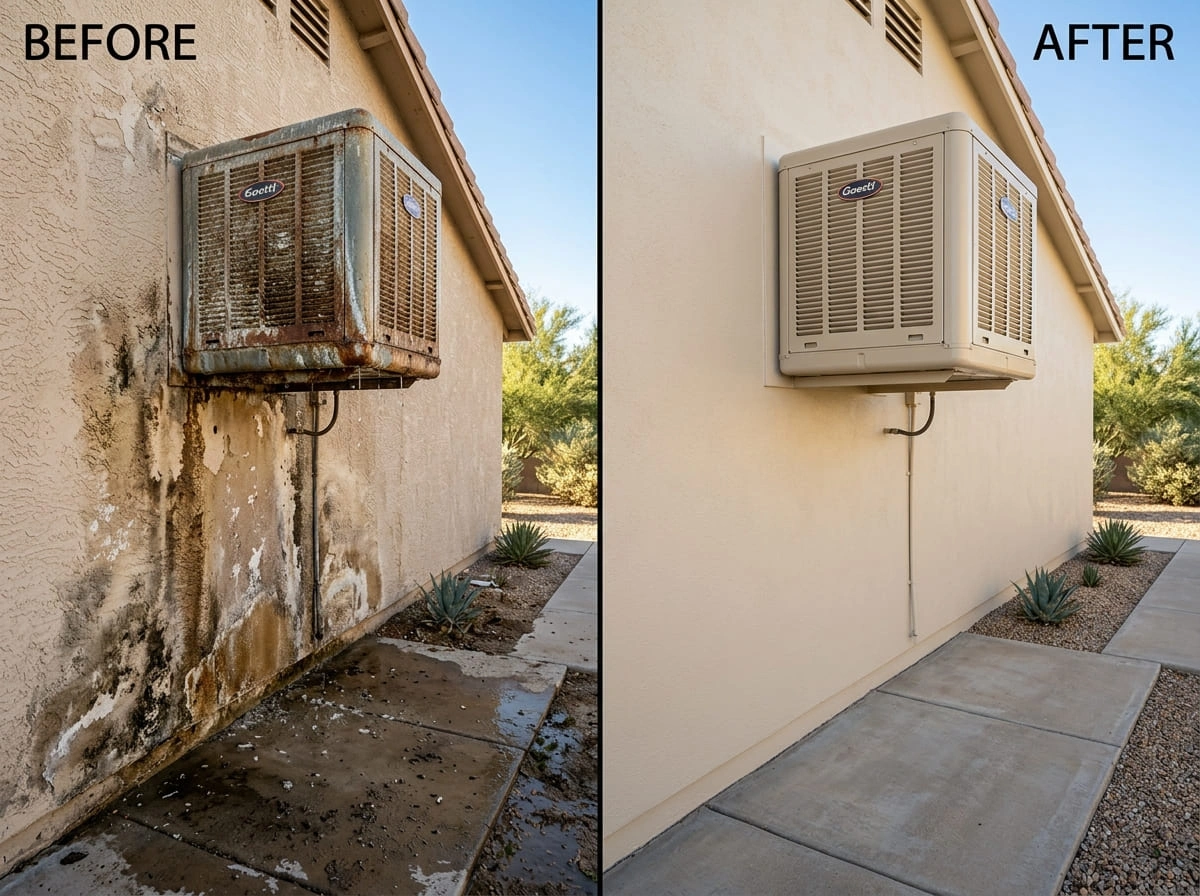
Property owners often call after seeing a sudden ceiling drip, a wet air vent, a spreading stain, damp flooring, or water below a roof-mounted swamp cooler. The visible symptom can create understandable stress because it is hard to know whether the water stopped at the surface or moved into hidden building materials.
After Mont Long Restoration completes inspection and mitigation work, customers have a clearer path forward.
Water is visible at a ceiling, vent, wall, or floor, but hidden moisture is unknown.
A documented inspection identifies affected areas and guides the drying plan.
A cooler leak has stopped, but insulation, drywall, flooring, or ducts may still be wet.
Drying equipment and monitoring are used where appropriate to address retained moisture.
Owners are uncertain whether to call HVAC, plumbing, roofing, restoration, or insurance.
The source-repair and water-mitigation roles are clearly separated, with documented next steps.
A ceiling stain, musty odor, or soft drywall creates concern about secondary damage.
The condition is evaluated so materials can be dried, repaired, or removed based on actual findings.
How We Mitigate Water Damage After a Swamp Cooler Leak
Targeted extraction, moisture inspection, air movement, dehumidification, and repair planning based on the affected materials.
Water-damage restoration is not a one-size-fits-all process. Mont Long Restoration evaluates how water moved through the property and which materials are affected before recommending the appropriate mitigation approach.
Our service methods may include:
- Moisture meters and other inspection tools to evaluate ceilings, walls, floors, and insulation
- Water extraction equipment for standing water, wet carpet, or affected floor surfaces
- Commercial drying equipment to reduce moisture in building materials and air
- Dehumidification to support controlled structural drying
- Air movement directed toward affected materials where appropriate
- Removal of unsalvageable wet insulation, drywall, carpet padding, flooring, or other materials when necessary
- Containment or controlled work areas when demolition, odor control, or microbial-risk management is required
- Detailed documentation of conditions, work performed, and recommended repairs
The best approach depends on the amount of water, duration of exposure, material type, safety conditions, source category, and whether materials can be dried to an acceptable condition.
Should You Dry or Replace Materials After a Swamp Cooler Leak?
Helping Longmont property owners make practical decisions after ceiling, insulation, wall, floor, or duct-related water damage.
When a swamp cooler leak affects building materials, the goal is to dry and preserve materials when it is safe and practical to do so. However, some materials may be too saturated, structurally compromised, contaminated, or damaged to restore reliably.
| Affected Condition | Drying May Be Appropriate When | Replacement May Be Recommended When |
|---|---|---|
| Ceiling drywall | Moisture is limited, drying begins quickly, and the board remains structurally sound | The ceiling sags, softens, swells, cracks, crumbles, or cannot be dried effectively |
| Insulation | Exposure is limited and the material can be evaluated safely | Insulation is saturated, compressed, contaminated, or creating a ceiling-load concern |
| Hardwood flooring | Water is addressed quickly and boards remain stable | Boards cup, buckle, delaminate, stain severely, or retain trapped moisture |
| Carpet and padding | Clean-water exposure is limited and extraction begins promptly | Padding is saturated, odor persists, contamination is involved, or materials cannot be dried |
| Laminate flooring | The material remains stable and moisture did not penetrate beneath it | Planks swell, edges lift, layers separate, or moisture is trapped under the surface |
| Baseboards and trim | Materials remain sound after controlled drying | Swelling, warping, separation, staining, or hidden wall moisture is present |
| Duct-adjacent materials | Moisture is limited and accessible areas can be dried | Water has affected insulation, registers, ceiling assemblies, or concealed spaces beyond safe drying limits |
Replacement may be appropriate when materials are structurally compromised, remain wet despite controlled drying, contain contamination, create an electrical or ceiling-safety concern, or cannot be restored to a safe condition.
Swamp Cooler Water Damage Restoration Costs in Longmont, CO
Clear cost drivers and documented recommendations for emergency water mitigation.
The cost of evaporative cooler leak cleanup Longmont CO depends on where water traveled, how long materials were wet, how quickly the source was stopped, and whether affected materials can be dried or require removal and reconstruction.
Mont Long Restoration provides a property-specific assessment and explains the recommended scope before work begins. We do not rely on a one-price-fits-all approach because a small cooler-line leak and a ceiling/duct/insulation water event can require very different levels of mitigation.
| Cost Factor | How It Can Affect the Scope |
|---|---|
| Size of the affected area | More rooms, ceilings, flooring, or wall assemblies can require additional equipment and labor |
| Water location | Roof, attic, ceiling, ductwork, walls, crawl spaces, and floors have different access requirements |
| Duration of the leak | Longer exposure may allow water to move farther into building materials |
| Material type | Carpet, hardwood, laminate, drywall, insulation, trim, and contents require different drying or replacement decisions |
| Emergency timing | After-hours or immediate emergency conditions may change dispatch and mitigation needs |
| Source condition | A cooler repair, plumbing repair, HVAC repair, or roofing issue may need to be handled separately |
| Reconstruction needs | Drywall, insulation, flooring, painting, trim, or other repairs may add to the final project scope |
| Insurance documentation | Detailed photos, readings, work records, and communication support may be needed for a claim |
When Should a Longmont Property Call for Swamp Cooler Water Damage Cleanup?
A visible drip is not the only reason to request an inspection.
You should consider professional water mitigation after a swamp cooler leak when water has entered building materials, affected occupied areas, or created uncertainty about hidden moisture. Even if the cooler is repaired, moisture may remain behind a ceiling, under flooring, inside insulation, or near a duct system.
Call Mont Long Restoration when you notice:
- Water dripping from a ceiling vent, register, light fixture area, or ceiling seam
- A brown ring, spreading stain, bubbling paint, soft drywall, or sagging ceiling
- Wet attic insulation, wet ceiling insulation, or moisture below a roof-mounted cooler
- Water on hardwood, laminate, carpet, tile, subflooring, or furniture
- A swamp cooler overflow that reached the roof, attic, or interior space
- A cooler water line that froze, cracked, or leaked after winter
- Musty odors after a cooler leak or water event
- Damp walls, wet baseboards, swollen trim, or peeling paint
- Water affecting a rental unit, apartment community, office, store, restaurant, or other business space
- Uncertainty about whether water entered ducts or concealed building areas
Swamp Cooler Leak Cleanup for Commercial & Multi-Unit Properties
Protect occupied spaces, common areas, tenant improvements, inventory, and building materials after a water event.
Commercial properties can face operational disruption when an evaporative cooler leaks into a ceiling, duct system, office, retail space, corridor, warehouse, restaurant, classroom, or tenant suite. Mont Long Restoration works with business owners, facility managers, landlords, HOAs, and commercial property teams to assess damage, coordinate mitigation, document conditions, and create a practical recovery plan.
| Commercial Service | Description |
|---|---|
| Emergency water extraction | Removal of standing water from affected interior areas |
| Moisture inspection and mapping | Evaluation of ceilings, walls, floors, insulation, and concealed moisture concerns |
| Structural drying | Controlled drying with professional air-moving and dehumidification equipment |
| Contents and material protection | Practical steps to protect inventory, furnishings, equipment, and unaffected areas |
| Documentation support | Photos, moisture records, work documentation, and scope information |
| Reconstruction planning | Repair coordination for damaged drywall, insulation, flooring, trim, ceilings, and related materials |
Commercial Properties We Support Include:
- Shopping centers, retail stores, restaurants, breweries, and hospitality venues
- Offices, professional buildings, and mixed-use developments
- Apartment communities, condominiums, and HOA-managed properties
- Schools, churches, daycares, community centers, and nonprofit spaces
- Warehouses, workshops, storage facilities, and light-industrial buildings
- Medical offices, clinics, dental practices, and service facilities
Benefits of Hiring Swamp Cooler Water Damage Professionals in Longmont
Fast action, moisture visibility, controlled drying, and clearer recovery decisions.
A property may look dry after the visible drip stops, but that does not confirm that ceiling insulation, drywall, flooring, ducts, or wall cavities are dry. Professional mitigation helps identify and address moisture before it becomes a larger repair issue.
Benefits include:
- Faster removal of standing water and moisture from affected materials
- Moisture inspection beyond visible staining or surface dampness
- Reduced risk of secondary damage to ceilings, walls, floors, and contents
- Clearer decisions about drying, selective removal, repair, or reconstruction
- Safer handling of wet materials near electrical fixtures or ceiling damage
- Documentation for property records, landlords, HOAs, managers, and insurers
- Support for homeowners who need help after a roof-mounted evaporative cooler leak
- Less uncertainty about whether water entered insulation, ductwork, or concealed areas
Why You Should Not Ignore a Leaking Swamp Cooler or Wet Ceiling
Water near roof equipment, ceiling cavities, ductwork, and electrical components can create risks that require prompt attention.
Do not continue running a swamp cooler if water is dripping through a ceiling, coming from a vent, pooling indoors, or appearing near electrical fixtures. A leaking evaporative cooler can create a false sense of security when the drip slows or stops, even though moisture may remain inside building materials.
For Safety:
- Turn off the cooler water supply only if you can do so safely
- Stop operating the cooler if water is entering ducts, vents, ceilings, or interior rooms
- Do not climb onto a roof or attempt roof-level repairs during unsafe conditions
- Avoid touching wet lights, outlets, switches, ceiling fixtures, or electrical equipment
- Keep people away from a sagging, soft, cracked, or actively leaking ceiling
- Move valuables and electronics away from water when it is safe to do so
- Call emergency services or a qualified electrician if water affects electrical systems or there is immediate danger
- Contact an HVAC technician, plumber, or roofer for source repair and Mont Long Restoration for water-damage mitigation
Answers to Common Swamp Cooler Water Damage Questions in Longmont
Quick, practical answers for homeowners, tenants, landlords, and commercial property managers.
Why is my swamp cooler leaking water into my house?
A swamp cooler may leak because of a cracked water line, loose fitting, failed float valve, overflowing reservoir, corroded pan, drain issue, clogged distribution tray, pad-placement problem, roof curb issue, or flashing concern. Water may enter ceilings, insulation, ducts, walls, or floors before it becomes visible indoors.
What should I turn off first when my evaporative cooler leaks?
If safe to do so, turn off the cooler's water supply and stop running the unit. Avoid wet electrical fixtures, outlets, switches, ceiling lights, or equipment. If water is actively entering a room, move belongings away from the affected area and call for source repair and water-damage mitigation.
Can a swamp cooler leak through the ceiling?
Yes. A roof-mounted cooler leak can move through roof-level materials, insulation, ductwork, framing, and ceiling cavities before appearing as a stain, drip, bubbling paint, soft drywall, or sagging ceiling. The leak source should be repaired, and affected materials should be assessed for retained moisture.
Why is water dripping from my ceiling vent when the swamp cooler runs?
Water may be entering the cooler's airflow path and traveling through ductwork. Possible causes can include distribution problems, clogged trough openings, pad-placement issues, overflow, or another cooler malfunction. Stop using the unit until the source is inspected, then assess the ducts, insulation, ceiling, and nearby materials for water damage.
Why is my swamp cooler overflow pipe constantly draining?
A constantly running overflow can indicate that the water level is too high, often because the float valve is misadjusted, stuck, or failing. Some units also use a bleed-off or purge system, so a qualified technician should determine whether the discharge is normal operation or a failure condition.
Why does my swamp cooler leak only when the fan is on?
Water may be getting pulled into the airflow when the blower operates. Improperly seated pads, uneven water distribution, clogged trough openings, or another internal issue can allow water to travel into ducts and eventually drip from a ceiling vent or register.
Why is my swamp cooler leaking after winter?
Winter conditions can expose problems when the system is restarted. Water left in a cooler line, hose, reservoir, or component may freeze and cause cracking or damage. A line or fitting can then begin leaking during spring start-up when water pressure returns.
Can a frozen swamp-cooler water line burst during a Longmont winter?
Yes. If water remains in the cooler water line or unit during freezing conditions, components can be damaged. Proper winterization generally includes shutting off the water supply, draining the line and reservoir, and disconnecting power. Covering the unit alone does not remove trapped water.
Can a swamp cooler leak cause mold?
A leak does not automatically mean mold is present. However, moisture left in organic materials such as drywall backing, wood, insulation, carpet padding, or dust accumulation can increase microbial-growth risk. Prompt source repair, water removal, drying, and moisture verification help reduce that risk.
Do I need water extraction if the swamp cooler leak stopped?
Possibly. A stopped drip does not prove that the ceiling, insulation, wall cavity, ductwork, flooring, or subfloor is dry. If water reached materials inside the property, a moisture assessment can identify whether extraction, drying, monitoring, or material removal is needed.
Does wet drywall from a cooler leak need replacement?
Not always. Drywall may sometimes be dried if moisture exposure is limited and the board remains structurally sound. It may need replacement if it becomes soft, swollen, sagging, crumbling, contaminated, or unable to dry effectively.
Who repairs the evaporative cooler and who handles the water damage?
An HVAC technician, plumber, or roofer may address the cooler, water line, drain, float, roof curb, or flashing source depending on the issue. Mont Long Restoration addresses the resulting property damage through water extraction, moisture mapping, structural drying, mitigation, and reconstruction planning.
Does homeowners insurance cover a swamp cooler water leak?
Coverage depends on the policy, cause of loss, maintenance history, exclusions, endorsements, and insurer determination. Sudden and accidental water damage may be treated differently from long-term seepage, deferred maintenance, flood damage, or related exclusions. Take photos, document when the leak was discovered, retain repair records, and review your policy with your insurer or agent.
How do I document water damage from a swamp cooler leak for insurance?
Take photos and video of the cooler area if safely accessible, visible water, ceiling stains, wet materials, damaged contents, and affected rooms. Record the date and time you discovered the issue, keep source-repair invoices, and retain water-mitigation documentation, photos, moisture readings, and repair estimates.
Is a wet ceiling under a roof-mounted cooler an emergency?
It can be. A wet, sagging, cracked, or actively dripping ceiling may pose property and safety concerns, particularly if electrical fixtures are nearby. Stop the water source and cooler operation if safe, keep people away from the affected area, and seek urgent professional help.
You're Supported From Emergency Water Removal Through Drying and Repair Planning
Local response, documented work, and practical support when a swamp cooler leak affects your Longmont property.
Mont Long Restoration approaches every water-damage event with a focus on safety, clear scope communication, controlled drying, and property-specific recommendations. We explain what we find, what work is recommended, and what may be needed next if materials cannot be safely dried or restored.
When we provide drying, repair, or reconstruction work, applicable workmanship and material warranty terms are explained with the specific scope of service. Coverage, repairability, drying outcomes, and insurance decisions depend on the actual property conditions and the work performed.
Mont Long Restoration
1205 S Main StLongmont, CO 80501
United States
Certifications That Support Swamp Cooler Leak Water Damage Restoration
Credentials that support proper water mitigation, structural drying, microbial-risk awareness, and reconstruction planning.
Water damage from an evaporative cooler can affect structural materials, indoor conditions, and property safety. Mont Long Restoration maintains credentials and professional capabilities relevant to water-damage mitigation and restoration work.
Water Damage Restoration Technician (WRT)
Applied Structural Drying (ASD)
Applied Microbial Remediation Technician (AMRT)
Certified Restorer (CR)
Local Municipal Class C / General Contractor License
Water Extraction & Structural Drying Capability
Dehumidification & Mitigation Capability
Reconstruction & Repair Capability
Emergency Swamp Cooler Leak Cleanup in Longmont, CO
Rapid water-damage response when a roof-mounted evaporative cooler leaks into ceilings, ducts, walls, insulation, or flooring.
A failed cooler line, overflowing reservoir, broken fitting, roof-level leak, or water-filled duct path can become urgent when water reaches the interior of a home or business. Mont Long Restoration provides around-the-clock emergency water mitigation for Longmont property owners facing active water damage.
Our emergency response process includes:
- Immediate phone consultation to understand the location and severity of the water issue
- Guidance on safe first steps, including stopping the water source if safe
- Emergency dispatch for water extraction, moisture inspection, and drying needs
- Assessment of ceilings, walls, insulation, flooring, ducts, and affected contents
- Practical material protection and mitigation planning
- Documentation for property records, insurance communication, and reconstruction needs
Emergency Situations May Include:
- Water dripping through a ceiling or ceiling register
- Water coming from an air vent while the swamp cooler runs
- A roof swamp cooler overflowing into the home or business
- Wet insulation, a soft ceiling, bubbling paint, or a spreading stain
- A frozen or cracked cooler water line leaking after winter
- Water on hardwood, laminate, carpet, furniture, inventory, or equipment
- A musty odor or concern that moisture remains after the visible leak stopped
Insurance Claim Assistance for Evaporative Cooler Water Damage
Organized documentation to help Longmont property owners communicate with their insurer.
A swamp cooler leak can lead to questions about the cause, timing, affected materials, emergency mitigation, and repair scope. Mont Long Restoration can provide documentation related to our inspection and restoration work to support your records and insurance communication.
Available documentation may include:
- Initial inspection notes and photos of visible water damage
- Moisture readings and drying-monitoring records when applicable
- Photos of affected ceilings, walls, floors, insulation, contents, and materials
- Water-extraction and structural-drying documentation
- Mitigation scope, invoices, repair estimates, and reconstruction recommendations
- Records describing observed conditions and corrective restoration measures
Coverage is determined by the terms of the individual policy, exclusions, endorsements, maintenance-related provisions, and insurer decision. Property owners should review their policy and speak with their insurer or agent regarding available coverage.
Warranty Coverage for Swamp Cooler Leak Cleanup and Repairs
Know what workmanship, installed materials, and restoration records apply to your project.
Mont Long Restoration provides project-specific information regarding applicable workmanship coverage for services we perform and manufacturer coverage for new materials or products installed as part of an approved repair or reconstruction scope.
| Coverage Type | Description |
|---|---|
| Workmanship | Applicable coverage for restoration, repair, or reconstruction labor as defined in the project agreement |
| Materials | Manufacturer warranties that may apply to new flooring, drywall, fixtures, materials, or other installed products |
| Documentation | Restoration records that can support future maintenance, repair planning, or insurance communication |
| Drying scope | Documentation of mitigation work, equipment use, and monitoring performed during the project |
Warranty terms vary based on the specific service, materials, property conditions, manufacturer requirements, and written project agreement. Mont Long Restoration explains applicable terms before the work is finalized.
10 Fully Equipped Service Vans Supporting Swamp Cooler Leak Cleanup
Equipment, people, and emergency-response capability for water removal and structural drying.
Mont Long Restoration operates with 10 equipped service vans to support emergency water-damage response across Longmont and surrounding Front Range communities. Our crews arrive prepared to assess water migration, begin extraction where needed, place drying equipment, protect affected areas, and document conditions.
Our fleet and equipment support may include:
- Water-extraction equipment for standing water and wet floor surfaces
- Moisture-detection and inspection tools
- Commercial air movers and dehumidifiers
- Equipment for structural drying and controlled work areas
- Protective materials for contents and unaffected areas
- Vehicles dispatched to residential, commercial, multifamily, and property-management locations
Flexible Payment Options for Larger Swamp Cooler Water Damage Projects
Support for qualifying reconstruction and major restoration work after a significant water event.
Emergency water mitigation can sometimes lead to additional repair needs, including ceiling replacement, insulation removal, drywall repair, flooring replacement, painting, trim work, or broader reconstruction. When a project involves substantial restoration work, Mont Long Restoration can discuss available payment options or financing possibilities for qualifying services.
Potential support may include:
- Options for larger reconstruction or repair projects
- Planning for multi-room or multi-unit restoration work
- Clear explanation of project scope, timing, and payment expectations
- Coordination with insurance-related restoration processes when applicable
Financing availability, eligibility, terms, and project qualification can vary. Ask our team about current options when discussing a major repair or reconstruction project.
Service Recognition and Community-Focused Restoration Support
Professional service standards for emergency water removal, structural drying, and property recovery.
Mont Long Restoration is positioned to serve Longmont property owners with 24/7 water-damage response, professional drying support, and reconstruction planning. Any current recognition, local awards, association acknowledgments, or community-based distinctions should be displayed only with accurate dates, issuing organizations, and verifiable supporting details.
Angi Super Service Award
Boulder County Gold Award
Longmont Area Chamber of Commerce Business of the Year
Nextdoor Neighborhood Fave
The Best of Longmont Award
Senior and Military Discounts for Qualifying Water Damage Services
Supporting Longmont seniors, military members, veterans, and eligible households after property damage.
Mont Long Restoration may extend special discounts or promotional offers for qualifying water-damage restoration services, including emergency extraction, drying support, repair planning, or related restoration work.
Potential qualifying offers may include:
- Senior citizen discount on eligible water-damage services
- Military and veteran discount for qualifying restoration projects
- Seasonal promotion opportunities for emergency mitigation or reconstruction work
- Bundled service considerations for extraction, drying, and reconstruction needs
Discount availability, eligibility, exclusions, and terms can vary by service type and project scope. Confirm current offers when scheduling service.
Swamp Cooler Leak Water Damage Service Hours in Longmont, CO
24/7 emergency availability for water extraction, structural drying, and urgent mitigation needs.
Water from a leaking evaporative cooler does not wait for regular business hours. Mont Long Restoration offers 24/7 emergency water-damage response for Longmont homes, businesses, rental properties, HOAs, and commercial facilities.
| Day | Hours |
|---|---|
| Monday | 00:00 – 23:59 |
| Tuesday | 00:00 – 23:59 |
| Wednesday | 00:00 – 23:59 |
| Thursday | 00:00 – 23:59 |
| Friday | 00:00 – 23:59 |
| Saturday | 00:00 – 23:59 |
| Sunday | 00:00 – 23:59 |
Phone: +1 (720) 438-7100
Email: montlongrestoration@gmail.com
Website: waterdamagerestorationlongmontco.com
Mont Long Restoration vs Typical Water Damage Providers in Longmont
Emergency readiness, water-mitigation scope, and local support can make a meaningful difference after a cooler leak.
Not every company that responds to a water issue provides the same level of emergency mitigation, moisture assessment, drying, documentation, and reconstruction support. A swamp cooler leak can affect more than the visible puddle, so it is important to choose a provider capable of evaluating hidden moisture and explaining the next steps.
| Feature | Mont Long Restoration | Typical Limited-Scope Provider |
|---|---|---|
| Emergency availability | 24/7 water-damage response | May offer limited hours or delayed scheduling |
| Restoration focus | Water extraction, moisture mapping, drying, mitigation, and reconstruction planning | May provide basic cleanup only |
| Longmont coverage | Based in Longmont and serving surrounding Front Range communities | May dispatch from outside the immediate area |
| Team and fleet resources | 40 skilled professionals and 10 equipped service vans | Resources vary by provider |
| Scope documentation | Inspection, moisture, mitigation, and repair-planning documentation | Documentation may be limited |
| Property types served | Residential, commercial, multifamily, HOA, rental, and facility properties | May focus on one property type |
| Cooler leak guidance | Coordinates property dry-out after source repair | May not distinguish HVAC repair from water mitigation |
Contact Mont Long Restoration for Swamp Cooler Leak Water Damage in Longmont, CO
Talk with an emergency water-damage professional when water reaches your ceiling, vents, insulation, drywall, flooring, or belongings.
If your swamp cooler is leaking into the house, water is dripping from a ceiling vent, a roof-mounted evaporative cooler has overflowed, or you are concerned that moisture reached insulation, ductwork, flooring, or walls, Mont Long Restoration is ready to help. Our team provides emergency water removal, moisture assessment, structural drying, documentation, and reconstruction support for Longmont homes and businesses.
Mont Long Restoration
1205 S Main St
Longmont, CO 80501, USA
+1 (720) 438-7100
Swamp Cooler Leak Water Damage
Current Special Offers
- Free Structural Moisture Assessment
- Flat-Rate 24/7 Emergency Dispatch
- Deductible Relief Discount
- Direct-to-Insurance Billing Promo
- Extraction & Reconstruction Bundle Credit
Protect your property with prompt, professional swamp cooler water damage Longmont cleanup from Mont Long Restoration.