Storm & Flood Damage Cleanup in Longmont, CO — Fast Water Removal, Drying & Recovery Support
Front Range storm damage cleanup to protect your property, limit water damage, and help you move forward with a clear restoration plan.
When you need storm damage cleanup in Longmont, CO, water may already be entering a basement, coming through a ceiling, soaking carpet, filling a window well, or spreading behind walls. Mont Long Restoration provides prompt, professional help for stormwater intrusion, flooded basements, roof leaks, sump-pump failures, crawl-space flooding, and water damage affecting homes and commercial properties.
Our team helps identify the water source, remove standing water, assess affected materials, document hidden moisture, and begin the drying process. With 40 skilled professionals, 10 fully equipped service vans, and 24/7 emergency availability, Mont Long Restoration is prepared to respond throughout Longmont, Boulder County, and nearby Front Range communities.
- 24/7 emergency storm damage restoration for homes and businesses
- Water extraction, structural drying, dehumidification, and moisture mapping
- Help with flooded basements, roof leaks, sump-pump failure, and stormwater intrusion
- Documentation support for insurance claims and restoration planning
Call +1 (720) 438-7100 for emergency water removal, moisture inspection, and a clear explanation of the next steps.
Request Emergency Storm Cleanup
Fill out the form and we'll contact you immediately!
Storm & Flood Damage Cleanup Backed by 16+ Years of Restoration Experience
Work with a local emergency response team focused on safe cleanup, clear communication, and thorough drying.
Storm and flood damage can become more expensive when water remains in carpet, drywall, insulation, subfloors, cabinets, crawl spaces, or ceiling cavities. Mont Long Restoration approaches each loss as more than a visible-water problem. We assess where moisture traveled, determine whether the water may be contaminated, identify materials that can potentially be dried, and explain when removal or repair may be necessary.
Our team serves property owners, landlords, businesses, HOAs, and facility managers who need a reliable restoration partner after stormwater, rainwater, roof leaks, or flood-related water enters a building.
16+ years serving Longmont, Boulder County, and surrounding Front Range communities
40 skilled restoration professionals and 10 fully equipped service vans
24/7 emergency availability for urgent water intrusion and flood cleanup needs
Water Damage Restoration Technician, Applied Structural Drying, Applied Microbial Remediation Technician, and Certified Restorer qualifications where applicable to the assigned team and scope of work
Residential and commercial storm damage cleanup, water mitigation, drying, repair, and reconstruction support
Storm & Flood Damage Cleanup Near Longmont Neighborhoods, Creek Corridors & Business Areas
Serving properties throughout Longmont, from the St. Vrain corridor to Main Street, Prospect New Town, and nearby Boulder County communities.
Longmont property owners understand that fast-moving Front Range weather can bring intense rain, hail, wind-driven moisture, roof leaks, saturated soil, drainage issues, and basement water intrusion. Mont Long Restoration provides local storm and flood cleanup for homes, rental properties, retail spaces, offices, community facilities, and commercial buildings throughout the area.
We assist property owners near St. Vrain Creek, Left Hand Creek, the St. Vrain Greenway, downtown Longmont, Main Street Historic District, Prospect New Town, Union Reservoir, McIntosh Lake, and other neighborhoods where storm runoff, window-well flooding, roof damage, sump-pump failure, or drainage problems allow water inside.
Longmont Neighborhoods & Communities Served
- Historic Eastside
- Prospect New Town
- Clover Creek
- Fox Hill
- Meadowview
- Champion Greens
- Creekside
- Rainbow Ridge
- Southmoor Park
- Quail Crossing
- Quail Ridge
- Reynolds Farm
- Sugarmill Farms
- Stroh Heights
- Villas at Ute Creek
- Wolf Creek
- Warner's Orchard
- Garden Square
- Mill Village
- Paramount Village
Nearby Communities We Serve
Longmont's flood awareness guidance encourages property owners to direct water away from structures, protect window wells, and keep drainage channels clear so storm flows can move properly. These practical measures are especially relevant after cleanup, when homeowners want to reduce the chance of water returning.
Specialized Storm & Flood Damage Cleanup for Longmont Properties
Northern Front Range water-mitigation specialists focused on extraction, contamination awareness, moisture control, and recovery planning.
A flooded basement, wet ceiling, storm-damaged crawl space, or water-soaked commercial suite can involve more than mopping and placing fans in a room. Moisture can move under floors, behind baseboards, inside wall cavities, through insulation, into cabinets, and beneath carpet padding. Some water losses also involve contamination risks that require more than routine cleaning.
Mont Long Restoration provides professional water mitigation, meaning the immediate work needed to limit further damage, remove water, assess moisture, and begin controlled drying. We use documented moisture readings and restoration methods to help property owners understand what happened, what needs attention now, and what may be required for repair or reconstruction.
- Technicians trained to inspect visible and hidden moisture conditions
- Water extraction and drying equipment for basements, living areas, crawl spaces, ceilings, and commercial spaces
- Clear distinction between rainwater intrusion, plumbing water, stormwater, drain backups, and suspected contaminated water
- Detailed recommendations for drying, material removal, repairs, and next-step restoration planning
- Documentation support for owners, property managers, insurers, and adjusters
What Happens When Stormwater Enters a Longmont Property?
Water can spread far beyond the wet area you can see, creating safety, material, and indoor-environment concerns.
Stormwater can enter a property through a basement window, window well, roof opening, foundation crack, crawl-space vent, exterior door, overflowing drain, sump-pump failure, or drainage problem. A water loss may appear limited at first, but moisture can migrate through porous materials and remain trapped where it is not visible.
The cleanup process depends on the source of water, how long materials remained wet, how far moisture traveled, and whether the water may contain contaminants. Exterior floodwater, drain backups, and sewage-related water require different safety measures than a small clean-water leak.
Common Storm & Flood Damage Concerns
- Wet carpet, carpet pad, hardwood, laminate, tile underlayment, or subflooring
- Soaked drywall, insulation, baseboards, cabinets, and wall cavities
- Ceiling leaks, sagging drywall, attic insulation moisture, and roof-related water damage
- Mold-like odors or musty conditions after prolonged moisture exposure
- Contaminated stormwater, sewage backup, floor-drain overflow, or unknown water sources
- Electrical hazards near outlets, panels, appliances, cords, and standing water
- Damage to belongings, furniture, documents, electronics, inventory, and stored items
- Business interruption, tenant concerns, and loss documentation needs for commercial properties
If you have water in the basement after heavy rain, the key question is not only how much water is visible. It is also where the water went, whether it is safe to handle, and whether the structure can be dried before secondary damage develops.
Prevent Future Water Intrusion With Seasonal Drainage and Sump-Pump Planning
Longmont property owners can reduce certain stormwater risks by addressing drainage, window wells, roof runoff, and sump-pump concerns before the next severe weather event.
Storm cleanup solves the immediate damage, but many property owners also want to know why the water entered and whether it could happen again. While every property is different, recurring water intrusion may be connected to roof runoff, downspout discharge, clogged gutters, poor grading, window-well drainage, foundation drainage, sump-pump performance, or exterior drainage conditions.
Mont Long Restoration can document the post-loss condition and explain what restoration findings may suggest. For permanent drainage, roofing, foundation, plumbing, or exterior improvements, the appropriate qualified contractor or municipal resource may be needed.
| Seasonal Task | What to Check | Best Timing | Why It Matters |
|---|---|---|---|
| Gutter and downspout inspection | Check for clogs, loose connections, and discharge near the foundation | Before spring melt and summer storm season | Helps direct roof runoff away from exterior walls |
| Window-well inspection | Remove debris and check covers, drains, and water accumulation | Before forecasted heavy rain | Helps reduce water entry around below-grade windows |
| Sump-pump check | Test operation, float movement, discharge line, and backup plan | Before wet-weather periods | Helps identify a pump or discharge issue before flooding |
| Exterior grading review | Watch for water pooling toward the home | Spring and after major storms | Helps identify runoff patterns near foundation walls |
| Roof and flashing review | Look for missing shingles, damaged flashing, and leak signs | After hail, wind, or severe storms | Helps address roof-entry risks before interior damage grows |
| Drainage recordkeeping | Save invoices, photos, repair notes, and prior loss information | Ongoing | Helps track recurring conditions and repair history |
Seasonal Preparation Guidance
- Clear leaves, trash, and debris from gutters, drains, and window wells
- Observe where downspouts discharge during rain or snowmelt
- Keep basement storage elevated where water intrusion has occurred before
- Test sump-pump operation before the period when you rely on it most
- Address a persistent musty smell, damp carpet edge, wall staining, or recurring floor moisture early
- Do not connect a sump pump to the sanitary sewer; Longmont states that sump pumps must not discharge into the sanitary sewer system
Frequency note: A seasonal check is a practical baseline, while homes with a history of basement water, complex drainage, finished lower levels, or prior sump-pump problems may need more frequent attention.
Cost note: The cost of prevention work varies by the condition found, accessibility, drainage design, roof or foundation needs, and whether professional repair is required. Mont Long Restoration can document water damage conditions after a loss and explain the restoration-related scope before work begins.
Who Needs Storm & Flood Damage Cleanup in Longmont?
From homes and rental properties to retail spaces, HOAs, and large commercial facilities across Boulder County.
Stormwater does not affect every property in the same way. A finished basement may have carpet, drywall, contents, and electronics at risk. A commercial building may have tenant spaces, inventory, equipment, flooring systems, records, or operational areas that require a more coordinated response.
Mont Long Restoration serves residential and commercial property owners who need prompt water extraction, structural drying, cleanup, damage documentation, and restoration planning.
- Homeowners with flooded basements, ceiling leaks, wet floors, or crawl-space water
- Landlords and rental-property owners responding to tenant water damage
- Multi-family communities, apartment buildings, and HOAs
- Retail stores, shopping centers, and mixed-use buildings
- Restaurants, cafes, breweries, and food-service facilities
- Office buildings, professional suites, and coworking spaces
- Medical offices, clinics, dental practices, and laboratories
- Schools, daycare centers, churches, and community facilities
- Warehouses, workshops, industrial properties, and storage facilities
- Hotels, hospitality venues, and event spaces
How Longmont Weather and Seasonal Conditions Cause Water Damage
Thunderstorms, hail, wind-driven rain, snowmelt, frozen conditions, and saturated soil can expose weak points around a property.
Longmont sits along Colorado's northern Front Range, where changing conditions can place stress on roofs, gutters, downspouts, window wells, drainage systems, foundations, pipes, and sump-pump systems. A property may perform normally during light rain yet take on water during a severe thunderstorm, rapid snowmelt, extended rainfall, or wind-driven rain event.
The 2013 flood remains an important part of Longmont's local flood history. The city's flood information describes the September 2013 event as the most devastating flash flood in Longmont's history, while ongoing resilience work reflects the community's focus on flood readiness and recovery.
Seasonal Conditions to Consider
Summer
Intense thunderstorms, hail, wind-driven rain, and fast roof runoff can expose roof leaks, blocked gutters, window-well issues, and drainage weaknesses.
Fall
Leaves and debris can obstruct gutters, downspouts, exterior drains, and window wells before wetter weather arrives.
Winter
Freeze-thaw conditions can affect pipes, roof edges, drainage lines, and vulnerable exterior components.
Spring
Snowmelt, saturated soil, and runoff can increase pressure around foundations, crawl spaces, window wells, and basement drainage systems.
What Is Causing Water to Enter Your Longmont Property?
Finding the source matters because stormwater, plumbing water, groundwater, and sewage backups require different cleanup decisions.
"Flooding" can describe several very different situations. A storm may cause water to enter through the roof, a window well, the foundation, or a drainage opening. It may also expose a failed sump pump, overwhelmed floor drain, damaged pipe, or sewer backup. Identifying the likely source helps determine the urgency, safety measures, drying approach, and materials that may need removal.
| Water Source or Condition | Typical Signs | Main Concern |
|---|---|---|
| Roof leak or storm damage | Ceiling stain, dripping, wet insulation, sagging drywall | Hidden moisture in ceilings, walls, and attic materials |
| Window-well flooding | Water at basement windows, seepage around frames | Rapid water entry into finished or unfinished basements |
| Foundation or groundwater intrusion | Water at wall-floor joints, damp edges, seepage after rain | Moisture under flooring, inside wall cavities, or in lower-level finishes |
| Sump-pump failure | Water rising around sump pit or basement floor | Standing water and widespread basement saturation |
| Overflowing gutters or poor drainage | Water pooling near the home or entering near exterior walls | Water pressure and runoff directed toward the structure |
| Plumbing failure during a storm | Water from supply lines, appliances, water heaters, or pipes | Clean, gray, or contaminated water depending on the source |
| Floor-drain or sewer backup | Dirty water, odor, solids, dark discoloration | Potential contaminated-water cleanup and sanitation requirements |
| Crawl-space water intrusion | Damp soil, wet insulation, musty odor, standing water | Moisture migration into floors, framing, and indoor spaces |
Important reliability note: A professional assessment should not assume that all rain-related water is clean. Exterior floodwater, sewer backup, and water from unknown sources can contain contaminants and may require protective procedures, removal of affected porous materials, and specialized cleaning.
Our 6-Step Storm & Flood Damage Cleanup Process
Know what to expect when Mont Long Restoration arrives at your Longmont home or business.
Emergency Call and Initial Safety Triage
We discuss the location of the water, whether it is still entering, possible sources, electrical concerns, affected rooms, property type, and immediate safety issues. This helps determine the urgency of dispatch and what to do before help arrives.
On-Site Inspection and Moisture Mapping
Our team evaluates standing water, affected materials, likely water category, and visible or hidden moisture. Moisture mapping means documenting where water traveled, including areas that may look dry on the surface.
Emergency Water Extraction
We remove standing water from floors, carpets, pads, basements, crawl spaces, and affected areas using professional extraction equipment appropriate to the situation.
Cleanup, Sanitation, and Material Assessment
Based on the source of water and the materials affected, we clean, sanitize, remove damaged contents, or recommend controlled demolition where necessary. Suspected sewage or exterior floodwater requires more careful handling than a clean-water appliance leak.
Structural Drying and Dehumidification
We place drying equipment, monitor moisture conditions, and adjust the drying plan as needed. Structural drying means drying materials such as walls, floors, framing, cabinets, ceilings, and subfloors—not simply running household fans.
Documentation, Repair Planning, and Next Steps
We provide restoration records, photos, moisture-related documentation, and a clear explanation of repair or reconstruction needs. When applicable, we can help organize information commonly requested during an insurance claim.
What's Included in Our Storm & Flood Damage Cleanup Service
Clear restoration deliverables for Longmont homeowners, property managers, and commercial decision-makers.
Every storm damage restoration project is different. The services required depend on the source of water, the extent of affected materials, safety conditions, contamination concerns, and how long moisture remained in the structure. Mont Long Restoration explains the recommended scope before proceeding with non-emergency restoration work.
Our Storm & Flood Cleanup Services May Include
- Emergency inspection and water-intrusion assessment
- Standing-water extraction from basements, rooms, crawl spaces, and commercial areas
- Carpet and pad extraction, drying assessment, or removal planning
- Moisture mapping of walls, ceilings, floors, cabinets, and hidden cavities
- Structural drying with air movers and dehumidification equipment
- Wet drywall, insulation, flooring, ceiling, or cabinet assessment
- Stormwater, mud, debris, and affected-content cleanup
- Contaminated-water sanitation and removal procedures when required
- Odor-control and indoor-environment stabilization measures when appropriate
- Photo documentation and restoration records for insurance claim support
- Repair, reconstruction, or damaged-material replacement planning
Key Advantages of Working With Mont Long Restoration
Professional equipment, clear documentation, and coordinated support from emergency mitigation through recovery.
Mont Long Restoration is built to help Longmont property owners make informed decisions after water enters a structure. Our approach focuses on responding quickly, identifying the real extent of damage, communicating clearly, and helping prevent avoidable secondary damage.
24/7 emergency response for stormwater, basement flooding, roof leaks, and urgent water intrusion
Water extraction, moisture mapping, structural drying, and dehumidification support
Residential, commercial, multi-unit, HOA, and property-management experience
Clear work documentation for owners, insurers, adjusters, and facility records
Restoration planning that can continue from mitigation through repairs and reconstruction
Local response capacity supported by a 40-person team and 10 equipped service vans
Storm & Flood Damage Cleanup Transformations for Longmont Properties
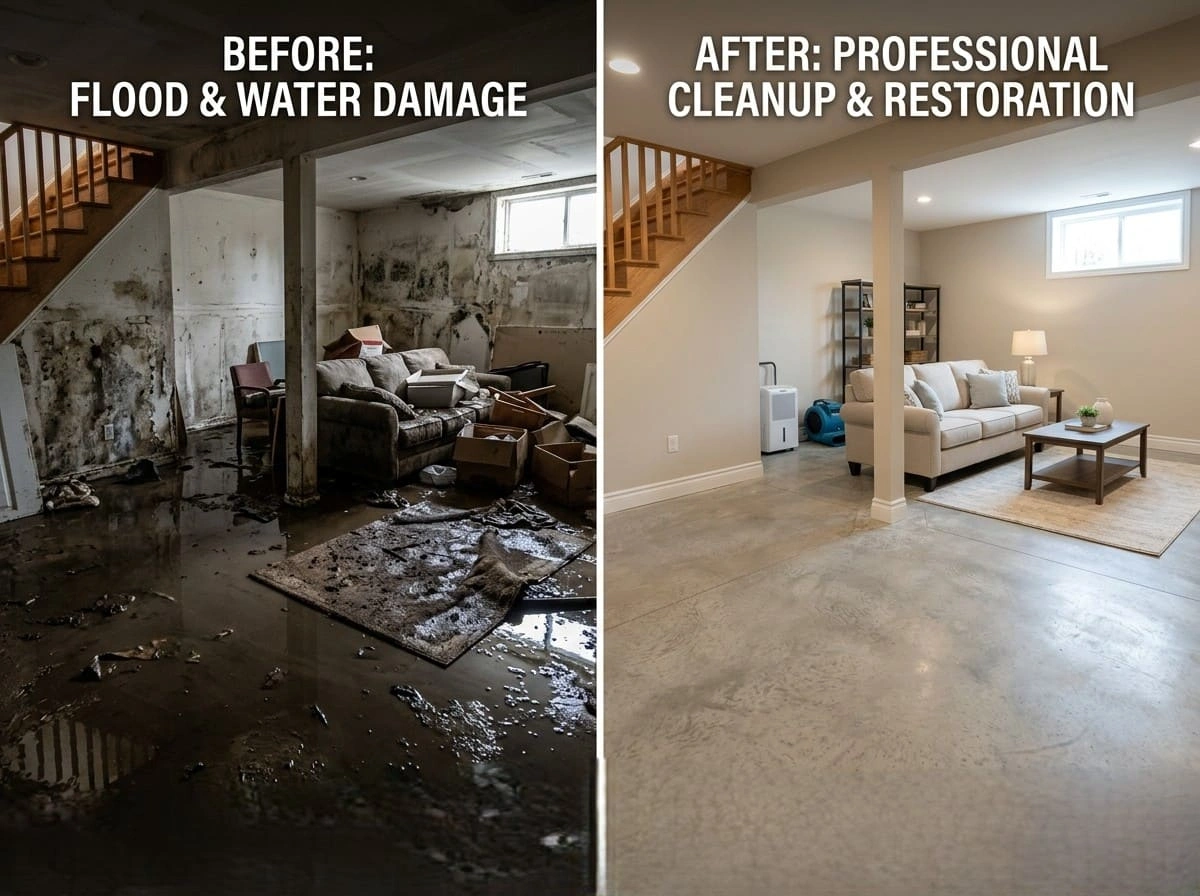
What changes after water is removed, moisture is documented, and a proper drying plan begins.
A water loss can leave property owners uncertain about what is wet, what is safe, what can be saved, and how long recovery will take. A professional cleanup plan replaces guesswork with documented findings, clear priorities, and a path toward drying and restoration.
Before
- Standing water, wet carpet, soaked drywall, musty odors, and uncertainty about the source
- A flooded basement after a sump-pump failure or heavy storm with unclear damage behind walls and under flooring
- A roof leak or stormwater entry that appears small but may have affected ceilings, insulation, or wall cavities
- Anxiety about insurance documentation and how to explain the event to an adjuster
After
- Water extraction, moisture mapping, controlled drying, and documented next steps
- A structured assessment identifying affected materials, drying needs, and repair priorities
- Moisture evaluation, targeted drying, photo documentation, and restoration planning
- Organized photos, moisture information, scope documentation, and itemized restoration records
How We Remove Water, Dry Structures, and Stabilize Storm-Damaged Areas
Restoration work is based on the water source, affected materials, safety risks, and measured moisture conditions.
Professional storm cleanup involves more than visibly removing water. The goal is to identify how far moisture traveled, remove water safely, dry structural materials in a controlled way, and determine which materials remain salvageable.
Mont Long Restoration uses restoration methods appropriate to the affected area and scope of work.
- Professional extraction equipment for standing water in carpets, flooring, basements, crawl spaces, and occupied commercial areas
- Moisture meters and moisture mapping to identify wet materials beyond the visible water line
- Air movers and dehumidifiers to support controlled structural drying
- Containment and controlled removal practices when damaged materials must be removed
- Cleaning and sanitation methods appropriate to the water category and affected surface
- Documentation of moisture conditions, drying progress, and recommended repair work
- Careful assessment of drywall, insulation, carpet pad, flooring, cabinetry, ceilings, and contents
Method note: The right approach depends on whether the water is from a clean source, a gray-water source, exterior flooding, or suspected sewage backup. Category 3 or "black water" refers to contaminated water that may come from sewage or exterior flooding and requires enhanced safety procedures.
Should Water-Damaged Materials Be Dried, Repaired, or Replaced?
Mont Long Restoration helps Longmont property owners understand the condition of affected materials before moving into reconstruction.
Not every wet material must be removed, and not every material can be saved. The correct decision depends on water source, duration of exposure, moisture readings, material type, structural condition, contamination risk, and whether drying can be completed effectively.
| Material or Condition | Restoration May Be Possible When | Replacement May Be Recommended When |
|---|---|---|
| Carpet | Water was clean, addressed quickly, and drying is achievable | Water was contaminated, remained wet too long, or padding/subflooring is compromised |
| Drywall | Wetting is limited and materials can be dried without deterioration | Drywall is swollen, crumbling, heavily saturated, mold-affected, or exposed to contaminated water |
| Insulation | Material is minimally affected and can be evaluated safely | Fiberglass, cellulose, or other porous insulation is saturated or contaminated |
| Hardwood flooring | Water is removed quickly and flooring remains stable during drying | Boards are cupped, buckled, delaminated, or subfloor moisture remains elevated |
| Cabinets | Water exposure is limited and components remain structurally sound | Particleboard, MDF, toe-kicks, or cabinet boxes are swollen or deteriorating |
| Ceiling drywall | Moisture is isolated and no safety risk exists | Ceiling is sagging, cracking, crumbling, or at risk of collapse |
| Contents and furniture | Non-porous or quickly addressed items can be cleaned and dried | Porous items are heavily contaminated, structurally damaged, or cannot be safely restored |
Replacement May Be the Better Path When:
- A material has absorbed contaminated water
- Drying cannot be verified or completed effectively
- Structural integrity is reduced
- Swelling, delamination, crumbling, corrosion, or recurring odor is present
- Removal is necessary to access trapped moisture or safely restore the assembly
What Does Storm & Flood Damage Cleanup Cost in Longmont, CO?
Clear scopes and upfront explanations help you understand the factors behind emergency mitigation and restoration pricing.
The cost of storm and flood cleanup varies widely because every property loss is different. A small roof leak affecting one ceiling requires a very different response than a flooded basement, a crawl-space water event, a sump-pump failure, or water that may be contaminated.
Mont Long Restoration evaluates the situation on-site and explains the recommended scope based on the condition found.
Main Cost Drivers Include:
- Source and category of water
- Amount of standing water and number of affected rooms
- Basement, crawl-space, attic, ceiling, or difficult-access conditions
- Square footage of affected carpet, flooring, drywall, insulation, cabinets, or contents
- Need for extraction, sanitation, drying equipment, monitoring, demolition, or reconstruction
- Emergency, after-hours, weekend, or holiday response requirements
- Commercial operations, tenant coordination, and business-continuity needs
- Extent of documentation needed for insurance claim support
| Service Type | Typical Scope Considerations |
|---|---|
| Emergency water extraction | Water depth, square footage, access, flooring type, and affected rooms |
| Basement flood cleanup | Standing water, carpet/pad, drywall, contents, sump-pump or drainage conditions |
| Roof-leak water mitigation | Ceiling materials, insulation, wall cavities, roof-entry point, and hidden moisture |
| Contaminated-water cleanup | Water source, affected porous materials, sanitation requirements, and protective measures |
| Structural drying | Size of affected area, moisture levels, material types, and drying duration |
| Reconstruction and repairs | Demolition needs, finish materials, code requirements, and restoration scope |
Pricing note: Mont Long Restoration provides a clear explanation of the recommended restoration scope. Insurance coverage, deductible responsibilities, exclusions, limits, and claim payment are determined by the policy and insurer—not by the restoration contractor.
Which Longmont Properties Need Immediate Water Mitigation?
If water entered the building, affected porous materials, or may be contaminated, a professional assessment can help prevent unnecessary damage and uncertainty.
Professional storm damage cleanup is especially important when water has moved beyond a small, contained surface spill. A quick assessment can help identify electrical concerns, contamination risks, hidden moisture, wet materials, and the appropriate drying approach.
Consider Emergency Water Mitigation When Your Property Has:
- A flooded basement, crawl space, lower level, or utility room
- Water coming through a ceiling after a roof leak, hail event, or wind-driven rain
- Wet carpet and pad, soaked drywall, damaged insulation, or water under flooring
- A failed sump pump, overflowing sump pit, or water rising through a basement floor
- A basement window well filled with water or rain entering around a below-grade window
- A floor drain backing up or signs of sewage, odor, dark water, or solids
- Stormwater entering through doors, walls, roof openings, garage areas, or foundation gaps
- A musty smell, recurring dampness, staining, bubbling paint, or visible moisture after rain
- Commercial inventory, equipment, tenant spaces, records, or operational areas exposed to water
Storm & Flood Cleanup for Longmont Commercial and Multi-Unit Properties
Protect operations, tenant spaces, equipment, inventory, and building materials with a coordinated restoration response.
Stormwater and flood damage can disrupt a business long after rain stops. Wet flooring, ceiling leaks, damaged inventory, affected electrical areas, tenant complaints, odors, and safety concerns can all affect operations. Mont Long Restoration works with business owners, property managers, facility teams, landlords, and HOA representatives to assess the loss, stabilize the affected area, and document the work.
| Commercial Service | Description |
|---|---|
| Emergency water extraction | Removal of standing water from offices, retail spaces, common areas, storage areas, and affected suites |
| Structural drying | Controlled drying of walls, floors, ceilings, crawl spaces, and building materials |
| Moisture mapping | Documentation of affected materials and hidden moisture conditions |
| Contaminated-water cleanup | Cleanup and sanitation support for sewer backup, drain overflow, or potentially contaminated water |
| Contents and inventory support | Assessment and handling coordination for affected movable property where applicable |
| Reconstruction planning | Repair planning for drywall, ceilings, flooring, cabinets, finishes, and other damaged components |
| Documentation support | Photos, restoration records, and scope details for ownership, insurers, and facility files |
Commercial Properties We Help Include:
- Shopping centers and retail spaces
- Office buildings and professional suites
- Restaurants, cafes, breweries, and hospitality businesses
- Apartment communities, condominiums, and HOA-managed properties
- Schools, churches, clinics, and community facilities
- Warehouses, industrial buildings, workshops, and logistics properties
Why Commercial Owners Choose Mont Long Restoration:
- One restoration partner from emergency cleanup through repair planning
- 24/7 availability for urgent water intrusion and flood events
- Coordinated communication with property managers, tenants, owners, and insurers
- Scalable response supported by a 40-person team and 10 equipped vans
- Clear documentation for incident records, repair planning, and insurance discussions
| Commercial Need | Typical Consideration |
|---|---|
| Multi-unit property | Phased access, tenant communication, shared systems, and coordinated drying |
| Retail or office space | Minimizing downtime, protecting inventory, and maintaining safe access |
| Restaurant or hospitality property | Fast response around equipment, customer areas, sanitation, and operating hours |
| Warehouse or industrial site | Large-area drying, inventory concerns, equipment access, and safety procedures |
| HOA or managed community | Unit coordination, common-area exposure, owner communication, and documentation |
Benefits of Hiring Professional Storm Damage Cleanup Specialists in Longmont
Prompt mitigation, accurate moisture assessment, and safer cleanup can reduce uncertainty after water enters your property.
Storm and flood damage often creates a time-sensitive decision. Professional cleanup helps property owners move from uncertainty to a documented plan based on the source of water, materials affected, visible damage, hidden moisture, and drying needs.
Remove standing water before it spreads into additional materials
Identify hidden moisture behind walls, under floors, and above ceilings
Reduce the chance of lingering odors, material deterioration, and secondary damage
Address contaminated-water concerns with appropriate safety and sanitation measures
Receive documented moisture findings, photos, and restoration records
Understand whether materials may be dried, repaired, or need replacement
Coordinate emergency cleanup, drying, repair, and reconstruction planning in one process
Support clearer communication with insurers, adjusters, tenants, owners, and property managers
Why DIY Flood Cleanup Can Be Dangerous
Standing water, contaminated water, electrical exposure, and wet building materials can create hazards that are not always obvious.
A small, clean spill may be manageable with basic drying, but stormwater and flood damage can involve conditions that require professional evaluation. Do not assume that water is safe because it looks clear or because the visible water level has dropped.
Call for Professional Help or Use Extreme Caution When You Have:
- Standing water near outlets, electrical panels, appliances, cords, or powered equipment
- A sagging ceiling, bubbling paint, wet insulation, or water bulging behind drywall
- Suspected sewage backup, drain overflow, exterior floodwater, or unknown water source
- Wet carpet pad, saturated insulation, soaked drywall, or water that has been present for an extended time
- A strong sewage odor, musty odor, visible mold-like growth, mud, debris, or dark water
- A large affected area, basement, crawl space, commercial property, or multi-unit building
- Water entering while the storm is still active
- Structural materials that feel soft, swollen, unstable, or damaged
Do not use household electrical equipment in standing water. Do not enter a flooded area if there may be an electrical hazard. Avoid cutting into walls, removing ceilings, or disturbing contaminated materials without proper evaluation and protective measures.
Answers to Common Storm & Flood Cleanup Questions in Longmont
Quick, practical answers for homeowners, landlords, and property managers dealing with water intrusion.
What should I do if my basement floods during a Longmont rainstorm?
If it is safe, avoid standing water near electrical hazards, move unaffected belongings away from the wet area, photograph visible damage, and arrange professional water extraction and drying. Do not assume that stormwater, drain water, or water from an unknown source is safe to handle.
Who should I call for emergency flood cleanup in Longmont?
Call Mont Long Restoration at +1 (720) 438-7100 for 24/7 emergency storm and flood cleanup. We can assess the situation, discuss immediate safety concerns, and dispatch help for water extraction, moisture inspection, drying, and restoration planning.
Is rainwater in my basement considered clean water?
Not always. Water entering during a storm may have contacted soil, debris, drains, exterior surfaces, or other contaminants. The cleanup approach depends on the actual source and conditions found during inspection.
My sump pump failed during heavy rain. What should I do?
If the basement is flooding, avoid electrical hazards, protect belongings only when safe, and call for emergency water removal. After extraction, the property should be assessed for wet carpet, drywall, insulation, flooring, contents, and hidden moisture. Longmont states that sump pumps must not be connected to the sanitary sewer.
Why is water coming through my basement floor after rain?
Water may enter through foundation conditions, saturated soil, hydrostatic pressure, drainage issues, a failed sump pump, cracks, floor-drain problems, or other pathways. A moisture and source assessment can help distinguish the likely cause and identify restoration needs.
My basement window well filled with water. What should I do?
Keep away from electrical hazards, avoid forcing open a water-pressured window, and arrange for water removal and assessment if water entered the basement. Once the emergency is controlled, inspect the window well, drainage, cover, grading, and nearby downspout discharge with the appropriate qualified professional.
Can a roof leak after a storm cause hidden damage?
Yes. Water from a roof leak can affect insulation, attic materials, ceilings, walls, electrical components, and flooring below the visible stain. A stain may be smaller than the moisture area behind the surface.
Should I poke a hole in a bulging, water-filled ceiling?
A water-filled ceiling can present a collapse and electrical hazard. Keep people out of the area and contact a qualified restoration professional. Avoid taking action that could cause uncontrolled water release, injury, or additional damage.
How long does it take to dry a flooded basement?
Drying time depends on water amount, affected materials, humidity, temperature, airflow, hidden moisture, and whether contaminated materials must be removed. Moisture readings and daily monitoring provide a more reliable guide than estimating by appearance alone.
Does a flooded carpet always need to be replaced?
Not always. A carpet may be restorable when clean water exposure is limited and professional drying can be completed promptly. Replacement may be necessary when water is contaminated, padding is compromised, drying cannot be verified, or odor and material damage remain.
How do I know if the water is from a storm, plumbing leak, or sewer backup?
Clues can include when the water appeared, weather conditions, location of the water, odor, color, presence of solids, nearby plumbing issues, roof damage, floor-drain behavior, and sump-pump conditions. A professional assessment can help determine the appropriate cleanup and sanitation approach.
Does homeowners insurance cover stormwater or basement flooding?
Coverage depends on the cause of loss and the terms of the specific policy. The City of Longmont notes that standard homeowners insurance generally does not cover flood damage, while flood insurance may be available for properties inside or outside mapped floodplains. Mont Long Restoration can provide documentation, but your insurer determines coverage and payment.
Do I have to wait for an insurance adjuster before starting flood cleanup?
Emergency mitigation is often needed to help prevent additional damage, but your policy requirements may vary. Photograph the damage, keep records, and contact your insurer promptly. Mont Long Restoration can provide restoration documentation to support the claim process.
Are you available 24/7 for storm damage cleanup?
Yes. Mont Long Restoration provides 24/7 emergency storm and flood cleanup throughout Longmont, Boulder County, and surrounding Front Range communities.
You're Supported From Emergency Water Removal Through Restoration Planning
Clear communication, documented moisture conditions, and responsive support when water enters your property.
Mont Long Restoration is committed to helping Longmont homeowners and businesses understand the restoration process after stormwater, flooding, roof leaks, sump-pump failures, and other water intrusions. We focus on prompt response, safe cleanup practices, documented drying, and clear explanations of the next recommended step.
When work includes repair, replacement, or reconstruction, applicable workmanship and manufacturer warranty details should be provided in writing for the specific scope. Warranty coverage, exclusions, terms, and remedies depend on the services and materials involved.
1205 S Main St
Longmont, CO 80501
United States
Certifications and Qualifications That Support Storm & Flood Cleanup
Restoration credentials matter when water affects building materials, indoor conditions, and property safety.
Storm and flood cleanup can involve water extraction, drying science, contaminated-water precautions, material removal, documentation, and reconstruction planning. Mont Long Restoration's stated qualifications support a professional approach to water mitigation and restoration work.
Water Damage Restoration Technician (WRT)
Applied Structural Drying (ASD)
Applied Microbial Remediation Technician (AMRT)
Certified Restorer (CR)
Local Municipal Class C / General Contractor License
Ongoing Training in Water Damage Mitigation, Drying, Sanitation & Reconstruction
Specific technician qualifications, licensing requirements, and scope-of-work responsibilities can vary by project. Mont Long Restoration should present only current, verifiable credentials applicable to the assigned team and service being performed.
Emergency Storm & Flood Cleanup in Longmont, CO
Rapid support when a flooded basement, roof leak, sump-pump failure, or stormwater intrusion cannot wait.
A stormwater emergency can develop quickly. Water may continue entering while rain is active, a sump pump may stop working, a roof leak may spread through ceiling cavities, or a floor drain may begin backing up. Mont Long Restoration provides around-the-clock response for urgent water damage situations across Longmont and surrounding Front Range communities.
Emergency Response Process:
- Immediate phone consultation to discuss safety, water source, property type, and urgency
- Dispatch coordination for emergency water extraction and on-site assessment
- Inspection of standing water, affected materials, possible contamination, and moisture migration
- Water removal, drying equipment placement, and mitigation planning
- Documentation for owners, property managers, insurers, and adjusters
- Repair and reconstruction planning once the emergency is stabilized
Emergency Situations Include:
- A basement flooding during or after heavy rain
- A sump pump that quit, overflowed, or cannot keep up with incoming water
- Rain entering through a ceiling, roof, window, wall, or exterior door
- Window-well flooding with water entering a finished or unfinished basement
- Crawl-space flooding, foundation seepage, or water coming through the floor
- Sewer backup, floor-drain overflow, or suspected contaminated water
- Commercial water intrusion affecting tenants, inventory, equipment, or operations
Insurance Claim Assistance for Storm & Flood Damage Incidents
Clear restoration documentation can help you communicate the condition of your property after a water loss.
After storm damage, an insurer or adjuster may request information about the source of loss, affected areas, mitigation work, damaged materials, and repair needs. Mont Long Restoration can help organize restoration-related information so you have clearer records of the cleanup process.
Insurance Documentation May Include:
- Initial inspection notes and photos of affected areas
- Photos of standing water, wet materials, visible damage, and mitigation conditions
- Moisture mapping records and drying documentation
- Water extraction, cleaning, sanitation, demolition, and drying scope information
- Itemized mitigation invoices and restoration estimates
- Documentation describing observed conditions and recommended corrective measures
- Repair or reconstruction records when applicable
Policy note: Insurance coverage depends on your policy language, cause of loss, deductible, limits, exclusions, endorsements, and insurer determination. Standard homeowners insurance generally does not cover flood damage, according to Longmont's flood-insurance guidance; separate flood insurance may be available for eligible properties. Mont Long Restoration can provide cleanup documentation but does not interpret policies, guarantee coverage, or guarantee claim payment.
Warranty Coverage for Repairs and Reconstruction After Water Damage
Know what workmanship and material protections may apply after emergency cleanup is complete.
Emergency water mitigation focuses first on extraction, cleanup, moisture control, and stabilization. If your project continues into repair, replacement, or reconstruction, warranty details should be explained in writing based on the exact work performed and the materials installed.
| Coverage Type | Description |
|---|---|
| Workmanship | May apply to qualifying installation, repair, or reconstruction labor as defined in the written service agreement |
| Parts and materials | New materials may include manufacturer warranties that vary by product, supplier, and installation conditions |
| Documentation | Project records, invoices, photos, and scope details can support future maintenance or claim discussions |
| Restoration scope | Water mitigation and emergency cleanup are documented separately from repair or replacement work when applicable |
Important note: Warranty availability, length, exclusions, maintenance requirements, and remedies vary by project, material, manufacturer, and written agreement. Mont Long Restoration should provide the applicable warranty terms before qualifying repair or reconstruction work begins.
10 Fully Equipped Service Vans Serving Longmont & the Front Range
Water extraction equipment, drying systems, diagnostic tools, and trained professionals prepared for emergency response.
Mont Long Restoration operates with 10 fully equipped service vans to support emergency water removal, storm damage cleanup, structural drying, moisture inspection, and restoration planning throughout Longmont and surrounding communities.
Professional water extraction tools for floors, carpet, basements, and crawl spaces
Air movers and dehumidification equipment for structural drying
Moisture meters and inspection tools for documenting affected materials
Containment, cleaning, and sanitation equipment appropriate to the scope of work
Common restoration supplies for initial mitigation and stabilization
GPS-dispatched service vehicles to coordinate response across Longmont, Boulder County, and nearby Front Range service areas
Payment and Financing Options for Larger Storm Damage Repairs
Help with planning for major reconstruction, multi-room repairs, or large restoration projects.
A storm or flood event may require more than emergency water removal. If drying reveals damaged flooring, drywall, insulation, ceilings, cabinetry, or structural components, the reconstruction phase can become a larger property investment.
Mont Long Restoration can discuss available payment or financing options for qualifying projects, subject to approval, program terms, and availability.
- Payment options for qualifying repair and reconstruction work
- Support for multi-room water damage repairs and large-loss projects
- Discussion of phased repair planning when appropriate
- Clear explanation of approved terms, timelines, and project scope before work begins
- Coordination with insurance-related restoration documentation when applicable
Financing is not a substitute for insurance coverage and does not determine claim eligibility, deductible obligations, or insurer payment decisions.
Recognition for Longmont Restoration Service
Awards and community recognition should reflect verified, current achievements and responsible service.
Mont Long Restoration is associated with the following recognition and service distinctions:
Angi Super Service Award
Boulder County Gold Award
Longmont Area Chamber of Commerce Business of the Year
Nextdoor Neighborhood Fave
The Best of Longmont Award
Awards, recognition years, eligibility details, display rights, logos, and issuing organizations should be verified before publication. Only current, substantiated recognition should appear on the live page.
Senior and Military Discounts on Qualifying Restoration Services
Supporting eligible Longmont seniors, service members, veterans, and their households.
Mont Long Restoration offers special discounts for qualifying senior citizens, active-duty military personnel, and veterans on eligible storm damage cleanup, water mitigation, and related restoration work.
Senior Discount
On qualifying restoration services
Military & Veteran Discount
On eligible services
Seasonal Offers
Available for selected water damage or reconstruction projects
Confirm Eligibility
Discount eligibility, exclusions, availability, and applicable service minimums should be confirmed before scheduling
Discounts do not alter insurance coverage, deductible obligations, or insurer claim decisions.
Storm & Flood Damage Cleanup Hours in Longmont, CO
24/7 emergency availability for water extraction, drying, cleanup, and restoration support.
Water intrusion does not wait for standard business hours. A flooded basement, roof leak, sump-pump failure, ceiling leak, or stormwater emergency can happen overnight, on a weekend, or during severe weather. Mont Long Restoration provides 24/7 emergency support throughout Longmont and surrounding Front Range communities.
| Day | Emergency Service Hours |
|---|---|
| Monday | 00:00 – 23:59 |
| Tuesday | 00:00 – 23:59 |
| Wednesday | 00:00 – 23:59 |
| Thursday | 00:00 – 23:59 |
| Friday | 00:00 – 23:59 |
| Saturday | 00:00 – 23:59 |
| Sunday | 00:00 – 23:59 |
Phone: +1 (720) 438-7100
Email: montlongrestoration@gmail.com
Website: waterdamagerestorationlongmontco.com
Mont Long Restoration vs. Typical Storm Damage Cleanup Providers in Longmont
Compare emergency availability, restoration scope, documentation support, and local response capacity before choosing a provider.
Property owners should compare restoration providers based on their actual scope, availability, qualifications, written estimates, insurance documentation practices, and ability to manage both immediate mitigation and repair planning.
| Feature | Mont Long Restoration | Questions to Ask Any Provider |
|---|---|---|
| Local service focus | Longmont-based service at 1205 S Main St, with coverage across Boulder County and the Front Range | Do you have a local service presence and clear service-area coverage? |
| Team capacity | 40 skilled professionals and 10 equipped service vans | Do you have enough trained staff and equipment for my type of water loss? |
| Emergency availability | 24/7 response for urgent storm and flood cleanup needs | Are you available overnight, weekends, and during severe weather? |
| Service scope | Water extraction, moisture mapping, drying, sanitation support, repair, and reconstruction planning | Can you manage both emergency mitigation and the next restoration phase? |
| Documentation | Photos, restoration records, moisture-related documentation, and insurance claim support | Will I receive clear records, photos, and a written scope? |
| Property types | Residential, commercial, multi-unit, HOA, and managed-property support | Do you have experience with my property type and occupancy needs? |
| Communication | Clear explanation of water source concerns, drying process, affected materials, and next steps | Who will explain the scope, updates, and decisions during the project? |
The right restoration company should help you understand what happened, what requires immediate action, what can wait, what materials may be saved, and how the drying and repair process will be documented.
Contact Mont Long Restoration for Storm & Flood Damage Cleanup in Longmont, CO
Talk with a restoration professional about emergency water removal, flooded basements, roof leaks, sump-pump failures, and stormwater intrusion today.
If your basement is flooding, water is coming through the ceiling, a sump pump has failed, rain entered through a window well, or stormwater reached your home or business, Mont Long Restoration is ready to help. We provide 24/7 emergency water extraction, moisture assessment, structural drying, sanitation support, and restoration planning for residential and commercial properties.
Contact Mont Long Restoration
(720) 438-7100
montlongrestoration@gmail.com
1205 S Main St
Longmont, CO 80501
24/7 Emergency Service Available
Storm & Flood Damage Cleanup
Current Special Offers
- Free Structural Moisture Assessment
- Flat-Rate 24/7 Emergency Dispatch
- Deductible Relief Discount
- Direct-to-Insurance Billing Promo
- Extraction & Reconstruction Bundle Credit
Protect your property with professional storm damage cleanup in Longmont, CO from Mont Long Restoration—available 24/7 for emergency water removal, flood cleanup, structural drying, and recovery support.