Ice Dam Water Damage Removal in Longmont, CO
Front Range emergency water damage restoration for snowmelt roof leaks, wet ceilings, and hidden moisture.
When you need ice dam water damage removal Longmont CO homeowners can rely on, the problem is usually already inside: a ceiling is staining or dripping, attic insulation is wet, an eave is frozen solid, or snowmelt is backing up beneath the roof covering. Mont Long Restoration provides emergency water extraction, moisture mapping, structural drying, and damage documentation for homes and commercial properties across Longmont and Boulder County.
After a Longmont snowstorm, daytime sun can melt snow on the roof while colder eaves, gutters, and overhangs refreeze the runoff overnight. That trapped water can move beneath vulnerable roof details and reach attic insulation, drywall, walls, flooring, and contents. Stop the water first. Diagnose the cause second.
- Emergency water mitigation for ceiling leaks, wet insulation, and snowmelt-related interior damage
- Moisture inspection and structural drying for homes, HOAs, and commercial properties
- Clear documentation for property records and insurance claim communication
- Available 24/7 for urgent winter roof leak water damage across Longmont and the Front Range
Call +1 (720) 438-7100 for 24/7 emergency water extraction, drying, and moisture assessment.
Request Emergency Ice Dam Restoration
Fill out the form and we'll contact you immediately!
Ice Dam Water Damage Removal Backed by Restoration Experience
Longmont ice dam cleanup focused on safety, clear communication, and measured drying.
Ice-dam water damage is not solved by placing a bucket under a ceiling stain. When moisture enters a building, the affected materials need to be evaluated, documented, and dried based on actual conditions. Mont Long Restoration approaches winter water losses with a practical focus: identify where moisture has traveled, protect affected areas, begin appropriate extraction and drying, and explain what should happen next.
For active snowmelt leaks, the restoration scope may involve wet ceiling cavities, attic insulation, wall materials, flooring, contents, and hidden framing. Our team helps property owners understand what can potentially be dried, what may need removal, and where roofing or building-envelope repair must be coordinated separately.
Established Longmont restoration business profile with 24/7 emergency availability
Team of 40 skilled professionals and 10 equipped service vans, based on provided business information
Water damage mitigation, moisture mapping, structural drying, and reconstruction-focused service capabilities
Residential, HOA, multi-unit, retail, office, and commercial property support
Clear work documentation and communication throughout the mitigation process
Ice Dam Cleanup Near Longmont Neighborhoods, Landmarks & Business Areas
Serving Longmont properties near Downtown, Historic Eastside, Prospect New Town, and the St. Vrain area.
A winter roof leak can affect a home or business anywhere in Longmont. Whether a property is near Downtown Longmont, the Main Street Historic District, Prospect New Town, McIntosh Lake, Union Reservoir, or the St. Vrain Greenway, snow accumulation, roof design, attic conditions, shade, sun exposure, and overnight temperatures can affect how roof snow melts and refreezes.
Mont Long Restoration provides Boulder County ice dam water damage cleanup for properties throughout Longmont. Our role is to address interior water damage, assess moisture conditions, deploy drying equipment where appropriate, and help property owners make informed next-step decisions.
Longmont Neighborhoods & Communities We Serve
Nearby Cities Served for Winter Water Damage
Regional Landmarks & Hubs Near Longmont
Specialized Ice Dam Water Damage Restoration for Longmont Properties
Front Range water mitigation specialists for wet ceilings, insulation, walls, floors, and structural materials.
An ice dam may begin at the roof edge, but the damage can spread through the building. Water can travel along framing, insulation, drywall seams, electrical pathways, and flooring layers before it becomes visible. That is why a stained ceiling or one active drip does not always show the full affected area.
Mont Long Restoration focuses on the water-damage side of a winter roof leak: moisture assessment, extraction, controlled drying, material evaluation, documentation, and reconstruction planning. We do not encourage homeowners to climb onto icy roofs, chip ice from shingles, or use high-pressure water on roof ice.
A visible ice ridge is often a symptom. The long-term cause may involve attic air leakage, insulation gaps, ventilation conditions, roof details, or other building-envelope concerns. Water mitigation protects the interior while the property owner evaluates the appropriate roof and attic solutions.
What Happens When an Ice Dam Causes a Roof Leak in Longmont?
Snowmelt can back up under roof materials and damage ceilings, insulation, walls, floors, and contents.
An ice dam develops when snow melts on warmer upper roof areas, then refreezes at colder eaves, overhangs, gutters, or roof edges. As additional snow melts, water can pool behind the ice and seek entry points beneath shingles, flashing, roof penetrations, nail holes, or other vulnerable roof details.
The first indoor sign may be a small stain, a ceiling drip, damp insulation, peeling paint, or water near a window or exterior wall. Without prompt mitigation, moisture can spread into concealed materials and create a larger drying and reconstruction project.
Common Ice Dam Water Damage Problems
Prevent Secondary Damage With Prompt Ice Dam Water Damage Restoration
Fast action helps protect materials after ceiling leaks, wet insulation, and snowmelt intrusion.
Ice dams do not follow an annual certification schedule, but moisture damage still requires a disciplined response. Once water enters the building, the priority is to identify affected materials, remove standing water where present, start controlled drying, and monitor moisture conditions until the affected areas reach appropriate dry standards.
The U.S. Environmental Protection Agency recommends drying water-damaged areas and items within 24–48 hours when possible to help reduce the likelihood of mold growth. The actual drying plan depends on the materials involved, the duration of wetness, the water source, and the extent of hidden moisture.
| Restoration Task | What It Involves | Typical Timing | Why It Matters |
|---|---|---|---|
| Emergency Safety Review | Identify active dripping, electrical concerns, ceiling sagging, and affected rooms | At initial contact and arrival | Helps prioritize safe next steps |
| Moisture Inspection | Check visible and concealed materials for moisture migration | Initial assessment and throughout drying | Reveals damage beyond surface stains |
| Water Extraction | Remove standing water or accumulated moisture where possible | As soon as conditions allow | Reduces ongoing absorption and material damage |
| Structural Drying | Use appropriate air movement, dehumidification, and monitoring | Varies by conditions and materials | Helps dry affected building materials |
| Documentation | Record observations, photos, readings, and work performed | Throughout the project | Supports owner records and claim communication |
| Repair Planning | Identify materials that may need removal, repair, or reconstruction | After conditions are assessed | Helps define the next phase of work |
Seasonal Timing Guidance
- Arrange an assessment promptly when a ceiling leaks after snow or a thaw cycle.
- Document visible conditions before moving or discarding affected materials when safe.
- Watch attic spaces, upper-level ceilings, exterior-wall finishes, and rooms beneath known ice buildup.
- Plan permanent roof, insulation, air-sealing, and ventilation improvements after the active moisture issue is controlled.
Frequency Note
A property does not need scheduled "ice dam certification," but properties with recurring winter roof leaks, eave ice, wet attic insulation, or repeated ceiling staining should arrange a qualified roof and attic evaluation before the next snow season.
Cost Note
Restoration costs vary based on the affected area, material type, moisture extent, access conditions, emergency timing, equipment needs, and whether reconstruction becomes necessary. Mont Long Restoration provides an assessment-based scope so property owners understand the work before major mitigation or repairs proceed.
Maintenance Guidance
- Keep attic access areas clear for inspections when safe.
- Save photos, work records, moisture documentation, and repair invoices.
- Address small stains, damp insulation, and recurring ice buildup early.
- Avoid treating visible ice as the entire problem when interior moisture is present.
Who Needs Ice Dam Water Damage Removal in Longmont?
Emergency support for homeowners, property managers, HOAs, and commercial properties across the Front Range.
Any property with snowmelt entering the attic, ceiling, wall, or living space can need professional water mitigation. The need is not limited to older homes or steep rooflines. Roof geometry, attic insulation, air leaks, shading, roof exposure, snow accumulation, and maintenance history can all influence how a winter roof leak develops.
Mont Long Restoration helps property owners and managers respond to indoor moisture damage while coordinating the information needed for long-term repair decisions.
How Longmont Weather Can Lead to Ice Dam Water Damage
Snowfall, sunshine, overnight refreezing, roof exposure, and attic conditions can combine to create winter leak risks.
Longmont's Front Range location can bring snowstorms followed by sunshine, daytime melting, temperature swings, wind, and overnight freezing. When a roof surface is warm enough to melt snow while the eaves remain cold, the meltwater can refreeze at the roof edge and block later runoff.
This does not mean every winter leak is an ice dam. Damaged flashing, worn shingles, wind-driven snow, roof penetrations, attic condensation, and plumbing leaks can produce similar interior symptoms. A proper assessment looks at the visible damage, weather pattern, roof conditions, and moisture path before drawing conclusions.
Winter
Snow accumulation, cold snaps, frozen eaves, blocked gutters, and overnight refreezing can increase leak risk.
Late Winter
Repeated thaw-and-freeze cycles can cause water to back up behind roof-edge ice.
Early Spring
Melting snow can reveal moisture that traveled through attic insulation, ceiling cavities, and wall assemblies.
After Sunny Days
Roof snow may melt while cold shaded edges or north-facing sections remain frozen.
Across Longmont, roof geometry, sun exposure, shade, insulation, ventilation, and snow accumulation can make one house more vulnerable than another nearby property.
Is It an Ice Dam, a Roof Leak, or Another Winter Water Problem?
A correct diagnosis helps protect your property from repeat damage and unnecessary work.
A ceiling leak in winter does not automatically mean an ice dam is present. Homeowners may see similar symptoms from damaged flashing, shingle issues, roof penetrations, wind-driven snow, attic condensation, frozen plumbing, or other sources. Mont Long Restoration evaluates the interior moisture conditions and documents the damage pattern so owners can make informed restoration and repair decisions.
| Possible Problem | Common Signs | Recommended Next Step |
|---|---|---|
| Ice Dam | Ice at eaves, leak during melting or refreezing, staining near exterior walls or ceilings | Water mitigation plus roof and attic evaluation |
| Roof Flashing or Shingle Issue | Localized leak during snow, rain, or wind | Roofing assessment and interior moisture inspection |
| Wind-Driven Snow | Moisture around roof penetrations, vents, transitions, or upper walls | Building-envelope and roof evaluation |
| Attic Condensation | Frost or moisture in attic without a clear roof entry point | Insulation, ventilation, and air-sealing review |
| Frozen or Burst Pipe | Leak continues regardless of snowmelt pattern | Plumbing repair and emergency water extraction |
| Gutter/Downspout Ice | Overflow or edge ice with drainage restrictions | Evaluate roof-edge drainage and related water damage |
Reliability Note: Visible ice alone does not reveal the complete damage path. Moisture can travel beyond the point of entry, so inspecting ceilings, insulation, walls, flooring, and adjacent rooms is often necessary.
Our 6-Step Ice Dam Water Damage Removal Process
What to expect when Mont Long Restoration responds to a Longmont winter roof leak.
Emergency Call & Safety Triage
We discuss the active symptoms, affected rooms, visible ceiling conditions, water near electrical fixtures, property type, and immediate safety concerns. This helps determine the urgency of the response.
On-Site Moisture Assessment
Our team evaluates visible damage and checks likely moisture pathways in ceilings, walls, insulation, flooring, and other affected areas. The goal is to understand where water has traveled—not just where it first appeared.
Water Extraction & Contents Protection
If water is present inside the property, we remove it where possible and take steps to protect affected contents and finishes within the agreed scope of work.
Structural Drying & Dehumidification
We place appropriate drying equipment based on material conditions and monitor progress. Drying work is tailored to the affected building assembly, access, temperature, and moisture extent.
Documentation & Communication
We document observations, affected materials, photos, moisture readings where applicable, and mitigation work. Owners can use these records for property files and insurance communications.
Repair & Reconstruction Planning
After the moisture situation is evaluated, we explain which materials may be dried, repaired, removed, or reconstructed. If roof repair or ice removal is needed, we clarify whether that work should be completed by an appropriate roofing specialist.
What's Included in Our Ice Dam Water Damage Removal Service
Clear restoration deliverables for Longmont homeowners, HOAs, and commercial property managers.
Every winter water-damage loss is different. A small, quickly addressed ceiling leak may have a different scope from a multi-room roof leak with saturated insulation and flooring. Mont Long Restoration builds the service plan around actual moisture conditions, material response, access, safety, and the owner's approved scope.
Key Advantages of Working With Mont Long Restoration
Emergency readiness, water-damage expertise, documentation, and practical next-step guidance.
Mont Long Restoration is built to help Longmont property owners manage the indoor consequences of winter roof leaks. The focus is not on alarmist promises. It is on fast communication, measured assessment, appropriate drying, clear records, and a straightforward explanation of what should happen next.
24/7 Emergency Response
For active water intrusion and winter roof leaks
Water Extraction & Drying
Water extraction, moisture assessment, structural drying, and dehumidification
All Property Types
Homes, condos, HOAs, offices, retail, and commercial facilities
Clear Documentation
Supports property files and insurance claim communication
Practical Guidance
Difference between water mitigation, roof repair, and ice-dam prevention
Local Coverage
Longmont and Boulder County with regional Front Range support
Ice Dam Water Damage Transformations for Longmont Properties
What changes after moisture is assessed, documented, and professionally dried.
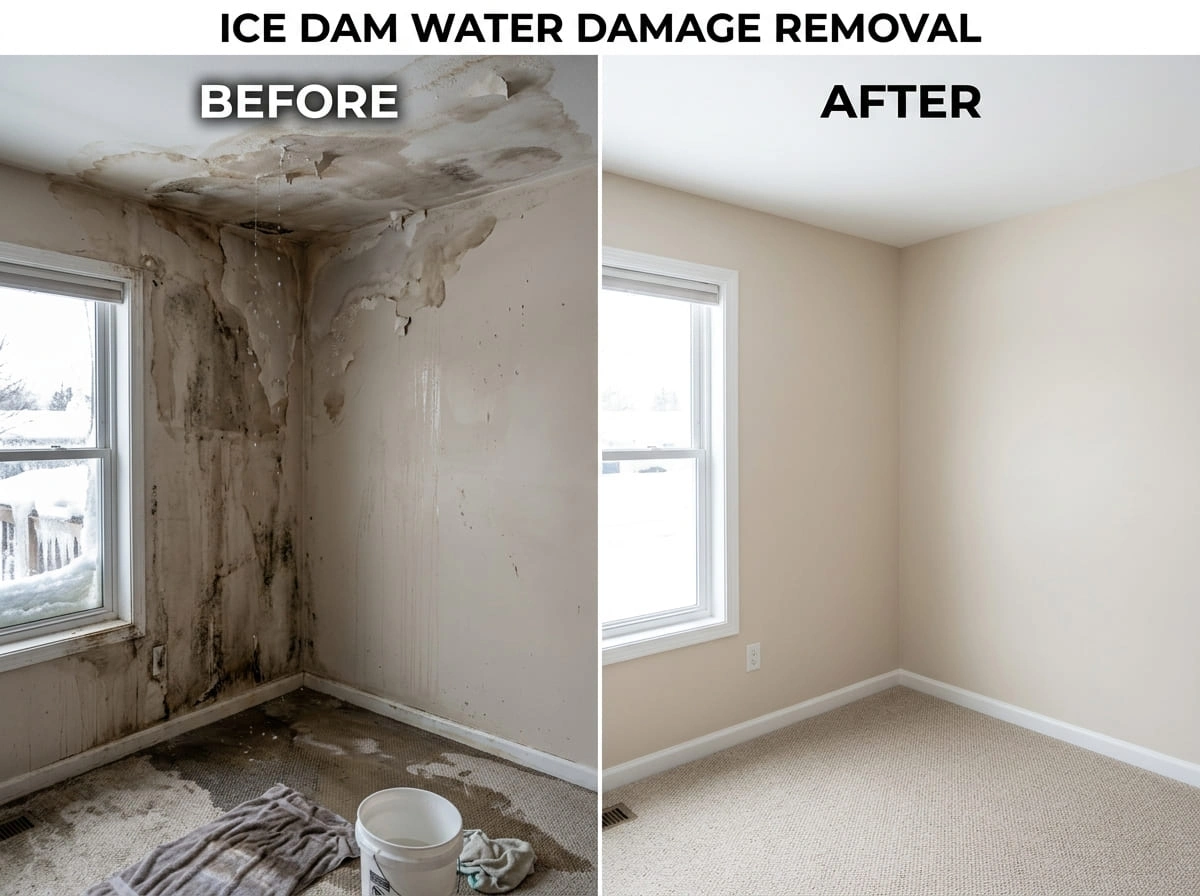
Many owners contact a restoration provider after discovering water on a ceiling, damp insulation, peeling paint, or a spreading stain beneath an ice-covered roof edge. The uncertainty can be stressful: Is the leak still active? Has water spread behind the wall? Is the ceiling safe? What needs to be saved, dried, removed, or repaired?
A professional restoration process replaces guesswork with a documented plan.
A ceiling stain or drip with unknown moisture spread.
A clearer map of affected materials and a defined drying approach.
Wet insulation, damp drywall, or flooring at risk of continued deterioration.
Targeted extraction, drying, monitoring, and material recommendations.
Uncertainty about what to tell an insurer or roofing professional.
Photos, observations, work records, and documented mitigation details.
A homeowner considering unsafe roof access or aggressive ice removal.
Safer, informed coordination with the appropriate roof or ice-management professional.
How We Dry, Protect, and Restore Ice Dam Water Damage
Appropriate equipment and moisture-control methods for winter roof leak cleanup.
Effective water damage restoration is not based on surface appearance alone. Materials can look dry while moisture remains behind drywall, beneath flooring, inside insulation, or within structural cavities. Mont Long Restoration uses restoration-focused methods to inspect, dry, monitor, and document affected areas.
Method Note: Drying equipment placement, duration, and material removal decisions depend on the building assembly, moisture level, temperature, access, water category, contamination risk, and condition of the materials. A moisture assessment is more reliable than assuming a ceiling, wall, or floor is dry because the visible surface feels dry.
Should You Dry Water-Damaged Materials or Replace Them?
Helping Longmont property owners make informed decisions after an ice dam roof leak.
A water-damaged material does not automatically need replacement, but it should not automatically be assumed salvageable either. The best choice depends on the material type, the amount of water absorbed, how long it remained wet, contamination concerns, structural condition, and measured drying response.
| Scenario | Drying or Repair May Be Appropriate | Replacement May Be Appropriate |
|---|---|---|
| Minor ceiling stain with limited moisture | Possible after inspection and successful drying | Needed if drywall is softened, swollen, sagging, or delaminated |
| Wet attic insulation | Possible in limited cases depending on material and condition | Often considered when insulation is saturated, compacted, contaminated, or cannot be dried effectively |
| Hardwood floor exposure | Possible when addressed quickly with controlled drying | Needed when boards buckle, cup severely, delaminate, or remain structurally compromised |
| Carpet and pad exposure | May be evaluated based on water source, duration, and materials | Pad or carpet may require replacement depending on contamination and saturation |
| Wet wall cavity or framing | Framing can often be dried if promptly addressed | Further repair may be required if materials deteriorate or remain compromised |
| Repeated roof leak damage | Local repairs may address isolated interior damage | Broader reconstruction may be needed if repeated moisture has damaged multiple assemblies |
When Replacement Is More Likely
- Drywall is visibly sagging, crumbling, swollen, or structurally weak
- Insulation is saturated, compressed, contaminated, or cannot be dried effectively
- Flooring has buckled, delaminated, or suffered prolonged moisture exposure
- Materials have persistent odor, visible deterioration, or suspected microbial growth
- The same area has experienced repeated leak events and layered damage
Ice Dam Water Damage Removal Costs in Longmont, CO
Upfront scope discussions and clear cost drivers for winter roof leak restoration.
The cost of an ice-dam water damage project depends on the actual moisture conditions inside the property—not simply the size of the visible ceiling stain. A small leak caught early may require a limited assessment and drying setup, while water that has reached attic insulation, multiple ceiling areas, walls, flooring, or contents may require more extensive mitigation and reconstruction.
Main Cost Drivers
| Service Type | Typical Cost Consideration |
|---|---|
| Emergency Moisture Assessment | Depends on urgency, property conditions, and scope |
| Water Extraction | Depends on water volume, affected materials, and access |
| Structural Drying | Depends on equipment needs, affected area, and drying duration |
| Drywall or Insulation Removal | Depends on material extent, disposal, and access |
| Reconstruction | Depends on the repair scope, finishes, and affected rooms |
| Commercial or Multi-Unit Response | Depends on unit count, access planning, coordination, and phased work |
Note: Mont Long Restoration can provide an assessment-based estimate for approved restoration work. Insurance coverage, deductibles, exclusions, and claim decisions are determined by the policy and insurer—not by the restoration contractor.
Which Longmont Properties Need Professional Help After an Ice Dam Leak?
Call when water has entered the building, materials are wet, or the moisture path is unclear.
Some homeowners see ice at the eaves and wait to see whether it melts. That can be reasonable when there is no indoor moisture and roof access is unsafe. But when snowmelt has entered the attic, ceiling, wall, floor, or living space, the issue has moved beyond a roof-edge ice problem and into a water-damage situation.
Professional help is especially important when you are unsure whether materials can be dried, when water may be concealed, or when the property has multiple occupants, shared walls, sensitive contents, or commercial operations.
Ice Dam Water Damage Restoration for Commercial & Multi-Unit Properties
Protect tenant spaces, common areas, inventory, equipment, and operations across Longmont.
Commercial roof leaks and ice-dam water intrusion require careful coordination. A leak above an office, store, restaurant, apartment corridor, warehouse, or common area can disrupt occupants, threaten equipment and inventory, and spread between suites or units. Mont Long Restoration works with owners, facility managers, HOA boards, and property management teams to assess damage, plan mitigation access, document conditions, and support a practical recovery process. Learn more about our commercial water damage restoration services.
| Commercial Service | Description |
|---|---|
| Emergency Water Mitigation | Assess active intrusion, remove accessible water, and protect affected spaces |
| Moisture Inspection | Identify wet ceilings, walls, insulation, flooring, and adjoining areas |
| Structural Drying | Deploy and monitor drying equipment for affected assemblies |
| Contents & Area Protection | Help protect equipment, furnishings, inventory, or tenant areas within scope |
| Documentation Support | Provide records, photographs, and work details for owners and claim communication |
| Reconstruction Planning | Define repair needs after affected materials are dry and evaluated |
Commercial Properties We Support
Why Commercial Owners Choose a Restoration-Focused Response
- Coordination around tenant access, building operations, and safety conditions
- Scalable response for more than one affected room or unit
- Clear damage and drying documentation for stakeholders
- Practical separation of restoration, reconstruction, and roofing responsibilities
- 24/7 availability for urgent water intrusion concerns
| Commercial Project Type | Typical Considerations |
|---|---|
| Multi-Unit Building | Unit-to-unit moisture migration, access coordination, resident communication |
| Retail or Office Space | Contents protection, business continuity, ceiling and flooring exposure |
| Large Facility | Phased mitigation, equipment planning, documentation across zones |
| Industrial or Warehouse Property | Equipment, inventory, elevated roof areas, safety and access planning |
Benefits of Hiring Water Damage Restoration Professionals in Longmont
Protect materials, reduce uncertainty, and establish a documented recovery plan.
A visible ceiling stain can make a winter leak look small. The real concern is what has happened behind the surface. Professional restoration helps owners make decisions based on moisture conditions rather than guesswork.
Identify moisture that may have traveled beyond the visible leak
Remove accessible water and begin structural drying promptly
Help reduce the risk of prolonged dampness in insulation, drywall, flooring, and framing
Protect affected contents and occupied areas where possible
Document the incident, affected materials, and mitigation work
Clarify what may be dried, repaired, removed, or reconstructed
Help owners communicate more effectively with insurers, roofers, and managers
Avoid unsafe DIY roof access, ice chopping, or aggressive water-pressure methods
Prompt Drying Matters: EPA guidance recommends drying water-damaged areas and items within 24–48 hours where possible to help prevent mold growth, while recognizing that material conditions and contamination risks must be evaluated case by case.
Why DIY Ice Dam Removal Can Be Dangerous
Do not risk a fall, shingle damage, electrical exposure, or ceiling collapse while trying to stop a winter leak.
An ice dam can create a stressful emergency, but rushing onto an icy roof can make the situation more dangerous. Homeowners should not climb onto snow-covered roofs, strike ice with hammers or picks, use metal tools aggressively around shingles, or direct high-pressure water at roof ice.
FEMA advises using trained, insured professionals for roof snow removal and warns against sharp tools such as picks; roof and snow work can create serious fall, falling-ice, and structural-load hazards.
Answers to Common Ice Dam Water Damage Questions in Longmont
Practical answers for ceiling leaks, snowmelt roof damage, wet insulation, drying, and prevention.
What should I do if water is leaking from my ceiling after snow in Longmont?
Move people, valuables, and electronics away from the affected area when safe. Place containers under active drips if the ceiling is stable, document visible damage with photos, and avoid water near lights, outlets, or electrical equipment. Do not climb onto the roof. Contact a water damage restoration provider for moisture assessment and drying, and coordinate roof-side diagnosis with an appropriate roofing professional.
How can I tell whether a roof leak is caused by an ice dam?
An ice dam is more likely when there is ice buildup at the eaves, the leak appears during daytime melting or freeze-thaw cycles, and snowmelt is present above a frozen roof edge. However, flashing failures, damaged shingles, wind-driven snow, attic condensation, and plumbing leaks can cause similar symptoms. A professional assessment helps avoid misdiagnosis.
Can an ice dam cause water damage inside walls and ceilings?
Yes. Water can move beneath roof materials and travel through insulation, framing, ceiling cavities, wall assemblies, and flooring layers. The visible stain may not show the full moisture path.
Should I call a roofer or a water damage restoration company for an ice-dam leak?
Often, both types of expertise are needed. A qualified roofer or ice-management provider addresses the roof-side cause or relief strategy. A water damage restoration company evaluates, extracts, dries, and documents interior moisture damage. Mont Long Restoration focuses on the interior mitigation and restoration side.
Is it safe to remove an ice dam myself?
Roof and ice conditions can be hazardous. Avoid climbing on icy roofs, chopping at shingles, or using high-pressure water. If roof-side action is needed, consult an appropriately qualified and insured professional.
Can I chip or hammer ice off my roof?
It is not recommended. Striking ice can damage roof materials, create falling-ice hazards, and put you at risk of slipping or falling. FEMA warns against sharp tools for roof snow removal.
Is steam removal safer than using a shovel or ice pick?
Professional low-pressure steam is commonly used by specialized ice-dam removal providers because it can create drainage paths without mechanically striking the roof surface. Whether it is appropriate depends on roof access, weather, snow load, roof material, and provider capabilities. Mont Long Restoration's role is water mitigation unless ice removal is separately confirmed.
Can calcium chloride damage my roof, gutters, landscaping, or pets?
Ice-melt products can have material, runoff, and safety implications. Do not assume a household salt or chemical is safe for your roof, gutters, vegetation, pets, or local drainage conditions. Ask a qualified roof professional before applying products.
Do I need to remove wet attic insulation after an ice dam?
Not always, but saturated, compressed, contaminated, inaccessible, or persistently wet insulation may require removal or replacement. The proper decision depends on insulation type, moisture extent, contamination risk, drying response, and affected building materials.
How quickly should wet drywall and ceilings be dried?
Prompt action is important. EPA guidance recommends drying water-damaged materials within 24–48 hours where possible to help limit mold growth risk, though each loss must be evaluated based on moisture conditions and material type.
Can water damage from an ice dam cause mold?
Prolonged moisture can support mold growth. Drying affected areas quickly, identifying hidden moisture, and correcting the source of water are important parts of prevention. Not every water event results in mold, but delaying assessment and drying can increase risk.
Does homeowners insurance cover water damage from ice dams?
Coverage depends on your individual policy, the cause of loss, exclusions, deductible, maintenance history, and insurer decision. Some policies may address sudden interior water damage while treating roof repair, maintenance-related conditions, or ice removal differently. Review your policy and speak with your insurer or agent.
How do I document ice-dam water damage for insurance?
Take date-stamped photos and video of visible ice, roof-edge conditions visible from the ground, ceiling stains, active dripping, wet materials, damaged contents, and affected rooms. Keep invoices, moisture documentation, repair recommendations, and communication records. Do not put yourself in danger to obtain photos.
Why does my roof leak only when snow melts?
A melt-only leak can occur when snow melts on a warmer roof surface and refreezes at a colder eave, creating a dam that blocks runoff. It can also indicate roof flashing, shingle, ventilation, insulation, or condensation issues. A roof and moisture assessment can help identify the cause.
Will fixing the ice dam stop the leak permanently?
Removing or relieving visible ice may reduce immediate backup, but it may not correct the underlying cause. Long-term prevention may require a roof, attic insulation, ventilation, air-sealing, flashing, drainage, or underlayment evaluation.
How do I prevent ice dams from returning next winter?
Potential prevention measures include attic air sealing, adequate insulation, ventilation assessment, roof-detail evaluation, safe roof-snow management, and targeted drainage or heating solutions where appropriate. The best approach depends on the specific roof and attic conditions.
Does attic insulation prevent ice dams?
Insulation can be part of a prevention strategy because it helps reduce uneven roof warming from heat escaping the home. It is not a standalone guarantee. Air sealing, ventilation, roof design, and roof condition may also be relevant.
Does attic ventilation prevent ice dams?
Ventilation can be part of maintaining a more consistent roof temperature, but it is not a universal cure. A qualified building-envelope or roofing assessment should consider insulation, air leakage, ventilation design, and roof details together.
Can frozen gutters and downspouts make ice-dam damage worse?
Frozen gutters and downspouts can restrict drainage and contribute to ice buildup at the roof edge. However, ice dams usually involve roof-temperature differences and snowmelt refreezing, so gutter cleaning alone may not solve the problem.
What is the safest way to remove snow from a roof?
Avoid climbing onto an icy roof. If snow removal is needed, use a qualified, insured professional with appropriate safety procedures. FEMA advises professional roof-snow removal and cautions against sharp tools.
Clear Support From First Assessment to Restoration Planning
Emergency response, documented moisture conditions, and straightforward communication.
Mont Long Restoration is committed to providing a clear, professional response when snowmelt enters your property. We explain what we observe, identify the areas requiring attention, document the work performed, and provide practical next-step guidance for drying, repair, reconstruction, and roof-side coordination.
We do not promise that every affected material can be saved, that every roof condition can be resolved by water mitigation, or that insurance will approve a claim. Instead, we provide an assessment-based restoration approach designed to reduce uncertainty and help you protect the property.
Reinforcing Statement: If conditions change during drying or additional affected materials are identified, we will explain the findings and discuss the appropriate corrective options before significant new work proceeds.
Mont Long Restoration
1205 S Main StLongmont, CO 80501
United States
Certifications and Qualifications for Ice Dam Water Damage Restoration
Training and restoration capabilities that matter when moisture affects your property.
Water-damage restoration requires more than surface cleanup. Proper mitigation can involve inspection, extraction, drying, monitoring, material evaluation, microbial-risk awareness, and reconstruction planning. Mont Long Restoration's supplied business profile identifies restoration-related qualifications and licensing claims that should be maintained accurately in all public materials.
Credential Note: Credentials, licenses, registrations, scope-of-work authority, and insurance coverage should be confirmed for the specific team and services assigned to each project. Roof repair, electrical work, plumbing repair, and ice removal may require separate qualified providers depending on the work needed.
Emergency Ice Dam Water Damage Removal in Longmont
Rapid support when snowmelt is entering ceilings, insulation, walls, floors, or business spaces.
When a ceiling leaks after snow, a roof-edge ice ridge is visible, or water is spreading through an attic or upper floor, waiting can allow moisture to move into more materials. Mont Long Restoration provides around-the-clock emergency water damage response across Longmont, Boulder County, and surrounding Front Range communities.
Our emergency focus is to assess the indoor water damage, identify urgent safety concerns, begin appropriate mitigation, and document conditions. If a roof-side repair, tarp, snow removal, or ice-dam relief service is required, we help clarify the issue so the owner can coordinate with an appropriate roofing or ice-management provider.
Emergency Response Process
Emergency Scenarios We Respond To
Insurance Claim Assistance for Ice Dam Water Damage Incidents
Organized records that help Longmont property owners navigate the claims process.
After a winter roof leak, property owners may need to report damage to an insurer. Clear documentation can help establish the observed conditions, affected materials, mitigation steps, and repair needs. Mont Long Restoration can provide restoration-related work records and project documentation for the owner's claim file.
We do not determine coverage, interpret policy language, act as the insurer, or guarantee a claim outcome. Coverage decisions remain with the insurance carrier under the terms of the policy.
Policy Note: Homeowners insurance coverage for ice dam water damage may depend on the cause of the loss, the policy wording, exclusions, maintenance considerations, deductible, and insurer evaluation. Review your policy and consult your insurance agent or carrier for coverage guidance.
Warranty Coverage for Ice Dam Water Damage Restoration Work
Know what may be covered after mitigation, repair, or reconstruction.
Water mitigation, reconstruction, repair labor, and installed materials can involve different warranty terms. Mont Long Restoration provides project-specific information so property owners understand what is included in the approved work scope and what warranty terms apply to completed services or installed materials.
| Coverage Type | Description |
|---|---|
| Workmanship | Applicable warranty terms for approved repair or reconstruction labor |
| Parts and Materials | Manufacturer warranties for qualifying installed products, where provided |
| Drying Documentation | Records showing mitigation work and monitored moisture conditions |
| Reconstruction Scope | Written project details describing repair materials, finishes, and exclusions |
Important Notes
- Warranty terms vary by service type, material, manufacturer, installation conditions, and written agreement.
- Water mitigation does not guarantee future roof performance or prevent a new weather-related event.
- Roof repair, roof replacement, ice-dam removal, plumbing work, and electrical work may have separate providers, scopes, and warranty terms.
- Property owners should retain all invoices, photos, warranty documents, maintenance records, and repair recommendations.
10 Equipped Service Vans Supporting Longmont Ice Dam Water Damage Response
Moisture-control equipment, restoration tools, and people prepared for urgent water intrusion.
Mont Long Restoration's supplied business profile identifies a fleet of 10 fully equipped service vans supporting emergency response across Longmont and nearby Front Range communities. Fleet readiness matters when an active winter roof leak requires timely assessment, water extraction, drying equipment, and site documentation.
Equipment selection depends on the property layout, type of water damage, materials affected, access conditions, weather, and approved work scope.
Flexible Payment Options for Major Ice Dam Water Damage Projects
Help with budgeting when winter water damage requires extensive drying, repair, or reconstruction.
Some ice-dam water damage losses are limited to a small ceiling area. Others involve insulation, multiple rooms, flooring, walls, contents, and reconstruction after drying. When significant approved restoration or reconstruction work is needed, Mont Long Restoration can discuss available payment approaches and project-planning options.
Financing Note: Availability, qualification, terms, rates, and payment schedules depend on the applicable provider and project agreement. Financing is not a substitute for insurance coverage, and no financing terms should be assumed until confirmed in writing.
Mont Long Restoration Service Recognition
Community-facing service claims should always be displayed with accurate supporting information.
Mont Long Restoration's supplied business profile references awards and recognition associated with service quality, local business participation, and neighborhood visibility. If awards are displayed on this page, each should be supported by current, verifiable information, including the award name, issuing organization, qualifying year, category, and any applicable eligibility terms.
Angi Super Service Award
Boulder County Gold Award
Longmont Area Chamber of Commerce Business of the Year
Nextdoor Neighborhood Fave
The Best of Longmont Award
Display Guidance: Use award logos, dates, links, verification references, and eligibility details only when current and authorized. Do not imply that an award applies to a specific ice-dam project, service outcome, or insurance decision.
Senior and Military Discounts on Ice Dam Water Damage Services
Supporting eligible Longmont customers during stressful property-damage events.
Winter water damage can create unexpected expenses. Mont Long Restoration may offer qualifying senior, military, and veteran discounts on eligible water damage restoration services or related approved work.
Offer Note: Discount availability and terms may change. Ask the team for current details when requesting service or an estimate.
Ice Dam Water Damage Removal Hours in Longmont, CO
24/7 emergency help for snowmelt roof leaks, wet ceilings, and structural drying needs.
Ice dam water damage does not wait for regular business hours. A roof leak may begin overnight, worsen when snow melts, or spread during a freeze-thaw cycle. Mont Long Restoration provides 24/7 emergency service availability for urgent water intrusion concerns in Longmont and surrounding Front Range communities.
| Day | Hours |
|---|---|
| Monday | 00:00–23:59 (24/7) |
| Tuesday | 00:00–23:59 (24/7) |
| Wednesday | 00:00–23:59 (24/7) |
| Thursday | 00:00–23:59 (24/7) |
| Friday | 00:00–23:59 (24/7) |
| Saturday | 00:00–23:59 (24/7) |
| Sunday | 00:00–23:59 (24/7) |
Contact Information
Phone: +1 (720) 438-7100
Email: montlongrestoration@gmail.com
Website: waterdamagerestorationlongmontco.com
Mont Long Restoration vs. Typical Ice Dam Cleanup Providers in Longmont
What to look for when choosing help for an active snowmelt roof leak.
Not every company that offers roof work, ice removal, cleanup, or drying handles the full indoor water-damage process. A property owner may need roof-side relief, interior mitigation, reconstruction, and insurance documentation support from different qualified providers. The important question is whether the provider clearly explains its scope, safety limits, documentation process, and next steps.
| Feature | Mont Long Restoration | Typical Limited-Scope Provider |
|---|---|---|
| Emergency Availability | 24/7 emergency service availability | May operate only during standard hours |
| Interior Water Mitigation | Water extraction, moisture assessment, drying, and documentation | May focus only on roof work or visible cleanup |
| Moisture Evaluation | Assesses affected interior materials and migration | May address only the visible source or surface damage |
| Documentation | Provides project records for owners and claims | Documentation depth can vary |
| Residential & Commercial Scope | Homes, HOAs, multi-unit, and commercial spaces | May serve one property type only |
| Restoration Planning | Identifies drying, repair, removal, and reconstruction needs | May not provide post-leak restoration planning |
| Roof-Side Scope Clarity | Separates restoration needs from roofing or ice-removal work | Scope boundaries may be unclear |
The right provider is not simply the first company that can reach the property. Choose a team that communicates clearly, works safely, documents the conditions, and explains what it can—and cannot—perform.
Contact Mont Long Restoration for Ice Dam Water Damage Removal in Longmont, CO
Speak with a restoration professional about an active ceiling leak, wet insulation, snowmelt roof damage, or emergency drying needs.
If you are unsure whether water is coming from an ice dam, a roof leak, wind-driven snow, attic condensation, or another source, do not wait for the visible stain to grow. Mont Long Restoration can assess indoor moisture conditions, help contain and dry the affected area, document the loss, and explain the next steps for restoration and roof-side coordination.
Contact Details
(720) 438-7100
montlongrestoration@gmail.com
1205 S Main St
Longmont, CO 80501
24/7 Emergency Service Available
Current Special Offers
- Free Structural Moisture Assessment
- Flat-Rate 24/7 Emergency Dispatch
- Deductible Relief Discount
- Direct-to-Insurance Billing Promo
- Extraction & Reconstruction Bundle Credit
Protect your home, business, ceilings, insulation, floors, and contents with professional ice dam water damage removal Longmont CO property owners can call when snowmelt water enters the building.