Frozen Pipe Water Damage Cleanup Longmont CO
Longmont, Colorado emergency water damage restoration for homes, rentals, businesses, and commercial properties after frozen or burst pipe leaks.
When you need frozen pipe water damage cleanup Longmont CO property owners can depend on, the priority is clear: stop the active water source, protect people and property, remove standing water, locate hidden moisture, and begin professional drying before secondary damage spreads. A frozen pipe may stay quiet during a cold snap and begin leaking only after temperatures rise and the ice thaws.
Mont Long Restoration provides around-the-clock emergency response for water damage from frozen pipes throughout Longmont and nearby Front Range communities. Our team helps homeowners, landlords, HOAs, property managers, and commercial property owners respond to burst-pipe flooding, water in walls, wet insulation, ceiling leaks, damp flooring, and water migration into crawl spaces or cabinets. After the active plumbing source is isolated or repaired by a qualified plumber, we provide extraction, moisture mapping, structural drying, documentation, and reconstruction planning.
- Emergency water removal after frozen-pipe and burst-pipe leaks
- Moisture inspection for walls, ceilings, flooring, insulation, cabinets, and crawl spaces
- Structural drying and dehumidification to address hidden water damage
- Documentation to support the insurance claim process
- 24/7 emergency availability in Longmont, Boulder County, and the Front Range
Call +1 (720) 438-7100 for 24/7 water extraction, moisture assessment, and structural drying after a frozen or burst pipe.
Request Emergency Frozen Pipe Cleanup
Fill out the form and we'll contact you immediately!
Frozen Pipe Water Damage Restoration Backed by a Complete Mitigation Process
Work with a local restoration team focused on rapid extraction, verified drying, clear communication, and property recovery.
A frozen-pipe loss is more than a plumbing inconvenience. Water can enter wall cavities, insulation, flooring assemblies, ceilings, cabinetry, contents, and crawl spaces before the visible puddle is gone. Mont Long Restoration approaches each loss as a full property-protection event, not simply a water-removal call.
Our process is designed to identify where water traveled, remove excess moisture, establish drying conditions, monitor affected materials, document conditions, and help you understand the next steps. Professional water-damage restoration standards recognize that successful restoration involves assessment, water categorization, drying principles, structural and contents considerations, monitoring, final inspection, and project documentation.
Longmont-based emergency water-damage response for residential and commercial properties
24/7 availability for frozen-pipe leaks, burst-pipe flooding, and water emergencies
Moisture mapping and drying-focused restoration rather than visible-water removal alone
Clear separation between plumbing source repair and property drying/restoration
Documentation of affected materials, moisture conditions, and mitigation work
Support for homeowners, property managers, HOAs, landlords, and businesses
Frozen Pipe Cleanup Near Longmont Neighborhoods, Landmarks & Business Areas
Longmont, Colorado frozen-pipe cleanup for properties across Historic Eastside, Downtown Longmont, Prospect New Town, and nearby Front Range communities.
Whether water is spreading through an older home near Historic Eastside, affecting a rental near Downtown Longmont, reaching a basement in Clover Creek, or damaging a commercial property near Main Street, a frozen-pipe leak needs more than towels and a fan. Mont Long Restoration provides burst pipe cleanup Longmont CO property owners can call for emergency water removal, hidden-moisture inspection, drying, and repair planning.
Longmont's location on the Front Range makes rapid winter changes a practical concern. Freezing nights, daytime sunshine, thawing, and refreezing can expose pipe damage after the original freeze event. A pipe may restrict water flow first, then reveal a crack or split as temperatures rise and water begins moving again. The City of Longmont specifically advises property owners to protect interior and exterior service lines from freezing and to act promptly if no water comes from a faucet or a pipe bursts.
Longmont Communities Served
- Historic Eastside and Westside Historic District
- Downtown Longmont and Main Street areas
- Prospect New Town
- Fox Hill, Meadowview, Clover Creek, and Creekside
- Quail Crossing, Rainbow Ridge, Southmoor Park, and Spangler Park
- Champion Greens, Countryside Village, Garden Square, and Pleasant Valley
- Homes, rentals, commercial properties, and managed communities throughout Longmont
Nearby Cities Served
Local Destinations & Business Areas
- Downtown Longmont and Main Street Historic District
- St. Vrain Greenway and St. Vrain Creek area
- Prospect New Town
- McIntosh Lake and Union Reservoir areas
- Longmont Museum, Roosevelt Park, and Golden Ponds vicinity
- Commercial and mixed-use properties across Longmont and Boulder County
Specialized Frozen Pipe Water Damage Cleanup for Longmont Properties
Front Range restoration specialists focused on moisture detection, structural drying, material protection, and documented recovery.
A burst pipe may be repaired quickly, but the property damage can continue long after the water source is shut off. Water can wick upward into drywall, spread beneath flooring, collect inside insulation, enter cabinets, soak carpet padding, or travel through framing cavities. Removing visible water does not automatically mean the structure is dry.
Mont Long Restoration focuses on the property-recovery phase after a frozen, thawed, or burst pipe causes water intrusion. We assess affected materials, locate hidden water, establish drying equipment where appropriate, monitor progress, and help plan repair or reconstruction after mitigation is complete.
What Specialized Restoration Work Addresses
- Hidden moisture behind walls, under floors, and inside ceilings
- Wet insulation, soaked carpet padding, swollen trim, and damaged cabinetry
- Cupped hardwood, wet subflooring, drywall bubbling, and ceiling staining
- Water migration into crawl spaces, utility areas, garages, and exterior-wall assemblies
- Documentation for insurance claim review and reconstruction planning
- Controlled drying decisions based on materials, water source, exposure time, and moisture conditions
What Happens When a Frozen Pipe Bursts in Longmont?
A pipe can freeze during a cold snap, stay silent overnight, and start leaking once daytime temperatures rise.
Frozen-pipe damage is often discovered after the freeze, not during it. A line may become blocked by ice, develop a crack under pressure, and begin leaking as it thaws. That is why Longmont residents may see water coming from a wall, ceiling, cabinet, or floor after the weather appears to have improved.
If water is actively flowing, turn off the main water supply if it is safe to do so. Avoid wet electrical outlets, appliances, and fixtures. If a ceiling is sagging, stay out of the affected area. Arrange qualified plumbing repair for an active source, then begin emergency water extraction and drying as quickly as possible.
Frozen-Pipe Damage Can Lead To
- Water spreading into wall cavities, insulation, framing, and finished surfaces
- Ceiling stains, sagging drywall, bubbling paint, and damaged light fixtures
- Wet carpeting, soaked padding, warped flooring, and cupped hardwood
- Swollen baseboards, delaminated cabinets, damaged trim, and wet subflooring
- Musty odors and conditions that can support microbial growth if materials remain wet
- Disruption for homeowners, tenants, businesses, landlords, and property managers
- Insurance documentation challenges if damage conditions are not recorded promptly
Prevent Repeat Frozen-Pipe Damage with Prompt Cleanup and Seasonal Preparation
What Longmont property owners should address after a frozen-pipe water loss and before the next cold snap.
Frozen-pipe cleanup is not an annual certification service. However, once emergency drying and repairs are complete, the incident creates an important opportunity to identify why the pipe was vulnerable and what may help reduce future risk. Common concerns include exterior-wall plumbing, cold garages, crawl spaces, hose bibs, unheated utility areas, poorly insulated lines, open vents, vacant-property heat settings, and irrigation winterization.
The City of Longmont advises residents to protect water lines inside and outside the home, ensure heat ducts serving water-line or meter areas are functioning, shut off irrigation water, and blow out sprinkler systems to help keep irrigation lines from freezing.
| Follow-Up Task | What It Involves | Typical Timing | Property-Protection Value |
|---|---|---|---|
| Post-loss moisture inspection | Check affected materials after extraction and during drying | During mitigation and follow-up visits | Confirms whether walls, floors, insulation, and contents are drying properly |
| Structural drying monitoring | Track drying equipment performance and moisture conditions | Daily or as scheduled during active drying | Helps reduce prolonged moisture exposure |
| Repair and reconstruction planning | Identify damaged drywall, flooring, trim, insulation, cabinets, or ceilings | After stabilization and drying assessment | Supports orderly property restoration |
| Plumbing vulnerability review | Coordinate with a qualified plumber regarding the cause and exposed pipe areas | After active leak repair | Helps identify future freeze-risk areas |
| Winterization checklist | Address hoses, hose bibs, irrigation, crawl spaces, garages, insulation, and heat circulation | Before freezing weather | Reduces preventable cold-weather exposure |
Seasonal Preparation Priorities
- Locate and label your main water shutoff before winter weather arrives
- Disconnect hoses and protect exterior faucets or hose bibs
- Winterize and blow out irrigation systems where appropriate
- Maintain safe heat in occupied, vacant, rental, and seasonal properties
- Open cabinet doors where plumbing is exposed to cold interior-wall conditions
- Address drafts, missing insulation, unheated spaces, and poor air circulation around vulnerable lines
Frequency Note: A post-loss property assessment, drying verification, and qualified plumbing evaluation should be scheduled based on the severity of the event and condition of the affected materials. Winter preparation should be reviewed before periods of sustained freezing temperatures.
Cost Note: Frozen-pipe restoration costs vary based on the amount of water, how long materials remained wet, affected rooms, accessibility, contamination conditions, the need for removal or drying, and the extent of repairs or reconstruction. Mont Long Restoration can explain the scope of work before mitigation and repair decisions move forward.
Who Needs Frozen Pipe Water Damage Cleanup in Longmont?
From single-family homes to commercial facilities, water damage can spread quickly after a pipe freezes, splits, or thaws.
Frozen-pipe damage affects more than one type of building. A homeowner may find water under a kitchen sink after a cold night, a landlord may receive a call about a frozen bathroom line in a rental, or a facility manager may discover water damage in a vacant office, restaurant, warehouse, or multi-unit property.
Mont Long Restoration provides emergency water-damage mitigation for properties where a frozen, burst, or thawed pipe has introduced water into building materials or contents.
Residential Properties
Single-family homes, townhomes, condos, and duplexes
Rental & Multi-Family
Rental homes, apartments, and multi-family communities
HOAs & Condominiums
HOAs, condominiums, and common-area properties
Commercial Properties
Offices, retail spaces, restaurants, and mixed-use buildings
Community & Public Facilities
Schools, churches, community facilities, and public-facing spaces
Industrial & Vacant Properties
Warehouses, industrial buildings, storage facilities, vacant homes, and seasonal properties
How Longmont Freeze–Thaw Weather Can Lead to Frozen Pipe Water Damage
Sunny daytime thawing and overnight refreezing can expose a crack or split after a pipe has already frozen.
Longmont winters are not defined only by low temperatures. Rapid temperature changes can matter just as much. Snow and ice may melt during sunny daytime conditions, then refreeze after dark. That freeze–thaw pattern can place stress on vulnerable plumbing and make a hidden crack more likely to reveal itself once ice melts and normal water flow returns.
The City of Longmont notes the importance of protecting water service lines from freezing, including lines inside and outside the property. Property owners should take no-water conditions seriously and contact a plumber rather than assuming the issue will resolve on its own.
Cold-Weather Risks to Watch For
- Exterior-wall pipes exposed to drafts or insufficient insulation
- Plumbing in garages, crawl spaces, utility rooms, and unheated additions
- Outdoor spigots, hose bibs, irrigation systems, and sprinkler lines
- Vacant homes with inadequate heat or an unmonitored water supply
- Cabinet plumbing near cold walls with limited warm-air circulation
- Water lines near open vents, construction gaps, or poorly sealed penetrations
- Lines that freeze overnight and begin leaking during daytime thaw conditions
Seasonal Patterns
- Winter cold snaps: Water flow may slow or stop, and exposed plumbing can freeze
- Daytime thawing: A split line may begin leaking after ice recedes
- Late-winter freeze–thaw cycles: Repeated expansion and contraction can reveal weaknesses
- Spring startup periods: Irrigation systems, hose connections, and exterior fixtures may show damage caused during winter
Where Can Water Travel After a Frozen Pipe Bursts?
Understanding the materials and building areas that may need inspection after a pipe leak.
A burst-pipe event is not limited to the room where the water first appears. Water follows gravity, framing pathways, flooring seams, ducts, utility openings, and hidden voids. Mont Long Restoration inspects the affected area and nearby materials to determine where water may have migrated and what drying or removal decisions may be needed.
| Affected Area or Material | Common Frozen-Pipe Damage Concern | Professional Assessment May Evaluate | Typical Restoration Focus |
|---|---|---|---|
| Walls and drywall | Water inside cavities, bubbling paint, soft drywall | Moisture migration, insulation condition, material stability | Targeted drying, monitoring, selective removal if necessary |
| Ceilings | Staining, dripping, sagging, wet insulation above | Safety, extent of saturation, structural material condition | Containment, drying, controlled removal, repair planning |
| Hardwood and finished flooring | Cupping, buckling, gaps, moisture below surface | Surface and subfloor moisture, material response | Extraction, drying, monitoring, restoration or replacement assessment |
| Carpet and padding | Saturation, odor, water trapped beneath carpet | Water category, backing and pad condition, subfloor moisture | Extraction, lifting, drying, cleaning, or removal as appropriate |
| Cabinets and baseboards | Swelling, delamination, trapped water | Moisture behind toe kicks, walls, and adjoining flooring | Drying, selective access, material evaluation |
| Crawl spaces and utility areas | Standing water, wet insulation, damp framing | Water migration, access, insulation and wood moisture | Extraction, dehumidification, drying, monitoring |
| Contents and furnishings | Wet furniture, boxes, textiles, electronics, and belongings | Material type, exposure conditions, salvage potential | Contents protection, cleaning coordination, documentation |
Reliability Note: Not every wet material needs to be removed, and not every material can be safely dried in place. Decisions depend on the water source, material type, duration of wetting, accessibility, contamination conditions, damage severity, and drying response.
Our 6-Step Frozen Pipe Water Damage Cleanup Process
What to expect when Mont Long Restoration responds to a burst, thawed, or leaking frozen pipe.
Emergency Call and Safety Screening
We begin by discussing the active source, visible water, affected rooms, electrical concerns, ceiling conditions, occupancy, and whether a qualified plumber has isolated or repaired the leak.
On-Site Inspection and Damage Assessment
Our team evaluates visible damage, likely water pathways, affected materials, access needs, and immediate property-protection priorities.
Water Extraction and Contents Protection
We remove standing water where present, protect affected belongings when feasible, and address water that could continue spreading into flooring, cabinetry, wall systems, or lower levels.
Moisture Mapping and Hidden-Water Detection
We use appropriate moisture-detection methods to identify water inside walls, ceilings, flooring assemblies, insulation, crawl spaces, and other concealed areas.
Structural Drying, Dehumidification, and Monitoring
Drying equipment and methods are selected based on the structure, materials, moisture conditions, and scope of the loss. Moisture conditions are monitored to guide next steps.
Documentation, Repair Planning, and Follow-Up
We document mitigation conditions and work performed, coordinate information useful for the claim process, and help plan repairs or reconstruction after the affected structure is stabilized.
Industry Note: Professional restoration standards recognize documentation, inspection, mitigation of further damage, cleaning and drying, monitoring, and final inspection as foundational components of a water-damage restoration project.
What's Included in Our Frozen Pipe Water Damage Cleanup Service
Clear emergency mitigation deliverables for Longmont homeowners, property managers, and businesses.
Every frozen-pipe loss is different. A small leak under a bathroom vanity does not require the same response as a pipe that bursts behind a wall and sends water through ceilings, hardwood flooring, insulation, and a finished basement. Mont Long Restoration explains the observed conditions, recommended mitigation steps, and material concerns before work progresses.
Complete Service Checklist
- Initial emergency call, safety screening, and source-status discussion
- On-site inspection of visible water damage and affected spaces
- Water extraction and removal of standing water where necessary
- Moisture inspection of walls, floors, ceilings, cabinets, insulation, and contents
- Moisture mapping to locate hidden water migration
- Placement of appropriate drying and dehumidification equipment
- Monitoring of drying progress and affected material conditions
- Documentation of visible damage, moisture conditions, and mitigation activities
- Communication support for insurance claim documentation
- Recommendations for selective removal, repair, restoration, or reconstruction when needed
Key Advantages of Choosing Mont Long Restoration
Emergency extraction, moisture-focused assessment, structured drying, and property recovery support.
When a pipe thaws and starts leaking, fast action matters—but the right actions matter too. Mont Long Restoration focuses on controlling secondary damage after water enters the structure. That means looking beyond the visible puddle to inspect areas where moisture can remain hidden.
24/7 emergency response for burst-pipe and frozen-pipe water damage
Water extraction and drying support for homes, rentals, businesses, and managed properties
Moisture mapping for concealed water in walls, floors, ceilings, insulation, and crawl spaces
Clear explanation of plumbing-source repair versus water-damage restoration
Drying monitoring and documentation that support informed repair decisions
Internal service options for carpet drying, ceiling damage, drywall damage, crawl-space drying, hardwood-floor restoration, and reconstruction planning
Longmont and Front Range service-area coverage for winter water emergencies
Frozen Pipe Water Damage Transformations for Longmont Properties
What changes once hidden moisture is identified, water is removed, and the structure begins a controlled drying process.
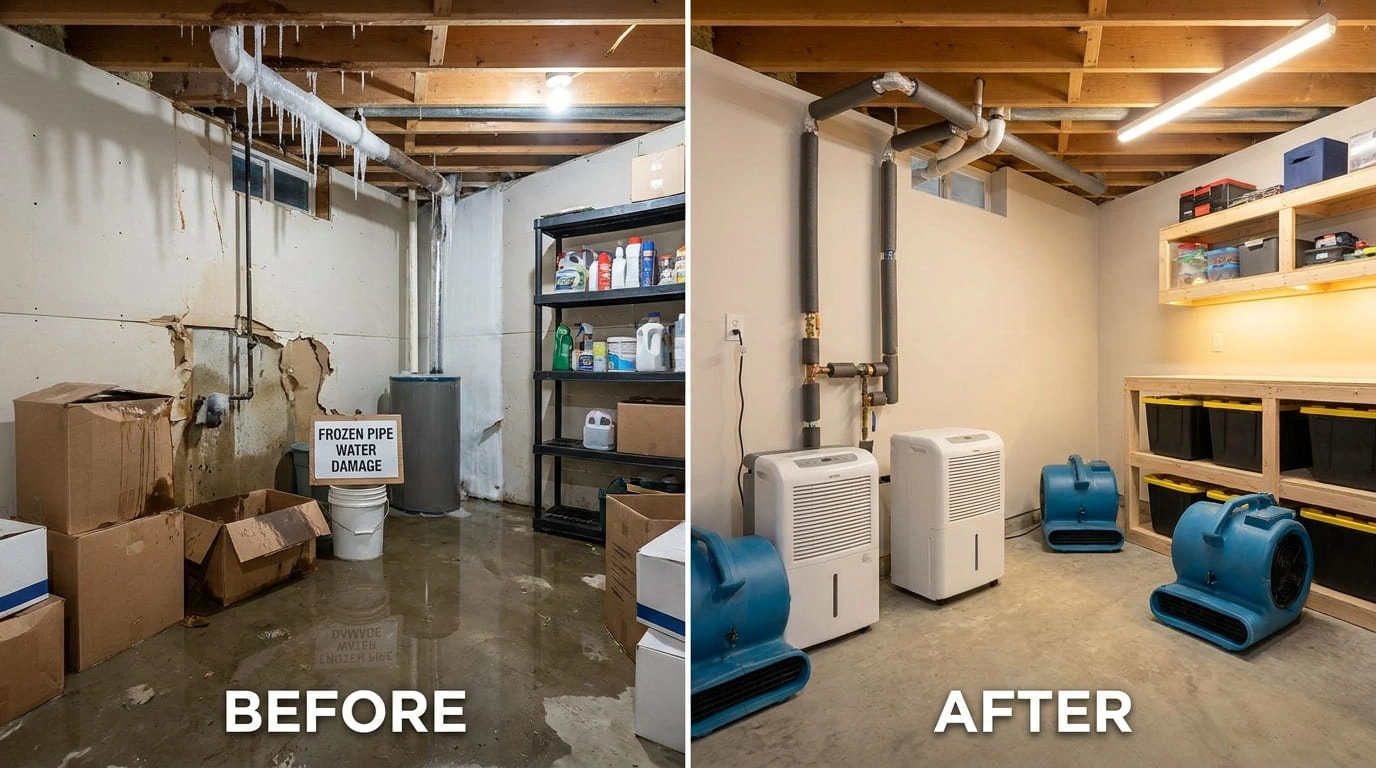
Many property owners call after the obvious emergency has passed. The pipe may already be repaired, the visible water may be mopped up, and the room may look mostly normal. Yet moisture can remain behind baseboards, inside walls, beneath flooring, in insulation, or above ceilings.
Mont Long Restoration helps turn uncertainty into a documented recovery plan.
Water is visible on the floor, but it is unclear how far it traveled.
Affected materials are inspected, moisture paths are mapped, and extraction/drying needs are identified.
A pipe has been repaired, but drywall, flooring, cabinets, or insulation remain wet.
The property receives structural drying, monitoring, and recommendations for materials that can be saved or require repair.
A homeowner is unsure what to photograph, what to keep, or how to communicate the loss.
Damage conditions, moisture findings, and mitigation work are documented to support the property owner's claim process.
The room looks dry, but odors, swollen baseboards, ceiling staining, or flooring changes remain.
Hidden moisture concerns are assessed so repair decisions are not based on appearance alone.
How We Address Frozen Pipe Water Damage in Longmont Properties
Methods selected around the water source, affected materials, building layout, and extent of moisture migration.
Frozen-pipe restoration is not a one-size-fits-all process. A clean-water supply-line leak may be handled differently from water that has been standing for an extended time, mixed with contaminants, or traveled through multiple levels of a property. The appropriate approach depends on the observed conditions, material type, access, safety concerns, and moisture readings.
Professional Methods May Include
- Water extraction from floors, carpets, padding, crawl spaces, and affected rooms
- Moisture mapping of building materials and adjacent areas
- Controlled air movement and dehumidification to support structural drying
- Targeted access where needed to inspect or dry concealed moisture
- Protection or relocation of contents where practical
- Cleaning and stabilization appropriate to the water source and affected surfaces
- Selective removal of damaged materials when drying in place is not appropriate
- Documentation of work performed, equipment use, moisture conditions, and recommendations
Why Method Selection Matters
- Drying decisions should account for drywall, insulation, cabinetry, flooring, subflooring, framing, and contents—not simply visible water
- Improper drying can leave moisture trapped in concealed areas
- Excessive or uncontrolled demolition can create unnecessary disruption
- A documented process helps property owners understand why equipment, monitoring, selective removal, or reconstruction is recommended
Should Water-Damaged Materials Be Dried, Repaired, or Replaced?
Helping Longmont property owners make practical decisions after a frozen-pipe leak.
The pipe itself should be evaluated and repaired by a qualified plumbing professional. Mont Long Restoration's role is to assess the water-damaged property materials after the leak. Some materials can be dried and restored; others may be too swollen, contaminated, deteriorated, or inaccessible to dry reliably.
| Material Condition | Drying or Repair May Be Appropriate | Removal or Replacement May Be Recommended |
|---|---|---|
| Limited clean-water exposure | Materials are stable, accessible, and responding to drying | Not usually necessary if drying goals are reached |
| Drywall with minor moisture impact | May be dried when condition, access, and moisture response allow | May require removal when soft, swollen, deteriorated, contaminated, or unable to dry |
| Wet insulation | Depends on insulation type, amount of saturation, access, and contamination | Often considered for removal when saturated, compressed, contaminated, or trapping moisture |
| Hardwood or engineered flooring | May be restorable when addressed quickly and moisture conditions improve | May require replacement when severely cupped, buckled, delaminated, or structurally compromised |
| Carpet and padding | Clean-water losses addressed rapidly may allow restoration in some circumstances | May require removal after prolonged saturation, contamination, odor, backing damage, or pad deterioration |
| Cabinets, trim, and baseboards | Limited moisture may allow drying and repair | Swelling, delamination, structural breakdown, or persistent moisture can require replacement |
When Removal or Replacement May Be the Safer Path
- Building materials are structurally damaged, swollen, or breaking down
- Water has been present long enough to create persistent moisture concerns
- The water source or conditions make cleaning and drying unsuitable
- Material construction prevents reliable inspection or drying
- Flooring, insulation, drywall, cabinetry, or ceilings cannot return to a stable condition
- Repair work is required after mitigation to restore the property's finish and function
What Does Frozen Pipe Water Damage Cleanup Cost in Longmont?
Clear explanations of the factors that influence extraction, drying, repair, and reconstruction costs.
The cost of water damage from frozen pipes Longmont property owners face depends on more than the size of the visible puddle. A small leak caught immediately may require limited extraction and drying. A pipe that leaks for hours or days while a property is vacant can affect multiple rooms, hidden cavities, flooring, insulation, ceilings, and personal property.
Mont Long Restoration explains the observed damage and recommended scope so you can understand the work before major mitigation or reconstruction decisions are made.
Main Cost Drivers
- How long water flowed before the leak was discovered
- Number of rooms, levels, and materials affected
- Water volume and extent of hidden moisture migration
- Condition of drywall, flooring, carpet, padding, insulation, cabinets, ceilings, and contents
- Accessibility of crawl spaces, wall cavities, under-floor areas, or ceiling systems
- Water category and contamination conditions
- Amount of extraction, drying equipment, monitoring, removal, repair, or reconstruction required
- Emergency timing versus scheduled follow-up work
- Insurance policy details, deductibles, scope approvals, and claim-specific conditions
| Service Type | Typical Pricing Factor | Why the Scope Varies |
|---|---|---|
| Emergency water extraction | Water volume, affected area, access, timing | Standing water and material saturation can differ significantly |
| Moisture inspection and mapping | Number of affected rooms and concealed areas | Water may travel beyond the visible source |
| Structural drying and dehumidification | Material type, moisture load, drying duration | Floors, walls, ceilings, insulation, and crawl spaces dry differently |
| Selective demolition or removal | Condition and salvageability of materials | Some materials can be dried; others cannot be stabilized reliably |
| Repair and reconstruction | Finish materials, building components, and extent of damage | Repairs may range from small drywall work to multi-room rebuilding |
Note: Insurance coverage is determined by the policy, cause of loss, exclusions, occupancy conditions, maintenance history, deductibles, endorsements, and the insurer's review of the claim. Mont Long Restoration can provide damage and mitigation documentation, but cannot guarantee claim approval or coverage.
Which Longmont Properties Need Immediate Frozen-Pipe Cleanup?
If water entered building materials, hidden areas, or finished spaces, professional assessment may help prevent secondary damage.
You may need emergency restoration support even if the active leak has stopped. The right question is not only "Did a pipe burst?" It is also "Where did the water go, how long was it there, and what materials are still wet?"
Professional assessment is particularly important when any of the following situations apply.
Common Use Cases
- Water is leaking from a wall, ceiling, cabinet, or floor after a freeze
- A pipe thawed and started leaking after water service returned
- Water reached drywall, insulation, carpet, flooring, cabinets, or a finished basement
- A ceiling is stained, bubbling, dripping, or sagging
- Water traveled to a lower level, crawl space, utility room, or adjoining room
- A home, rental, vacation property, or business was unoccupied during the leak
- There is a musty odor, swollen baseboard, warped floor, or visible material deterioration
- You need photos, moisture records, work documentation, or repair estimates for an insurance claim
- A plumber repaired the line, but the property still contains wet materials
- You are unsure whether the problem is limited to one fixture, a household pipe, or a utility-side issue
Important: If the entire property has no water or extremely low pressure, do not assume the issue is necessarily a frozen household pipe. Check for utility notices and contact the appropriate City of Longmont water or emergency channel for potential utility-side concerns.
Frozen Pipe Water Damage Cleanup for Commercial & Multi-Unit Properties
Protect offices, retail locations, rentals, common areas, warehouses, restaurants, and managed portfolios after winter pipe failures.
Commercial water damage from a frozen or burst pipe can interrupt operations, affect tenant spaces, damage inventory, close work areas, and create urgent communication challenges for property managers. Mont Long Restoration assists Longmont-area commercial and multi-unit properties with emergency water removal, moisture assessment, drying, documentation, and restoration planning.
We coordinate with property representatives, facility personnel, landlords, HOAs, and management teams to identify affected areas, support access planning, and organize mitigation around the needs of the building.
| Commercial Service | Description |
|---|---|
| Emergency water extraction | Removal of standing water after frozen-pipe leaks, burst lines, or thaw-related failures |
| Moisture assessment | Inspection of walls, floors, ceilings, utility spaces, tenant areas, and common areas |
| Structural drying | Dehumidification and drying support for affected building materials |
| Damage documentation | Photos, notes, moisture conditions, equipment records, and scope-related information |
| Selective removal and stabilization | Material decisions when drywall, insulation, carpet, flooring, cabinets, or ceilings are damaged |
| Reconstruction planning | Post-mitigation planning for repairs, finish restoration, and return-to-use needs |
Commercial Properties We Assist
- Retail centers, office buildings, and mixed-use spaces
- Restaurants, cafés, hospitality properties, and food-service facilities
- Apartment communities, HOAs, condominiums, and managed rentals
- Warehouses, storage facilities, logistics properties, and industrial spaces
- Schools, churches, community centers, and institutional buildings
- Multi-building portfolios and owner-managed commercial properties
Commercial Restoration Considerations
Benefits of Hiring Frozen Pipe Water Damage Restoration Professionals in Longmont
Fast extraction is important, but proper moisture assessment and drying help protect the parts of the property you cannot immediately see.
A wet floor can be obvious. Water inside wall cavities, insulation, subflooring, cabinets, ceiling assemblies, and crawl spaces often is not. Professional cleanup helps property owners make informed decisions based on observed moisture conditions rather than appearances alone.
Helps identify water that traveled beyond the visible leak area
Supports rapid water extraction and property stabilization
Uses moisture inspection to guide drying and material decisions
Reduces the chance of leaving wet building materials behind after surface cleanup
Helps distinguish materials that may be dried from materials that may need removal
Documents damage conditions, mitigation work, and drying progress
Supports organized repair and reconstruction planning after the property is stabilized
Gives homeowners, landlords, and managers a clearer path during a stressful event
Why DIY Frozen Pipe Thawing and Cleanup Can Be Dangerous
Protect people first—especially when water, electricity, concealed pipes, ceilings, or structural materials are involved.
Do not use an open flame, torch, or other unsafe heat source to thaw plumbing. Do not continue DIY thawing if the pipe is concealed, visibly cracked, inaccessible, leaking, near electrical components, or in an area where water has damaged walls or ceilings. If a pipe bursts, turn off the main water supply when it is safe to do so and leave faucets open until repairs are completed, consistent with City of Longmont guidance.
Safety Warnings
- Do not use a torch, open flame, or uncontrolled heat source on frozen plumbing
- Do not enter areas with a sagging ceiling, especially if water is pooled above it
- Do not touch switches, outlets, electrical panels, appliances, or cords in wet areas
- Do not assume a leak is over simply because visible dripping stops
- Do not rely only on towels, household fans, or surface cleaning when water entered walls, floors, ceilings, insulation, or cabinets
- Do not remove structural materials without considering utility lines, electrical hazards, contamination conditions, and hidden damage
- Do not promise yourself that insurance will cover every part of the loss before reviewing the policy and claim facts
Answers to Common Frozen Pipe Water Damage Questions in Longmont
Quick guidance for homeowners, landlords, managers, and businesses facing a frozen or thawed pipe leak.
What should I do if a frozen pipe bursts in my Longmont house?
If water is actively flowing, turn off the main water supply if it is safe to reach the valve. Avoid wet electrical areas, move people away from sagging ceilings, and arrange qualified plumbing repair to stop the source. Then contact Mont Long Restoration for water extraction, moisture assessment, structural drying, and documentation of the affected property.
Why is my pipe leaking now that the weather is warmer?
A pipe can freeze without visibly leaking at first. When ice thaws, water can reach a crack or split and begin escaping into a wall, ceiling, cabinet, crawl space, or floor system. This is why some Longmont pipe leaks appear after a cold night has passed.
Is a frozen pipe an emergency if water is not leaking yet?
It can be. No water, reduced flow, frost on an exposed line, or a suspected frozen section should be taken seriously because a pipe may leak when it thaws. The City of Longmont advises calling a plumber if you open a faucet and no water comes out.
Who do I call first for a burst frozen pipe: a plumber or a water damage restoration company?
If the pipe is actively leaking or broken, a qualified plumber is needed to isolate and repair the source. Mont Long Restoration handles the water damage after the source is controlled, including extraction, moisture mapping, drying, documentation, and repair planning. Significant losses may require both responses at the same time once the area is safe.
Can I use a hair dryer or space heater to thaw a frozen pipe?
Gentle warming methods may be discussed with a qualified plumber for an accessible, undamaged pipe, but never use a torch or open flame. Stop DIY efforts and seek professional help if the pipe is inside a wall, leaking, cracked, near electricity, inaccessible, or located in a wet area.
Is visible water removal enough after a burst pipe?
Not always. Water can migrate into walls, ceilings, insulation, flooring, cabinets, subfloors, and crawl spaces. Proper restoration involves assessing the extent of moisture, extracting water, applying controlled drying, monitoring materials, and determining whether any materials need repair or replacement.
How do you find hidden water damage after a frozen pipe leak?
Moisture-detection methods can help assess affected materials and nearby areas where water may have traveled. The goal is to identify wet building materials behind surfaces or below flooring so drying decisions are based on the actual moisture conditions, not only visible water.
Can wet drywall, insulation, carpet, or hardwood flooring be saved?
It depends on the material, water source, how long it was wet, accessibility, contamination conditions, structural condition, and drying response. Some materials can be dried and restored; others may require removal or replacement because they are swollen, deteriorated, contaminated, or unable to dry reliably. See our pages on drywall repair, carpet drying, and hardwood restoration for more.
How long does it take to dry a house after a burst pipe?
Drying time varies by the amount of water, affected materials, building design, temperature, humidity, access, and extent of water migration. A professional moisture assessment and ongoing monitoring provide a more reliable answer than a fixed timeline.
Can a burst pipe cause mold?
Prolonged moisture can create conditions that support microbial growth. Prompt extraction, drying, moisture monitoring, and appropriate material decisions help reduce the risk associated with wet structural materials.
Does homeowners insurance cover water damage from frozen pipes?
Coverage may be available, but it depends on the policy, exclusions, endorsements, occupancy, maintenance history, vacancy conditions, deductible, and facts of the loss. Photograph damage, take reasonable steps to mitigate further damage, keep records and receipts, notify your insurer promptly, and review the claim with your carrier or agent.
What should I photograph after a frozen pipe bursts?
Photograph the source area if it is safe, standing water, affected walls and ceilings, flooring, cabinets, damaged belongings, visible pipe damage, and any changes before cleanup begins. Keep receipts, notes, and communications related to emergency mitigation and repair.
I have no water or low pressure—how do I know if it is a frozen pipe or a utility issue?
If the problem is limited to one fixture or section of the property after freezing temperatures, a frozen household line may be possible. If the entire property has no water or very low pressure, check City utility notices and contact the appropriate Longmont water or emergency channel for potential utility-side issues.
How can I help prevent frozen pipes after the cleanup is complete?
Ask a qualified plumber to evaluate the cause of the freeze. Before the next cold period, locate your main water shutoff, protect exterior fixtures, disconnect hoses, winterize irrigation, maintain adequate indoor heat, improve airflow around vulnerable plumbing, and address exposed lines in garages, crawl spaces, exterior walls, and utility areas.
Clear Communication From Emergency Mitigation Through Repair Planning
Local response, documented drying decisions, and practical support when a frozen pipe disrupts your property.
Mont Long Restoration is committed to helping Longmont property owners understand what happened, where water may have traveled, what needs immediate attention, and what comes next after a frozen or burst pipe loss. Our focus is on responsive communication, careful assessment, professional mitigation, documented moisture conditions, and a clear path toward restoring the property.
If moisture conditions, affected materials, or drying progress require additional evaluation, we will explain the findings and outline practical corrective options. Any specific workmanship, repair, equipment, or reconstruction warranty is provided only under the written terms applicable to the approved scope of work.
Mont Long Restoration1205 S Main St
Longmont, CO 80501
United States
Certifications and Qualifications Relevant to Frozen Pipe Water Damage Cleanup
Training, restoration practices, and contractor qualifications matter when water enters structural materials.
Water-damage mitigation can involve moisture assessment, drying science, material evaluation, documentation, contents handling, sanitation considerations, and reconstruction planning. Mont Long Restoration's work should be performed by properly trained professionals operating within the scope of their actual certifications, licensing, insurance, and service capabilities.
WRT
Water Damage Restoration Technician training
ASD
Applied Structural Drying training
AMRT
Applied Microbial Remediation Technician training
CR
Certified Restorer qualification
Contractor License
General contractor licensing for applicable reconstruction work
Insured & Trained
Insurance coverage and ongoing equipment, safety, moisture-detection, and drying-method training
Important Note: Only current, verifiable credentials held by applicable personnel should be displayed on the published page. Plumbing-source repairs should be completed by appropriately qualified plumbing professionals when required.
Emergency Frozen Pipe Water Damage Cleanup in Longmont
Rapid action after a pipe freezes, thaws, bursts, or leaks into your property.
When a frozen pipe breaks, the most important steps are to protect people, stop the active water source when safe, and begin mitigating the water already inside the property. Whether water is running through a ceiling, soaking a basement carpet, pooling around cabinets, entering a crawl space, or spreading under hardwood flooring, Mont Long Restoration provides 24/7 emergency water-damage response across Longmont and surrounding Front Range service areas.
Emergency Response Process
- Immediate phone consultation to understand the source, safety concerns, affected rooms, and urgency
- Guidance to shut off water if safe and avoid wet electrical or structurally unsafe areas
- Coordination around active plumbing-source repair when the line has not been isolated
- On-site inspection, emergency extraction, and moisture assessment
- Structural drying and dehumidification based on the observed damage conditions
- Documentation of damage and mitigation work for the property owner's records
Emergency Scenarios
- Water leaking from a wall or ceiling after a freeze
- A pipe thawed and started leaking overnight or while the property was vacant
- Burst-pipe water entering flooring, cabinets, insulation, or a finished basement
- Wet drywall, sagging ceilings, or water near electrical components
- Water in a crawl space, garage, utility room, or exterior-wall cavity
- Pipe repair is complete, but the property still has wet materials or hidden moisture
Insurance Claim Assistance After a Frozen Pipe Leak
Documentation that helps property owners organize the facts of a water-damage loss.
A frozen-pipe loss can create immediate questions about photos, damaged materials, emergency mitigation, repair estimates, and insurance communication. Mont Long Restoration can help document the observed water damage and mitigation work so you have organized information to provide to your insurer.
We focus on documenting property conditions and services performed; the insurer determines coverage based on the policy and facts of the claim.
Insurance Documentation May Include
- Initial inspection notes and photos of visible water damage
- Photos of affected walls, ceilings, flooring, cabinets, contents, and materials
- Moisture findings and drying-related observations
- Water extraction, drying-equipment, monitoring, and mitigation records
- Itemized estimates or invoices for approved mitigation, repair, or reconstruction work
- Documentation of materials removed or preserved when applicable
- Information that helps explain the observed cause, location, and impact of the water event
Policy Note: Coverage depends on your specific insurance policy, deductible, endorsements, exclusions, occupancy requirements, maintenance conditions, and the insurer's claim investigation. Review your policy and consult your insurer or agent for coverage questions. Mont Long Restoration does not guarantee claim approval, settlement amount, or coverage.
Warranty Coverage for Frozen Pipe Water Damage Cleanup Work
Clear written terms help property owners understand what is covered after mitigation, repair, or reconstruction work.
Emergency water mitigation, material drying, repairs, and reconstruction can involve different scopes of work and different warranty terms. Mont Long Restoration should provide any applicable workmanship or reconstruction warranty in writing for the specific approved scope of work.
| Coverage Type | What It May Address | Important Consideration |
|---|---|---|
| Emergency mitigation work | Scope of extraction, drying equipment, monitoring, and documented procedures | Results depend on conditions discovered during the loss and material response |
| Repair workmanship | Labor associated with approved repair work | Written terms should define duration, exclusions, and covered work |
| Reconstruction workmanship | Work performed to restore approved building components | Terms should be provided with the reconstruction scope |
| Parts and materials | Manufacturer coverage for qualifying installed products | Manufacturer warranties can vary by product and installation requirements |
| Documentation | Records of mitigation, moisture conditions, and approved work | Documentation supports property records but is not insurance-coverage approval |
Important Notes: Warranty terms vary by the service performed, approved scope, materials used, manufacturer requirements, pre-existing conditions, and property-specific circumstances. Written terms provided for the individual project govern any applicable coverage.
Fully Equipped Response Resources for Frozen Pipe Water Damage Cleanup
Water extraction, moisture detection, drying, and documentation tools for residential and commercial losses.
A frozen-pipe leak can affect a small closet, an entire level of a home, a finished basement, a tenant space, or a commercial building. The restoration response needs to match the extent of the water intrusion. Mont Long Restoration deploys appropriate emergency-response resources for assessment, extraction, drying, and property stabilization.
Emergency-response vehicles serving Longmont and nearby Front Range communities
Water-extraction equipment for standing water and saturated materials
Moisture-detection tools for assessing affected building materials
Drying and dehumidification equipment selected for the property conditions
Containment and protective materials for affected work areas where appropriate
Documentation tools for photos, moisture observations, equipment records, and project notes
Equipment and materials to support carpet drying, crawl-space drying, ceiling damage response, and structural drying workflows
Flexible Planning for Frozen Pipe Reconstruction Projects
Helping property owners understand the path from emergency mitigation to approved repairs.
Emergency mitigation often comes first because water damage can worsen while a property owner waits for a final repair plan. Once the property is stabilized and drying conditions are documented, the next phase may involve repair or reconstruction decisions for drywall, insulation, flooring, ceilings, cabinetry, trim, paint, or other affected materials.
Mont Long Restoration can discuss available payment, estimate, scheduling, and reconstruction-planning options for larger approved projects. Any financing option, promotional offer, credit program, or payment arrangement is subject to separate eligibility, terms, and written approval.
Project-Planning Support
- Separate mitigation and reconstruction scopes when appropriate
- Clear explanation of urgent work versus planned repair work
- Itemized estimates for approved repair or reconstruction needs
- Coordination around insurance documentation and claim-related information
- Discussion of available payment or financing options only where currently offered and applicable
- Scheduling options designed around occupancy, access, tenant needs, and business continuity
Recognition for Water Damage Restoration Service in Longmont
Third-party recognition should reflect real, current, and verifiable service achievements.
Mont Long Restoration values the trust of Longmont homeowners, businesses, landlords, property managers, and community members. Any awards, review-platform distinctions, local recognition, or service honors presented on this page should be current, accurately named, and supported by the organization that issued the recognition.
Angi Super Service Award
Boulder County Gold Award
Longmont Chamber Business of the Year
Nextdoor Neighborhood Fave
Best of Longmont Award
Display Standard: Only verifiable award names, dates, issuing organizations, and applicable service categories should be used in the final published design. Recognition should support—not replace—clear scope explanations, emergency responsiveness, and documented restoration work.
Senior and Military Discount Opportunities for Frozen Pipe Cleanup
Support for qualifying seniors, service members, veterans, and households facing an unexpected water emergency.
A frozen-pipe loss is rarely planned. Mont Long Restoration may offer qualifying discounts, seasonal promotions, or project-specific savings for eligible customers when available. Availability, eligibility, applicable services, exclusions, and combination rules should always be confirmed before work begins.
Senior Customer Savings
Qualifying savings on eligible water-damage services for senior property owners
Military & Veteran Discount
Discounts on eligible mitigation or repair work for service members and veterans
Seasonal Promotions
Seasonal emergency-response promotions when available
Bundle Credits
Project-specific savings for bundled mitigation and reconstruction scopes
Written Estimate Review
Written estimate review before approval of qualifying work
Important Note: Discounts, promotional pricing, deductible-related offers, and bundled-service credits may be subject to eligibility requirements, claim conditions, service scope, and current program terms. Confirm availability at the time of scheduling.
Frozen Pipe Water Damage Cleanup Hours in Longmont, CO
24/7 emergency availability for burst-pipe water removal, moisture assessment, and structural drying.
A frozen pipe does not wait for normal business hours to thaw, split, or begin leaking. Mont Long Restoration is available around the clock for Longmont property owners dealing with burst-pipe flooding, water in walls or ceilings, wet flooring, soaked insulation, crawl-space water, and other urgent water-damage conditions.
| Day | Emergency Service Hours |
|---|---|
| Monday | 00:00 – 23:59 (24 Hours) |
| Tuesday | 00:00 – 23:59 (24 Hours) |
| Wednesday | 00:00 – 23:59 (24 Hours) |
| Thursday | 00:00 – 23:59 (24 Hours) |
| Friday | 00:00 – 23:59 (24 Hours) |
| Saturday | 00:00 – 23:59 (24 Hours) |
| Sunday | 00:00 – 23:59 (24 Hours) |
Contact Us Anytime
Phone: +1 (720) 438-7100
Email: montlongrestoration@gmail.com
Website: waterdamagerestorationlongmontco.com
Mont Long Restoration vs. Basic Water Removal After a Frozen Pipe Leak
The difference is not only removing visible water—it is identifying moisture, drying affected materials, documenting conditions, and planning the next steps.
Not every response to a frozen-pipe leak includes a full moisture assessment and structured drying plan. A property may look dry after surface water is removed while moisture remains inside walls, ceilings, flooring, insulation, cabinets, crawl spaces, or adjoining rooms.
| Feature | Mont Long Restoration Approach | Basic Surface-Water Response |
|---|---|---|
| Emergency water removal | Addresses standing water and immediate property stabilization | May focus only on visible water |
| Moisture assessment | Evaluates affected materials and hidden water migration | May not inspect beyond obvious damage |
| Structural drying | Uses drying and dehumidification methods based on observed conditions | May rely on household fans or limited drying support |
| Documentation | Records visible damage, moisture findings, and mitigation activity | May provide limited or no restoration documentation |
| Material decisions | Helps evaluate drying, selective removal, repair, and reconstruction needs | May leave the owner to decide based on appearance |
| Plumbing-source distinction | Clarifies that a qualified plumber stops the active leak while restoration addresses property damage | May not explain which professional handles each stage |
| Follow-up planning | Supports drying monitoring and post-mitigation repair planning | May end after the initial water removal |
The right restoration provider should explain what is wet, why it matters, what work is recommended, and what the property owner can expect next. Avoid choosing solely on the promise of a quick surface cleanup when water has entered building materials.
Contact Mont Long Restoration for Frozen Pipe Water Damage Cleanup in Longmont, CO
Talk with an emergency water-damage restoration professional about extraction, hidden moisture, structural drying, documentation, and repair planning.
If a pipe froze, thawed, and began leaking—or if a repaired pipe has left water in walls, ceilings, flooring, cabinets, insulation, or a crawl space—Mont Long Restoration is ready to help. Call for emergency water removal, moisture assessment, structural drying, and organized next-step planning for your Longmont home, rental, commercial property, or managed building.
If the plumbing source is still active, turn off the water if safe to do so and arrange qualified plumbing repair. Once the source is isolated, prompt restoration can help address the water already inside the property before secondary damage becomes more extensive.
Contact Mont Long Restoration
(720) 438-7100
montlongrestoration@gmail.com
1205 S Main St
Longmont, CO 80501
24/7 Emergency Service Available
Current Special Offers
- Free Structural Moisture Assessment
- Flat-Rate 24/7 Emergency Dispatch
- Deductible Relief Discount
- Direct-to-Insurance Billing Promo
- Extraction & Reconstruction Bundle Credit
Protect your home, rental, business, or commercial property with professional frozen pipe water damage cleanup Longmont CO property owners can call for 24/7 water extraction, moisture mapping, structural drying, damage documentation, and restoration planning from Mont Long Restoration.