Water-Damaged Drywall Repair Longmont, CO
Longmont Drywall Water Damage Repair for leaks, wet ceilings, basement flooding, and complete reconstruction
When you need Drywall Water Damage Repair Longmont CO property owners can rely on, the priority is not simply covering a stain or patching a damaged wall. First, the water source must be stopped. Then the affected wall or ceiling needs to be inspected for hidden moisture, wet insulation, soft gypsum, damaged framing, and water that may have migrated beyond the visible area.
Mont Long Restoration provides emergency water damage restoration, moisture inspection, structural drying, selective drywall removal, ceiling repair, texture matching, and reconstruction for Longmont homes, businesses, apartments, HOAs, and managed properties. Whether water came from a burst pipe, a frozen pipe, a toilet overflow, a water-heater leak, a roof leak, a sump-pump failure, a dishwasher line, or a flooded basement, our team follows the complete restoration path:
With 16 years of client-supplied experience, 40 skilled professionals, 10 equipped service vans, and 24/7 emergency availability, Mont Long Restoration helps property owners make informed decisions about whether drywall can be dried and saved or should be removed and replaced.
- Moisture inspection, controlled drying, and water damaged drywall repair for Longmont homes and businesses
- Ceiling water damage repair, wall reconstruction, wet-insulation assessment, and texture matching
- Emergency response for leaks, overflows, burst pipes, basement water, roof leaks, and storm damage
- Clear documentation and reconstruction planning for homeowners, property managers, HOAs, and insurance discussions
Call +1 (720) 438-7100 for urgent water damage assessment, structural drying, and drywall reconstruction in Longmont.
Request Emergency Drywall Restoration
Fill out the form and we'll contact you immediately!
Drywall Water Damage Repair Backed by 16+ Years of Experience
A Front Range restoration team focused on drying first, rebuilding correctly, and explaining every step
Water-damaged drywall can look like a minor cosmetic problem while moisture remains hidden behind paint, baseboards, insulation, or ceiling finishes. Mont Long Restoration approaches each loss as a restoration project—not a quick patch. We inspect the visible damage, evaluate likely moisture migration, explain what can be dried versus what should be removed, and rebuild the affected area only after it is ready for reconstruction.
Our work is built around clear communication for Longmont homeowners, landlords, commercial property managers, apartment communities, and HOA representatives. You should understand why a wall, ceiling, baseboard, or insulation section can remain—or why removal is the safer long-term option.
16+ Years Experience
Serving Longmont, Boulder County, and surrounding Front Range communities since 2010
40 Skilled Professionals
With 10 fully equipped service vans ready for emergency dispatch
Full Restoration Scope
Water mitigation, structural drying, drywall repair, ceiling repair, texture matching, and reconstruction under one coordinated scope
24/7 Emergency Availability
For active leaks, wet ceilings, burst pipes, basement flooding, and urgent water intrusion
4.9/5 Rating
Client-supplied aggregate rating based on 8,647 ratings
Water Damage Repair Near Longmont Neighborhoods, Historic Areas & Business Districts
Serving Longmont properties near Downtown, Main Street, Prospect New Town, and the St. Vrain Creek corridor
A ceiling stain in an older Historic Eastside home, wet drywall after snowmelt near Southmoor Park, a pipe leak in a Prospect New Town townhome, or a flooded finished basement near Fox Hill can require very different drying and reconstruction plans. Mont Long Restoration adapts the scope to the property, the water source, the materials affected, and the level of moisture found behind the surface.
We serve residential and commercial properties throughout Longmont, including older homes with plaster or aging finishes, newer attached housing with HOA coordination needs, apartments, office spaces, restaurants, retail buildings, and managed communities.
Longmont Neighborhoods & Communities
Nearby Communities
Local Landmarks & Service Context
Specialized Water Damage Drywall Repair for Longmont Walls and Ceilings
Front Range restoration specialists for hidden moisture, damaged drywall, wet insulation, and finished-space reconstruction
A drywall patch may hide a stain, but it does not prove the wall cavity, insulation, framing, or ceiling structure is dry. Water can travel downward, sideways, behind baseboards, into seams, across ceiling cavities, and into floors below. That is why water damaged drywall repair should begin with source control and moisture assessment—not just joint compound and paint.
Mont Long Restoration handles the restoration decisions that come before cosmetic repair. We assess whether the affected drywall remains firm and structurally sound, whether seams are intact, whether insulation retained moisture, whether a ceiling has begun to sag, and whether water category or contamination changes the scope.
What Happens When Drywall Gets Water Damaged in Longmont?
A water stain can be visible evidence of a much larger problem behind the wall or ceiling
Drywall is made with a gypsum core and paper-facing materials that can lose integrity when wet. Water may cause paint bubbles, brown ceiling rings, swollen seams, soft spots, crumbling edges, sagging ceilings, loose baseboards, damaged insulation, and musty odors. The visible surface does not always show the full moisture path.
A wall or ceiling may be repairable when the water source is controlled, the board remains solid, seams are intact, insulation is not retaining moisture, and appropriate moisture assessment confirms the cavity is dry. However, swollen, soft, sagging, mold-affected, contaminated, or structurally compromised drywall often needs selective removal and replacement before reconstruction can begin. EPA guidance similarly notes that drywall may be dried in place when there is no obvious swelling and seams are intact; otherwise, removal may be necessary, with wall-cavity ventilation considered when drywall is left in place.
Can Wet Drywall Be Saved After a Leak?
Longmont property owners need moisture-based answers—not automatic demolition or guesswork
"Can wet drywall be saved?" is one of the most common questions after a leak. The answer depends on the source of water, how long materials stayed wet, the condition of the gypsum board, whether water reached insulation or framing, the amount of saturation, and whether the loss involved contaminated water.
Mont Long Restoration does not treat every wet wall the same way. We inspect the damage and recommend a scope based on what the materials can realistically support after drying and cleaning.
| Drywall Condition | Possible Restoration Approach |
|---|---|
| Minor clean-water exposure, firm board, intact seams, dry cavity | Controlled drying and targeted finish repair may be possible |
| Drywall has a stain but remains solid and dry after assessment | Stain sealing, surface repair, primer, and repainting may be appropriate |
| Swollen, soft, bubbling, crumbling, or delaminated drywall | Selective removal and drywall replacement may be recommended |
| Sagging or water-loaded ceiling drywall | Secure assessment and removal/reconstruction may be necessary |
| Wet insulation behind a wall or ceiling | Insulation must be assessed separately before the cavity is closed |
| Toilet, drain, sewer, or floodwater exposure | Affected porous materials may require removal, cleaning, and sanitation procedures |
| Persistent odor, repeated leak, or suspected hidden growth | Further assessment is needed before cosmetic repairs begin |
Drywall and gypsum wallboard may sometimes dry in place when swelling is absent and seams remain intact, but drying the wall cavity is more difficult and should not be assumed based on surface appearance alone. EPA guidance also advises addressing water problems quickly and drying materials completely before painting.
Who Needs Water-Damaged Drywall Repair in Longmont?
From single-family homes and townhomes to offices, rentals, restaurants, and managed communities
Water damage does not stay within one room or one type of property. A dishwasher leak can affect a kitchen wall and basement ceiling. A frozen pipe can soak insulation and drywall behind an exterior wall. A toilet overflow can damage flooring, lower-level ceilings, and adjacent wall finishes. Mont Long Restoration helps property owners and managers coordinate drying and reconstruction across a wide range of building types.
Residential & Managed-Property Clients
Commercial Property Clients
How Longmont Weather and Property Conditions Lead to Wet Drywall
Freeze-thaw swings, snowmelt, storm runoff, roof leaks, and basement water can expose weak points
Longmont's Front Range climate can bring quick winter temperature shifts, snowmelt, spring runoff, summer thunderstorms, occasional heavy rain, and hard-freeze events. These conditions can reveal plumbing weaknesses, worsen ice-dam problems, expose drainage limitations, or lead to water intrusion in basements, ceilings, crawl spaces, and exterior walls.
Colorado winter weather can shift rapidly, with temperature swings that contribute to melting and refreezing conditions. For Longmont property owners, that can mean attention to frozen pipes, thaw-related leaks, roof water intrusion, ice dams, wet basements, sump-pump problems, and ceiling stains after weather events.
Seasonal Water-Damage Concerns
Local Property Patterns
Common Causes of Water-Damaged Drywall in Longmont, CO
From burst pipes and wet ceilings to basement flooding and appliance-line leaks
The source of water affects the restoration plan. Clean water from a recently failed supply line may be handled differently from a toilet overflow, sewer backup, stormwater event, or long-term roof leak. Mont Long Restoration identifies the likely cause, evaluates affected materials, and explains the recommended drying, cleaning, removal, and reconstruction steps.
| Water-Loss Source | Common Drywall Impact | Related Mont Long Service |
|---|---|---|
| Burst or frozen pipe | Wet walls, ceilings, insulation, flooring, and baseboards | Burst Pipe Water Damage Cleanup |
| Roof leak or ice dam | Ceiling stains, damp insulation, sagging drywall, attic-to-ceiling moisture | Roof Leak Repair / Ice Dam Removal |
| Toilet overflow | Bathroom walls, hallways, flooring, ceilings below, and porous materials | Toilet Overflow Cleanup |
| Water-heater leak | Utility-room drywall, nearby floors, trim, and wall cavities | Water Heater Leak Cleanup |
| Dishwasher, refrigerator, or washing-machine leak | Kitchen or laundry walls, cabinets, floors, and lower-level ceilings | Appliance Leak Cleanup |
| Basement flood or seepage | Lower drywall, insulation, baseboards, carpet, and finished rooms | Basement Water Damage Cleanup |
| Sump-pump failure | Flooded basement finishes, drywall, flooring, and stored contents | Sump Pump Failure Cleanup |
| Stormwater intrusion | Basement walls, crawl spaces, ceilings, exterior-wall materials | Storm & Flood Damage Cleanup |
| Drain or sewer backup | Contaminated porous materials, lower-level drywall, and flooring | Emergency Water Removal |
Our 6-Step Water-Damaged Drywall Repair Process
What to expect when Mont Long Restoration responds to a Longmont leak, wet wall, or damaged ceiling
Immediate Call & Loss Assessment
Call +1 (720) 438-7100 and explain the source of water, whether the leak is active, which rooms are affected, and whether there are safety concerns such as a sagging ceiling, standing water, or nearby electrical components.
Source Control & Safety Review
The water source must be stopped before drywall restoration can succeed. When needed, the appropriate plumbing, roofing, drainage, or building repair must be addressed. Our team evaluates the affected area and identifies immediate safety concerns.
Moisture Inspection & Damage Mapping
We inspect visible damage and assess likely moisture migration into drywall, insulation, ceilings, baseboards, floors, and adjoining areas. A water stain alone does not show the complete damage path. Our moisture mapping service helps identify hidden impact.
Extraction, Structural Drying & Dehumidification
When the loss requires it, we remove standing water and deploy controlled drying equipment. Air movement, dehumidification, and moisture monitoring are used to reduce moisture in affected materials and the surrounding environment.
Selective Material Removal & Cleaning
Drywall, insulation, trim, carpet, or other porous materials that are structurally compromised, contaminated, or not suitable for drying may need selective removal. We explain why each affected material is included in the scope.
Drywall Reconstruction & Finish Restoration
After the area is ready for reconstruction, we repair or replace drywall, address seams and openings, blend texture where feasible, prepare stains appropriately, and coordinate paint, baseboard, trim, and finished-surface restoration according to the approved scope.
What's Included in Our Longmont Drywall Water Damage Repair Service
Clear deliverables for homes, rentals, HOAs, and commercial properties
Every loss is different, so the approved scope depends on the source of water, affected materials, contamination category, moisture findings, and property needs. Mont Long Restoration explains what is included before reconstruction begins so that you understand the difference between mitigation, drying, demolition, and finish repair.
Why Mont Long Restoration Is Built for Water-Damaged Drywall Repair
Commercial-grade drying, practical reconstruction guidance, and one coordinated restoration plan
Water damaged drywall repair should not force you to coordinate several disconnected companies without a clear sequence. Mont Long Restoration helps manage the process from emergency assessment through reconstruction, with the goal of restoring the affected area without skipping the moisture-control work that should happen first.
Emergency response for active leaks, water-damaged ceilings, wet walls, basement flooding, and burst-pipe events
Moisture-focused assessment before cosmetic repairs begin
Structural drying and dehumidification for affected building materials
Selective removal rather than automatic full-room demolition
Drywall, ceiling, texture, primer, paint-preparation, and reconstruction coordination
Clear documentation for property records, managers, HOAs, and insurance discussions
Residential and commercial water damage restoration support throughout Longmont and Boulder County
Drywall Water Damage Repair Transformations for Longmont Properties
What changes after hidden moisture is addressed and reconstruction is completed
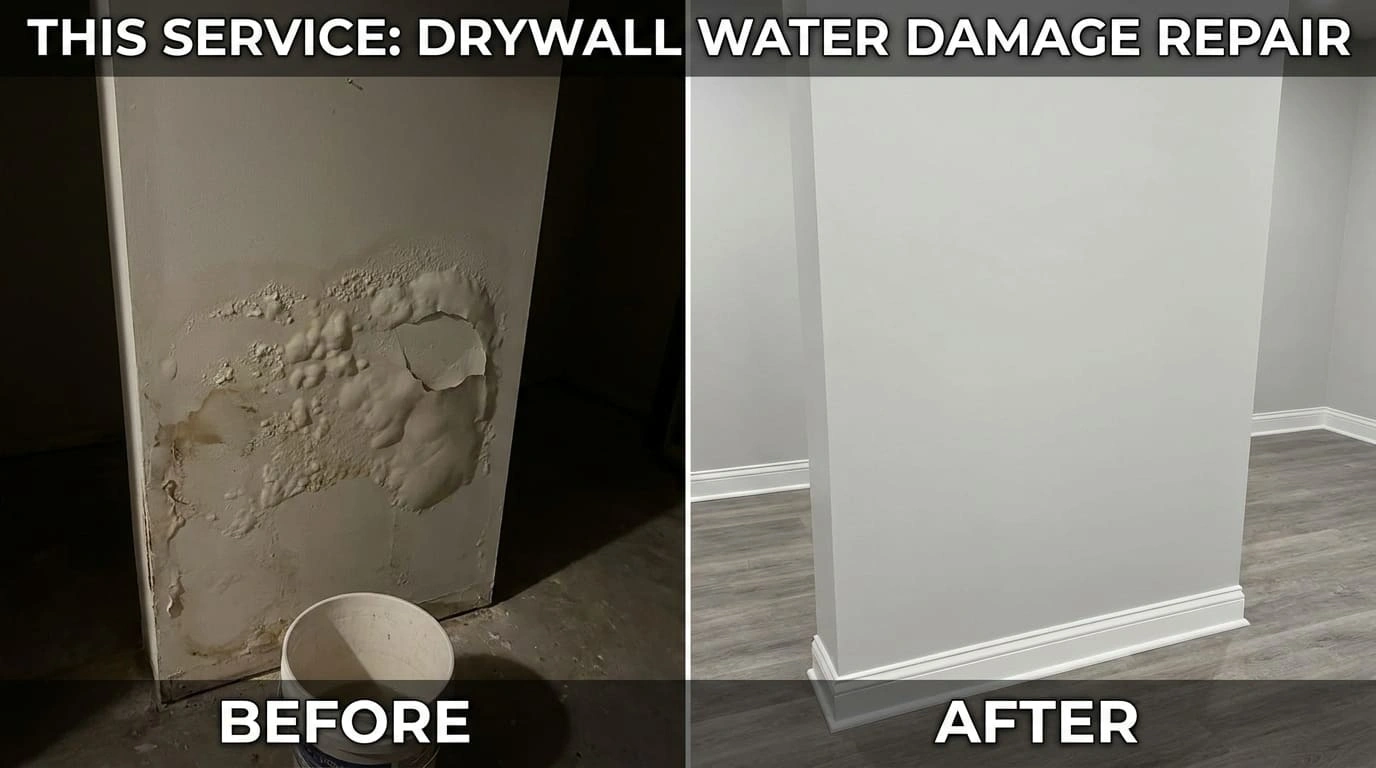
A successful drywall-water-damage project is more than a fresh coat of paint. The result should be a dry, stable, appropriately cleaned and repaired area that is ready for normal use. Whether the affected area is a basement wall, kitchen ceiling, bathroom drywall, office corridor, or apartment unit, the work should follow the actual condition of the materials.
How We Repair and Replace Water-Damaged Drywall
Proper materials, drying verification, finish work, and reconstruction planning for Longmont properties
The right repair method depends on the room, wall or ceiling configuration, existing drywall thickness, finish style, water source, and material condition. Mont Long Restoration works to restore the affected area while respecting what is still sound and addressing materials that are no longer suitable for use.
Should You Repair Water-Damaged Drywall or Replace It?
Mont Long Restoration helps Longmont owners choose the right path based on material condition
Not every stain requires full drywall replacement, and not every wet panel can be safely saved. The correct decision comes from the source of water, how long materials remained wet, whether drywall lost its integrity, whether insulation is wet, and whether the event involved clean or contaminated water.
| Scenario | Repair May Be Appropriate | Replacement May Be Recommended |
|---|---|---|
| Old stain from a resolved leak | Yes, after moisture is addressed and drywall is dry and sound | Only if board is damaged or staining reflects deeper material failure |
| Minor clean-water exposure caught quickly | Possibly, if drywall remains firm and the cavity dries properly | Depends on saturation, insulation, and measured moisture conditions |
| Bubbling paint or small surface damage | Sometimes, after source correction and drying | If paper facing, seams, or gypsum core are compromised |
| Soft, swollen, crumbling, or delaminated drywall | Usually not a reliable long-term patch candidate | Often appropriate |
| Sagging or water-loaded ceiling | Limited repair may be unsafe or ineffective | Commonly requires controlled removal and replacement |
| Wet insulation behind drywall | Depends on material condition and drying results | May require removal before cavity closure |
| Toilet overflow, sewer backup, or contaminated water | Limited for porous material exposure | Often appropriate for affected porous materials |
| Persistent odor, repeated leak, or suspected hidden growth | Only after the source and hidden conditions are resolved | May be needed after proper inspection |
Water-Damaged Drywall Repair Costs in Longmont, CO
Clear cost drivers for drying, selective removal, drywall replacement, ceiling repair, and reconstruction
The cost of water damaged drywall repair in Longmont depends on the full loss—not only the size of the visible stain. A small ceiling ring from a resolved, clean-water leak may require limited drying confirmation and finish repair. A burst pipe, basement flood, sewer backup, long-term roof leak, or wet ceiling cavity may require extraction, equipment, monitoring, material removal, insulation assessment, and larger reconstruction work.
Mont Long Restoration provides a property-specific assessment and scope so you can understand what is needed before work proceeds.
| Service Need | Pricing Depends On |
|---|---|
| Moisture assessment | Extent of affected areas, access, and whether emergency evaluation is needed |
| Structural drying | Saturation level, material types, equipment needs, and drying duration |
| Drywall patch or repair | Opening size, wall/ceiling access, backing, texture, and finish work |
| Ceiling water damage repair | Source, sagging risk, insulation impact, height, texture, and repainting |
| Drywall replacement | Area size, removal needs, insulation, framing condition, texture, primer, and paint |
| Basement reconstruction | Flood source, affected finishes, baseboards, flooring, walls, and drying scope |
| Commercial reconstruction | Unit count, access windows, occupancy, after-hours coordination, and project phasing |
When Do You Need Drywall Water Damage Repair in Longmont?
Do not wait for a small stain to become a larger reconstruction project
You may need professional inspection and repair when water has entered a wall or ceiling cavity, materials are visibly changing shape, or the source and drying condition are uncertain. Even after a plumber repairs the leak, the drywall, insulation, baseboards, and ceiling space may still need evaluation.
Drywall Water Damage Repair for Longmont Commercial & Multi-Unit Properties
Protect occupied spaces, maintain operations, and coordinate reconstruction across your property
Commercial water damage can affect tenants, employees, customers, inventory, equipment, and normal operations. A leaking supply line in an office corridor, a roof leak above a retail space, a restroom overflow in a restaurant, or a broken pipe in an apartment building may require quick action and a phased reconstruction plan.
Mont Long Restoration coordinates emergency mitigation, drying, material assessment, drywall repair, and finish restoration for commercial and multi-unit properties throughout Longmont, Boulder County, and surrounding Front Range communities including Boulder, Broomfield, Loveland, and Fort Collins.
| Commercial Service | Scope |
|---|---|
| Emergency water extraction | Removal of standing water and initial property stabilization |
| Moisture mapping | Identify affected walls, ceilings, floors, insulation, and adjacent spaces |
| Structural drying | Air movement, dehumidification, and monitoring based on conditions |
| Selective demolition | Remove materials that are compromised, contaminated, or unsuitable for drying |
| Drywall and ceiling reconstruction | Replace damaged board, repair finishes, and coordinate texture and paint work |
| Documentation support | Photos, scope information, drying/reconstruction records, and owner communication |
| Project phasing | Coordinate work around tenants, operating hours, access restrictions, and business continuity |
Commercial Properties We Help
Why Commercial Owners Choose Coordinated Restoration
Benefits of Hiring Professional Drywall Water Damage Repair Specialists in Longmont
The right repair begins with the right diagnosis
A water stain, soft wall, or bubbling ceiling often creates pressure to patch and repaint immediately. Professional water damage restoration helps ensure that cosmetic work follows moisture control—not the other way around.
Why You Should Not Ignore Wet, Sagging, or Contaminated Drywall
Water-damaged building materials can create safety and cleanup concerns beyond appearance
Do not treat every water-damaged wall or ceiling as a simple DIY patch. A wet ceiling can become heavy and unstable. Water near electrical fixtures, outlets, wiring, or panels can create an electrical hazard. Wet insulation and hidden cavities may retain moisture after the visible leak is repaired. Toilet overflows, sewer backups, and floodwater may involve contamination that requires a different cleanup approach than a clean supply-line leak.
EPA guidance emphasizes fixing water problems promptly and drying materials completely; porous materials can be difficult to fully clean after prolonged wetting or mold growth.
Answers to Common Drywall Water Damage Questions in Longmont
Practical answers for wet walls, ceiling stains, burst pipes, basement flooding, and reconstruction
Can water-damaged drywall be repaired instead of replaced?
Sometimes. Drywall may be repairable when the source is stopped, the board remains firm, seams are intact, the wall cavity and insulation are appropriately dry, and the water was not contaminated. Drywall that is swollen, soft, crumbling, sagging, delaminated, mold-affected, or contaminated may need selective removal and replacement.
How do you know whether drywall is still wet behind the paint?
A dry-looking or dry-feeling surface does not confirm the wall cavity is dry. Moisture inspection should consider the affected drywall, adjacent finishes, insulation, baseboards, flooring, ceiling cavities, and nearby unaffected materials for comparison.
How long does water-damaged drywall take to dry after a leak?
Drying time varies based on the extent of saturation, water source, insulation, wall construction, airflow, humidity, temperature, and drying equipment. The right time to rebuild is based on material condition and moisture assessment—not a fixed number of hours or days.
Do you need to remove wet insulation behind a wall or ceiling?
Wet insulation should be assessed separately. Insulation can hold moisture against drywall and framing, which may slow drying and affect whether the wall or ceiling cavity can be closed. The appropriate action depends on the insulation type, saturation, contamination, and drying results.
Can I paint over a water stain after a leak?
Only after the source is corrected and the drywall is dry and structurally sound. If the board remains wet, soft, or damaged, painting can hide the visible stain without resolving the underlying issue. Stain-blocking primer is generally a finish step after proper drying and repair.
When does a water-damaged ceiling need to be replaced?
Replacement may be needed when ceiling drywall is sagging, soft, cracked, swollen, saturated, separating at seams, affected by wet insulation, or compromised by contaminated water. Do not stand under a sagging or dripping ceiling.
What should I do if water is dripping from my ceiling?
If safe to do so, move people and belongings away from the area, avoid electrical fixtures and outlets, contain water where possible, and contact the appropriate emergency help. The water source must be stopped and the ceiling assessed before cosmetic repair begins. Call (720) 438-7100 for 24/7 emergency response.
Does a toilet overflow require drywall removal?
It depends on the affected materials, water category, extent of migration, and whether porous materials such as drywall or insulation were exposed. A toilet overflow involving contaminated water may require a more cautious removal and cleaning scope than a clean-water pipe leak.
Can water-damaged drywall cause mold?
Moisture can support mold growth when water problems are not corrected and materials remain wet. Prompt source repair, proper drying, and appropriate cleanup are important. EPA advises fixing water problems quickly and drying affected materials completely.
Will homeowners insurance cover drywall water damage?
Coverage depends on the cause of loss, policy terms, exclusions, deductibles, endorsements, and your insurer's decision. Sudden and accidental discharge may be handled differently from long-term seepage, floodwater, sewer backup, or maintenance-related issues. Review your policy and speak with your insurer or agent.
Can you match my existing ceiling or wall texture?
Mont Long Restoration can assess the existing finish and work to blend orange peel, knockdown, smooth-wall, popcorn, or other common textures where feasible. Exact appearance can depend on age, paint history, lighting, prior repairs, and the surrounding surface condition.
Do I need a plumber before drywall water damage repair begins?
If the cause is an active plumbing leak, the source needs to be stopped before reconstruction. A plumber may be needed to repair a supply line, drain line, appliance connection, toilet, water heater, or other plumbing component. Mont Long Restoration can then assess moisture, drying, and reconstruction needs.
Can you repair drywall after a flooded Longmont basement?
Yes. Basement water damage can affect lower drywall, insulation, baseboards, flooring, trim, carpet, and stored materials. The scope depends on the water source, height and duration of water exposure, contamination concerns, and whether building materials can be properly dried.
Do you provide moisture readings or drying documentation?
Mont Long Restoration can provide documentation appropriate to the approved scope, including moisture assessment findings, drying progress information, photos, repair scope details, and reconstruction records as applicable.
Can you help with a Longmont townhome, condo, or HOA-managed property?
Yes. We work with unit owners, landlords, HOAs, and property managers. Responsibility for a water-loss event can depend on the source, building layout, governing documents, insurance coverage, and whether the issue involves a unit, common area, private plumbing, or another component.
Are you available for emergency water damage in Longmont?
Yes. Mont Long Restoration offers 24/7 emergency service for active water damage, wet drywall, ceiling leaks, burst pipes, basement flooding, water extraction, and urgent reconstruction planning throughout Longmont and surrounding communities.
You're Supported from Moisture Assessment Through Reconstruction
Clear recommendations, documented scope, and responsive support for Longmont water damage
Mont Long Restoration is committed to helping property owners understand what happened, what materials are affected, what can be dried or saved, and what needs to be repaired or replaced. Before reconstruction begins, we explain the approved scope, material decisions, and next steps so you are not left guessing about the condition behind a wet wall or ceiling.
For repair and reconstruction work, applicable workmanship terms and manufacturer warranties are explained based on the actual approved scope, materials, and installation requirements.
1205 S Main St
Longmont, CO 80501, United States
Credentials That Support Drywall Water Damage Repair in Longmont
Restoration training and contractor credentials for drying, remediation, and reconstruction work
Water damage repair requires more than surface patching. Proper restoration involves understanding moisture behavior, building materials, controlled drying, contamination concerns, demolition decisions, reconstruction methods, and documentation. Mont Long Restoration's client-supplied credential profile supports a full-service restoration approach for Longmont properties.
AMRT
Applied Microbial Remediation Technician
ASD
Applied Structural Drying
CR
Certified Restorer
WRT
Water Damage Restoration Technician
Class C License
Local Municipal / General Contractor
These credentials support service work involving structural drying, water damage assessment, material stabilization, reconstruction planning, and related restoration needs.
Emergency Water-Damaged Drywall Repair in Longmont, CO
Fast guidance for leaking ceilings, burst pipes, wet walls, basement floods, and water intrusion
When water is actively entering your home or business, drywall repair comes after source control, extraction, and drying. Mont Long Restoration provides 24/7 emergency water damage support for Longmont properties affected by burst pipes, frozen pipes, appliance leaks, toilet overflows, water-heater leaks, roof leaks, basement flooding, stormwater, and sump-pump failures.
Emergency Response Process
Emergency Scenarios We Handle
Insurance Claim Assistance for Drywall Water Damage Incidents
Clear records for Longmont homeowners, property managers, HOAs, and commercial properties
A water-damage claim may involve the source of loss, affected materials, drying work, demolition decisions, reconstruction costs, and policy-specific coverage questions. Mont Long Restoration can help document the visible impact and approved restoration scope so you have organized information for your records and insurance discussions.
Important Insurance Note
Insurance coverage depends on your policy, deductible, cause of loss, exclusions, endorsements, insurer investigation, and claim decision. Mont Long Restoration cannot guarantee coverage, claim approval, direct payment, or reimbursement.
Warranty Coverage for Water-Damaged Drywall Repair
Understand what is covered after approved reconstruction work
Water-damage reconstruction may involve workmanship, installed drywall, joint materials, texture work, paint preparation, trim, insulation, and other building components. Warranty coverage can vary based on the scope, installed materials, manufacturer terms, pre-existing conditions, water source, maintenance, and future water intrusion.
| Coverage Type | What It May Address |
|---|---|
| Workmanship | Applicable terms for approved installation and repair labor |
| Materials | Manufacturer warranty terms for qualifying new materials or products |
| Reconstruction documentation | Records of the completed scope, materials, and recommended maintenance |
| Water-source limitations | Future leaks, plumbing failures, roof failures, drainage issues, or new water intrusion may require separate assessment |
Mont Long Restoration provides project-specific warranty and workmanship information with the approved scope of work. Promptly report any concern related to completed work so it can be evaluated under the applicable terms.
10 Fully Equipped Vehicles Serving Longmont & the Front Range
Moisture detection, water extraction, structural drying, and reconstruction support when property damage cannot wait
Mont Long Restoration's client-supplied fleet of 10 equipped service vans helps support emergency response and restoration work across Longmont, Boulder County, and nearby Front Range communities including Boulder, Broomfield, Loveland, Fort Collins, and Thornton. Our equipment setup is designed to help assess water impact, begin extraction and drying, monitor materials, and prepare affected areas for repair and reconstruction.
Payment Options for Large Drywall Water Damage Repair Projects
Helping Longmont property owners plan for significant restoration and reconstruction work
Major water damage can involve drying, demolition, drywall replacement, ceiling reconstruction, insulation, flooring transitions, trim, painting, and multiple affected rooms. When a project requires substantial work, Mont Long Restoration can discuss available payment arrangements or financing options associated with the approved project scope.
Availability, eligibility, terms, timing, and financing approval can vary by project and provider. Ask the Mont Long Restoration team for current options related to your specific restoration needs.
Mont Long Restoration Recognition and Community Service Awards
A Longmont restoration team committed to responsive service and property recovery
Mont Long Restoration's client-supplied business profile includes recognition associated with service quality, local involvement, and customer support across Longmont and Boulder County.
Angi Super Service Award
Boulder County Gold Award
Longmont Chamber Business of the Year
Nextdoor Neighborhood Fave
The Best of Longmont Award
These recognitions reflect Mont Long Restoration's stated focus on emergency response, water damage mitigation, structural drying, reconstruction, and service to Front Range property owners.
Senior & Military Discounts on Water Damage Restoration Services
Supporting Longmont seniors, service members, veterans, and qualifying households
Mont Long Restoration offers client-supplied special-discount opportunities for eligible senior citizens, active military personnel, and veterans who need qualifying water damage restoration, drywall repair, drying, or reconstruction services.
Discount eligibility, exclusions, availability, claim-related limitations, and promotion terms may vary. Contact Mont Long Restoration before scheduling to confirm current offers.
Drywall Water Damage Repair Hours in Longmont, CO
24/7 availability for emergency water removal, drying, ceiling leaks, and reconstruction planning
Water damage does not wait for business hours. A burst pipe can occur overnight, a ceiling may begin dripping during a storm, a water heater can fail on a weekend, and a basement can flood during snowmelt or heavy rain. Mont Long Restoration operates 24 hours a day, seven days a week, for emergency water damage support throughout Longmont and surrounding Front Range service areas.
| Day | Hours |
|---|---|
| Monday | 00:00 – 23:59 (24 Hours) |
| Tuesday | 00:00 – 23:59 (24 Hours) |
| Wednesday | 00:00 – 23:59 (24 Hours) |
| Thursday | 00:00 – 23:59 (24 Hours) |
| Friday | 00:00 – 23:59 (24 Hours) |
| Saturday | 00:00 – 23:59 (24 Hours) |
| Sunday | 00:00 – 23:59 (24 Hours) |
Contact Mont Long Restoration
Phone: +1 (720) 438-7100
Email: montlongrestoration@gmail.com
Website: waterdamagerestorationlongmontco.com
What to Look for in a Longmont Drywall Water Damage Repair Company
Ask the questions that matter before you approve drywall removal or cosmetic repair
The right restoration provider should be able to explain what happened, how far water likely traveled, what materials can be dried, what should be removed, and what reconstruction will include. Instead of comparing unsupported claims about other providers, use practical questions to evaluate whether a company is equipped to handle your specific water-damage event.
| What to Ask | Why It Matters |
|---|---|
| Will you inspect for moisture beyond the visible stain? | Water can migrate into insulation, wall cavities, ceilings, floors, and adjoining rooms |
| Can you explain whether drywall can be dried or needs replacement? | Helps avoid premature patching and unnecessary demolition |
| Do you handle both drying and reconstruction? | Reduces coordination gaps between mitigation and finish repair |
| Will I receive a written scope and documentation? | Supports decisions by homeowners, managers, HOAs, and insurers |
| Can you repair ceilings and match existing wall texture? | Helps restore the finished appearance after water damage |
| Are you available for emergency leaks and active water damage? | Matters when a ceiling is dripping, drywall is wet, or water is spreading |
| Can you explain the difference between clean-water and contaminated-water damage? | Helps ensure the cleanup approach matches the water source and material risk |
| Do you provide project-specific warranty information? | Clarifies expectations after approved reconstruction work |
Mont Long Restoration provides Water Damage Restoration Longmont CO property owners can use for moisture assessment, drying, selective demolition, drywall replacement, ceiling repair, texture restoration, and full reconstruction planning.
Contact Mont Long Restoration for Drywall Water Damage Repair in Longmont, CO
Talk with a water damage restoration professional about wet drywall, ceiling leaks, basement flooding, and reconstruction today
If you are dealing with a stained ceiling, soft drywall, bubbling paint, wet insulation, a burst pipe, a toilet overflow, basement water, a roof leak, or a wall that still feels damp after the leak was repaired, Mont Long Restoration is ready to help. We assess the visible and hidden impact, explain whether drywall can be dried or should be removed, and build a clear plan for drying, repair, texture matching, and reconstruction.
Contact Mont Long Restoration
(720) 438-7100
montlongrestoration@gmail.com
drywall-water-damage-repair page
1205 S Main St
Longmont, CO 80501
24/7 Emergency Service Available
Current Special Offers
- Free Structural Moisture Assessment
- Flat-Rate 24/7 Emergency Dispatch
- Deductible Relief Discount
- Direct-to-Insurance Billing Promo
- Extraction & Reconstruction Bundle Credit
Protect your Longmont home, business, rental property, condo, or managed community with Drywall Water Damage Repair Longmont CO property owners can trust from Mont Long Restoration.