Crawl Space Water Damage & Drying in Longmont, CO — Fast, Professional & Available 24/7
Front Range crawl-space drying and water removal to protect your property, reduce secondary damage, and give you a clear next-step plan.
When you discover water under the house, a musty odor, wet insulation, mud on the vapor barrier, or damp flooring above the crawl space, you need more than a generic cleanup crew. You need a team that can help determine whether the problem started with a plumbing leak, drain line, water heater, failed sump pump, irrigation issue, storm runoff, snowmelt, or water moving toward the foundation.
Mont Long Restoration provides crawl space water damage Longmont CO homeowners, landlords, HOAs, and property managers can call for 24/7 emergency water removal, moisture inspection, structural drying, cleanup, and recovery planning. Our team coordinates around the source of the loss, removes accessible standing water, measures moisture in affected materials, and explains what needs immediate drying versus what may require later repair, drainage work, or reconstruction.
With 16 years serving Longmont and surrounding Front Range communities, 40 skilled professionals, and 10 fully equipped service vans, Mont Long Restoration is prepared to respond when water is still entering, insulation is falling, floors feel damp, or a crawl space needs a documented dry-out.
- Water under the house after a burst pipe, plumbing leak, storm, snowmelt, or irrigation problem
- Wet, sagging, or contaminated crawl-space insulation
- Musty smells, damp floors, damaged vapor barriers, or visible moisture beneath the home
- Crawl space flood cleanup after a water-heater leak, drain-line leak, sewer backup, or sump-pump failure
- Crawl-space drying after frozen-pipe water damage in Longmont
Request Emergency Crawl Space Restoration
Fill out the form and we'll contact you immediately!
Crawl Space Drying Backed by 16+ Years of Experience
Choose a responsive local restoration team focused on water control, measured drying, clear communication, and practical recovery options.
Crawl-space water damage is not solved simply because visible water is gone. Moisture can remain in wood framing, subflooring, insulation, vapor barriers, soil-facing materials, ducts, and adjacent areas. That is why Mont Long Restoration approaches each loss as a source-and-drying problem: first identify whether water is still entering, then stabilize the affected area, inspect what is wet, and develop a documented plan for drying and repair.
Professional water-damage restoration standards recognize that identifying and correcting the cause of water intrusion is a critical part of recovery, even though source repair may involve the property owner, a plumber, a drainage specialist, or another qualified trade.
16+ Years Experience
Serving Longmont, Boulder County, and the Front Range with proven crawl space water damage restoration expertise.
40 Skilled Professionals
A full team of trained restoration professionals and 10 equipped service vans ready for immediate dispatch.
24/7 Emergency Availability
Around-the-clock response for active water losses and urgent crawl-space conditions across all service areas.
Complete Drying Services
Water extraction, structural drying, dehumidification, moisture mapping, cleanup, and reconstruction coordination.
All Property Types
Support for homeowners, property managers, HOAs, and commercial property owners throughout Longmont.
Full Documentation
Clear photo documentation, drying records, and insurance-ready scope information when applicable.
Crawl Space Water Removal Near Longmont Neighborhoods, Landmarks & Business Areas
Serving homes and managed properties throughout Longmont, including 80501 and 80504.
Whether a property is near Downtown Longmont, Main Street, Historic Eastside, Historic Westside, Prospect New Town, Sunset, St. Vrain Greenway, McIntosh Lake, Golden Ponds, or a nearby Boulder County community, water under the house deserves a prompt source assessment and moisture check.
Longmont properties can experience crawl-space moisture after spring snowmelt, fast-moving summer storms, downspout overflow, irrigation leaks, pipe failures, drain leaks, or poor drainage around the foundation. The City of Longmont's runoff guidance notes that rain and melting snow create excess runoff and emphasizes proper drainage patterns that move water away from structures. Flood-awareness materials also encourage property owners to understand local flood risk and protect structures from water intrusion.
Longmont Communities We Serve
Nearby Service Areas
Local Landmarks & Corridors
Specialized Crawl Space Drying for Water-Damaged Structures
Longmont restoration specialists focused on water extraction, moisture mapping, structural drying, and recovery planning.
A crawl space is difficult to access, poorly lit, often low-clearance, and frequently home to plumbing, wiring, ductwork, insulation, vapor barriers, soil, framing, and utility equipment. Water can travel beyond the visible puddle and remain trapped in materials after the surface appears dry.
Mont Long Restoration provides focused crawl-space water damage and drying work for properties where a basic fan, shop vacuum, or wait-and-see approach may not be enough. We inspect conditions, determine whether water is still entering, evaluate the category of water involved, measure affected materials, and explain what drying, cleaning, repair, or replacement may be appropriate.
What Happens When a Crawl Space Gets Wet in Longmont?
Water below your home can affect insulation, wood framing, subflooring, odors, indoor comfort, and long-term repair decisions.
A wet crawl space may begin with a visible plumbing leak or a sudden flood, but many property owners first notice subtler signs: a musty smell, cold floors, sagging insulation, damp soil, a damaged vapor barrier, white mineral staining, or a home-inspection concern.
Water in a crawl space can come from multiple sources. A burst pipe, water-line leak, failed water heater, leaking drain, toilet overflow, sewer problem, stormwater runoff, snowmelt, irrigation leak, sump-pump failure, or foundation seepage may each require a different response. The correct order is to identify or stop the source, remove water where appropriate, assess moisture, dry affected materials, and then determine whether longer-term prevention work is needed.
What Should You Do When Your Crawl Space Is Flooded?
A fast, safe response can limit the spread of moisture and help protect the materials beneath your home.
If your crawl space is wet or flooded, do not assume that it will dry on its own. Water may be actively entering through a pipe, drain line, irrigation leak, runoff path, sump-pump issue, or another source. The safest next step depends on the type of water, whether electrical hazards are present, and whether you can safely access the source.
| Immediate Task | What It Means | Typical Timing | Why It Matters |
|---|---|---|---|
| Safety Check | Identify standing water, electrical hazards, sewage, unstable access, and active leaks | Immediately | Helps prevent injury and limits unsafe DIY entry |
| Source Control | Shut off water if safe, contact a plumber, stop irrigation, or identify stormwater entry | As soon as possible | Drying cannot succeed while water continues entering |
| Water Extraction | Remove accessible standing water with appropriate equipment | After safety and source review | Reduces saturation and helps prevent further migration |
| Moisture Inspection | Check framing, subflooring, insulation, vapor barriers, and adjacent materials | During initial assessment | Finds moisture that is not obvious from the access opening |
| Structural Drying | Use controlled airflow and dehumidification based on the space and materials | After extraction | Helps return materials toward a dry condition |
| Documentation | Photograph conditions, record findings, and retain relevant drying information | During service | Useful for recovery planning and potential insurance claims |
Seasonal Timing Considerations
- Inspect crawl-space conditions after spring snowmelt, heavy rain, or a noticeable drainage change.
- Winterize irrigation and address exposed or vulnerable plumbing before cold weather increases freeze-related risk.
- Watch for wet soil, odor, condensation, or water after sprinkler cycles during warmer months.
- Schedule a moisture inspection promptly after a plumbing leak—even if no standing water remains.
Frequency note: A crawl space does not need a generic annual "certification," but periodic inspection can be practical for homes with prior water intrusion, drainage concerns, older plumbing, sagging insulation, a sump system, or a history of musty odors.
Cost note: Crawl-space drying costs vary based on access, water source, duration, affected materials, contamination level, extraction needs, equipment time, and whether reconstruction is required. Mont Long Restoration explains the visible conditions, the drying scope, and the factors affecting cost before major work begins.
Who Needs Crawl Space Water Damage Help in Longmont?
From single-family homes to managed properties across Boulder County and the Front Range.
Water under a house can affect more than one type of property. Mont Long Restoration assists property owners and managers who need a practical plan for extraction, drying, cleanup, documentation, and next-step repairs.
How Longmont Weather, Drainage & Seasonal Changes Affect Crawl Spaces
Snowmelt, storms, irrigation, freeze-thaw cycles, and drainage patterns can all contribute to water under a Longmont home.
Longmont's climate can feel dry for much of the year, but a dry regional climate does not automatically mean a dry crawl space. Water may move toward a home during spring snowmelt, heavy rain, rapid thunderstorms, irrigation cycles, blocked gutters, downspout overflow, or a plumbing failure. A crawl space may also stay humid after a one-time water event because wet soil, insulation, wood, and vapor-barrier conditions can slow drying.
Spring
Snowmelt, saturated soil, side-yard runoff, and drainage paths can reveal grading or downspout problems.
Summer
Fast-moving storms, heavy rain, irrigation leaks, and sprinkler overspray can increase water around foundations.
Fall
Seasonal irrigation changes, falling leaves in gutters, and reduced evaporation may reveal drainage weaknesses.
Winter
Frozen or burst pipes, hose-bib issues, and freeze-thaw cycles can create sudden crawl-space water damage.
If water repeatedly appears beneath the home after rain, snowmelt, or irrigation, the long-term solution may involve drainage correction, gutter/downspout adjustments, plumbing repair, a sump solution, vapor-barrier work, encapsulation, or humidity control. The right option depends on the source—not a one-size-fits-all recommendation.
Why Is There Water in My Crawl Space When It Hasn't Rained?
A source assessment helps distinguish a plumbing issue, drainage concern, sewer problem, or lingering moisture condition.
Different water sources create different risks and require different professionals. A plumber may need to stop an active pipe or drain leak. A restoration team handles water extraction, moisture mapping, structural drying, cleanup, and documentation. A drainage or foundation specialist may be appropriate when outside water repeatedly enters near the structure.
| Possible Cause | Typical Signs | Immediate Response | Likely Next Step |
|---|---|---|---|
| Burst or leaking supply line | Active water, rising water bill, sound of running water, wet utility area | Shut off water if safe | Plumber repairs source; restoration team dries affected area |
| Drain or waste-line leak | Odor, staining, damp soil, recurring moisture near plumbing | Avoid contact with potentially contaminated water | Plumbing diagnosis and appropriate cleanup |
| Water-heater leak | Water around utility equipment or drain pan | Shut off water/power only if safe | Repair source, extract water, dry affected materials |
| Sewer backup or toilet overflow | Dirty water, wastewater odor, solids, staining | Do not enter or disturb | Specialized sewage cleanup and source repair |
| Storm runoff or snowmelt | Water after rain, thaw, gutter overflow, wet exterior soil | Keep water away from structure if safe | Drainage, grading, gutter, or downspout assessment |
| Irrigation leak | Moisture after sprinkler cycle, wet ground near valves/lines | Shut off irrigation zone | Irrigation repair and crawl-space drying |
| Sump-pump failure | Water after storm or groundwater event | Check power/alarm if safely accessible | Pump-system evaluation and water removal |
| Condensation or humid conditions | Damp surfaces without obvious leak, musty odor | Inspect rather than assume | Moisture assessment and ventilation/dehumidification review |
Reliability depends on finding the source, correcting ongoing intrusion, and verifying that affected materials are dry—not simply removing the visible water.
Our 6-Step Crawl Space Water Damage & Drying Process
Know what to expect when Mont Long Restoration arrives at your Longmont property.
Emergency Call & Situation Review
We ask what you are seeing: active water, standing water, sewer odor, wet insulation, storm-related runoff, a suspected plumbing leak, or a musty crawl space. We also discuss access, urgency, and immediate safety concerns.
On-Site Inspection & Safety Setup
Our team evaluates crawl-space access, visible water, electrical or contamination concerns, affected materials, and the likely direction of water movement. We document conditions before beginning the drying plan.
Source Coordination & Moisture Mapping
We identify whether water appears related to plumbing, drainage, rain/snowmelt, irrigation, a sump issue, or another source. Moisture readings help locate affected framing, subflooring, insulation, and adjacent materials.
Water Extraction & Stabilization
When accessible and appropriate, we remove standing water and stabilize wet materials. If the water source is active, source repair may need to be completed by a plumber or another qualified professional before drying can proceed effectively.
Structural Drying & Monitoring
We use controlled airflow, dehumidification, and moisture monitoring suited to the crawl space and materials involved. Professional water-damage standards emphasize planned restoration procedures, inspection, contamination considerations, and documented drying objectives.
Cleanup, Documentation & Recovery Plan
After drying progresses, we explain material decisions, cleaning needs, repairs, reconstruction options, and reasonable prevention steps. When applicable, we provide documentation that can support communication with an insurer or property manager.
What's Included in Our Crawl Space Water Damage Service
Clear deliverables for Longmont homeowners, landlords, HOAs, and property managers.
Every crawl-space water damage situation is different. Some properties need a limited moisture check and targeted drying; others need extraction, wet-material evaluation, cleaning, documentation, and reconstruction planning. Mont Long Restoration explains the scope based on the actual conditions found.
Key Advantages of Working with Mont Long Restoration
Commercial-grade drying equipment, practical communication, and a source-first approach for Longmont water losses.
Mont Long Restoration is built for property owners who want a clear answer to the question: "What is happening under my house, and what needs to happen next?"
Crawl Space Water Damage Recovery for Longmont Properties
What changes once the source is addressed, affected materials are assessed, and drying is verified.
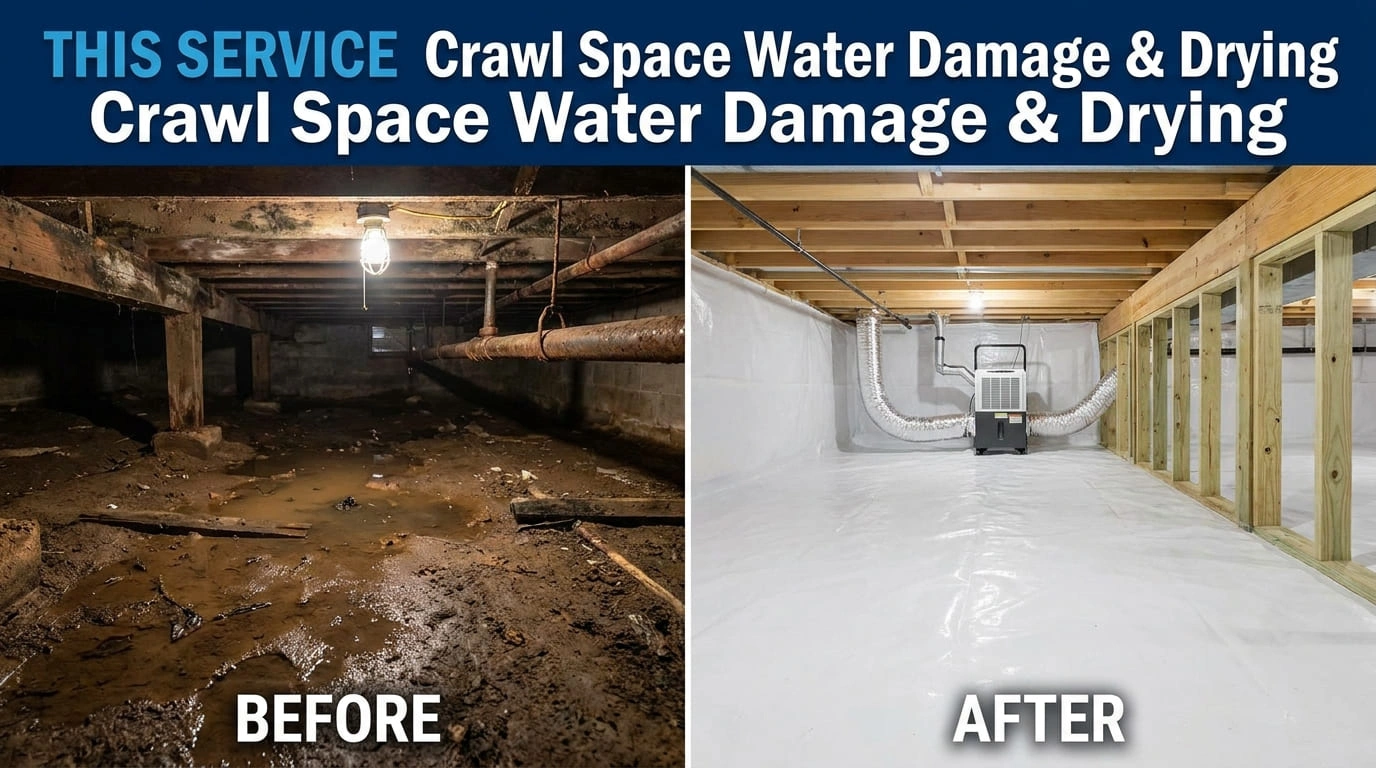
Crawl-space recovery is not just about making a puddle disappear. The goal is to move from uncertainty to a documented plan: identify the source, assess what was affected, dry materials based on measurements, address contamination where necessary, and make informed decisions about repairs or prevention.
Before
- Standing water, wet soil, sagging insulation, damaged vapor barrier, or an unexplained musty odor
- Water damage after a burst pipe, water-heater leak, drain-line problem, storm, or snowmelt event
- Uncertainty about whether a plumber, restoration company, drainage contractor, or mold specialist is needed
After
- A documented inspection, source assessment, moisture readings, and a drying/recovery plan
- Extraction where appropriate, structural drying, material evaluation, and recommended next steps
- A clearer understanding of the cause, urgency, proper service sequence, and prevention options
How We Dry, Clean & Restore Water-Damaged Crawl Spaces
Measured drying, appropriate equipment, and material decisions based on actual conditions—not guesswork.
Crawl-space drying requires more than opening an access door or placing a household fan near the opening. The proper method depends on water source, water category, access, material saturation, outdoor conditions, crawl-space layout, and whether water is still entering.
Mont Long Restoration may use the following methods when appropriate:
The goal is not to create an arbitrary "perfect" condition. It is to establish realistic drying goals, monitor progress, and verify that affected materials are returning toward an appropriate dry state. IICRC water-damage restoration guidance describes professional procedures for inspection, investigation, contamination assessment, work planning, and restoration of water-damaged structures.
Should You Save or Replace Water-Damaged Crawl Space Materials?
Longmont property owners deserve a material-by-material decision—not automatic demolition or a blanket replacement recommendation.
Whether a material can be dried, cleaned, repaired, or replaced depends on its condition, how long it was wet, the type of water involved, accessibility, odor, contamination, visible deterioration, and response to drying.
| Material or Condition | Drying or Repair May Be Considered | Replacement May Be Recommended |
|---|---|---|
| Vapor barrier | Intact, clean, and able to be repositioned or dried | Torn, heavily soiled, contaminated, or no longer functional |
| Fiberglass insulation | Lightly affected and able to regain condition where appropriate | Saturated, sagging, contaminated, mold-affected, compressed, or unable to perform |
| Wood framing | Often suitable for structural drying if not severely deteriorated | Material is significantly compromised or damage is beyond practical repair |
| Subflooring | May be dried and monitored depending on material and moisture response | Delamination, severe swelling, structural deterioration, or persistent damage |
| Soil and debris | Limited cleanup may be appropriate for clean water events | Removal may be needed after sewage, drain waste, or significant contamination |
| Duct insulation or components | May be assessed and cleaned in limited circumstances | Saturated, contaminated, damaged, or unable to be restored safely |
Replacement May Be Appropriate When:
- Insulation is saturated, sagging, contaminated, or no longer performing
- The vapor barrier is torn, displaced, heavily soiled, or affected by contaminated water
- Wood or subfloor materials show structural deterioration, delamination, or damage that will not respond to drying
- The water source involved sewage, drain waste, or another contamination concern
- Repeated water intrusion has caused recurring material failure requiring full reconstruction
Crawl Space Water Damage & Drying Costs in Longmont, CO
Clear scope explanations and upfront discussions of the factors that affect your restoration cost.
The cost to dry a crawl space varies widely because crawl spaces differ in access, size, water source, contamination risk, material saturation, equipment needs, and repair requirements. A small plumbing leak caught early is different from a crawl-space flood after a burst pipe, sewer backup, storm runoff event, or prolonged water-heater leak.
| Cost Driver | Why It Matters |
|---|---|
| Water source | Clean water, drain water, sewage, runoff, and groundwater conditions may require different safety and cleanup methods |
| Amount and duration of water | More water or a longer exposure can affect more materials and extend drying time |
| Crawl-space access | Low clearance, limited entry, difficult equipment access, or restricted work areas can affect labor and setup |
| Materials affected | Insulation, vapor barriers, framing, subflooring, ducts, contents, and debris each require evaluation |
| Drying equipment and monitoring | Equipment type, placement, run time, and required monitoring affect the mitigation scope |
| Cleaning or contamination | Sewage or wastewater may require specialized cleaning and removal procedures |
| Reconstruction needs | Repairing insulation, subflooring, drywall, flooring, or other building materials is separate from initial mitigation |
| Emergency response timing | Active losses requiring 24/7 dispatch may differ from planned moisture inspections |
Mont Long Restoration provides a clear assessment and explains recommended work before major mitigation or reconstruction decisions. If insurance is involved, we can provide records and documentation, but coverage depends on the cause of loss and the terms, exclusions, deductibles, endorsements, and limits in your specific policy.
When Should a Longmont Property Owner Call for Crawl Space Water Removal?
If water is active, materials are wet, or the cause is uncertain, prompt assessment can prevent avoidable secondary damage.
Call Mont Long Restoration for crawl-space water damage help when you notice:
A crawl space should not be treated as a simple storage void. It is part of the building environment and may contain plumbing, electrical components, HVAC equipment, structural framing, insulation, and access points that deserve professional assessment after a water event.
Crawl Space Water Damage Services for Commercial & Multi-Unit Properties
Protect shared building systems, coordinate access, and maintain clear documentation across your Longmont portfolio.
Mont Long Restoration provides crawl-space water damage and structural drying support for commercial properties, HOAs, apartment communities, mixed-use buildings, retail locations, and managed portfolios throughout Longmont, Boulder County, and surrounding Front Range service areas.
| Commercial Service | Description |
|---|---|
| Emergency Water Removal | Response for active leaks, standing water, pipe failures, stormwater entry, and other urgent losses |
| Moisture Inspection | Assessment of wet materials, water migration, access conditions, and likely source |
| Structural Drying | Equipment planning, monitoring, and drying verification for affected spaces |
| Documentation Support | Photos, work records, estimates, drying information, and communication support for owners or insurers |
| Reconstruction Coordination | Planning for insulation replacement, repairs, material restoration, and post-mitigation needs |
| Multi-Unit Scheduling | Coordinated service for managed properties, common areas, and multiple crawl-space access points |
Commercial Properties We Help Include:
- Apartment communities and multi-family buildings
- HOA-managed townhomes and condominium properties
- Retail centers, office spaces, and mixed-use developments
- Restaurants, hospitality properties, and service businesses
- Warehouses, light-industrial sites, and managed commercial facilities
Why Property Managers Choose a Coordinated Response:
- One point of contact for water mitigation, drying communication, and documentation
- Clear status updates for owners, tenants, boards, and maintenance teams
- Flexible access planning for occupied or multi-unit properties
- Recommendations that separate emergency mitigation from long-term plumbing, drainage, or reconstruction projects
Benefits of Hiring Crawl Space Water Damage Professionals in Longmont
Proper assessment, measured drying, and clear documentation help you make better recovery decisions.
Professional crawl-space drying is valuable because the most important moisture often is not visible from the access opening. Wet framing, insulation, vapor barriers, soil-facing materials, ducts, and subflooring may need evaluation before a property owner decides to close the space, replace materials, or invest in permanent drainage work.
Find the likely source instead of treating only the symptom
Remove accessible standing water and stabilize affected materials
Identify hidden moisture through inspection and moisture mapping
Reduce the risk of leaving wet insulation, wood, or subflooring unaddressed
Make informed decisions about drying, cleaning, removal, repair, or replacement
Document conditions and completed work for property records or insurance communication
Coordinate the right next professional when plumbing, drainage, electrical, HVAC, or structural issues are involved
Avoid rushing into encapsulation, demolition, or major upgrades before the source has been identified
Why DIY Crawl Space Water Removal Can Be Risky
Crawl spaces can contain electrical, contamination, structural, and access hazards that are not obvious from the entrance.
Important Safety Warning
Do not enter a wet crawl space if there is standing water near electrical equipment, unknown wiring, damaged outlets, exposed conductors, a water heater, HVAC components, or other utilities. You should also avoid entering if sewage, toilet-overflow water, drain-water contamination, strong odors, damaged framing, pests, or unstable access conditions are present.
- Electrical hazards may exist where water contacts wiring, equipment, outlets, or extension cords
- Sewage or wastewater can introduce contamination concerns that should not be handled with household cleaning methods
- Wet crawl spaces may have low clearance, poor visibility, sharp debris, rodents, pests, or restricted escape routes
- Improper fan placement or unsuitable equipment can spread moisture or fail to dry concealed materials
- Opening, disturbing, or removing wet insulation without assessment can expose hidden moisture or contamination
- A musty odor can indicate a moisture problem that needs inspection; it is not a reason to make unsupported health claims or self-diagnose mold
Answers to Common Crawl Space Water Damage Questions in Longmont
Quick answers for homeowners and property managers dealing with water under the house.
Is water in a crawl space an emergency?
It can be. Treat the problem as urgent if water is still entering, a pipe or water heater is leaking, electrical equipment may be affected, sewage is present, insulation is saturated, or water is moving toward finished areas. Even when standing water is gone, a crawl space may still need a moisture inspection and controlled drying.
Why is my Longmont crawl space wet after snow melts or it rains?
Possible causes include runoff toward the foundation, poorly directed downspouts, saturated soil, irrigation leakage, foundation seepage, blocked drainage paths, or a plumbing issue that became noticeable after a weather event. Longmont's runoff guidance emphasizes moving rain and snowmelt away through appropriate drainage paths, but the actual source should be inspected rather than assumed.
Will a crawl space dry on its own?
Minor moisture may dissipate in some cases, but waiting is risky when there is standing water, wet insulation, wet wood, sewage contamination, persistent odor, a continuing leak, or water trapped beneath a vapor barrier. A professional moisture assessment can determine whether materials are actually dry rather than merely looking dry.
How long does crawl-space drying take?
Drying time depends on the amount of water, duration of exposure, crawl-space size, access, outside conditions, materials affected, equipment placement, and whether water is still entering. Some losses may dry in several days, while more extensive losses can take longer. Mont Long Restoration uses moisture readings and site conditions to guide the drying plan rather than promising a fixed timeline.
Do I need to remove wet crawl-space insulation?
Not always. Insulation may need removal when it is saturated, sagging, contaminated, mold-affected, compressed, dirty, or unable to regain its intended performance. The proper decision follows source assessment, material inspection, water category evaluation, and drying response.
Why is there water on top of my crawl-space vapor barrier?
Water above the vapor barrier can indicate active intrusion from a plumbing leak, drain problem, runoff, snowmelt, irrigation, sump failure, or foundation seepage. Water beneath the barrier may point to soil moisture or groundwater conditions. Both situations deserve source diagnosis before permanent repair or encapsulation decisions are made.
Do I call a plumber or a water-damage restoration company?
Call a plumber first—or at the same time as the restoration team—if an active supply line, drain line, sewer line, appliance, water heater, or plumbing component may be leaking. After the source is stopped, Mont Long Restoration handles extraction, moisture inspection, structural drying, cleanup, and documentation. Drainage, foundation, or crawl-space specialists may be appropriate for repeated exterior-water intrusion.
Does homeowners insurance cover crawl-space water damage?
It depends on your policy and the cause of the damage. Sudden and accidental plumbing discharges may be handled differently from groundwater, flooding, repeated seepage, sewer backup, gradual leaks, mold-related damage, or excluded causes. Review your policy and speak with your insurer or agent. Mont Long Restoration can provide damage photos, work records, and drying documentation when applicable.
Should I encapsulate my crawl space immediately after water damage?
No permanent solution should be assumed before the source is identified and the crawl space is dried. Encapsulation, drainage improvements, sump systems, vapor-barrier replacement, plumbing repair, or dehumidification may be helpful in the right situation, but the first priority is stopping water entry and evaluating affected materials.
Can a wet crawl space make my home smell musty?
It can contribute to a musty or basement-like odor when moisture affects insulation, wood, soil-facing materials, or other crawl-space components. An odor alone does not identify the source or prove mold, so an inspection is the appropriate next step.
Can you pump water out from under my house?
When access, safety, water depth, and conditions allow, Mont Long Restoration can assess whether extraction or pumping is appropriate. We also inspect for hidden moisture and explain whether additional structural drying, cleaning, or material evaluation is needed after visible water is removed.
Clear Guidance From First Inspection to Drying Completion
Local response, practical recommendations, documented work, and support through the next recovery step.
Mont Long Restoration approaches every crawl-space water loss with a focus on safety, clear communication, and measured drying. We do not assume that every wet crawl space requires the same solution. Instead, we assess the source, visible water, affected materials, access conditions, and moisture readings before explaining the recommended scope.
If a concern arises about documented work completed within the applicable workmanship or manufacturer warranty terms, we will review the situation and outline available corrective options. Specific warranty coverage, exclusions, and time periods depend on the service and materials involved and will be provided in the applicable work documentation.
Mont Long Restoration1205 S Main St
Longmont, CO 80501
United States
Restoration Credentials That Support Crawl Space Water Damage Work
Training and professional methods matter when moisture, contamination, structural materials, and difficult-access conditions are involved.
Crawl-space water damage can involve more than basic cleanup. A proper response may require water extraction, material assessment, moisture mapping, controlled drying, dehumidification, contamination awareness, documentation, and reconstruction coordination.
Mont Long Restoration's stated restoration qualifications include:
Applied Structural Drying (ASD)
Applied Microbial Remediation Technician (AMRT)
Certified Restorer (CR)
Water Damage Restoration Technician (WRT)
Local Municipal Class C / General Contractor License
Professional restoration guidance recognizes the importance of competent inspection, documentation, contamination assessment, work planning, and proper water-damage restoration procedures for residential, commercial, and institutional buildings.
Emergency Crawl Space Water Removal in Longmont, CO
Rapid response when water is entering, materials are wet, or the source of the loss needs immediate attention.
A crawl-space water emergency can begin with a burst pipe, frozen pipe, plumbing leak, drain failure, water-heater leak, toilet overflow, sewer backup, irrigation failure, storm runoff, snowmelt, or sump-pump problem. Mont Long Restoration provides around-the-clock response for urgent water-damage situations across Longmont and nearby Front Range communities.
Our Emergency Response Process Includes:
- Immediate phone consultation to understand the water source, safety concerns, and urgency
- Dispatch planning for accessible water extraction, crawl-space inspection, and moisture assessment
- On-site evaluation of standing water, affected materials, electrical concerns, contamination risk, and access
- Coordination around source control when a plumber, drainage specialist, electrician, or another qualified trade is required
- Structural drying and dehumidification planning based on actual conditions
- Photo documentation and records for property owners, managers, and insurance communication
Call Immediately If You Have:
- Water actively entering your crawl space
- A burst, frozen, or leaking pipe under the house
- A water-heater leak or appliance leak affecting a low-clearance area
- A drain, sewer, or toilet-overflow concern
- Stormwater or snowmelt flowing toward the foundation
- Wet insulation, standing water, or water near electrical equipment
- A crawl-space flood after a sump-pump failure
Insurance Documentation Help for Crawl Space Water Damage Incidents
Clear records can help you communicate the condition of the property and the work performed.
Water-damage claims can involve questions about the source of water, when the loss occurred, affected materials, mitigation steps, policy endorsements, exclusions, deductibles, and the insurer's scope review. Mont Long Restoration can provide restoration-related documentation to help you communicate with your insurance carrier, agent, adjuster, property manager, or HOA.
Available Documentation May Include:
- Initial observations, photos, and visible-condition notes
- Moisture inspection records and drying-monitoring information where applicable
- Water-extraction, mitigation, cleaning, and equipment-use documentation
- Estimates and invoices for restoration work performed
- Material-condition notes and recommended repair or reconstruction scope
- Records describing the observed conditions and corrective work completed
Important Insurance Note
Coverage is determined by your insurer and the specific language of your policy. Sudden plumbing discharge, sewer backup, sump-pump overflow, groundwater, floodwater, gradual leakage, mold limits, and exclusions may be treated differently. You remain responsible for your policy deductible when applicable; do not rely on any contractor promise to improperly waive or conceal deductible responsibility. Colorado insurance guidance emphasizes that deductibles are the policyholder's contractual responsibility.
Understand Warranty Coverage After Crawl Space Drying & Repair
Clear service terms help you understand what is covered after mitigation, repair, or reconstruction work.
Mont Long Restoration provides service documentation that identifies the scope of work completed. Warranty terms can differ based on whether work involves mitigation, drying, cleaning, material installation, repair, reconstruction, or manufacturer-supplied components.
| Coverage Type | What It May Cover |
|---|---|
| Workmanship | Applicable labor coverage for qualifying repair, installation, or reconstruction work |
| Materials or Components | Manufacturer warranty coverage for qualifying newly installed products or equipment |
| Documentation | Records of completed work, moisture monitoring, estimates, invoices, and project details |
| Maintenance Expectations | Recommended steps that may help preserve coverage, including source correction and proper care |
Warranty availability and terms vary by project, material, manufacturer, cause of loss, and the services performed. Specific coverage, exclusions, and time periods are provided with the applicable agreement or project documentation.
10 Fully Equipped Service Vans for Crawl Space Drying Across Longmont
Water-extraction equipment, moisture tools, drying systems, and trained personnel ready for urgent property damage needs.
Mont Long Restoration operates with 10 fully equipped service vans to support emergency water-damage response across Longmont, Boulder County, and nearby Front Range communities. A properly equipped response can reduce delays when a crawl space is wet, difficult to access, or connected to an active plumbing or stormwater issue.
Equipment selection depends on crawl-space access, materials, water conditions, and the drying plan. Not every job requires the same equipment, and the goal is to use the right approach for the actual situation.
Payment Options for Crawl Space Repairs & Reconstruction
Help with planning larger recovery work after emergency mitigation and drying are complete.
Emergency water removal and structural drying may be only the first stage of crawl-space recovery. Some properties may later need insulation replacement, vapor-barrier work, subfloor repairs, drainage improvements, sump-pump installation, reconstruction, or other larger corrective projects.
Mont Long Restoration can discuss available payment or financing options for qualifying major restoration and reconstruction work.
Financing availability, approval, terms, rates, and eligible services depend on the provider and the specific project. Ask our team for current options before making a major repair decision.
Recognition for Water Damage Restoration Service
A community-focused response backed by experienced restoration professionals.
Mont Long Restoration is presented as a Longmont water-damage restoration provider with a focus on responsive emergency service, structural drying, cleanup, and property recovery. We believe recognition should be supported by consistent performance: clear communication, appropriate drying methods, documented work, and respectful service when a property owner is dealing with an unexpected loss.
Service-recognition information associated with Mont Long Restoration includes:
Angi Super Service Award
Boulder County Gold Award
Longmont Area Chamber of Commerce Business of the Year
Nextdoor Neighborhood Fave
The Best of Longmont Award
Because award programs, eligibility periods, names, and issuing entities can change, customers should contact Mont Long Restoration directly for current documentation or details relevant to any listed recognition.
Senior & Military Discounts on Crawl Space Water Damage Services
Supporting qualifying Longmont seniors, active-duty service members, veterans, and military families.
Mont Long Restoration may offer special discounts for qualifying senior and military customers on eligible crawl-space water damage, drying, cleanup, repair, or related restoration services.
Senior Discounts
Senior-citizen discounts on qualifying services
Military & Veterans
Active-duty military and veteran discounts on eligible restoration work
Seasonal Offers
Seasonal promotions and service offers when available
Clear Qualifications
Clear explanation of qualification requirements, exclusions, and limits before work begins
Discount availability, amount, timing, service eligibility, and exclusions may vary. Ask during your call for current offer details.
Crawl Space Water Damage Service Hours in Longmont, CO
24/7 availability for water removal, crawl-space drying, emergency mitigation, and urgent property damage response.
Water under the house does not wait for standard business hours. Mont Long Restoration offers 24/7 emergency response across Longmont and surrounding Front Range communities for crawl-space water damage, water extraction, structural drying, and urgent cleanup needs.
| Day | Hours |
|---|---|
| Monday | 00:00–23:59 |
| Tuesday | 00:00–23:59 |
| Wednesday | 00:00–23:59 |
| Thursday | 00:00–23:59 |
| Friday | 00:00–23:59 |
| Saturday | 00:00–23:59 |
| Sunday | 00:00–23:59 |
Phone: +1 (720) 438-7100
Email: montlongrestoration@gmail.com
Website: waterdamagerestorationlongmontco.com
Mont Long Restoration vs. Typical Crawl Space Cleanup Options in Longmont
Focus on the response process, documentation, and recovery planning that your property actually needs.
Not every provider offers the same scope. Some may only remove visible water, while others may focus only on plumbing repairs, drainage, or long-term encapsulation. Mont Long Restoration is positioned to help bridge the urgent restoration phase: water removal, moisture inspection, structural drying, cleanup, documentation, and coordinated next steps.
| Feature | Mont Long Restoration | Limited-Scope Provider |
|---|---|---|
| Emergency availability | 24/7 response for qualifying water-damage emergencies | May be limited to scheduled or business-hour appointments |
| Crawl-space assessment | Visible-condition review, moisture mapping, access evaluation, and drying plan | May address only visible water or one trade-specific concern |
| Water-damage scope | Extraction, drying, cleanup, documentation, and recovery coordination | May provide only plumbing repair, only drainage work, or only insulation/encapsulation services |
| Source coordination | Helps identify when plumbing, drainage, electrical, or other qualified trades are needed | May not address the full source-to-recovery sequence |
| Documentation | Photos, scope information, and drying-related records when applicable | Documentation may be limited by service type |
| Long-term planning | Separates emergency drying from later repair, drainage, or moisture-control decisions | May lead with a single predetermined solution |
The best provider depends on the actual cause of water intrusion. If you have an active leak, a plumber may be required. If sewage is present, specialized cleanup is essential. If exterior water repeatedly enters, drainage or foundation evaluation may be needed after drying. Mont Long Restoration helps clarify that sequence.
Contact Mont Long Restoration for Crawl Space Water Damage & Drying in Longmont, CO
Speak with a water-damage professional about active water, wet insulation, musty odors, moisture concerns, or a crawl space that needs a documented dry-out.
If you are dealing with water under the house, a suspected plumbing leak, storm or snowmelt intrusion, wet vapor barrier, sagging insulation, a drain-line concern, or a musty crawl-space odor, Mont Long Restoration is ready to help you understand the next step.
Tell Us What You Are Seeing:
- Is water still entering?
- Did the problem follow rain, snowmelt, irrigation, or a plumbing issue?
- Is there standing water, sewage odor, wet insulation, or damaged vapor barrier?
- Are electrical components, a water heater, ducts, or finished areas nearby?
- Do you need emergency extraction, a moisture inspection, drying, documentation, or reconstruction planning?
Contact Mont Long Restoration
(720) 438-7100
montlongrestoration@gmail.com
1205 S Main St
Longmont, CO 80501
24/7 Emergency Service Available
Current Special Offers
- Free Structural Moisture Assessment
- Flat-Rate 24/7 Emergency Dispatch
- Deductible Relief Discount
- Direct-to-Insurance Billing Promo
- Extraction & Reconstruction Bundle Credit
Protect your Longmont property with professional crawl space water damage Longmont CO cleanup, water extraction, moisture mapping, and structural drying from Mont Long Restoration.
Mont Long Restoration Location & Service Coverage
Serving Longmont and the Front Range from our central Longmont location at 1205 S Main St.