Carpet Water Extraction & Drying in Longmont, CO — Fast Emergency Water Removal 24/7
Longmont carpet drying help for wet carpet, soaked padding, basement water, and water-damage emergencies.
When you need water extraction Longmont property owners can call after a leak, overflow, burst pipe, wet basement, or stormwater intrusion, fast action matters. A wet carpet is not simply a carpet-cleaning issue: water can settle beneath the fibers in the backing and pad, travel into tack strips and baseboards, and reach drywall edges or subflooring even when the surface no longer feels wet.
Mont Long Restoration provides emergency Carpet Water Extraction & Drying in Longmont, CO for homes, rental properties, HOAs, offices, retail spaces, and other affected buildings. Our team evaluates the source and category of water, extracts standing water, checks the carpet pad and surrounding materials, installs appropriate drying equipment, and documents drying progress so you have a clear path forward.
Whether you have water in basement carpet, a washing-machine overflow, a water-heater leak, a toilet overflow, a frozen-pipe loss, or water entering through a basement window or window well, call for a professional assessment before moisture becomes a larger cleanup, odor, material-loss, or reconstruction problem.
- Emergency extraction for wet carpet, soaked carpet padding, flooded rooms, and finished basements
- Moisture inspection of carpet, pad, baseboards, adjacent walls, and accessible subfloor areas
- Water-mitigation support after appliance leaks, burst pipes, overflows, storms, and basement water intrusion
- Clear documentation, practical drying guidance, and next-step recommendations for property owners and insurers
Call (720) 438-7100 for 24/7 emergency wet-carpet extraction and drying support in Longmont and surrounding Front Range communities.
Request Emergency Carpet Water Extraction
Fill out the form and we'll contact you immediately!
Carpet Water Extraction Backed by Local Water-Mitigation Experience
A practical emergency response for Longmont homes, businesses, and property managers.
Carpet water extraction requires more than pulling visible water from the surface. The right plan depends on what caused the loss, how long materials remained wet, whether water reached the pad or subfloor, and whether the water may be contaminated. Mont Long Restoration approaches each loss as a water-mitigation problem first, helping property owners understand what can potentially be dried, what needs closer evaluation, and what next steps are needed to protect the property.
From the initial call through moisture monitoring and repair planning, our focus is on clear communication, controlled drying, and documentation—not guesswork. If the source remains active, such as a leaking pipe, failed appliance connection, roof opening, damaged window well, or drainage condition, we explain the need to stop and repair the source while we address the water damage left behind.
Carpet Water Extraction Near Longmont Neighborhoods, Business Areas & Everyday Destinations
Serving wet-carpet emergencies throughout Longmont, Boulder County, and the Front Range.
A water loss can happen anywhere: in a finished basement near Main Street, an apartment close to Hover Street, a retail suite off Ken Pratt Boulevard, an office near Downtown Longmont, or a home in a nearby neighborhood. Mont Long Restoration provides emergency water extraction in Longmont for carpeted rooms affected by plumbing leaks, appliance failures, stormwater intrusion, roof leaks, toilet overflows, and other unexpected water events.
Local homeowners may also be concerned about water entering a basement through a window well, near a foundation wall, or after heavy rain. If stormwater or creek-related flooding affects a property, the City of Longmont directs owners to property-specific floodplain resources rather than relying on general neighborhood assumptions.
Longmont Neighborhoods & Communities
Old Town Longmont, Prospect New Town, Quail Ridge, Southmoor Park, Historic Eastside, Fox Hill, Meadowview, Clover Creek, Creekside, Kensington, and nearby communities
Nearby Service Areas
Boulder, Broomfield, Erie, Frederick, Firestone, Lafayette, Louisville, Loveland, Greeley, Fort Collins, Denver, Westminster, Thornton, Arvada, Aurora, Lakewood, and surrounding Front Range locations
Local Landmarks & Corridors
Downtown Longmont, Main Street, Hover Street, Ken Pratt Boulevard, St. Vrain Greenway, Union Reservoir, McIntosh Lake, Prospect New Town, Highway 119, and Highway 287
Specialized Carpet Water Extraction & Structural Drying for Longmont Properties
Professional water mitigation for wet carpet, soaked pad, hidden moisture, and affected building materials.
Routine carpet cleaning addresses dirt, stains, and surface appearance. Water mitigation addresses where water traveled, how deeply it saturated materials, whether the water is safe to handle as a clean-water loss, and how drying should be controlled and verified.
Mont Long Restoration provides water-damage response for carpeted rooms affected by supply-line leaks, appliance overflows, burst pipes, water-heater failures, basement-window intrusion, storms, toilet overflows, and other water events. Our approach evaluates the carpet, backing, padding, tack strips, baseboards, drywall edges, furniture contact areas, and accessible subfloor conditions—not simply whether the carpet feels damp underfoot.
- Water-mitigation assessment instead of surface-only carpet cleaning
- Moisture evaluation for carpet, padding, walls, baseboards, and subfloor areas
- Source-specific planning for clean-water leaks, appliance failures, stormwater, and contaminated-water incidents
- Clear separation between stopping the source, drying the damage, and preventing recurrence
- Documentation and repair/reconstruction recommendations when materials cannot be safely or effectively restored
What Happens When Carpet Gets Wet in a Longmont Home or Business?
Water can spread below the carpet surface before you see the full extent of the damage.
A wet carpet can hold far more water than it appears to from above. Moisture may remain in the backing and padding, move along tack strips, wick into baseboards and drywall, or reach the subfloor beneath. The carpet may feel mostly dry at the surface while hidden materials remain wet, creating conditions that can lead to odors, deterioration, or a larger removal and repair scope.
The urgency also depends on the water source. A clean supply-line leak is handled differently from dishwasher discharge, a toilet overflow, sewer backup, outdoor floodwater, or stormwater of unknown contamination. The IICRC S500 standard describes water-damage restoration procedures and precautions for buildings and their contents, while the underlying cause of intrusion must be identified and corrected by the owner or appropriate specialist.
- Soaked carpet padding can retain moisture after the carpet surface feels dry
- Water may spread into baseboards, drywall edges, flooring transitions, and subfloor materials
- Delayed drying can increase odor, microbial-growth, staining, and material-damage concerns
- Toilet overflows, sewer backups, and other contaminated-water events require a different safety approach
- Active leaks, failed valves, window wells, roof openings, drainage problems, and appliance defects must be repaired to prevent another loss
Prevent Further Damage With Prompt Carpet Water Extraction
What happens during the first hours and days after carpet gets wet in Longmont.
Carpet water extraction is not an annual service or a routine certification. It is a time-sensitive response designed to remove water, evaluate affected materials, control drying conditions, and help property owners make informed decisions about cleaning, salvage, removal, and repair.
Boulder County advises fully drying water-damaged items and areas within 48 hours to reduce mold concerns. That does not mean every wet carpet automatically requires replacement at the same time mark; water category, contamination, duration, pad condition, and subfloor moisture all influence the appropriate plan.
| Task | Description | Typical Timing | Property Impact |
|---|---|---|---|
| Emergency Intake | Review water source, timing, affected areas, and immediate safety concerns | At first contact | Helps determine urgency and next steps |
| Moisture Assessment | Inspect carpet, padding, walls, baseboards, and accessible subfloor areas | Initial visit | Identifies visible and hidden water migration |
| Water Extraction | Remove standing and trapped water from carpet and accessible materials | As soon as possible | Reduces the amount of moisture that must be dried |
| Water-Category Evaluation | Assess clean, gray, or contaminated water conditions | Initial inspection | Guides safe salvage, cleaning, or removal decisions |
| Controlled Drying Setup | Place appropriate air movement and dehumidification equipment | After extraction | Supports evaporation and humidity control |
| Drying Monitoring | Recheck readings and adjust equipment as conditions change | During dry-down | Helps verify materials are progressing toward dry conditions |
| Documentation | Record affected areas, observations, equipment use, and drying progress | Throughout service | Supports property records and insurance discussions |
| Repair Planning | Recommend cleaning, removal, repair, or reconstruction where needed | After assessment/dry-down | Clarifies the path to recovery |
Seasonal Timing Guidance
- Act quickly after a burst pipe, appliance overflow, water-heater failure, roof leak, or toilet overflow.
- After rain or stormwater intrusion, inspect basement carpet, window wells, wall edges, and lower-level rooms promptly.
- During freezing conditions, address thawing pipe leaks before water spreads beneath carpet and into wall cavities.
- Do not wait for odor to develop before arranging a wet-carpet assessment.
When Is Carpet Water Extraction Needed?
Most carpet water extraction needs are event-driven rather than scheduled. If a property has recurring basement moisture, window-well flooding, plumbing leaks, sump-pump problems, roof intrusion, or drainage issues, the source should be assessed and corrected to reduce repeat water damage.
Cost Range Note
Carpet drying cost depends on the size of the affected area, amount of extracted water, water source, contamination level, access, drying equipment needs, duration of monitoring, contents handling, and whether carpet, padding, baseboards, or other materials require removal or repair. Mont Long Restoration provides a property-specific scope after evaluating the loss.
Maintenance & Prevention Tips
- Keep basement windows, window wells, gutters, downspouts, and drainage paths maintained where applicable.
- Inspect appliance hoses, supply lines, water heaters, and exposed plumbing for leaks or corrosion.
- Keep emergency shutoff locations accessible and known to household members or facility staff.
- Save water-damage photos, invoices, moisture records, and repair documentation for property and insurance files.
Who Needs Carpet Water Extraction & Drying in Longmont?
From one wet room to multi-unit and commercial water-loss events across the Front Range.
Any property with soaked carpet, wet padding, hidden moisture, or water spreading beyond a small surface spill may benefit from professional evaluation. Mont Long Restoration assists property owners and managers who need a practical response after water enters carpeted living spaces, work areas, common areas, or tenant suites.
- Homeowners with wet bedroom, living-room, hallway, or finished-basement carpet
- Renters needing documentation and prompt next steps after a leak or overflow
- Landlords and property managers handling water damage in rental units
- HOAs and apartment communities with common-area or multi-unit water events
- Offices, retail stores, restaurants, hotels, and service businesses with wet carpet or flooring
- Schools, churches, medical offices, community facilities, and managed properties
- Warehouses, commercial suites, and industrial spaces with carpeted offices or break areas
How Front Range Weather, Plumbing & Drainage Issues Affect Carpet Drying Needs
From winter pipe failures to summer stormwater, the cause of water matters.
Longmont property owners can face wet-carpet problems from indoor plumbing failures, appliance leaks, seasonal weather changes, roof and window intrusion, drainage issues, and stormwater events. The right restoration plan begins with identifying whether the source has stopped and whether the water that reached the carpet is clean, potentially contaminated, or clearly unsafe.
The City of Longmont monitors and manages flood-related information associated with St. Vrain Creek and Left Hand Creek, including property-specific floodplain resources. A property affected by stormwater or creek flooding should be evaluated based on its actual conditions, not broad assumptions about a street or neighborhood.
Winter
Frozen pipes, thawing lines, failed fittings, water-heater issues, and snowmelt-related intrusion can send water into carpeted areas.
Spring
Rain, drainage changes, window-well filling, sump-pump concerns, and foundation-adjacent water can affect lower-level carpet.
Summer
Heavy storms, appliance demand, air-conditioning condensate issues, and swamp-cooler leaks can create unexpected wet-carpet losses.
Fall
Roof leaks, gutter problems, outdoor faucet preparation, and seasonal temperature swings can reveal vulnerabilities before winter.
Clean Water, Gray Water & Contaminated Carpet Water Damage in Longmont
The water source helps determine whether carpet and padding may be dried, cleaned, or removed.
Not all wet carpet is the same. A prompt response to a clean supply-line leak may allow some carpet and padding to be dried and restored, depending on saturation and material condition. Water from appliance discharge, fixtures, outdoor flooding, drains, or sewage can require a more cautious approach. Grossly contaminated water can make porous materials such as carpet and padding unsuitable for routine drying and reinstallation.
| Water Condition | Typical Examples | Key Concern | Possible Restoration Direction |
|---|---|---|---|
| Clean Water | Broken supply line, water-heater leak, clean appliance supply hose failure | Moisture migration and delayed drying | Extraction and controlled drying may be possible after inspection |
| Gray Water | Dishwasher discharge, washing-machine overflow, some fixture-related water | Increased contamination risk | Requires case-specific evaluation, cleaning, and material assessment |
| Contaminated Water | Toilet waste, sewer backup, drain backup, outdoor floodwater, water with visible contaminants | Health and sanitation risk | Porous materials may require controlled removal and disposal |
| Hidden Moisture Condition | Carpet feels dry on top but pad, wall edge, or subfloor remains wet | Secondary damage and odor | Moisture inspection and targeted drying are needed |
| Recurring Water Event | Repeat window-well flooding, repeated pipe leak, unresolved drainage issue | Ongoing material damage | Source repair plus mitigation and restoration planning |
Note on Drying Reliability
Reliable drying is not based on appearance alone. Technicians use inspections and moisture information to assess whether the carpet, pad, baseboards, walls, and accessible subfloor areas are progressing toward appropriate dry conditions.
Our 6-Step Carpet Water Extraction & Drying Process
What to expect when Mont Long Restoration arrives at your Longmont property.
Emergency Call & Safety Review
We ask about the source of water, when the loss began, affected rooms, possible contamination, active leaks, electrical concerns, and whether anyone has already attempted cleanup.
On-Site Moisture & Damage Assessment
Our team evaluates carpet, padding, furniture contact areas, baseboards, walls, flooring transitions, and accessible subfloor areas to understand where water traveled.
Water Extraction
We remove standing and trapped water from affected carpet and accessible materials using appropriate extraction methods to reduce moisture before drying begins.
Carpet & Padding Evaluation
We assess whether materials may be dried and cleaned or whether contamination, deterioration, prolonged saturation, odor, or damage warrants removal recommendations.
Controlled Drying & Monitoring
Air movement, dehumidification, and other appropriate drying measures are set based on the loss. Moisture conditions are rechecked during the dry-down process.
Documentation & Recovery Planning
We document relevant findings, explain drying progress, provide information that may support insurance discussions, and outline cleaning, repair, removal, or reconstruction next steps as needed.
What's Included in Our Carpet Water Extraction & Drying Service
Clear deliverables for Longmont homeowners, property managers, and businesses.
Every water loss is different. The exact scope depends on the source, duration, water category, affected materials, and safety conditions. Mont Long Restoration explains what is included before work begins and communicates when conditions require additional steps.
- Initial review of the water source, affected areas, and immediate safety concerns
- On-site moisture assessment of carpet, padding, baseboards, adjacent walls, and accessible subfloor areas
- Water extraction from wet carpet and reachable materials
- Evaluation of furniture, contents, and floor transitions affected by water
- Carpet lifting, floating, selective removal, or pad assessment when conditions warrant it
- Placement of appropriate air movers and dehumidification equipment
- Moisture monitoring and drying-progress documentation
- Clear recommendations for cleaning, deodorization, removal, repair, or reconstruction
- Photos, notes, and service records that may assist with property documentation and insurance communication
Key Advantages of Working With Mont Long Restoration
Emergency extraction, moisture evaluation, and clear communication when water affects your carpet.
Our Carpet Water Extraction & Drying service is designed for property owners who need practical help now—not vague promises. We focus on removing water, evaluating the true affected area, controlling drying conditions, and explaining the next decision clearly.
Carpet Water Extraction Transformations for Longmont Properties
What changes once water is extracted, hidden moisture is assessed, and drying is documented.
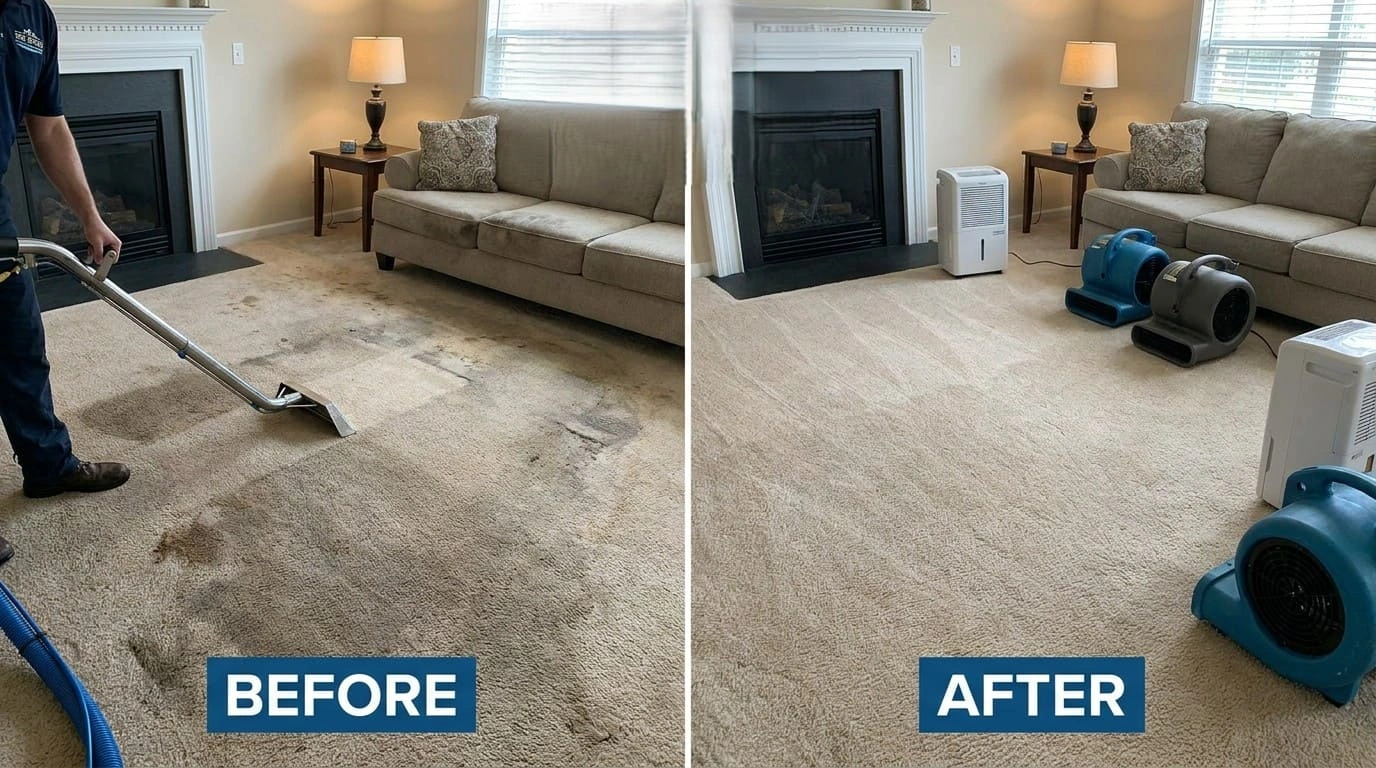
Many property owners call after discovering a wet basement carpet, a spreading appliance leak, a burst pipe, or a room that smells damp after water entered days earlier. The visible water may be gone, but questions remain: Is the pad still wet? Did moisture reach the walls? Can the carpet stay? Is the water clean? What must happen before repairs begin?
Mont Long Restoration helps replace uncertainty with a documented plan. The goal is not to promise that every material can be saved. The goal is to identify affected materials, begin appropriate mitigation, monitor drying, and help the property owner understand the most sensible next step.
- Before: Wet carpet with unknown pad, wall-edge, or subfloor moisture. After: Moisture-assessed areas with extraction and drying measures tailored to actual conditions.
- Before: Uncertainty about whether a leak, storm, toilet overflow, or appliance failure created a sanitation concern. After: A source-specific evaluation and clear material-handling recommendation.
- Before: A property owner guessing whether the area is dry. After: Documented drying progress and a defined recovery plan.
- Before: Water damage left behind after the source was repaired. After: A transition from emergency mitigation to cleaning, repair, removal, or reconstruction as appropriate.
How We Extract Water and Dry Wet Carpet, Padding & Building Materials
The goal is to remove water, control humidity, and verify drying progress—not just make carpet feel dry.
Carpet water extraction works best when the response matches the actual conditions. Mont Long Restoration uses professional water-mitigation methods to remove liquid water, address hidden moisture, and support controlled drying in affected rooms.
- High-volume extraction to remove visible and trapped water from carpet and accessible materials
- Moisture evaluation of carpet, padding, baseboards, adjacent walls, and accessible subfloor areas
- Air movement to support evaporation from wet materials
- Dehumidification to remove moisture from the air as drying progresses
- Selective carpet lifting or pad/material removal when the water source, saturation, or contamination level requires it
- Ongoing monitoring to help determine whether drying conditions are improving
- Documentation of relevant observations, equipment, and recovery recommendations
Should You Dry, Clean, Remove, or Replace Water-Damaged Carpet?
The right answer depends on the source, saturation, contamination, timing, and material condition.
One of the first questions after a wet carpet from leak is whether the carpet and padding can be saved. There is no responsible one-answer rule. A recent clean-water leak with prompt extraction may allow some materials to be dried and restored. Prolonged saturation, repeated wetting, carpet delamination, odor, sewage exposure, outdoor floodwater, or other contamination can change the recommendation.
| Scenario | Drying/Cleaning May Be Considered | Removal/Replacement May Be Recommended |
|---|---|---|
| Clean supply-line leak caught quickly | Often possible after inspection, extraction, and controlled drying | If pad, backing, subfloor, or adjacent materials cannot be dried appropriately |
| Small, contained clean-water area | More likely when moisture did not migrate widely | If hidden moisture extends beyond the visible wet area |
| Soaked carpet and padding | May be possible when prompt mitigation and monitoring support drying | More likely if materials remain wet, deteriorate, delaminate, or retain persistent odor |
| Toilet overflow or sewer backup | Requires careful on-site contamination assessment | Often necessary for porous materials exposed to gross contamination |
| Outdoor floodwater or stormwater intrusion | Depends on source and contamination conditions | May be recommended where contamination or saturation makes restoration unsuitable |
| Recurring leak or repeat basement-water event | Possible only after the source is corrected and conditions are assessed | More likely when repeated water exposure has damaged materials or concealed areas |
When Replacement Is Right
- Carpet padding is contaminated, deteriorated, or cannot be dried to an appropriate condition
- Carpet backing has delaminated, shrunk, or sustained permanent damage
- Water was sewage-affected, visibly contaminated, or otherwise unsuitable for routine drying
- The loss remained undetected long enough for persistent odor, material degradation, or microbial-growth concerns
- Baseboards, drywall, insulation, subfloor, or other connected materials require controlled removal or repair
Carpet Water Extraction & Drying Costs in Longmont, CO
Clear cost drivers for wet carpet, flooded basement cleanup, and emergency drying.
The cost of carpet water extraction depends on the actual loss—not simply the number of wet square feet. Mont Long Restoration evaluates the water source, affected materials, safety conditions, extraction needs, drying equipment, monitoring requirements, and any removal or repair work required after the initial emergency.
Main Cost Drivers
- Size of the wet-carpet area and how far water traveled beneath the surface
- Amount of water in the carpet, padding, walls, baseboards, and subfloor
- Clean-water, gray-water, or contaminated-water conditions
- Time elapsed before extraction and drying began
- Need for carpet lifting, pad removal, baseboard removal, demolition, or contents handling
- Quantity and duration of air-movement and dehumidification equipment
- Emergency, after-hours, commercial-access, or safety requirements
- Repair and reconstruction needs after mitigation is complete
| Service Type | Typical Scope Considerations |
|---|---|
| Emergency Carpet Water Extraction | Affected area size, water volume, source, access, and urgency |
| Wet Basement Carpet Drying | Carpet/pad saturation, wall-edge moisture, subfloor conditions, and window-well or drainage source |
| Appliance Leak Water Cleanup | Water path, duration, appliance location, and affected flooring/materials |
| Toilet Overflow or Sewer-Affected Carpet | Contamination assessment, safety procedures, removal/disposal needs, and sanitation requirements |
| Commercial Carpet Water Extraction | Building access, operational hours, tenant coordination, affected rooms, and drying logistics |
| Reconstruction After Water Damage | Materials removed, finishes affected, repair scope, and selected replacement materials |
Insurance Note
Insurance coverage is determined by the policy, cause of loss, exclusions, endorsements, deductible, limits, and insurer decision. Mont Long Restoration can document affected areas, moisture observations, equipment placement, and drying progress to support your claim process.
When Should You Call for Wet Carpet Drying in Longmont?
Prompt assessment is especially important when water reaches carpet padding or surrounding building materials.
Call Mont Long Restoration when a carpeted room has more than a minor surface spill, when water may have moved below the carpet, or when you are unsure whether the water is safe. An emergency assessment helps determine whether extraction and drying can begin quickly and whether additional cleanup or removal is needed.
- Carpet feels soaked, squishy, or wet underfoot
- Water came from a burst pipe, water heater, appliance hose, washing machine, dishwasher, refrigerator line, or fixture
- A finished basement, bedroom, hallway, office, or tenant space has wet carpet after a leak
- Water entered through a basement window, window well, roof opening, foundation area, stairwell, or drainage path
- Toilet overflow, sewer backup, drain backup, or visibly dirty water reached carpet or padding
- Carpet smells musty after a leak or still feels damp after fans were used
- Water reached furniture, baseboards, drywall edges, hardwood transitions, or electrical areas
- The loss occurred while the property was vacant, overnight, or while occupants were away
- A business needs commercial carpet water extraction Longmont support to limit disruption and document the event
Carpet Water Extraction & Drying for Longmont Commercial Properties
Protect workspaces, tenant areas, inventory zones, and daily operations after water damage.
Commercial water losses can affect office carpet, retail floors, tenant suites, meeting rooms, hallways, hospitality spaces, medical offices, and other occupied areas. A plumbing leak, HVAC condensate issue, appliance failure, stormwater intrusion, or restroom overflow can disrupt operations and create uncertainty for owners, managers, staff, tenants, and customers.
Mont Long Restoration supports commercial water mitigation across Longmont, Boulder County, and the Front Range. We help property stakeholders understand the affected area, drying plan, material decisions, documentation needs, and steps toward repair or reconstruction.
| Commercial Service | Description |
|---|---|
| Emergency Water Extraction | Remove water from affected carpet and accessible materials after leaks, overflows, or intrusion |
| Commercial Carpet Drying | Set up controlled drying for carpeted offices, suites, hallways, and common areas |
| Moisture Assessment | Evaluate carpet, pad, baseboards, walls, flooring transitions, and accessible subfloor conditions |
| Contents & Access Coordination | Plan around furniture, tenant areas, business operations, and approved access needs |
| Documentation Support | Provide records that help owners, managers, insurers, and restoration planning |
| Repair & Reconstruction Planning | Identify next steps when affected materials require removal, repair, or replacement |
Commercial Property Types We Support
- Office buildings, professional suites, and coworking spaces
- Retail centers, restaurants, hotels, and hospitality areas
- Medical, dental, and service offices
- Schools, churches, community facilities, and nonprofit buildings
- Multi-family communities, apartment common areas, HOAs, and managed properties
- Warehouses, industrial offices, storage facilities, and logistics operations
Why Commercial Owners Choose Us
- A structured response for water-damage events affecting carpeted commercial areas
- Communication that helps coordinate managers, tenants, facility teams, and insurers
- Moisture documentation and drying records for property files
- Water extraction, drying, material evaluation, and reconstruction planning through one restoration provider
| Commercial Service | Typical Considerations |
|---|---|
| Multi-unit property water loss | Access coordination, common-area impact, tenant communication, and phased drying |
| Office or retail suite | Business hours, furniture, electronics, customer areas, and reopening priorities |
| Hospitality or food-service adjacent area | Occupant safety, sanitation requirements, and operational coordination |
| Industrial or warehouse office area | Equipment protection, access protocols, and affected material pathways |
Benefits of Hiring Carpet Water Extraction Professionals in Longmont
Better decisions, controlled drying, and less guesswork after water reaches carpet.
Professional water mitigation helps property owners respond to more than the visible puddle. It provides a process for assessing water source, evaluating hidden moisture, removing water efficiently, monitoring drying conditions, and deciding whether materials can remain, need cleaning, or should be removed.
- Helps identify moisture below carpet fibers and within padding or connected building materials
- Removes more water before evaporation-based drying begins
- Supports controlled drying with appropriate air movement and dehumidification
- Evaluates clean-water versus contaminated-water conditions before assuming materials can be saved
- Helps reduce the risk of prolonged dampness, odors, and damage to connected materials
- Provides moisture observations, photos, records, and service documentation
- Clarifies when a plumber, roofer, appliance technician, drainage contractor, or other specialist must repair the original source
- Creates a defined path from emergency water removal to cleaning, repair, or reconstruction
Why DIY Wet Carpet Drying Can Be Risky After a Major Water Loss
Protect people, pets, and property before attempting cleanup.
A minor clean-water spill may be manageable with basic drying. A major wet-carpet event, hidden moisture condition, toilet overflow, sewage backup, stormwater intrusion, or active leak can involve safety and sanitation issues that are not visible at first glance.
Important Safety Guidance
- Avoid entering standing water near outlets, power strips, appliances, or electrical equipment
- Do not treat toilet-overflow, sewer-backup, or visibly contaminated carpet as a standard clean-water drying project
- Do not assume carpet is dry because the top fibers feel dry underfoot
- Avoid using extreme heat or unapproved chemicals to force-dry carpet and underlying materials
- Keep children, pets, and occupants away from contaminated or unsafe affected areas
- If safe, stop the water source and move electronics, important documents, and loose belongings away from wet areas
- Contact the appropriate source-repair professional when a broken pipe, appliance, roof, drainage, or window issue remains active
Answers to Common Wet Carpet Questions in Longmont, CO
Fast, practical answers for homeowners, property managers, and businesses.
Can wet carpet and padding be saved after a leak?
Sometimes. A recent clean-water leak with prompt extraction and controlled drying may allow carpet and padding to be restored, depending on saturation, material condition, and moisture readings. Prolonged soaking, repeated water events, odor, delamination, or contaminated water can change the recommendation.
How quickly should water be extracted from soaked carpet?
As soon as possible. Quick extraction reduces the amount of water that can move into padding, baseboards, drywall edges, and subfloor materials. Boulder County advises drying water-damaged areas and items quickly, generally within 24 to 48 hours, to reduce mold concerns.
Can you dry the carpet without removing it?
In some clean-water situations, carpet may be dried without full removal. In other cases, technicians may need to lift or float sections of carpet, evaluate the padding, or recommend removal based on the water source, contamination, saturation, and condition of the materials.
How do you tell whether water is trapped under the carpet pad?
The carpet may feel dry on top while padding or subfloor materials remain wet. A professional assessment uses inspection and moisture information to identify hidden moisture in the carpet system and surrounding materials.
Does wet carpet need to be replaced after 24 or 48 hours?
Not automatically. The decision depends on the water category, contamination, time wet, material condition, odor, pad saturation, and whether appropriate drying can be achieved. Porous materials exposed to sewage or gross contamination may require removal rather than routine drying.
Can carpet be saved after a toilet overflow or sewer backup?
A toilet overflow or sewer backup requires a safety-focused contamination assessment. Carpet and padding exposed to sewage or grossly contaminated water may need controlled removal and disposal rather than standard drying and reinstallation.
What should I do while waiting for emergency water extraction?
If it is safe, stop the source, avoid electrical hazards, move valuables and portable items away from wet areas, and keep children and pets out of contaminated spaces. Do not use household fans on sewage-affected or visibly contaminated areas without professional direction.
How long does professional carpet drying take?
Drying duration depends on how much water was absorbed, the materials affected, indoor humidity, temperature, equipment setup, and how long the water sat before mitigation began. Some losses dry over several days, while larger or more complex conditions can require longer monitoring and repair planning.
Why does my carpet smell musty after water damage?
A musty odor can mean moisture remains in the carpet, pad, subfloor, baseboards, wall materials, or adjacent contents. It can also indicate that the water loss sat long enough for microbial-growth concerns. An assessment can identify whether further drying, cleaning, removal, or repair is appropriate.
Will fans and a dehumidifier dry wet carpet by themselves?
Fans and dehumidifiers can support drying, but they do not remove the same volume of water as professional extraction and they do not confirm whether the pad or hidden materials are dry. Significant saturation often requires both extraction and monitored drying.
Can you dry carpet after water enters through a basement window or window well?
Yes, drying may be possible depending on the amount of water, source, contamination conditions, duration, and affected materials. The property also needs the source corrected, which may involve a window, window-well, drainage, grading, sump-pump, or foundation professional.
Will homeowners insurance cover carpet water damage?
Coverage depends on your policy, cause of loss, exclusions, endorsements, deductible, limits, and insurer decision. Sudden accidental pipe or appliance leaks may be handled differently from groundwater, flooding, repeated seepage, poor maintenance, or sewer backups without the right endorsement.
What is the difference between water extraction, water mitigation, and carpet cleaning?
Water extraction removes liquid water. Water mitigation includes evaluating the source and affected materials, extracting water, controlling drying, monitoring moisture, and making material recommendations. Carpet cleaning focuses primarily on soil, stains, and appearance rather than a full water-loss response.
How do technicians know the carpet, pad, subfloor, and walls are actually dry?
Technicians use inspection and moisture-monitoring practices to track drying conditions. The goal is to evaluate progress in the carpet system and nearby building materials rather than relying only on whether the carpet feels dry on the surface.
You're Supported From Emergency Extraction Through Recovery Planning
Clear findings, practical options, and responsive support for water-damaged carpet.
Mont Long Restoration approaches every wet-carpet emergency with a focus on safety, communication, documentation, and appropriate recovery planning. We explain what we find, identify the next steps, and help you understand the difference between a clean-water drying situation and a loss that may require removal, sanitation, repair, or reconstruction.
Our Reinforcing Statement
If conditions change during drying or inspection reveals additional affected materials, we will explain the findings and outline appropriate corrective options. Carpet salvageability, insurance coverage, drying time, and reconstruction needs depend on the specific water-loss conditions and cannot be responsibly guaranteed before evaluation.
Credentials That Support Carpet Water Extraction & Structural Drying
Training and operational standards matter when water reaches carpet and building materials.
Water-damage restoration requires informed decisions about extraction, drying, contamination, moisture conditions, demolition, repair, and reconstruction. Mont Long Restoration's service profile includes restoration-focused credentials and contractor capabilities that support water-mitigation work for affected properties.
WRT
Water Damage Restoration Technician
ASD
Applied Structural Drying
AMRT
Applied Microbial Remediation Technician
CR
Certified Restorer
Class C
Local Municipal / General Contractor License
Restoration
Reconstruction service capabilities for qualifying water-damage repair projects
Emergency Carpet Water Extraction & Drying in Longmont, CO
Rapid action when wet carpet, soaked padding, or basement water cannot wait.
A burst pipe, overflowing appliance, water-heater failure, toilet overflow, stormwater event, roof leak, or basement-window intrusion can spread quickly beneath carpet and into surrounding building materials. Mont Long Restoration provides around-the-clock support for urgent water-damage situations across Longmont and the Front Range.
Our Emergency Process
- Immediate phone consultation to discuss the water source, affected rooms, time of loss, and obvious safety concerns
- Dispatch coordination for urgent carpet water extraction and moisture assessment
- On-site extraction, affected-material evaluation, and drying-plan setup as conditions allow
- Guidance on stopping the source and coordinating with plumbers, roofers, appliance specialists, or drainage contractors when needed
- Documentation for property records, repair planning, and insurance claim discussions
Emergency Scenarios We Handle
- Burst or frozen pipe soaked carpet in a finished basement or living area
- Water-heater, washing-machine, dishwasher, refrigerator, or appliance leak
- Basement window, window-well, roof, drainage, or stormwater intrusion
- Toilet overflow, sewer backup, or other contaminated-water event
- Wet carpet after a commercial plumbing leak, HVAC condensate issue, or after-hours overflow
- Water under carpet, musty odor, or visible moisture after a leak that was not discovered immediately
Insurance Claim Assistance for Wet Carpet & Water Damage Incidents
Organized records that can help you navigate a water-damage claim.
Water damage is stressful enough without uncertainty about documentation. Mont Long Restoration can provide records related to the affected area, water-mitigation scope, equipment placement, drying progress, and recommended next steps. These records may help you communicate with an insurer, adjuster, property manager, or other stakeholder.
- Initial observations and photos of affected carpet, padding, walls, furniture areas, and other visible water damage
- Moisture-related observations and drying-progress documentation
- Extraction, equipment, service, and mitigation records
- Repair, removal, and reconstruction recommendations when required by the condition of affected materials
- Invoices and scope information for completed services
- Information describing the apparent source and corrective work needed, where observable within the restoration scope
Policy Note
Insurance coverage depends on your policy terms, cause of loss, endorsements, exclusions, deductible, coverage limits, and insurer determination. Review your policy and consult your insurance agent or carrier for claim-specific information.
Warranty Coverage for Water-Damage Repair & Restoration Work
Understand what may be covered after emergency mitigation and reconstruction.
Emergency extraction and drying are condition-based services: the final outcome depends on water source, contamination, material condition, prior damage, hidden moisture, and the repair work required after mitigation. Where Mont Long Restoration performs qualifying repair or reconstruction work, applicable workmanship and manufacturer warranty information can be provided with the approved project scope.
| Coverage Type | Description |
|---|---|
| Emergency Mitigation Documentation | Service records describing extraction, drying, observations, and next-step recommendations |
| Workmanship Coverage | Applicable terms for qualifying repair or reconstruction labor, where offered in the project agreement |
| Parts & Materials | Manufacturer warranties for eligible new materials, fixtures, or components installed as part of approved work |
| Project Records | Documentation that supports future maintenance, repair, and insurance discussions |
Important Notes
Warranty terms vary by scope, materials, manufacturer requirements, cause of loss, prior conditions, and signed project agreement. Emergency drying cannot guarantee that every water-damaged material will be salvageable or that hidden conditions will not require further work.
10 Fully Equipped Service Vehicles Supporting Carpet Water Extraction
Equipment, people, and restoration resources for urgent wet-carpet conditions.
Mont Long Restoration operates with a service fleet designed to support emergency water-damage response across Longmont and surrounding Front Range communities. Equipped vehicles help the team deploy water-extraction, moisture-assessment, air-movement, dehumidification, and restoration resources based on the needs of the loss.
Flexible Payment Options for Larger Restoration & Reconstruction Projects
Helping property owners plan for recovery after emergency carpet water damage.
Emergency water extraction is often only the first step. If carpet, padding, baseboards, drywall, flooring, or other materials require replacement after mitigation, Mont Long Restoration can discuss available payment options for qualifying restoration and reconstruction work.
- Options for qualifying carpet, flooring, drywall, and reconstruction projects
- Planning support for uninsured, underinsured, or deductible-related repair needs
- Coordination with larger restoration scopes after mitigation and material evaluation
- Clear discussion of available terms, project timing, and approved work before major repair begins
Recognition for Water-Damage Restoration & Community Service
A restoration company focused on reliable service when local properties face water damage.
Mont Long Restoration's business profile includes recognition associated with local service, customer care, and community presence. These distinctions reflect the company's stated commitment to emergency response, property protection, and water-damage recovery across Longmont and surrounding areas.
Angi Super Service Award
Boulder County Gold Award
Longmont Area Chamber of Commerce Business of the Year
Nextdoor Neighborhood Fave
The Best of Longmont Award
Senior & Military Discounts on Eligible Carpet Water Extraction Services
Supporting Longmont seniors, military members, and veterans during unexpected water-loss events.
Unexpected water damage can create immediate pressure for homeowners and property occupants. Mont Long Restoration offers discount opportunities for qualifying senior, military, and veteran customers on eligible Carpet Water Extraction & Drying and related restoration services.
- Senior discount on qualifying wet-carpet extraction and water-mitigation services
- Military and veteran discount for eligible emergency restoration work
- Seasonal offers and available promotions for qualifying water-damage cleanup, drying, repair, and reconstruction services
- Ask the team about current eligibility, applicable service scope, exclusions, and available offers before work begins
Carpet Water Extraction Hours in Longmont, CO
24/7 availability for water removal, carpet drying, and emergency water damage.
Water does not wait for business hours. Mont Long Restoration provides 24/7 emergency service for active leaks, soaked carpet, flooded basement conditions, appliance overflows, toilet backups, stormwater intrusion, and other urgent water-loss events across Longmont and the Front Range.
| Day | Hours |
|---|---|
| Monday | 00:00–23:59 (24 Hours) |
| Tuesday | 00:00–23:59 (24 Hours) |
| Wednesday | 00:00–23:59 (24 Hours) |
| Thursday | 00:00–23:59 (24 Hours) |
| Friday | 00:00–23:59 (24 Hours) |
| Saturday | 00:00–23:59 (24 Hours) |
| Sunday | 00:00–23:59 (24 Hours) |
What Professional Carpet Water Mitigation Should Include in Longmont
Use this checklist when comparing emergency wet-carpet drying providers.
When choosing a company after water reaches carpet, look beyond a promise to "dry the room." A professional response should evaluate the water source, identify hidden moisture, extract water, consider safety and contamination, control drying conditions, and explain what happens next.
| Feature | Mont Long Restoration Approach | Basic Surface-Only Response |
|---|---|---|
| Water-source discussion | Reviews apparent cause, timing, active leak status, and safety concerns | May focus only on visible wet carpet |
| Moisture assessment | Evaluates carpet, padding, baseboards, walls, flooring transitions, and accessible subfloor areas | May not assess below the carpet surface |
| Extraction | Removes standing and trapped water before drying | May rely primarily on fans or basic cleaning |
| Water-category consideration | Distinguishes clean, gray, and potentially contaminated conditions | May assume all water can be dried the same way |
| Controlled drying | Uses air movement and dehumidification as conditions require | May provide limited or unmonitored drying |
| Monitoring | Tracks drying conditions and documents relevant progress | May not verify whether hidden materials are dry |
| Recovery planning | Explains cleaning, salvage, removal, repair, or reconstruction options | May leave the owner without a next-step plan |
| Documentation | Provides service records to support property and insurance discussions | May provide limited records |
Contact Mont Long Restoration for Carpet Water Extraction & Drying in Longmont, CO
Speak with a water-damage professional about wet carpet, soaked padding, basement water, or an active leak today.
If your carpet is wet after a burst pipe, appliance leak, water-heater failure, toilet overflow, storm, basement-window intrusion, or another water event, do not rely on surface dryness alone. Mont Long Restoration can assess the affected area, extract water, evaluate the carpet and padding, set a controlled drying plan, and explain the next steps for cleaning, removal, repair, or reconstruction.
Contact Mont Long Restoration
(720) 438-7100
montlongrestoration@gmail.com
1205 S Main St
Longmont, CO 80501, USA
24/7 Emergency Service Available
Current Special Offers
- Free Structural Moisture Assessment
- Flat-Rate 24/7 Emergency Dispatch
- Deductible Relief Discount
- Direct-to-Insurance Billing Promo
- Extraction & Reconstruction Bundle Credit
For water extraction Longmont homeowners, property managers, and businesses can rely on after wet carpet, soaked padding, a flooded basement, appliance leak, plumbing failure, or water intrusion, contact Mont Long Restoration for emergency assessment, controlled drying, and clear recovery guidance.