Basement Flood Cleanup Longmont CO: Fast Water Removal & Structural Drying 24/7
Front Range basement water damage cleanup to protect your property, reduce hidden moisture, and help prevent costly repairs.
When you need basement water damage cleanup Longmont CO, you need more than a crew that removes visible water. You need a restoration team that can identify whether the problem began with a burst pipe, failed sump pump, groundwater seepage, storm runoff, a flooded window well, an appliance leak, irrigation damage, or a sewer backup—then create a clear cleanup and drying plan.
Mont Long Restoration provides emergency basement water removal, extraction, moisture mapping, structural drying, dehumidification, contamination-aware cleanup, repair planning, and reconstruction support across Longmont and the greater Front Range. With 40 skilled professionals, 10 fully equipped service vans, and around-the-clock emergency availability, our team helps homeowners, property managers, businesses, and multi-unit properties respond quickly when water enters a basement.
Call Now for Emergency Basement Water CleanupCall +1 (720) 438-7100 for emergency water extraction, basement drying, and a clear next-step assessment.
- 24/7 emergency water removal for residential and commercial properties
- Basement water extraction, moisture detection, structural drying, and dehumidification
- Help with burst pipes, sump-pump failures, stormwater, sewage backups, roof leaks, and appliance leaks
- Documentation, repair planning, and insurance-support information for Longmont property owners
Request Emergency Basement Restoration
Fill out the form and we'll contact you immediately!
Basement Water Damage Cleanup Backed by Local Restoration Resources
Dependable response, clear communication, and practical drying plans for Front Range properties.
A flooded basement can affect flooring, drywall, insulation, furniture, storage, electrical systems, and the indoor environment of the entire property. Mont Long Restoration approaches every emergency with a clear sequence: assess safety, identify the water source, remove water, inspect for hidden moisture, begin controlled drying, and explain what can be cleaned, dried, repaired, or replaced.
Our team supports water damage restoration needs across Longmont, Boulder County, and nearby Colorado communities. We focus on straightforward scopes, documented observations, and practical recommendations rather than vague promises or high-pressure decisions.
Since 2010
Serving Longmont and surrounding communities since 2010
40 Professionals
40 skilled professionals available for water damage mitigation and restoration work
10 Service Vans
10 equipped service vans for emergency dispatch and on-site response
24/7 Operations
24/7 operations for urgent basement water damage cleanup needs
Full-Service Scope
Water extraction, moisture mapping, structural drying, dehumidification, decontamination, repairs, and reconstruction support
4.9/5 Rating
4.9/5 rating based on 8,647 customer reviews
Basement Water Damage Cleanup Near Longmont Neighborhoods, Landmarks & Business Areas
Serving properties near Downtown Longmont, Prospect New Town, St. Vrain Creek, Main Street, and surrounding Front Range communities.
Whether your property is near Downtown Longmont, Historic Eastside, Prospect New Town, McIntosh Lake, Union Reservoir, Golden Ponds, or the Main Street Historic District, basement water can move quickly through finished rooms, storage areas, crawl spaces, utility rooms, and lower-level commercial spaces.
Mont Long Restoration provides on-site basement water cleanup for homes, rental properties, HOA communities, commercial facilities, offices, retail locations, and multi-unit buildings throughout Longmont. We understand that local water issues may involve heavy rain, rapid snowmelt, drainage changes, window wells, perimeter drains, irrigation lines, sump pits, roof leaks, or plumbing failures.
Longmont Neighborhoods & Communities Served
Nearby Cities Served
Regional Landmarks & Hubs
Specialized Basement Water Damage Cleanup for Longmont Properties
Front Range restoration specialists focused on extraction, moisture control, drying, and property recovery.
A wet basement is not always solved by removing the standing water. Water can move beneath flooring, wick into drywall, soak carpet padding, enter insulation, collect behind baseboards, affect stored belongings, and create moisture conditions that are not visible from the center of the room.
Mont Long Restoration provides specialized water damage mitigation rather than basic janitorial cleanup. Our approach is designed for active water emergencies and the hidden moisture conditions that may remain after the visible water is gone.
- Water extraction for standing basement water and saturated flooring
- Moisture mapping to identify wet walls, floors, framing, insulation, and concealed areas
- Structural drying and dehumidification for finished and unfinished basements
- Contamination-aware cleanup for toilet overflows, sewage backups, and unknown dirty water
- Clear documentation and recommendations for homeowners, property managers, and insurers
- Repair and reconstruction planning when damaged materials cannot be safely dried or restored
What Happens When a Basement Floods in Longmont?
Water can damage more than the area you can see.
Basement water damage can begin with a small leak, a failed sump pump, a frozen pipe, a water heater issue, a washing-machine overflow, a storm, or water entering through a foundation wall or basement window. Even when standing water appears limited, moisture can migrate into materials and adjacent spaces.
A basement flood can affect flooring, drywall, insulation, cabinets, contents, furniture, electrical components, and indoor air quality. Water conditions also matter: clean water from a supply line requires a different response than toilet water, wastewater, sewer backup, or stormwater with unknown contamination.
Common Risks Include
- Water spreading beneath carpet, laminate, hardwood, vinyl, and other flooring
- Saturated carpet padding, insulation, drywall, and baseboards
- Hidden moisture behind finished basement walls
- Odors, secondary material damage, and potential mold conditions when drying is delayed
- Electrical hazards around outlets, appliances, furnaces, panels, and cords
- Damage to stored valuables, furniture, records, and personal belongings
- Contamination concerns from toilet overflow, sewer backup, or unknown water sources
- Disruption for homeowners, tenants, property managers, and commercial occupants
Safety Notice: If water is near electrical equipment, active wiring, gas appliances, or an electrical panel, do not enter the space or attempt cleanup until the area is safe. EPA guidance advises waiting to re-enter until structural, electrical, and other hazards have been addressed, and stresses prompt drying after a water event.
Prevent Further Damage with Prompt Basement Water Cleanup
What your Longmont property needs after a basement water event.
Basement water damage does not follow an annual service schedule. It requires an immediate, site-specific response based on the source of water, the amount of water present, how long materials have been wet, the type of affected materials, and whether contamination may be involved.
Mont Long Restoration begins with a practical assessment to identify what happened and what needs to happen next. That may include water extraction, moisture inspection, structural drying, removal of unsalvageable materials, contamination cleanup, source-repair coordination, and repair or reconstruction planning.
| Assessment or Cleanup Task | What It Involves | Typical Timing | Why It Matters |
|---|---|---|---|
| Safety and Source Assessment | Identify visible water source, electrical concerns, affected materials, and contamination indicators | At first visit | Helps determine safe next steps |
| Water Extraction | Remove standing water from floors, carpet, pad, and affected spaces | Emergency response | Limits additional migration and material saturation |
| Moisture Mapping | Check walls, flooring, framing, insulation, and concealed areas | During initial assessment and drying | Finds moisture beyond visible puddles |
| Drying Equipment Setup | Place dehumidifiers, air movers, and specialized equipment as needed | After extraction | Supports controlled structural drying |
| Cleaning or Decontamination | Address affected surfaces and materials based on water condition | During mitigation | Important for sewage, toilet overflow, and unknown dirty water |
| Documentation and Repair Plan | Provide photos, scope information, moisture documentation, and repair recommendations | Throughout the project | Supports communication and insurance documentation |
Helpful Timing Guidance
- Call for help as soon as water is entering, spreading, or affecting finished materials.
- Photograph the affected area before major cleanup or disposal when it is safe to do so.
- Remove standing water promptly rather than waiting for it to evaporate.
- Arrange moisture inspection even when the water appears to be gone but carpet, drywall, flooring, or insulation may still be wet.
- Contact a plumber, roofer, electrician, drainage professional, or utility provider when the source requires their trade-specific repair.
Frequency Note: Properties with a history of water intrusion may benefit from routine checks of sump pumps, drainage routes, gutters, downspouts, window wells, irrigation systems, plumbing fixtures, water heaters, and exterior grading before heavy-rain or snowmelt periods.
Cost Note: Basement water damage cleanup costs vary based on the source, contamination condition, water depth, basement size, affected materials, drying requirements, accessibility, emergency timing, and the need for repair or reconstruction. Mont Long Restoration provides a clear scope based on the actual site conditions.
Who Needs Basement Water Damage Cleanup in Longmont?
From finished family basements to multi-unit and commercial properties across the Front Range.
Any property can experience a basement water emergency. A small appliance leak in an unfinished utility room may require limited extraction and drying, while a sewer backup or failed sump pump in a finished basement can affect flooring, furniture, drywall, insulation, personal contents, and nearby rooms.
Mont Long Restoration Works With
- Homeowners with finished or unfinished basements
- Rental-property owners and landlords
- Tenants who need prompt property-management coordination
- Condominium communities and HOA-managed properties
- Apartment communities and multi-family buildings
- Property managers overseeing multiple units or buildings
- Retail locations, offices, restaurants, and mixed-use spaces
- Medical offices, clinics, schools, churches, and community facilities
- Warehouses, workshops, light-industrial spaces, and storage areas
How Longmont Weather, Soil, Drainage & Plumbing Issues Affect Basements
Heavy rain, snowmelt, freeze-thaw cycles, irrigation, and drainage conditions can all contribute to water intrusion.
Longmont properties can experience basement water problems for many different reasons. Front Range temperature swings can contribute to frozen-pipe damage. Heavy rain and snowmelt can overwhelm drainage routes or expose weak points around window wells and foundations. Clay-heavy soils may limit infiltration, allowing water to collect near homes when grading, drainage, swales, gutters, downspouts, or irrigation systems are not managing water effectively.
The City of Longmont identifies heavy rain, elevated groundwater, overwatering, damaged irrigation lines, saturated soils, foundation drainage conditions, and nearby irrigation seepage as possible contributors to excess runoff and wet-basement conditions.
Seasonal Water-Risk Patterns
Winter
Frozen pipes, ice dams, roof leaks, frozen exterior drainage components, and thawing-related water entry
Spring
Snowmelt, saturated ground, shifting drainage patterns, sump-pump activity, and irrigation-system startup
Summer
Heavy thunderstorms, overflowing gutters, window-well flooding, drainage overflow, sprinkler leaks, and high groundwater conditions
Fall
Leaf-clogged gutters, blocked drains, delayed exterior repairs, early freezes, and seasonal irrigation shutdown concerns
A sump pump may be needed where groundwater is elevated or when heavy rain and local drainage conditions create water pressure near the foundation. Longmont's guidance also states that sump pumps must not discharge into the sanitary sewer.
Common Basement Water Damage Sources in Longmont & the Front Range
Understanding what caused the water helps determine the right cleanup plan.
Different water sources create different cleanup, drying, repair, and safety requirements. Mont Long Restoration assesses the visible conditions, the affected materials, and the source of the water before recommending a mitigation plan.
| Water Damage Source | Typical Examples | Potential Concerns | Recommended Response |
|---|---|---|---|
| Plumbing Supply Leak | Burst pipe, leaking valve, failed supply line | Fast water spread into walls, flooring, ceilings, and contents | Stop source if safe, extract water, inspect moisture, dry structure |
| Appliance Leak | Washing machine, dishwasher, refrigerator, water heater | Water may spread slowly and remain hidden | Extract water, inspect surrounding materials, dry affected areas |
| Sump-Pump Failure | Failed pump, power interruption, undersized system, clogged discharge | Groundwater or stormwater may enter basement | Extract water, inspect materials, identify future-prevention needs |
| Stormwater or Snowmelt | Heavy rain, flooded window well, poor drainage, surface runoff | Exterior water may carry debris or contaminants | Assess source, extract, dry, and evaluate drainage concerns |
| Groundwater or Foundation Seepage | Water through floor, wall, foundation joint, or perimeter-drain issue | Recurring moisture, material damage, hidden saturation | Moisture mapping, drying, source diagnosis, drainage referral if needed |
| Sewer or Toilet Backup | Toilet overflow, drain backup, sewage return | Contamination and disposal concerns | Restrict access, extract, decontaminate, remove affected porous materials as needed |
| Roof or Ice-Dam Leak | Ceiling leak, attic water, melting snow intrusion | Water may travel before appearing in the basement | Locate source, inspect ceilings/walls, dry and repair affected materials |
Reliable restoration depends on responding to the actual source and condition of the water—not treating every wet basement as the same type of event.
Our 6-Step Basement Water Damage Cleanup Process
What to expect when Mont Long Restoration arrives at your Longmont property.
Emergency Call & Initial Triage
We gather information about the water source, whether water is still entering, the size of the affected area, safety concerns, property type, and urgency. If there is an active plumbing leak, sewage backup, electrical concern, or significant standing water, we explain immediate safety priorities.
On-Site Inspection & Safety Setup
Our team evaluates visible water, affected materials, access conditions, potential electrical hazards, source indicators, and the presence of possible contamination. We determine whether the area can be entered safely and what equipment is required.
Water Extraction & Source-Control Coordination
We remove standing water from floors, carpet, padding, utility areas, crawl spaces, and other affected locations. When the source is plumbing, roofing, drainage, or electrical related, we help clarify the repair coordination needed.
Moisture Mapping & Material Assessment
We inspect nearby walls, flooring, insulation, baseboards, framing, and adjacent spaces for moisture that may not be visible. This helps determine which materials can be dried and which may require cleaning, removal, or replacement.
Structural Drying, Dehumidification & Cleanup
We set up appropriate drying equipment and monitor conditions as required. For contaminated water situations, we use a cleanup approach appropriate to the affected materials and site conditions.
Documentation, Repair Planning & Next Steps
We provide photos, observations, moisture documentation where applicable, cleanup scope information, and recommendations for repair or reconstruction. We can also help organize information needed for an insurance conversation.
What's Included in Our Basement Water Damage Cleanup
Clear deliverables for Longmont homeowners, property managers, and commercial property owners.
Every basement water cleanup project is based on the actual conditions at the property. A minor clean-water leak may need extraction and drying, while a sewage backup, stormwater intrusion, or long-term hidden leak may require more extensive cleaning, material removal, and repair planning.
A Typical Mont Long Restoration Service Visit May Include
- Initial emergency assessment of the water source and visible damage
- On-site safety review and identification of possible electrical or contamination concerns
- Water extraction from standing water, wet flooring, carpet, padding, and affected spaces
- Moisture inspection of walls, floors, ceilings, insulation, framing, and adjacent rooms
- Moisture mapping and documentation of affected materials
- Placement of drying and dehumidification equipment when needed
- Assessment of carpet, drywall, insulation, flooring, cabinets, furniture, and stored contents
- Cleaning or decontamination steps appropriate to the water source and affected materials
- Recommendations for controlled demolition, repair, replacement, or reconstruction when drying is not sufficient
- Photos, written scope information, and insurance-support documentation when applicable
Key Advantages of Working with Mont Long Restoration
Emergency response, advanced drying support, and practical communication from first call through recovery.
Mont Long Restoration is built for Longmont properties that need fast response, dependable water removal, clear documentation, and a realistic plan for restoring affected basement spaces.
- 24/7 emergency response for basement water damage, extraction, and drying needs
- 40 skilled professionals supporting mitigation, cleanup, repair, and reconstruction work
- 10 equipped service vans for dispatch across Longmont and surrounding Front Range communities
- Moisture mapping and structural drying support for water that has moved beyond visible areas
- Residential, commercial, multi-family, and property-management service capability
- Clear explanation of source conditions, drying needs, materials, and recommended next steps
- Documentation support for property records and insurance communication
Basement Water Damage Transformations for Longmont Properties
What changes once basement water is extracted, hidden moisture is assessed, and drying begins.
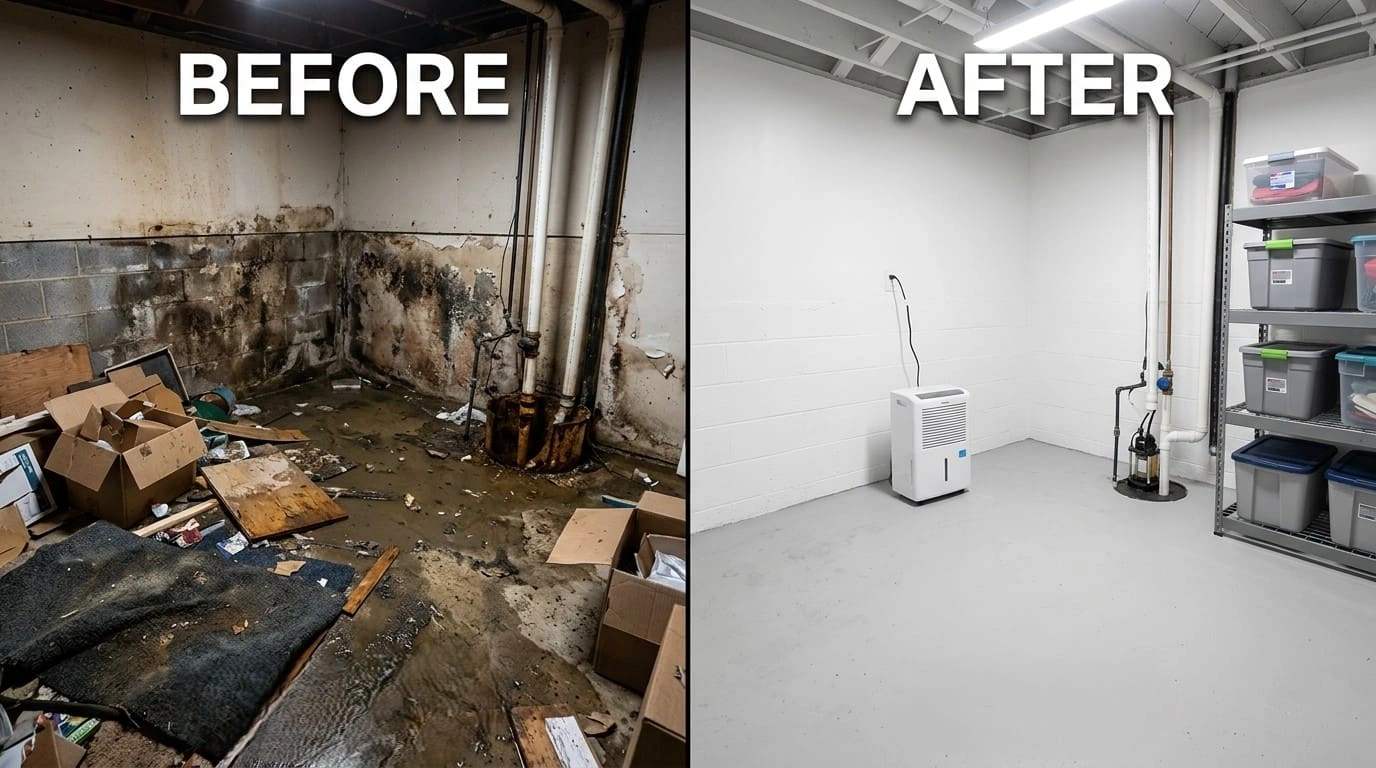
A basement water emergency can feel overwhelming because property owners often do not know what is happening behind flooring, walls, insulation, cabinets, or stored belongings. The goal is not simply to make the floor look dry—it is to identify affected materials, control moisture, address contamination when present, and provide a clear path toward repair.
Before
Standing water, wet carpet, soaked padding, damp drywall, unknown moisture conditions, and uncertainty about the source.
After
Water extraction, moisture mapping, drying equipment, documented conditions, and a clear mitigation scope.
Before
A failed sump pump, stormwater event, burst pipe, or appliance leak continues to affect the basement.
After
Source-control coordination, water removal, structural drying, and recommendations to reduce repeat incidents.
Before
Concerns about mold, odors, contamination, insurance, or the cost of repairs.
After
A documented cleanup plan, practical salvage-or-replace guidance, and next steps for repair or reconstruction.
How We Extract Water, Find Moisture & Dry Basement Materials
Professional methods designed for water removal, moisture control, and property recovery.
Mont Long Restoration uses water mitigation methods based on the source of water, the amount of water present, the materials affected, the length of exposure, and the level of contamination involved. The purpose is to remove water, reduce moisture, protect unaffected areas where possible, and create a documented drying or cleanup plan.
Our Methods May Include
- Professional water extraction from hard surfaces, carpet, padding, and basement floor areas
- Moisture meters and moisture mapping to identify hidden wet materials
- Thermal imaging or noninvasive inspection tools when appropriate
- Commercial air movers and dehumidifiers for controlled structural drying
- Targeted drying of walls, floors, framing, insulation cavities, and other affected areas
- Containment and air-quality controls when conditions require them
- Cleaning and decontamination procedures for toilet overflow, sewage backup, and contaminated-water events
- Controlled demolition of materials that cannot be safely dried, cleaned, or restored
- Documentation of affected areas, equipment placement, drying progress, and repair recommendations
Should You Restore Water-Damaged Basement Materials or Replace Them?
Helping Longmont property owners make practical decisions after a water event.
The right restoration decision depends on the source of water, how long materials stayed wet, whether contamination occurred, the type of material involved, and whether moisture can be reduced to an acceptable condition. Not every wet material needs replacement, but not every affected material can be safely restored.
| Scenario | Drying or Repair May Be Recommended | Replacement May Be Recommended |
|---|---|---|
| Clean-water leak caught quickly | Carpet, flooring, drywall, and contents may be evaluated for drying and restoration | If materials remain damaged, swollen, delaminated, or cannot be dried properly |
| Saturated carpet padding | Carpet may be considered for restoration in limited situations | Padding often needs replacement when heavily saturated or contaminated |
| Wet drywall near a small clean-water leak | Drying may be possible if exposure is limited and moisture is controlled | Removal may be needed if water wicked high, insulation is wet, or deterioration occurs |
| Buckled hardwood or damaged laminate | Limited drying may be attempted depending on material and exposure | Replacement may be necessary when boards separate, cup, swell, or delaminate |
| Sewer backup or toilet overflow | Nonporous surfaces may be cleaned and disinfected where appropriate | Porous materials may require removal due to contamination |
| Repeated foundation seepage | Drying can address the current event | Recurring damage may require drainage, waterproofing, grading, or perimeter-drain solutions |
Replacement May Be the Better Option When
- Materials are heavily saturated, deteriorated, distorted, or structurally compromised
- Water was contaminated by sewage, wastewater, or unknown dirty water
- Insulation, carpet padding, drywall, or porous furnishings cannot be cleaned or dried appropriately
- The same material has been repeatedly affected by leaks, seepage, or flooding
- Moisture remains trapped behind walls, beneath flooring, or inside cavities after mitigation efforts
Basement Water Damage Cleanup Costs in Longmont, CO
Clear cost drivers and practical scope information before restoration work moves forward.
The cost of basement water damage cleanup depends on what happened, how far the water spread, how long materials remained wet, and what is needed to restore the space. A small appliance leak in an unfinished utility room is different from a large stormwater event, sewer backup, burst pipe, or sump-pump failure affecting a finished basement.
Main Cost Factors
- Source and condition of the water
- Clean-water, stormwater, wastewater, or sewage contamination concerns
- Amount of standing water and size of the affected area
- Finished versus unfinished basement construction
- Wet carpet, pad, flooring, drywall, insulation, cabinets, furniture, and contents
- Water extraction, pumping, drying, dehumidification, monitoring, cleaning, and demolition needs
- Accessibility of the basement, crawl space, utility room, or affected areas
- After-hours or immediate emergency dispatch needs
- Repairs needed to stop the source, such as plumbing, roof, drainage, appliance, or sump-pump repairs
- Reconstruction requirements after mitigation is complete
| Service Type | Typical Scope Considerations |
|---|---|
| Emergency Basement Water Extraction | Water depth, access, floor area, water source, and amount of extraction needed |
| Structural Drying & Dehumidification | Number of affected rooms, wet materials, drying equipment, and monitoring requirements |
| Carpet Water Extraction & Drying | Carpet type, padding condition, water source, contamination concerns, and drying feasibility |
| Sewage or Toilet Overflow Cleanup | Contamination extent, affected porous materials, cleaning needs, and disposal requirements |
| Repair & Reconstruction | Flooring, drywall, insulation, trim, cabinetry, painting, and other restoration needs |
Which Longmont Properties Need Professional Basement Water Cleanup?
If water has entered your basement, hidden moisture or contamination may require more than a simple mop-up.
Professional water damage cleanup is strongly recommended when there is standing water, a failed sump pump, a burst pipe, sewage or toilet overflow, stormwater intrusion, wet finished materials, visible mold-like growth, recurring seepage, or uncertainty about what caused the water.
You May Need Professional Help If Your Property Has
- A flooded finished basement with carpet, flooring, drywall, insulation, furniture, or stored belongings
- Water entering through a basement window, foundation wall, floor crack, or perimeter-drain system
- A failed sump pump, flooded sump pit, or water around the foundation
- A burst pipe, frozen pipe, leaking water heater, washing-machine overflow, or appliance supply-line failure
- A sewer backup, toilet overflow, drain backup, or wastewater contamination concern
- A crawl space with wet vapor barrier, damp insulation, standing water, or musty odors
- A commercial lower-level space, storage room, utility room, office, retail area, or multi-unit building affected by water
- Recurring water seepage after rain, snowmelt, irrigation cycles, or drainage changes
Basement Water Damage Cleanup for Commercial & Multi-Unit Properties
Protect lower-level spaces, tenants, equipment, records, and operations across Longmont.
Commercial and multi-unit water damage events can disrupt tenants, employees, customers, equipment, records, inventory, and daily operations. Mont Long Restoration coordinates with facility managers, owners, HOA boards, landlords, maintenance teams, and property managers to create a clear response plan. Learn more about our commercial water damage restoration services.
| Commercial Service | Description |
|---|---|
| Emergency Water Extraction | Remove standing water from lower-level offices, storage areas, utility rooms, common areas, and commercial basements |
| Structural Drying | Reduce moisture in floors, walls, ceilings, insulation, and affected building materials |
| Sewage & Toilet Overflow Cleanup | Address contamination-aware cleanup needs after wastewater or sewage events |
| Multi-Unit Coordination | Coordinate access, document affected units, and help prioritize urgent spaces |
| Moisture Mapping & Documentation | Identify hidden moisture and provide records for property managers, owners, and insurers |
| Repair & Reconstruction Planning | Plan repairs after mitigation for flooring, drywall, ceilings, insulation, trim, and affected finishes |
Commercial Properties We Serve Include
- Office buildings and professional suites
- Retail centers and mixed-use properties
- Restaurants, cafes, breweries, and hospitality spaces
- Medical offices, dental practices, clinics, and care facilities
- Schools, daycare centers, churches, and community buildings
- Apartment complexes, condominium communities, and HOA-managed properties
- Warehouses, workshops, industrial sites, and logistics areas
Why Commercial Property Owners Choose Mont Long Restoration
- Emergency response for water damage events that cannot wait for normal business hours
- A single restoration partner for extraction, drying, cleanup, documentation, repair planning, and reconstruction support
- Coordination with facility managers, landlords, tenants, and property-management teams
- Practical documentation for incident records and insurance communication
- Resources to address multiple affected areas or units when a larger water event occurs
| Commercial Service Situation | Typical Considerations |
|---|---|
| Multi-Unit Water Damage | Unit access, affected tenants, common areas, moisture spread, and phased drying |
| Office or Retail Basement Flooding | Business continuity, inventory, records, equipment, safety, and after-hours access |
| Large Building Water Event | Priority zones, ongoing source control, equipment placement, monitoring, and reconstruction planning |
| Industrial or Warehouse Water Damage | Equipment protection, storage concerns, safety protocols, access restrictions, and cleanup scope |
Benefits of Hiring Water Damage Restoration Professionals in Longmont
Faster extraction, better moisture control, and clearer recovery decisions.
Professional basement water damage cleanup helps property owners move from uncertainty to a documented recovery plan. The benefit is not just water removal—it is understanding what happened, identifying hidden moisture, drying affected materials correctly, addressing contamination when necessary, and preventing a small water event from becoming a larger repair project.
- Protect flooring, drywall, insulation, contents, furniture, and lower-level living spaces
- Reduce the chance that hidden moisture remains behind walls or beneath flooring
- Receive water extraction, moisture mapping, drying, and dehumidification support in one coordinated process
- Understand whether materials may be dried, cleaned, repaired, or need replacement
- Address sewage, toilet overflow, or unknown dirty water with a more appropriate cleanup process
- Obtain photos, scope details, and documentation for property records or insurance communication
- Coordinate repair and reconstruction needs after the basement is stabilized and dry
- Gain practical prevention guidance for gutters, drainage, sump pumps, window wells, irrigation, and recurring water-entry issues
Why DIY Basement Water Cleanup Can Be Risky
Water, electricity, contamination, and hidden damage can create serious hazards.
A homeowner may be able to address a small, contained clean-water spill in a safe location. However, standing water, flooded finished basements, electrical equipment, wet drywall, saturated carpet, sewage backup, unknown water sources, and recurring water entry can create risks that require professional assessment.
Avoid Entering or Cleaning a Flooded Basement When
- Water may be near outlets, cords, appliances, electrical panels, furnaces, or powered equipment
- The source is sewage, toilet water, drain backup, or unknown dirty water
- You smell gas, see signs of structural damage, or suspect a compromised utility system
- Water is continuing to enter through a pipe, wall, window well, floor, or other opening
- Carpet, padding, drywall, insulation, furniture, or stored belongings are heavily saturated
- You see visible mold-like growth or experience strong musty odors
- Children, older adults, people with respiratory conditions, pregnant people, or immunocompromised occupants could be exposed to contaminated or moldy conditions
EPA Guidance: Take electrical and gas hazards seriously, dry affected materials quickly where safe, and keep vulnerable individuals away from mold-affected cleanup areas.
Answers to Common Basement Water Damage Questions in Longmont
Quick, practical answers for homeowners, landlords, and property managers.
What should I do first if my Longmont basement floods?
Prioritize safety. Do not enter standing water if electrical equipment, appliances, outlets, or cords may be affected. If it is safe, stop the source of water. Take photos or video for insurance documentation, keep children and pets out of the area, and call for emergency water extraction and moisture assessment.
Should I call a plumber or a water damage cleanup company?
Call a plumber for an active water-line break, fixture failure, water-heater leak, drain problem, or other plumbing repair. Call a water damage restoration company for water extraction, drying, moisture inspection, contamination handling, material assessment, documentation, and restoration planning. Many active plumbing leaks require both services.
Why is water coming into my basement after heavy rain?
Possible causes include a flooded window well, clogged gutters, downspouts discharging too close to the foundation, poor grading, blocked or overwhelmed side swales, groundwater, a failed sump pump, drainage issues, or foundation-wall entry points.
Can Longmont clay soil contribute to basement water problems?
Yes. Longmont notes that Front Range soils are often clay-based and can become hard and dense, which can make it more difficult for rain, snowmelt, and irrigation water to infiltrate. Water may then pool or move toward the foundation if drainage conditions are poor.
Why is my sump pump always running?
Heavy rain, elevated groundwater, long-term overwatering, nearby irrigation seepage, drainage conditions, or a sump-system problem may contribute. A sump pump that runs constantly or fails during a storm should be assessed before the next major weather event.
Can I connect my sump pump to the sewer in Longmont?
No. The City of Longmont states that sump pumps cannot discharge into the sanitary sewer.
Do I need professional cleanup if there is no standing water?
Possibly. Water can remain beneath flooring, inside carpet padding, behind drywall, in insulation, around baseboards, inside crawl spaces, and in other concealed areas. Moisture mapping can help determine whether drying or material removal is needed.
Does a basement flood always cause mold?
No. However, wet building materials should be dried promptly and thoroughly because prolonged moisture can create conditions that support mold growth and secondary material damage. EPA guidance recommends drying a home and its contents as quickly as possible, ideally within 24 to 48 hours when safe and feasible.
Can wet basement carpet be saved?
It depends on the source of the water, how long the carpet and padding were wet, the extent of saturation, and whether contamination is involved. Clean-water events addressed quickly may allow some materials to be restored, while sewage, wastewater, heavily saturated padding, and damaged carpet may require removal.
How long does it take to dry a water-damaged basement?
Drying time depends on the amount of water, type of materials, humidity, airflow, hidden moisture, water source, and equipment required. The drying plan should be based on measured conditions rather than how dry surfaces feel to the touch.
Will homeowners insurance cover basement flooding?
Coverage depends on the cause of loss, exclusions, deductible, endorsements, and policy terms. A burst pipe, appliance leak, sewer backup, groundwater seepage, and storm flooding may be treated differently under an insurance policy. Document the damage and contact your insurer or agent for policy-specific guidance.
How do I know whether my Longmont property is in a floodplain?
The City of Longmont provides a Floodplain Inquiry Map that allows property owners to check whether an address is within a regulatory floodplain.
Can I clean up sewage in my basement myself?
Sewage, toilet overflow, wastewater, and unknown dirty water should be treated differently from clean-water leaks. Keep people and pets away from the area, avoid contact with contaminated materials, and arrange professional cleanup, decontamination, and disposal guidance.
Are you available for emergency water extraction in Longmont?
Yes. Mont Long Restoration offers 24/7 emergency water removal, basement water extraction, drying, cleanup, and restoration support throughout Longmont and nearby Front Range communities.
You're Supported from Emergency Water Removal Through Restoration Planning
Clear communication, documented conditions, and responsive help when water affects your property.
Mont Long Restoration approaches each basement water damage project with a focus on safety, clear scope communication, moisture control, and practical recovery planning. We explain what we find, what needs immediate attention, what may be salvageable, and what repair or reconstruction steps may follow after mitigation.
If water damage requires repair or reconstruction after cleanup and drying, we provide project-specific information about recommended work, material options, and applicable workmanship or manufacturer warranty details.
Mont Long Restoration
1205 S Main St
Longmont, CO 80501
United States
Certifications & Credentials Supporting Basement Water Damage Cleanup
Specialized restoration knowledge matters when water affects building materials, indoor environments, and property systems.
Basement water damage restoration requires more than surface cleanup. Proper mitigation may involve water extraction, drying science, moisture measurement, contamination control, material assessment, repair planning, and reconstruction coordination.
Mont Long Restoration's Specialized Qualifications Include
AMRT
Applied Microbial Remediation Technician
ASD
Applied Structural Drying
CR
Certified Restorer
WRT
Water Damage Restoration Technician
Class C License
Local Municipal / General Contractor
These credentials support water mitigation, structural drying, environmental stabilization, repairs, and restoration planning for Longmont residential and commercial properties.
Emergency Basement Water Removal in Longmont, CO
Rapid response when a basement floods, a pipe bursts, or a sump pump fails.
When water enters a basement, waiting until normal business hours can allow moisture to move into flooring, drywall, insulation, contents, and adjacent spaces. Mont Long Restoration provides 24/7 emergency basement water cleanup across Longmont and nearby Front Range communities.
Our Emergency Process Includes
- Immediate phone consultation to understand the source, water level, safety concerns, and urgency
- Dispatch coordination for water extraction, moisture inspection, drying, and cleanup needs
- On-site assessment of standing water, wet materials, possible contamination, and hidden moisture
- Water removal, equipment setup, and source-control coordination when possible
- Documentation for homeowners, property managers, insurers, plumbers, roofers, or other involved parties
- Clear next steps for drying, repair, material removal, and reconstruction when needed
Emergency Situations We Handle Include
- Burst or frozen pipe water damage
- Failed sump pump or water entering a sump pit
- Heavy-rain or snowmelt basement flooding
- Flooded basement windows and window wells
- Water seeping through a basement floor or foundation wall
- Water heater, washing-machine, refrigerator, or appliance leaks
- Toilet overflows, sewer backups, and wastewater contamination
- Roof leaks, ice dams, and water traveling into basement spaces
- Crawl-space flooding and wet vapor barriers
Insurance Claim Assistance for Basement Water Damage Incidents
Documentation that helps you organize the details of a water-damage event.
After a basement flood, pipe break, sump-pump failure, appliance leak, roof leak, or sewer backup, property owners often need accurate documentation for an insurance conversation. Mont Long Restoration can help create a clearer record of the observed conditions and mitigation work performed.
Insurance-Support Documentation May Include
- Initial site observations and photos of visible damage
- Water-source observations and affected-area notes
- Moisture mapping and drying-related documentation when applicable
- Photos of wet flooring, drywall, insulation, carpet, contents, and other affected materials
- Water extraction, drying-equipment, cleanup, and demolition scope information
- Repair or reconstruction estimates when requested
- Invoices and documentation describing work performed
Coverage depends on the cause of loss, policy limits, exclusions, deductibles, flood coverage, sewer-backup endorsements, and the insurer's decision. Property owners should review their policy and contact their insurance agent or carrier for coverage-specific guidance.
Warranty Coverage for Basement Water Damage Repairs
Understand how workmanship and manufacturer coverage may apply after mitigation.
Mont Long Restoration provides clear project-specific information for repair, reconstruction, and installed materials after water damage mitigation is complete. Warranty availability and duration can vary based on the type of work, material manufacturer, repair scope, pre-existing conditions, and project agreement.
| Coverage Type | Description |
|---|---|
| Workmanship | May apply to eligible repair, reconstruction, installation, or restoration labor as outlined in the project agreement |
| Parts and Materials | Manufacturer warranties may apply to qualifying new materials, products, or equipment |
| Documentation | Project records, estimates, invoices, and material information can support future maintenance or warranty questions |
Important Notes
- Water damage mitigation, drying, repair, and reconstruction may have different warranty terms.
- Manufacturer warranties are controlled by the applicable manufacturer and product requirements.
- Warranty coverage does not replace the need to repair the source of water intrusion, such as plumbing failures, drainage problems, roof leaks, sump-pump issues, or exterior water-entry conditions.
- Specific warranty terms are provided with the applicable estimate, service agreement, or reconstruction scope.
10 Fully Equipped Service Vans Serving Longmont & the Front Range
Water extraction, drying equipment, moisture tools, and trained restoration professionals ready for emergency response.
Mont Long Restoration operates 10 fully loaded service vans to support emergency water damage response across Longmont, Boulder County, and nearby Front Range communities. Our fleet is prepared to mobilize water extraction, drying, dehumidification, moisture-inspection, cleanup, and restoration resources when basement water emergencies occur.
Fleet and Equipment Capabilities Include
- Water extraction equipment for standing water and wet flooring
- Moisture meters and moisture-mapping tools
- Commercial drying and dehumidification equipment
- Air movers and structural drying equipment
- Cleaning, containment, and decontamination supplies for appropriate conditions
- Equipment for carpet water extraction and affected-material assessment
- Stocked restoration tools for emergency stabilization and initial mitigation work
- GPS-dispatched vehicles for responsive area coverage
Flexible Payment Options for Basement Water Damage Reconstruction
Helping property owners plan for larger repair and rebuilding needs after mitigation.
Emergency water extraction and drying are often only the first phase of a basement water damage project. When flooring, drywall, insulation, cabinetry, ceilings, trim, electrical components, or finished basement areas require substantial repair or reconstruction, Mont Long Restoration can discuss available payment and financing options for qualifying projects.
Financing and Payment Discussions May Include
- Options for larger reconstruction or multi-room restoration projects
- Planning for flooring, drywall, insulation, cabinetry, and finish repairs
- Coordination with insurance-related project timelines when applicable
- Clear explanation of project scope, costs, payment expectations, and scheduling
- Practical phasing of repair work when property conditions allow
Availability, approval, terms, and conditions vary by project and financing provider.
Recognition for Water Damage Restoration Service
Awards and community recognition associated with Mont Long Restoration.
Mont Long Restoration has been associated with local and industry recognition reflecting its long-term service presence, restoration capabilities, and commitment to property recovery throughout Longmont and surrounding Colorado communities.
Angi Super Service Award
Boulder County Gold Award
Longmont Area Chamber of Commerce Business of the Year
Nextdoor Neighborhood Fave
The Best of Longmont Award
Senior & Military Discounts on Basement Water Damage Cleanup
Supporting qualifying Longmont residents during stressful water-damage events.
Mont Long Restoration offers special discounts for qualifying senior citizens, active-duty military personnel, veterans, and eligible military families on select basement water damage cleanup and related restoration services.
Discount Opportunities May Include
- Senior-citizen discounts on qualifying cleanup, drying, repair, or restoration services
- Military and veteran discounts for eligible water damage projects
- Seasonal offers for emergency extraction, structural drying, or reconstruction work
- Bundle credits for qualifying extraction-and-reconstruction projects
Discount availability, eligibility, service limits, project scope, and promotional terms may apply. Ask when scheduling service for current details.
Basement Water Damage Cleanup Hours in Longmont, CO
24/7 emergency availability for water removal, extraction, drying, and cleanup.
Basement water damage does not wait for normal business hours. Mont Long Restoration provides emergency response 24 hours a day, seven days a week, for Longmont homes, businesses, rental properties, and multi-unit communities.
| Day | Hours |
|---|---|
| Monday | 00:00–23:59 |
| Tuesday | 00:00–23:59 |
| Wednesday | 00:00–23:59 |
| Thursday | 00:00–23:59 |
| Friday | 00:00–23:59 |
| Saturday | 00:00–23:59 |
| Sunday | 00:00–23:59 |
Contact Mont Long Restoration
Phone: +1 (720) 438-7100
Email: montlongrestoration@gmail.com
Website: waterdamagerestorationlongmontco.com
Mont Long Restoration vs. Typical Water Damage Cleanup Providers in Longmont
A complete response plan for water removal, drying, cleanup, and property recovery.
Many companies may offer basic water removal. Mont Long Restoration is structured to support the broader recovery process: emergency extraction, moisture assessment, drying, dehumidification, contamination-aware cleanup, repair planning, reconstruction support, and clear documentation.
| Feature | Mont Long Restoration | Typical Limited-Scope Provider |
|---|---|---|
| Local service presence | Serving Longmont and nearby Front Range communities since 2010 | May have limited local availability |
| Team and fleet resources | 40 skilled professionals and 10 equipped service vans | May have fewer people or limited dispatch capacity |
| Emergency availability | 24/7 emergency water damage response | May operate only during normal business hours |
| Water damage scope | Extraction, moisture mapping, structural drying, cleanup, repair planning, and reconstruction support | May provide only basic extraction or limited cleanup |
| Contamination response | Support for sewage, toilet overflow, wastewater, and unknown dirty-water cleanup needs | May not provide contamination-aware services |
| Documentation | Photos, moisture documentation, scope details, and insurance-support information | May provide limited records |
| Property types served | Residential, commercial, rental, HOA, and multi-unit properties | May focus on a narrower property type |
Contact Mont Long Restoration for Basement Water Damage Cleanup in Longmont, CO
Speak with a water damage restoration professional and get a clear next-step plan.
If your basement is flooded, water is entering through a wall or window well, a sump pump has failed, a pipe has burst, carpet is soaked, drywall is wet, or you are dealing with a toilet overflow or sewer backup, Mont Long Restoration is ready to help.
Our team can assess the situation, remove standing water, inspect for hidden moisture, begin structural drying, explain contamination concerns, document the affected areas, and help you plan the next phase of cleanup, repair, or reconstruction.
Contact Details
Mont Long Restoration
+1 (720) 438-7100
1205 S Main St
Longmont, CO 80501
24/7 Emergency Service Available
Current Special Offers
- Free Structural Moisture Assessment
- Flat-Rate 24/7 Emergency Dispatch
- Deductible Relief Discount
- Direct-to-Insurance Billing Promo
- Extraction & Reconstruction Bundle Credit
Protect your property with professional basement water damage cleanup Longmont CO from Mont Long Restoration.