Appliance Leak Water Damage Cleanup in Longmont, CO
24/7 Water Damage Help for Longmont Homes & Businesses
A leaking dishwasher, washing machine, refrigerator water line, ice maker, or water heater can soak far more than the puddle you can see. Appliance leak water damage cleanup Longmont CO from Mont Long Restoration helps protect affected floors, cabinets, drywall, baseboards, ceilings, and other building materials through prompt extraction, moisture inspection, structural drying, and clear next-step planning.
Call +1 (720) 438-7100 for 24/7 emergency appliance leak cleanup in Longmont, Boulder County, and nearby Front Range communities.
- Emergency water extraction for appliance leaks and indoor flooding
- Moisture inspection for wet flooring, cabinets, walls, and ceilings below
- Structural drying and dehumidification for affected materials
- Documentation support for your records and insurance claim process
Important: If water is near an electrical outlet, appliance cord, breaker panel, or exposed wiring, avoid entering the area or handling electrical equipment. Shut off the appliance water supply or main water supply only if it is safe to do so.
Request Emergency Appliance Leak Cleanup
Fill out the form and we'll contact you immediately!
Appliance Leak Water Damage Cleanup Backed by 16+ Years of Experience
When water escapes from an appliance, fast action matters—but so does determining how far the moisture traveled. Mont Long Restoration helps Longmont homeowners, property managers, businesses, HOAs, and commercial facilities respond to appliance-related water losses with practical guidance and a clear drying plan.
Our team works with customers facing a washing machine leak, dishwasher leak, refrigerator water-line failure, ice-maker line leak, water-heater leak, overflow, or other indoor water event. We focus on the affected structure: the flooring, cabinet bases, drywall, insulation, ceiling below, subfloor, and contents that may need attention after the water source is controlled.
16+ Years Experience
Serving Longmont, Boulder County, and Front Range communities since 2010.
40 Skilled Professionals
Our trained team and 10 equipped service vehicles are ready for appliance leak emergencies.
24/7 Emergency Availability
Urgent water-damage situations need fast response at any hour, any day of the week.
Water Extraction & Drying
Water extraction, moisture mapping, structural drying, and reconstruction support.
All Property Types
Residential, commercial, HOA, rental-property, and multi-unit service options.
Award-Winning Service
Recognized with the Angi Super Service Award, Boulder County Gold Award, and more.
Appliance Leak Cleanup Near Longmont Landmarks & Neighborhoods
Mont Long Restoration provides water damage restoration from appliance leaks Longmont properties may experience in homes, apartments, offices, retail spaces, restaurants, and other buildings. Whether you are near Downtown Longmont, Main Street, Prospect New Town, Old Town Longmont, St. Vrain Creek, McIntosh Lake, Union Reservoir, or a nearby Boulder County community, our team can help assess and dry appliance-related water damage.
Water may travel under kitchen flooring, behind refrigerator enclosures, through laundry-room transitions, into utility-room walls, or into the ceiling below an upstairs appliance. A fast moisture inspection can help identify whether the visible puddle is the full extent of the problem.
Longmont Neighborhoods & Communities We Serve
Nearby Service Areas
Appliance Leak Cleanup Is Not a General Handyman Job
Stopping the appliance leak is essential, but it is only one part of the response. An appliance repair technician or plumber may repair the failed dishwasher, washer hose, refrigerator supply line, drain connection, water heater, or shutoff valve. Mont Long Restoration addresses the water that escaped into the building materials around it.
A small amount of visible water can travel beneath flooring, behind cabinet toe-kicks, into baseboards, through drywall, or down into a finished room below. Simply mopping the surface may not show whether moisture remains in concealed materials.
Our Appliance Leak Water Damage Cleanup Work Can Include
- Inspection of affected flooring, cabinets, drywall, and ceilings
- Moisture readings and moisture mapping to locate water migration
- Water extraction from accessible surfaces and materials
- Controlled air movement and dehumidification
- Drying monitoring and documented next steps
- Removal recommendations only when materials cannot be properly dried or restored
- Reconstruction planning for damaged walls, flooring, trim, cabinets, or ceilings when needed
What Happens When an Appliance Leaks in Longmont?
A dishwasher door gasket, supply line, drain hose, pump, washer hose, standpipe, refrigerator water line, ice-maker line, water-heater tank, or condensate connection can fail without much warning. In some cases, the appliance leak is obvious. In others, water slowly collects beneath a refrigerator, behind a dishwasher, inside a cabinet base, or under flooring before anyone notices.
The immediate risk is not always the appliance itself. The larger concern is where the water goes after it escapes.
Common Appliance-Leak Water Damage Concerns
- Wet laminate, hardwood, vinyl plank, tile underlayment, or carpet
- Swollen cabinet toe-kicks, cabinet bases, and trim
- Moisture beneath kitchen or laundry-room flooring
- Water migration into drywall, insulation, and baseboards
- Ceiling staining, sagging, or dripping in the room below
- Damp subflooring or framing that needs professional evaluation
- Electrical hazards near outlets, cords, appliances, or panels
- Increased risk of material deterioration when moisture remains concealed
- Business interruption for restaurants, offices, rental properties, and retail spaces
If a washing machine leaked through the ceiling below, a dishwasher soaked the kitchen floor, or a refrigerator water line leaked behind cabinets, a moisture inspection helps determine the appropriate drying scope.
Appliance Leak Prevention & Maintenance Guidance
Appliance leak cleanup is an emergency service, but practical maintenance can reduce the chance of an unexpected water loss. Longmont homes experience seasonal temperature changes, and appliance supply lines, hoses, valves, drain connections, and pans should be checked periodically—especially in utility rooms, garages, basements, kitchens, and other areas where leaks may not be noticed right away.
| Maintenance Task | What to Check | Suggested Timing | Why It Matters |
|---|---|---|---|
| Washer hose inspection | Look for cracks, bulges, corrosion, loose fittings, and worn connections | Periodically and before extended travel | Failed washer hoses can release water quickly |
| Dishwasher inspection | Check the door gasket, filter, drain connection, supply line, and toe-kick area | Periodically | Helps identify leaks before water reaches cabinetry or flooring |
| Refrigerator line check | Inspect the water supply line, valve, ice maker connection, and floor behind the appliance | Periodically | Small refrigerator leaks can remain hidden behind built-in units |
| Water-heater inspection | Look for corrosion, moisture at the base, pan issues, and nearby wet flooring | Regularly | A leaking tank or connection can affect surrounding rooms |
| Appliance-pan review | Confirm drain pans and discharge paths are clear where applicable | During routine maintenance | A pan cannot help if it is damaged, undersized, or blocked |
| Shutoff-valve awareness | Identify appliance shutoffs and the main water shutoff before an emergency | Before a leak occurs | Saves time when water must be stopped quickly |
Seasonal Guidance for Longmont Properties
- Inspect appliance supply connections before winter cold snaps and before leaving home for extended travel.
- Check laundry rooms, utility closets, and under-sink areas after periods of heavy appliance use.
- Look behind refrigerators and around water heaters when cleaning or servicing equipment.
- Do not assume that dry outdoor air will dry moisture trapped under flooring, behind cabinets, or inside walls.
Most appliance leaks do not require a city filing or annual certification. However, proactive inspection and prompt repair of worn hoses, valves, seals, and drain connections can help prevent a larger water-damage event.
Who Needs Appliance Leak Water Damage Cleanup?
Appliance leaks can affect nearly any property type. A dishwasher overflow in a home, washing machine failure in an upstairs apartment, refrigerator-line leak in an office breakroom, or water-heater leak in a retail suite can create hidden moisture and disruptive damage.
Mont Long Restoration Helps Property Owners & Managers in:
If water has reached a neighboring unit, common area, downstairs ceiling, shared wall, or commercial space, early mitigation can help clarify the affected areas and support a better repair plan.
How Longmont Conditions Affect Appliance Leak Damage
Longmont's Front Range climate includes seasonal temperature changes and winter cold conditions that can place added stress on exposed plumbing and water-supply components. Local building-climate data identifies a winter design temperature of -2°F, making supply-line protection and prompt response to indoor water leaks especially relevant during cold weather.
A dry climate does not mean a wet kitchen, laundry room, or utility closet will harmlessly dry on its own. Water trapped below laminate, behind cabinetry, inside wall cavities, or under appliances may not receive enough airflow to dry properly without targeted extraction and dehumidification.
Winter
Cold snaps can affect vulnerable water lines, appliance supply connections, and unheated utility areas. Frozen pipe damage risk increases.
Spring
Seasonal home maintenance may reveal slow leaks behind appliances or below flooring.
Summer
Higher appliance use, ice-maker demand, and laundry activity can expose worn hoses, seals, or drain connections.
Fall
Homeowners may discover hidden water damage while preparing utility areas, basements, and mechanical rooms for colder weather.
Common Appliance Leaks We Clean Up
Different appliances fail in different ways, but the restoration objective remains the same: stop the water, inspect its path, extract what can be removed, and dry affected materials based on measured conditions.
| Appliance or Source | Common Leak Locations | Potential Water-Damage Areas | What to Do First |
|---|---|---|---|
| Dishwasher | Door gasket, supply line, drain hose, pump, filter, overflow, toe-kick area | Kitchen flooring, cabinets, subfloor, adjacent walls | Stop the cycle, shut off water if safe, avoid running the appliance again |
| Washing machine | Supply hoses, door seal, pump, drain hose, standpipe, overflow | Laundry-room floor, walls, baseboards, ceiling below | Stop the machine, shut off water, avoid wet electrical areas |
| Refrigerator / ice maker | Water line, supply valve, ice-maker connection, defrost issue | Flooring, cabinets, walls, hidden area behind refrigerator | Shut off the refrigerator water supply if safe and inspect visible water |
| Water heater | Tank base, fittings, drain valve, pan, supply connections | Utility-room floor, walls, finished basement, nearby rooms | Turn off water or power/fuel only if safe; contact the appropriate repair professional |
| Condensate or humidifier line | Drain connection, pan, line blockage, pump failure | Ceiling, wall, utility space, flooring | Stop the source if safe and protect electrical areas |
| Appliance-adjacent plumbing | Shutoff valve, flexible supply line, drain connection | Cabinet interiors, flooring, drywall, ceiling below | Shut off the local valve or main water supply if safe |
If you are unsure whether a leak comes from the appliance, a water line, a drain, or a building system, do not guess. A repair professional can diagnose the source, while our restoration team can evaluate the water damage and drying needs.
Our 6-Step Appliance Leak Cleanup Process
Water damage can feel overwhelming because the source, visible damage, and hidden damage are not always the same. Our process is designed to give you a clear picture of what happened, what needs attention now, and what comes next.
Emergency Call & Initial Assessment
We discuss the appliance involved, whether water is still active, the rooms or materials affected, and any immediate hazards. If you can safely stop the water before help arrives, we will explain basic containment steps.
On-Site Inspection & Access Setup
Our team assesses visible damage and identifies accessible areas around flooring, cabinets, walls, appliances, and ceilings. We protect unaffected areas where appropriate and establish a safe work plan.
Moisture Inspection & Mapping
Moisture meters and appropriate inspection methods help locate water that may have moved beyond the visible puddle. This can include cabinet bases, flooring transitions, drywall, baseboards, subflooring, and the ceiling below.
Water Extraction & Emergency Mitigation
We remove standing water and address accessible wet materials. If the appliance or plumbing source has not been repaired, we coordinate the scope around the controlled water source and explain where a plumber or appliance technician may be needed.
Structural Drying & Dehumidification
Based on material type and measured conditions, we use targeted drying equipment and dehumidification to reduce moisture in affected building materials.
Monitoring, Documentation & Next-Step Planning
We monitor drying progress, document conditions and work performed, and explain repair or reconstruction considerations once affected materials have been evaluated.
What Is Included in Appliance Leak Water Damage Cleanup?
Every appliance leak is different. A brief dishwasher drip may require a limited assessment, while a washer overflow, refrigerator line failure, or water-heater leak may affect multiple rooms or floors. Mont Long Restoration builds the work scope around the actual conditions found on-site.
Your Appliance Leak Cleanup Service May Include
- Initial emergency assessment and visible-damage inspection
- Moisture inspection of affected structural materials
- Water extraction from accessible areas
- Evaluation of flooring, cabinets, baseboards, drywall, and ceilings
- Documentation of observed conditions and drying readings
- Placement of air movers, dehumidifiers, and related drying equipment when appropriate
- Drying monitoring and equipment adjustment as conditions change
- Recommendations for materials that can be dried, repaired, or may require removal
- Coordination guidance for appliance repair, plumbing repair, or reconstruction needs
- Records that may assist your documentation for a claim
Key Advantages of Mont Long Restoration
When an appliance leaks, you need more than a company that removes visible water. You need a team that can assess moisture migration, explain what the readings mean, and provide a realistic plan for drying and repair. Mont Long Restoration provides a practical, property-focused approach to appliance water damage in Longmont and the surrounding Front Range.
From Appliance Leak Damage to a Drying Plan
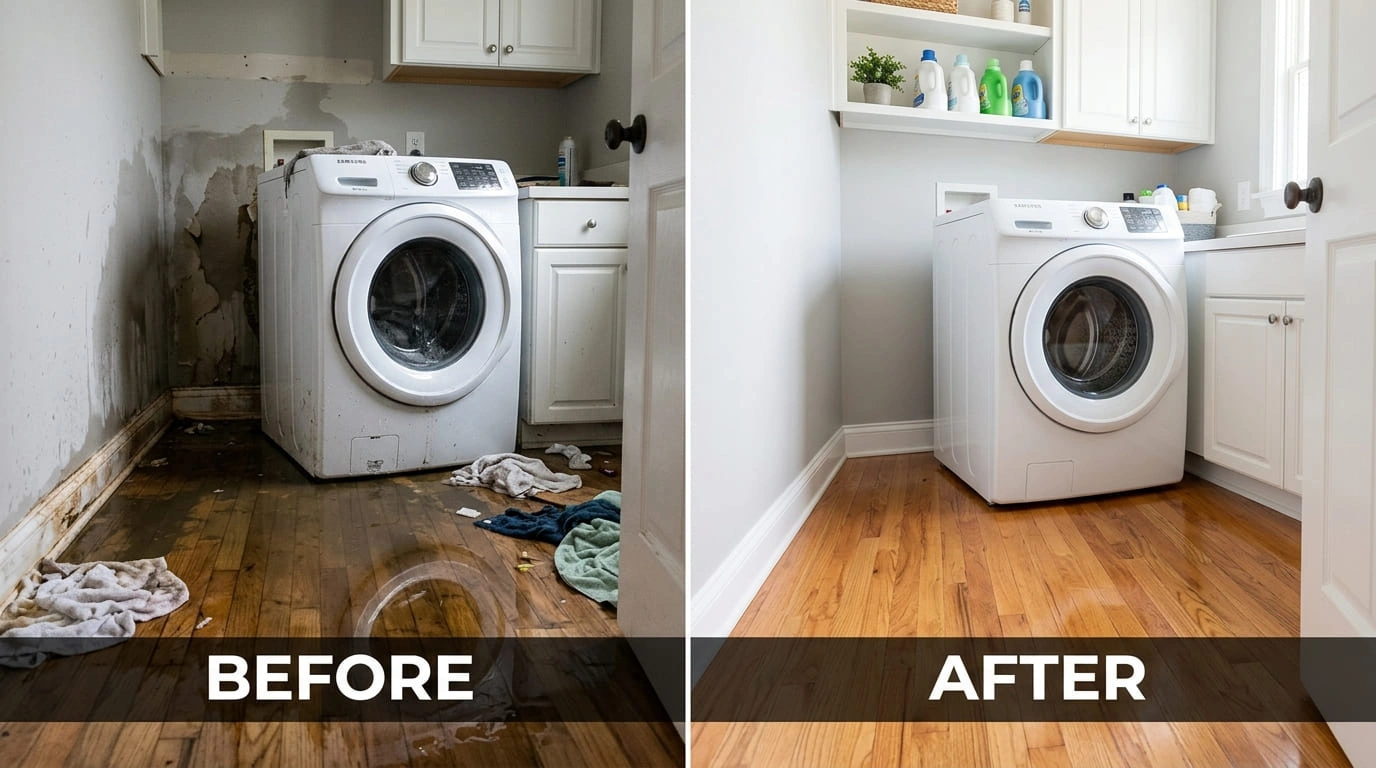
Before mitigation begins: You may see a wet floor, swollen cabinet base, dripping ceiling, damp drywall, standing water in a laundry room, or water behind an appliance. You may not know whether moisture reached the subfloor, wall cavity, or room below.
After professional inspection and mitigation begins: You have a clearer understanding of the affected area, moisture conditions, drying approach, and the next repair decisions. The goal is not to make promises before inspection; it is to create a documented plan based on what the water actually reached.
Professional Equipment & Drying Methods
Effective appliance leak cleanup is based on the condition of the affected property, not on a one-size-fits-all response. Mont Long Restoration uses professional water-damage mitigation methods to evaluate moisture and establish controlled drying conditions.
Depending on the Loss, Methods May Include
- Water extraction equipment for standing water and saturated surfaces
- Moisture meters to assess accessible building materials
- Moisture mapping to identify the path of water migration
- Air movers to support controlled airflow across affected materials
- Dehumidification equipment to reduce moisture from the indoor environment
- Targeted drying strategies for flooring, cabinetry, drywall, and structural materials
- Content-moving or protection measures where safe and necessary
- Documentation of drying conditions and mitigation progress
- Limited material removal only when drying, sanitation, or repair conditions require it
We do not assume every wet floor, cabinet, or wall must be removed. We also do not promise that every material can be saved. The appropriate approach depends on the water source, duration, materials involved, contamination concerns, accessibility, and measured moisture conditions.
Appliance Repair vs. Water Damage Restoration
A common Longmont question is: "Who do I call first for a leaking appliance?" The answer may involve more than one professional.
| Situation | Appliance Technician or Plumber | Mont Long Restoration |
|---|---|---|
| Dishwasher door, pump, hose, gasket, drain, or supply issue | Diagnoses and repairs the appliance or connected plumbing component | Evaluates water that escaped into flooring, cabinets, walls, or nearby materials |
| Washing-machine hose burst or drain overflow | Repairs hoses, valves, appliance components, drain, or standpipe issue | Extracts water and dries the laundry room, walls, flooring, and ceiling below if affected |
| Refrigerator water-line or ice-maker leak | Repairs supply line, valve, appliance connection, or refrigerator component | Inspects and dries water behind the refrigerator, beneath flooring, and in adjacent cabinets |
| Water-heater leak | Repairs or replaces the water heater, fittings, drain valve, or associated plumbing | Mitigates wet floors, walls, finished spaces, and materials affected by escaped water |
| Water through a ceiling below | Identifies and repairs the source above | Assesses moisture, establishes drying, documents conditions, and plans necessary repair work |
The appliance repair fixes the cause. Water-damage mitigation addresses the moisture that reached your property. In some situations, both services are necessary.
Appliance Leak Cleanup Costs in Longmont, CO
The cost of appliance leak cleanup varies because the visible puddle does not always reflect the actual drying scope. A leak caught immediately may require limited extraction and inspection, while a slow refrigerator water-line leak or washer overflow can affect flooring, cabinets, drywall, ceilings, and adjoining rooms.
Mont Long Restoration provides a clear scope and upfront explanation of recommended work after evaluating the conditions.
| Cost Factor | Why It Can Affect the Cleanup Scope |
|---|---|
| Duration of the leak | Water that remains undetected may spread into more materials |
| Water volume and travel path | A small leak can affect a large area if it moves under flooring or through walls |
| Appliance source | Clean water from a supply line may require a different approach than wastewater or contaminated water |
| Affected materials | Cabinets, hardwood, laminate, drywall, insulation, and subflooring dry differently |
| Access conditions | Built-in appliances, tight spaces, upper floors, finished basements, and concealed cavities may affect labor |
| Emergency timing | Active after-hours leaks may require immediate mitigation |
| Drying requirements | Equipment placement, monitoring, and drying duration depend on measured conditions |
| Reconstruction needs | Mitigation, appliance repair, and reconstruction can be separate scopes of work |
If you need dishwasher leak cleanup Longmont homeowners can understand, call for a property assessment instead of relying on a generic online price estimate. We will explain what we find, why specific steps are recommended, and what your options are.
When Professional Appliance Leak Cleanup Is Needed
Not every appliance drip becomes a large restoration project. However, professional moisture inspection and water-damage mitigation are strongly worth considering when water has reached more than an easy-to-dry surface.
Call Mont Long Restoration If You Notice:
- Water under a dishwasher, refrigerator, washing machine, or water heater
- Water soaking into laminate, hardwood, carpet, vinyl flooring, or baseboards
- A dishwasher leak into a cabinet or adjacent wall
- A washer leak, overflow, or burst hose in a laundry room
- A wet ceiling, stain, drip, or sagging area beneath an upstairs appliance
- Swollen cabinet toe-kicks, warped flooring, bubbling paint, or soft drywall
- A leak behind a refrigerator or built-in appliance that may have gone unnoticed
- Water heater leakage in a basement, utility room, garage, or finished space
- A refrigerator water line or ice-maker line leak inside a wall or cabinet
- A slow leak that may have been occurring for days or weeks
- An appliance leak in a rental, HOA, condo, commercial, or multi-unit property
- Water near outlets, cords, electrical equipment, or a breaker panel
If the issue appears to involve a City of Longmont water main, meter, or public utility infrastructure rather than an appliance or private indoor connection, contact the City's appropriate Water Utilities or after-hours dispatch channel. The City states that property owners are responsible for their private sewer service lines, while water-utility concerns have separate reporting channels.
Commercial Appliance Leak Water Damage Cleanup
Commercial appliance leaks can interrupt operations, affect tenants, damage inventory, and spread into neighboring suites or units. A breakroom refrigerator line, commercial dishwasher, laundry system, water heater, ice machine, or appliance-adjacent plumbing failure may require prompt extraction, drying, documentation, and coordinated repair planning.
Mont Long Restoration helps commercial and multi-unit property stakeholders manage appliance-related water damage with a practical focus on safety, communication, and minimizing disruption.
| Commercial Service Need | How We Help |
|---|---|
| Emergency water extraction | Remove standing water from accessible affected areas |
| Moisture inspection | Evaluate flooring, walls, cabinets, ceilings, and spaces below or adjacent to the leak |
| Structural drying | Deploy appropriate drying equipment based on materials and measured conditions |
| Multi-unit coordination | Help identify affected areas across units, common spaces, or suites |
| Documentation | Provide records, photos, and work documentation for property files and claim discussions |
| Reconstruction planning | Identify next steps after drying for damaged finishes and building materials |
Commercial and Multi-Unit Properties We Can Assist Include:
Benefits of Professional Appliance Leak Water Damage Cleanup
A leaking appliance can create uncertainty because water does not always remain where it first appears. Professional mitigation gives property owners a clearer view of affected materials and a structured response rather than relying only on surface mopping or guesswork.
Complete Inspection
More complete inspection of accessible flooring, cabinets, walls, and ceilings.
Moisture Readings
Moisture readings that help identify hidden water migration.
Faster Water Removal
Faster removal of standing water from affected surfaces.
Controlled Drying
Controlled drying conditions for materials that may be salvageable.
Better Documentation
Better documentation for your property records and potential claim.
Clear Service Separation
A clearer distinction between source repair and water-damage restoration.
Early Problem Detection
Earlier identification of damaged materials that may require repair or replacement.
Reduced Uncertainty
For homeowners, landlords, tenants, property managers, and business owners.
Appliance Leak Safety Warning
An appliance leak can create safety risks beyond water damage. Do not assume the issue is safe simply because the leak appears small or the appliance has stopped running.
Use Caution in These Situations
- Do not stand in water near electrical outlets, cords, appliances, extension cords, or electrical panels.
- Do not unplug or move a plugged-in appliance while standing on a wet floor.
- Do not restart a dishwasher, washer, refrigerator water system, or water heater until the leak source has been assessed.
- Do not puncture, cut, or push on a sagging ceiling that may contain trapped water.
- Do not remove cabinet panels, flooring, or wet drywall if doing so could expose electrical wiring, create a trip hazard, or spread contamination.
- Do not rely on household fans alone when water may be trapped below flooring, behind cabinets, or inside a ceiling.
- Do not delay if water is actively flowing, spreading to lower levels, or reaching electrical areas.
Appliance Leak Water Damage Cleanup FAQs
What should I do first if my appliance is leaking water?
If it is safe, stop the appliance, shut off its local water supply or the main water supply, and keep people away from wet electrical areas. Move small valuables away from the water if you can do so safely, photograph visible damage, and call for professional help if water reached flooring, cabinets, walls, ceilings, or an unknown area behind the appliance.
Do I need water damage cleanup after a dishwasher leak?
You may need professional cleanup if water reached cabinets, flooring, baseboards, drywall, a subfloor, or a room below. A moisture inspection helps determine whether the leak is limited to an easily dried surface or has moved into concealed materials.
Why is water coming out from under my dishwasher?
Possible causes can include a damaged door gasket, blocked filter, overflowing suds, drain issue, damaged hose, pump problem, loose supply connection, or leveling issue. An appliance technician or plumber can diagnose the source. Mont Long Restoration can inspect and dry the affected property damage.
Should I turn off the water if my washing machine is leaking?
If you can safely reach the washer shutoff valves without entering a hazardous wet area, turning off the water can help stop further damage. If you cannot safely access the valves, use the main shutoff only if it is safe and you know its location.
Can I unplug a washing machine if the floor is wet?
Do not unplug or handle electrical cords while standing in water or when an electrical hazard may be present. Keep clear of wet electrical areas and seek qualified assistance if you are unsure.
Who fixes a leaking appliance: an appliance technician, plumber, or restoration company?
The appliance technician or plumber generally repairs the failed appliance, water line, drain, valve, hose, or fixture. A restoration company handles the water extraction, moisture inspection, structural drying, and property-damage mitigation after water has escaped.
Can a refrigerator water-line leak cause hidden water damage?
Yes. Water behind a refrigerator can move beneath flooring, into adjacent cabinets, behind baseboards, and into walls. Because these areas are often concealed, a moisture inspection may be necessary even when the visible puddle appears small.
My washing machine leaked through the ceiling below. What should I do?
Stop the water source if safe, avoid electrical hazards, keep people away from a sagging or heavily wet ceiling, document visible damage, and call for mitigation. The ceiling, floor above, walls, insulation, and adjacent materials may need moisture evaluation.
Can water under laminate or hardwood flooring be dried?
It depends on the flooring type, water source, duration, installation method, amount of moisture, and condition of the material. A professional assessment can determine whether drying is possible or whether affected materials need repair or replacement.
How long does appliance leak drying take?
Drying time depends on the amount of water, affected materials, water path, indoor conditions, access, and moisture readings. After inspection, Mont Long Restoration can explain the expected drying approach and monitoring process for your situation.
Does homeowners insurance cover appliance leak water damage?
Coverage depends on the policy, cause of loss, deductible, exclusions, endorsements, maintenance history, and the insurer's decision. Sudden and accidental water discharge may be handled differently than a long-term or unresolved leak. Take photos, save relevant records, and speak with your insurer or agent about your policy.
Should I take photos before cleanup begins?
Yes, if it is safe. Photograph the appliance, visible water source, affected rooms, flooring, cabinets, walls, ceilings, and damaged personal property before moving or discarding items. Do not delay reasonable emergency mitigation solely to wait for an insurer.
Do you provide appliance leak cleanup in Old Town, Prospect, and throughout Longmont?
Yes. Mont Long Restoration serves Longmont communities, including Old Town/Downtown, Prospect New Town, Historic Eastside, Fox Hill, Southmoor Park, Garden Acres, and surrounding Boulder County and Front Range areas.
Can I use my dishwasher or washing machine after it leaks once?
Avoid using the appliance until the leak source has been identified and repaired. Running it again can release more water and expand the damage.
Our Appliance Leak Cleanup Commitment
Mont Long Restoration focuses on practical guidance when appliance leaks affect your Longmont property. We explain what we find, what the moisture conditions indicate, what immediate work is recommended, and what repair or reconstruction decisions may come next.
We stand behind clear communication, documented work, and a property-specific approach to water extraction and structural drying. If repairs, replacements, or reconstruction are needed, we will outline the next steps based on the actual condition of your property and the service scope provided.
Call +1 (720) 438-7100 to Schedule Appliance Leak Water Damage Cleanup in Longmont, CO
Mont Long Restoration1205 S Main St
Longmont, CO 80501
United States Call Now: (720) 438-7100
Licensed & Certified Water Damage Restoration Professionals
Appliance leak water damage may involve structural drying, moisture detection, controlled dehumidification, sanitation considerations, and reconstruction planning. Mont Long Restoration's stated service capabilities include trained water-damage and restoration professionals prepared to address the property effects of indoor water losses.
WRT
Water Damage Restoration Technician
ASD
Applied Structural Drying
AMRT
Applied Microbial Remediation Technician
CR
Certified Restorer
Class C License
Local Municipal / General Contractor License
Our Service Capabilities Include:
- Water damage mitigation and emergency extraction
- Structural drying and dehumidification
- Mold remediation and environmental stabilization
- Reconstruction and structural rehabilitation
- Sewage cleanup and biohazard decontamination when applicable
24/7 Emergency Appliance Leak Cleanup
When water is actively flowing from a dishwasher, washer, refrigerator line, water heater, or another appliance connection, quick source control and moisture assessment can help limit further spread. Mont Long Restoration provides 24/7 emergency water-damage support across Longmont, Boulder County, and nearby Front Range service areas.
Our Emergency Response Process Includes:
- Immediate phone guidance to assess the active leak and safety concerns
- Advice on safe source control when appropriate
- Dispatch planning for emergency water extraction and moisture inspection
- On-site evaluation of flooring, cabinets, drywall, ceilings, and other affected materials
- Structural drying and dehumidification plan based on conditions
- Documentation to support your property records and insurance discussions
- Repair and reconstruction guidance after mitigation where necessary
Emergency Appliance-Leak Situations May Include:
- Dishwasher water spreading across a kitchen floor
- Washing machine hose failure or laundry-room overflow
- Refrigerator or ice-maker line leaking behind cabinets
- Water heater leaking into a basement, garage, utility room, or finished space
- Water dripping through a ceiling beneath an upstairs laundry room or kitchen
- Water near outlets, plugged-in appliances, or electrical equipment
- Unknown water source behind a built-in appliance or inside a wall
Insurance Claim Assistance for Appliance Leak Water Damage
An appliance leak can create immediate questions about homeowners insurance, renters insurance, commercial property insurance, deductibles, and coverage for damaged materials. Mont Long Restoration can provide records that help you document the incident and communicate clearly with your insurer.
Our Available Documentation Support May Include:
- Initial observations and photographs of affected areas
- Moisture inspection findings and drying records
- Water extraction and mitigation work documentation
- Invoices and scope information for completed restoration services
- Documentation of visible affected materials
- Repair and reconstruction recommendations where needed
A sudden and accidental appliance-line failure may be evaluated differently from a gradual leak, long-term seepage, deferred maintenance issue, sewer backup, or flood event. Insurance coverage is determined solely by the terms of your policy, its exclusions and endorsements, your deductible, and your insurer's final claim decision.
Appliance Leak Cleanup Warranty Information
Mont Long Restoration provides a written scope for recommended appliance leak cleanup work so customers understand the mitigation services being performed and the next steps after drying. Any applicable workmanship terms for restoration repairs, reconstruction, or installed materials should be provided in writing for the specific project.
| Coverage Area | What It May Involve |
|---|---|
| Restoration workmanship | Defined work performed under the approved scope |
| Reconstruction work | Repair or replacement of affected finishes and building materials |
| Parts and materials | Manufacturer or supplier terms for installed products |
| Appliance repairs | Separate terms from the appliance technician, plumber, or manufacturer |
| Maintenance requirements | Conditions necessary to preserve applicable warranty coverage |
Because every appliance leak and repair scope is different, ask for written warranty details before approving reconstruction or replacement work.
10 Equipped Service Vehicles Supporting Longmont
Mont Long Restoration operates with 10 fully equipped service vehicles to support water-damage response throughout Longmont and surrounding Front Range communities. Our equipment capability is designed to help teams inspect affected areas, remove standing water, establish drying conditions, and monitor moisture during the mitigation process.
Service Vehicles May Be Equipped to Support:
- Water extraction and emergency mitigation
- Moisture inspection and mapping
- Air movement and dehumidification setup
- Basic containment and property-protection needs
- Equipment transport for structural drying
- Coordination of repair and reconstruction work
- 24/7 dispatch for urgent appliance leak situations
Flexible Payment Options for Major Restoration Projects
An appliance leak may begin as a small water event but require broader restoration or reconstruction if flooring, cabinets, drywall, ceilings, insulation, or other materials have been significantly affected. When a project includes larger repair or reconstruction needs, Mont Long Restoration can discuss available payment and scheduling options.
Potential Project-Planning Support May Include:
- Separate scopes for emergency mitigation and reconstruction
- Clear explanation of immediate versus elective repair needs
- Coordination with insurance documentation and direct-billing processes where applicable
- Planning for multi-room, multi-unit, or commercial restoration needs
- Discussion of available payment arrangements for qualifying projects
Financing availability, eligibility, rates, terms, approvals, and payment conditions depend on the specific program and project. Ask our team for current details before making a decision.
Recognized Longmont Restoration Service
Mont Long Restoration is positioned to serve Longmont homeowners, businesses, property managers, and surrounding Boulder County communities with responsive appliance leak water-damage cleanup. Our service approach focuses on clear communication, practical drying plans, and respectful treatment of the affected property.
Angi Super Service Award
Boulder County Gold Award
Longmont Area Chamber of Commerce Business of the Year
Nextdoor Neighborhood Fave
The Best of Longmont Award
4.9 Rating from 8,647 Reviews
Senior & Military Discount Options
Mont Long Restoration recognizes that unexpected appliance leaks can create financial pressure. Senior citizens, active-duty military personnel, veterans, and qualifying customers may be eligible for promotional savings on selected restoration and related services.
Senior Discount
Senior customer discount on qualifying services.
Military & Veteran Discount
Discount for eligible active-duty and veteran customers.
Deductible Relief Discount
Available where permitted on qualifying claims.
Bundle Credit
Extraction & reconstruction bundle credit for qualifying scopes.
Seasonal Promotions
Seasonal service promotions as available.
Free Moisture Assessment
Free structural moisture assessment for qualifying situations.
Discounts, eligibility, scope limitations, timing, and combination rules may vary. Ask about current offers before authorizing work.
Appliance Leak Cleanup Hours in Longmont, CO
Water damage does not wait for standard business hours. Mont Long Restoration offers 24/7 emergency appliance leak cleanup, water extraction, moisture inspection, structural drying, and restoration support for Longmont and nearby Front Range communities.
| Day | Emergency Service Hours |
|---|---|
| Monday | 12:00 AM – 11:59 PM |
| Tuesday | 12:00 AM – 11:59 PM |
| Wednesday | 12:00 AM – 11:59 PM |
| Thursday | 12:00 AM – 11:59 PM |
| Friday | 12:00 AM – 11:59 PM |
| Saturday | 12:00 AM – 11:59 PM |
| Sunday | 12:00 AM – 11:59 PM |
Contact Information
Phone: +1 (720) 438-7100
Email: montlongrestoration@gmail.com
Website: waterdamagerestorationlongmontco.com
Why Choose Mont Long Restoration for Appliance Leak Cleanup?
Not every company handles appliance-related water damage in the same way. The right provider should help you understand the source of the leak, the condition of the affected property, the drying process, and the next steps after water mitigation.
| Feature | Mont Long Restoration | What to Look for When Comparing Providers |
|---|---|---|
| Local focus | Longmont, Boulder County, and Front Range service coverage | A company that can clearly explain its actual service area |
| Emergency availability | 24/7 emergency services | Support when water is actively spreading, not only standard business hours |
| Appliance-leak scope | Dishwasher, washer, refrigerator line, water heater, and related water damage | Ability to address both visible water and potential hidden moisture |
| Moisture inspection | Moisture mapping and water-damage assessment | A documented process instead of visual-only inspection |
| Structural drying | Extraction, air movement, dehumidification, and monitoring | A drying plan based on materials and measured conditions |
| Source-repair clarity | Explains the role of appliance repair/plumbing versus restoration | No confusion about who repairs the appliance and who dries the property |
| Documentation | Records and photos to support property and claim documentation | Clear work records and scope explanations |
| Reconstruction planning | Water-damage repair and reconstruction support | A plan for affected finishes after mitigation is complete |
Contact Mont Long Restoration for Appliance Leak Cleanup
If your dishwasher is leaking under the cabinet, your washing machine overflowed, your refrigerator line leaked behind the appliance, your water heater is dripping, or you have water coming through a ceiling below, do not wait to understand how far the moisture may have traveled.
Mont Long Restoration is ready to help with water extraction, moisture inspection, structural drying, documentation, and recovery planning for residential and commercial appliance-related water losses.
Contact Mont Long Restoration
(720) 438-7100
montlongrestoration@gmail.com
1205 S Main St
Longmont, CO 80501
United States
24/7 Emergency Service Available
appliance-leak-water-damage-cleanup/
Current Special Offers
- Free Structural Moisture Assessment
- Flat-Rate 24/7 Emergency Dispatch
- Deductible Relief Discount
- Direct-to-Insurance Billing Promo
- Extraction & Reconstruction Bundle Credit
Protect Your Home, Business, Flooring, Cabinets, Walls, Ceilings & Peace of Mind
Get professional appliance leak water damage cleanup Longmont CO from Mont Long Restoration.
Call (720) 438-7100 Now